





Classical music for kids brings creativity into their lives while also providing developmental benefits! Children who listen to classical music develop attention and auditory processing skills. Learning to play classical music also connects students to a longstanding historical tradition. This invites students into a lifelong exploration and enjoyment of music.
Learning to play classical music is in reach for many children through Hoffman Academy’s online piano lessons. Try Premium today!
Why classical music matters for your child’s development
Classical music supports your child’s development physically and musically. Studies link music classes of any kind to improving working memory and attention, and musical training sharpens auditory processing and hand eye coordination.
Learning classical music connects children to a musical tradition. Students experience the chords and scales that branch out into other Western musical forms like pop and rock music. Classical music spans a tradition that builds technical skills through exercises and progression. It also emphasizes reading music, which can open up a world of other genres to your young musician.
How classical music shapes young musicians
Live classical performances open students’ eyes to a world of history and creativity. Ask any team member of Hoffman Academy, and you’ll find that most of us were inspired by memorable performances. I still remember the first classical music performance I went to at age four, which was a matinee of Tchaikovsky’s ballet the Nutcracker for young audiences. Moments like these inspire us to keep making music.
Can kids learn to play classical music on piano?
Yes, kids can learn to play classical music on the piano! Classical music for kids provides beginner piano students a foundational starting place that emphasizes music literacy and traditional learning.
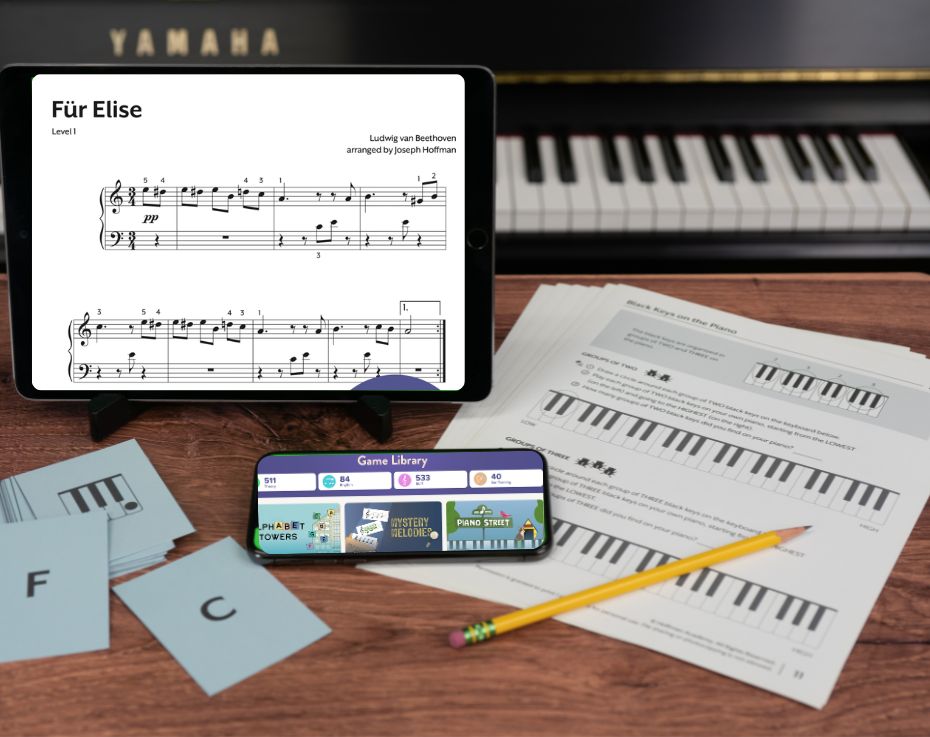
Für Elise is a great first classical piece! The delicate and charming piece is well known to kids. We have video lessons at all levels for this beloved melody by Beethoven. Check out our Elementary, Early Elementary, and Intermediate tutorials and sheet music arrangements to start learning.
What are some popular pieces of classical music for kids?
Classical music for kids features many popular and beloved pieces. To inspire your beginner pianist, we recommend listening to the following pieces. These piano classical music songs contrast different tempi and emotional worlds. They make great conversational pieces for you and your kid. You can listen to all of these pieces and more on our Spotify Classical Music for Kids playlist. For students at an intermediate piano level, we also offer video lessons for these pieces as well!
- Moonlight Sonata: This iconic and moody Beethoven sonata is beautiful. Be sure to listen all the way through to hear the fiery and exciting third movement! You can talk with your pianist about the differences between the movements. Our first movement tutorial is customized for Intermediate pianists.
- Gymnopedie No 1.: This elegant piece by composer Erik Satie is appealing background music for dinner. Ask your student how the soundscape makes them feel.
- Clair de lune: Enjoy floating on a moonbeam with Debussy’s iconic soundscape. This piece would make a delightful pre-nap quiet moment for listening. Later, your more grown-up intermediate pianist will be ready to give our Clair de lune video lesson a try.
If you have a budding singer, you can connect to classical music through the world of opera. These listening pieces showcase different types of operatic voices.
- The Magic Flute: Papageno/Papagena and the Queen of the Night. Young students especially love the playful bird costumes and melody of the Papageno/Papagena duet. The Queen of the Night’s showstopping High F – one of the highest notes on the operatic stage – also awes young students.
- Habanera: This iconic aria from Carmen has a delightful melody.
- Largo Al Factotum: Your child has probably heard this in a cartoon before! This is a great and funny piece showcasing the baritone voice.
We’ve also compiled a list of wonderful pieces of classical music for kids to listen to! For orchestral music, programmatic pieces make a great choice, because the music tells a story.
- Peter and the Wolf
- Night on Bald Mountain
- The Flight of the Bumblebee
- A Young Person’s Guide to the Orchestra
- Eine Kleine Nachtmusik
- William Tell Overture
Once again, we’ve put all these favorites and more together in a Classical Music for Kids playlist on Spotify! Listen and enjoy!
How can parents introduce classical music to their kids?
Parents can introduce classical music for kids through listening and talking about what they hear. Even video game scores and film scores saturate the media around us with themes and instrumentation derived from orchestral music. Start with a familiar classical-style piece from a favorite movie or video game. Take the time to talk together about what the music makes you feel and what instruments you hear.
Introducing music through listening teaches students to relate emotionally to the music. You can start by making classical music part of your life. Play it in the car on trips or during dinner. Then, ask questions! Ask your child what they like about a certain piece of music and plan your listening journey from there.
Although classical music helps build the part of the brain that works on focus, kids may not be ready to sit through a long piece. That doesn’t mean they can’t enjoy it – snippets or movements of a piece make a great starting place. Using short sections and letting kids get up and move help children learn to appreciate classical music. Ask your kid to make up their own dance to “The Sugar Plum Fairy,” or encourage them to move along with the creeping music of the Moonlight Sonata.
What makes a good online piano program for kids?
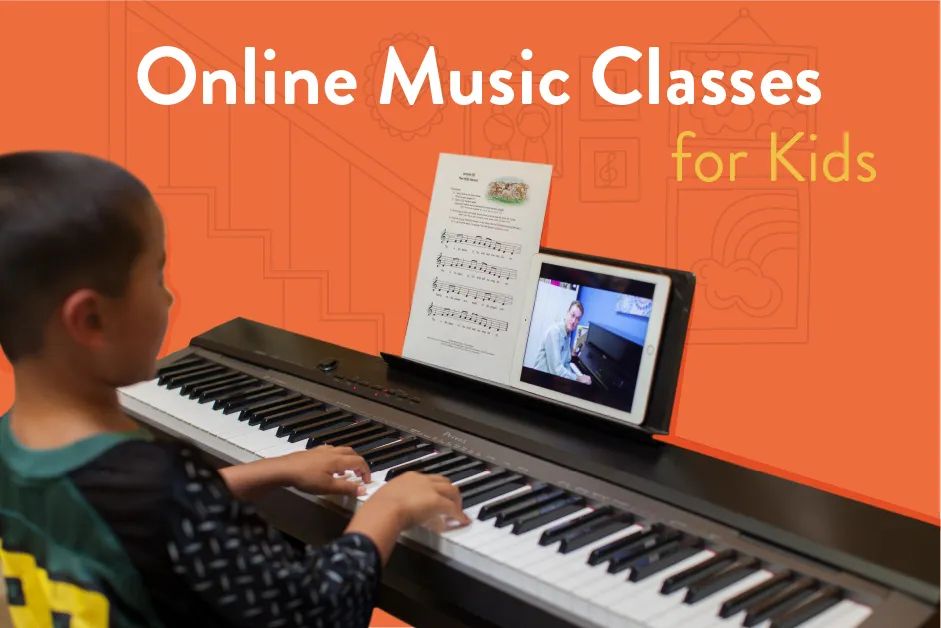
A good online piano program offers an engaging approach alongside a comprehensive curriculum. This should include music theory, note reading, ear training, and technique, all of which build music literacy skills. Establishing a foundation of reading music prepares students to enjoy playing songs from many genres for their lives.
A good online program should also explore a variety of musical genres, including classical music. Hoffman Academy’s online piano program centers the student’s experience and teaches through discovery, so students experience a wide variety of genres. Our video lessons teach through play. This fun approach means that our whole-music curriculum sticks with kids and inspires their natural curiosity. We offer our students a broad piano education, all from the comfort of your own home.
How to get started with classical piano at home
Active listening inspires curiosity, and an inspired child will be excited to learn the piano! Piano lessons are a great way to dive into classical piano. Our video lessons cover multiple genres of music from classical to pop. This engages students in the learning process and makes sure every kid finds a song to love.
Below, we’ve created a list of some of the favorite classical piano pieces in our curriculum. Our music education program pairs classical piano pieces with music history and technique. With games and play in every lesson, students have fun while learning to make music.
We start classical piano pieces early in our teaching, like this arrangement of the “Ode to Joy” in Unit 4. This familiar melody comes from Beethoven’s triumphant 9th symphony.
We have multiple levels of lessons for Vivaldi’s “Spring,” arranged specifically for young pianists. This piece, also known as “La Primavera,” is a delightful and playful piece that young pianists are sure to love.
Another classical piano piece for beginner pianists is our arrangement of “In the Hall of the Mountain King.” Drawn from the orchestral Peer Gynt Suite, this work is exciting and fun for young pianists to learn!
What are some resources for finding classical music for kids?
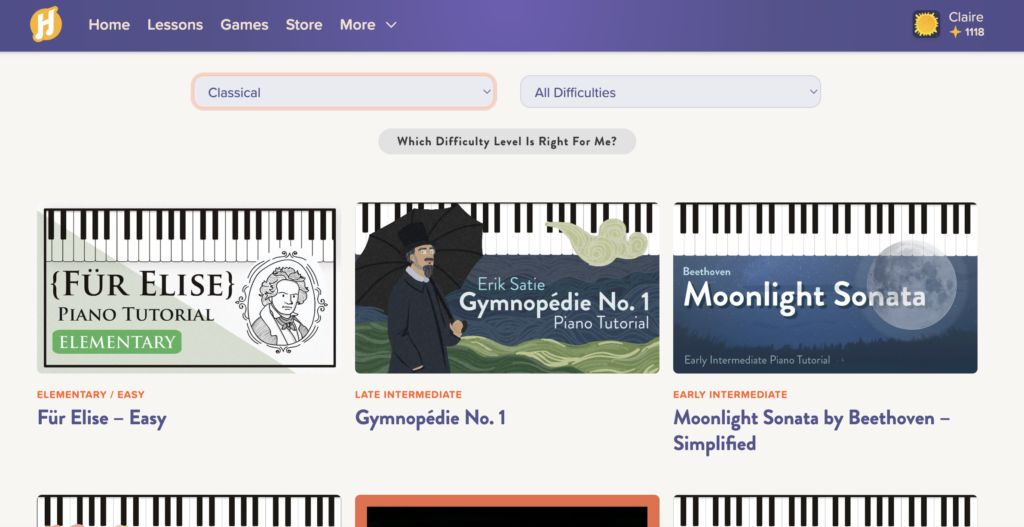
One excellent resource is Hoffman Academy’s classical songs list. Under the Popular Songs tab pictured above, you can sort all of our tutorials by Classical music and your skill level.
Another way to enrich your kids’ listening and learning is through music history. Our Composer series of articles includes sample pieces from each composer. This offers learning opportunities about history as well as listening opportunities.
- Johann Sebastian Bach
- Robert Schumann
- Clara Schumann
- Sergei Rachmaninoff
- Erik Satie
- Irving Berlin
- Franz Joseph Haydn
- Bela Bartok
- Ludwig van Beethoven
- Johannes Brahms
- Scott Joplin
- Film Composers
- Baroque Composers
Why starting with classical foundations builds long-term confidence
Starting musicians with classical foundations solidifies foundational knowledge about Western music. The chord progressions and melodic rules developed in classical music underpin much of the music written since then. It will deepen a student’s appreciation of pop and rock to understand Beethoven. Listening creates a dialogue between time periods, and is the underpinning of understanding a shared musical language.
Taking part in the tradition of classical music connects students to a long musical history. This teaching lineage means that students learn from music that was designed to build progress in proper fingering, scales, arpeggios, and chord shapes. These musical tools appear across multiple genres of piano music.
Classical music uses written musical notation. Learning to read melodies and chords opens up a wide world of Western compositions. The chord progressions that young musicians absorb from Beethoven appear in later musical genres, too. Along with this connection to musical theory, reading music also gives students the tools to try learning other instruments too.
From listening to playing: Your child’s next step in classical music
Through listening your student will develop a natural curiosity and interest in music. Once your kid is hooked on classical music, you can bring piano into your home with our video lessons. Learning to play and enjoy classical music is more approachable than ever with Hoffman Academy’s online piano program. Along with listening and talking about classical piano pieces, you can give Hoffman Academy Premium a try to bring classical music for kids and its benefits into your child’s life.