





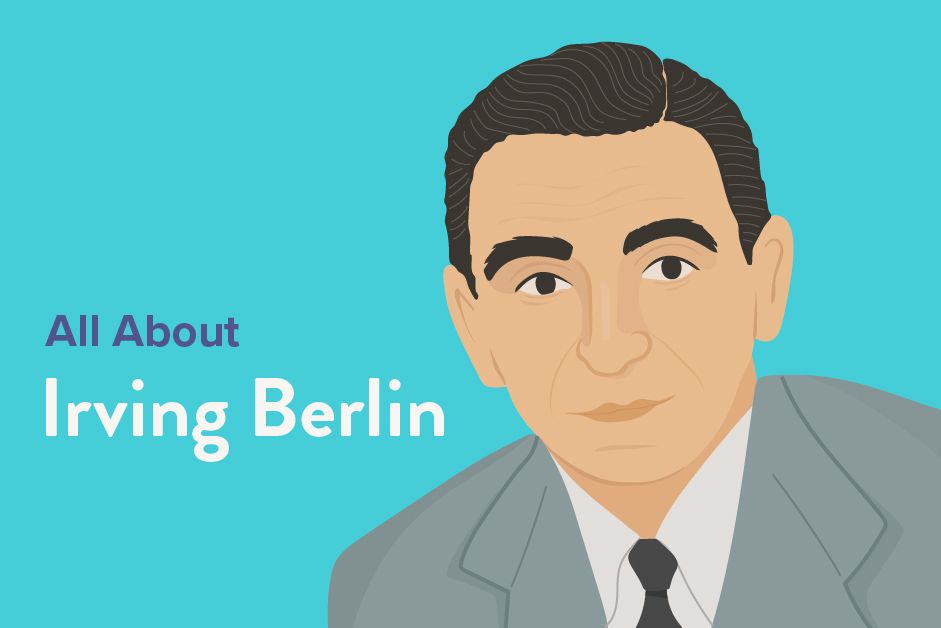
Who was Irving Berlin?
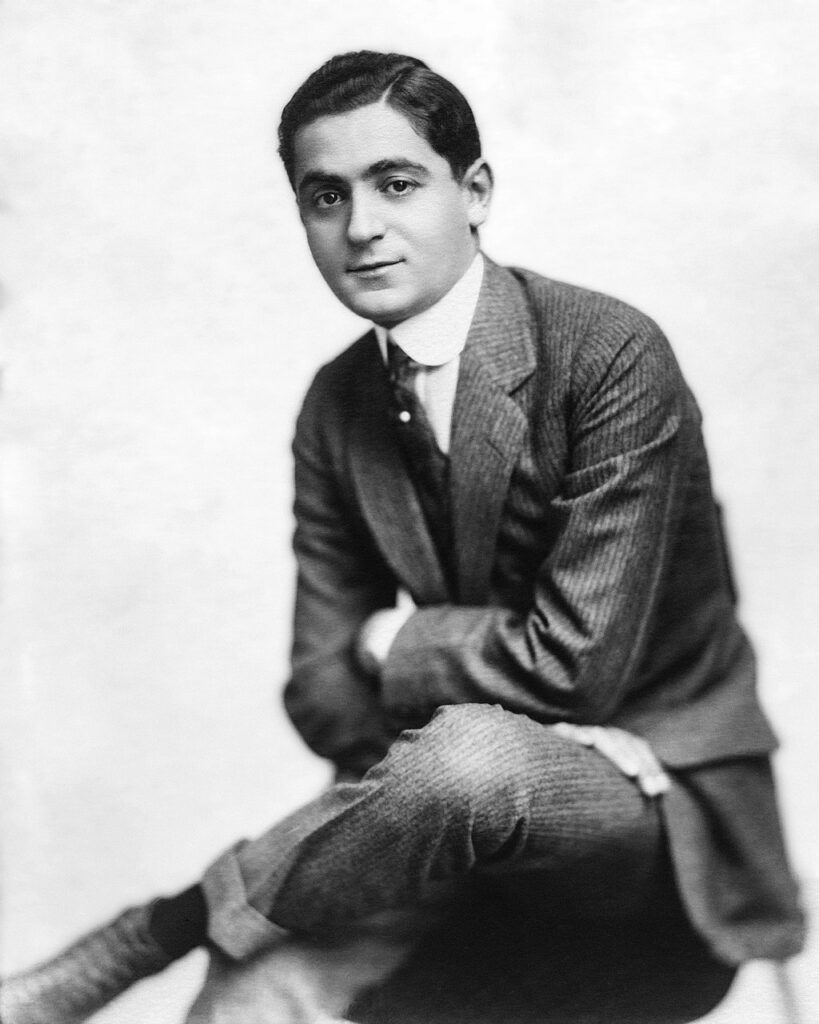
One of the most important voices in the history of American music, Irving Berlin composed music for over 20 Broadway musicals, 15 Hollywood films, 1,500 songs, and he was nominated eight times for the Academy Awards. Some of his most famous works include the musicals White Christmas (which includes the famous song of the same name that you hear every Christmas) and Annie Get Your Gun, the songs “God Bless America,” “Happy Holiday,” “White Christmas,” and many more. Many of his songs have become popular jazz standards, including “Alexander’s Ragtime Band,” “Blue Skies,” and “I’ve Got My Love to Keep Me Warm.”
Learn popular music with Hoffman Academy! Discover your piano potential at Hoffman Academy with the world’s best piano learning system.
Why did Irving Berlin immigrate to America?
Although he is considered one of the greatest American composers and one of the most influential voices in shaping our musical history, Irving Berlin was not born in the United States. He was born under the name Israel Beilin on May 11th, 1888 in the cold Siberian city of Tyumen in the Russian Empire. At this time in the Russian Empire there were violent riots called pogroms that were being carried out against Jewish citizens. Since Irving was the son of Belarusian Jewish parents, he and his family witnessed their own house burned to the ground during a pogrom. Soon after this, he and his family emigrated to the United States. He was five years old at the time. His family settled and made a new life for themselves in New York City, which Irving called home for the rest of his life.
Learn more about composer Irving Berlin’s life
Irving’s father passed away when he was only 13 years old, which meant that he and his siblings had to help support the family. In order to make money, Irving (known as “Izzy” by friends and family) took a job as a newspaper boy for The Evening Journal. In order to work fulltime, he quit going to school at age 14. Every evening he and his sisters (who all worked wrapping cigars) would come home and deposit their earnings into their mother’s apron so that the combined earnings would pay for rent, groceries, and other necessities.
While he was working as a newspaper boy, Irving Berlin was exposed to a large variety of musical styles which poured out of bars and restaurants. He quickly memorized these songs and would sing them as he delivered newspapers, which earned him a few extra coins as a tip.

In 1906 at the age of 18, he became a singing waiter at the Pelham Cafe in Chinatown and also worked as a song plugger for the Music Hall in Union Square. As a song plugger, his job was to sing and play piano in order to promote and sell sheet music. Unable to afford lessons, Izzy would spend his free time teaching himself how to play piano. During this time, he began improvising and composing his own music. He published his first song “Marie from Sunny Italy,” co-composed with Pelham Cafe pianist Mike Nicholson, in 1907 at the age of 19.
Izzy quickly became popular as a songwriter and gained recognition around the Manhattan area. By 1911, he had established himself as a leading Tin Pan Alley composer with songs such as the hits “Call Me Up Some Rainy Afternoon” and “Alexander’s Ragtime Band.” According to fellow Tin Pan Alley and Broadway composer George Gershwin (best known for the jazzy piano and orchestra composition Rhapsody in Blue), “Alexander’s Ragtime Band” was the “first real American musical work.”
In 1912, Berlin married his first wife, Dorothy Goetz, who passed away only a couple months after their marriage from typhoid fever that she contracted during their honeymoon to Cuba. In his grief, Irving composed his first ballad “When I Lost You.” While not his most famous song, this was the only song composed in his whole career that Irving admitted to having a deep personal connection with.
During World War I, he devoted much of his time composing supportive and patriotic songs. These include the “God Bless America“ (which would later be included in his 1942 musical This Is the Army) and “For Your Country and My Country.” In 1926, Berlin married his second wife, Ellin Mackay, whose family came from the Irish Catholic tradition. Due to his Jewish background, Ellin’s family disapproved of their marriage, which caused Irving and Ellin to elope in order to wed. Ellin’s father refused to speak to the newly married couple for three years afterwards. They were married until her death in 1988, one year before Irving’s own death.
Irving Berlin’s two most famous musicals were Annie Get Your Gun, composed in 1946, and White Christmas, composed in 1954 from material used in his 1942 musical Holiday Inn. He retired from writing music in the 1960’s and enjoyed a mostly private life in his later years. Irving Berlin passed away on September 22nd, 1989 at the age of 101. He was mourned by all of America, including President George H.W. Bush, who said “Berlin was a legendary man whose words and music will help define the history of our nation.” President Ronald Reagan, who performed in Berlin’s musical This Is the Army, said, “Nancy and I are deeply saddened by the death of a wonderfully talented man whose musical genius delighted and stirred millions and will live on forever.”
What is Irving Berlin best known for? Irving Berlin’s most famous songs
He is best known for writing around 1,500 songs, many of which contribute to the Great American Songbook. This is a generally accepted canon of significant show tunes, jazz standards, and popular songs from the 20th century which became the core repertoire of most jazz musicians. The Great American Songbook also includes music by composers such as Fats Waller, Harold Arlen (composer of The Wizard of Oz), Cole Porter, George Gershwin, Richard Rodgers (composer of The Sound of Music), Duke Ellington, Jule Styne, Jerome Kern, Frederick Loewe, Leonard Bernstein (composer of West Side Story), Kurt Weill, and so many others. Throughout the last century, Irving Berlin’s songs have been performed by some of the most famous performers on television and stage, including Ella Fitzgerald, Bing Crosby, Gene Wilder, Frank Sinatra, and Fred Astaire.
Irving Berlin’s most famous songs include:
- God Bless America
- White Christmas
- Alexander’s Ragtime Band
- Blue Skies
- Happy Holiday
- Anything You Can Do (I Can Do Better)
- There’s No Business Like Show Business
- That International Rag
- What’ll I Do?
- Always
- Puttin’ On the Ritz
- Marie
- Say It Isn’t So
- I’ve Got My Love to Keep Me Warm
- Heat Wave
How many musicals did Irving Berlin write?
As one of the most celebrated Broadway and Hollywood composers in history, Berlin composed over 20 musicals during his career. These musicals include White Christmas, Annie Get Your Gun, Holiday Inn, and Top Hat. Some of these musicals were first conceived for the stage and some were created first as musical films and then later adapted for the stage.
What key did Irving Berlin write in?
It is said that for most of his career, Berlin could not read sheet music well and could only play in one key: F-sharp. He even had a piano with a transposing lever. When he pulled this lever, he could play in other keys without having to move his hands. You can hear Irving Berlin speak and see his transposing piano in this television interview.
Concluding thoughts
In the words of American Broadway composer Jerome Kern, “Irving Berlin has no place in American music – He IS American music.” If you are interested in learning more, we recommend watching this fascinating CBS Sunday Morning spotlight about Irving Berlin and his life.
The United States is largely a country of immigrants and composer Irving Berlin was certainly one of them. He came from a poor family, could only play in one key on the piano, wasn’t very good at reading sheet music, but despite all of these obstacles, he created a lasting name for himself in the American memory. His songs are still sung, his musicals still performed, his films are still watched, and in the words of the composer himself, “It’s the lyrics that makes a song a hit, although the tune, of course, is what makes it last.”