


Learn all about Béla Bartók and how his innovative composition techniques combined tradition and experimentation
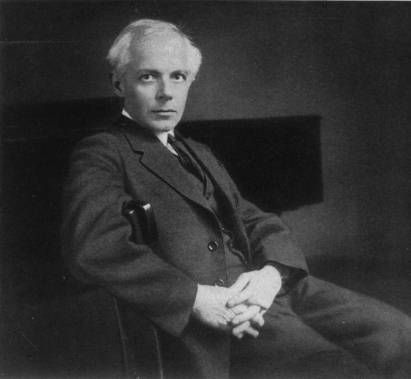
Béla Bartók was a Hungarian compositional wizard whose works helped shape the future of 20th century music. He was an innovator who fused classical tradition with the richness of folk music and created a new, energetic, percussive, melodic, and dissonant style. His compositions are adventures waiting to be explored and have captivated both pianists and composers for over a century. Journey with us to learn more about Bartók’s interesting life and style!
Learn classical music with Hoffman Academy! Discover your piano potential at Hoffman Academy with the world’s best piano learning system.
A short biography
Bartók was born on March 25th, 1881 in Nagyszentmiklós, Austrian-Hungary (today, this town is called Sânnicolau Mare and is located in Romania). According to his mother, Bartók displayed strong musical talents very early on in his life and was able to understand dance rhythms before he could speak fluently.
When he was young, Bartók’s father passed away, so his mother found it necessary to move his family around to different cities in Austria-Hungary. He had his first piano recital at age 11 while living in Nagyszőlős (today Vynohradiv, Ukraine) at which he performed a short composition of his own.
In 1899, Bartók began studying piano under István Thomán who had studied with the virtuosic master of the piano Franz Liszt. Bartók also began studying composition at the Royal Academy of Music (known today as the Franz Liszt Academy of Music) in Budapest around the same time. At first, Bartók’s works combined elements of Hungarian folk-styles and late romanticism and were largely inspired by Johannes Brahms and Richard Strauss.
For much of his professional career, Bartók would travel the countryside of what was at the time Austria-Hungary. In his travels, he encountered people of Hungarian, Romanian, Romani (not to be confused with Romanian people), Bulgarian, Slovak, and Turkish backgrounds. He would study their songs and the musical styles of their villages and then record them in his journal. His academic study of folk music (called ethnomusicology) brought him close to musicians with similar ethnomusical interests, such as Hungarian composers Zoltán Kodály, László Lajtha, and Turkish composer Ahmet Adnan Saygun.
During World War II, Bartók, who was strongly anti-fascist, escaped Europe and settled in New York City. Shortly afterward, he was diagnosed with cancer and passed away on September 26th, 1945 at the age of 64. His studies of folk music, his pianistic talent, and his compositional style would continue to inspire other musicians long after his death. Listen to a recording of the composer performing some of his own music here.
Béla Bartók’s musical style
Bartók is known for his percussive and dissonant modern compositional style, which was highly influenced by the folk music of his native Hungary and the surrounding cultures of Slovakia, Bulgaria, and Romania. His music includes complex rhythmic structures, which you can hear and see examples of in the following two pieces: Two Romanian Dances, Allegro Vivace and Six Dances in Bulgarian Rhythms, Mvt. 2.
His style has had a lasting and tremendous influence on film music and other classical composers, ranging from composers such as piano works by Argentinian Alberto Ginastera to film scores like John Williams’ Star Wars.
How many pieces did Béla Bartók compose? Examples of famous works by Béla Bartók
Bartók composed over 100 works during his lifetime. His compositional portfolio includes music for solo piano, chamber ensembles, orchestra, one opera, and music for other ensembles. To get an idea of his style, check out some of his most famous pieces, which include his Concerto for Orchestra, the ballet The Miraculous Mandarin, the Piano Sonata, the Viola Concerto, the 2nd Violin Concerto, any of his three piano concerti (Piano Concerto 1, Piano Concerto 2, and Piano Concerto 3), and his creepy opera Bluebeard’s Castle. My favorite part of Bluebeard’s Castle is the Fifth Door scene, which contains massive orchestral chords and dramatic singing that sends shivers down the listener’s spine. Other great works include the Music for Strings, Percussion, and Celesta and Six Romanian Dances for String Orchestra.
If you’re interested in learning Bartók’s piano music, a great place to start would be his Mikrokosmos, which include piano pieces that range from the elementary level through the advanced levels. His most popular piece to learn and perform would be the Six Romanian Dances for Piano, which are catchy and fun to play. Other piano pieces include the more challenging Bagatelles, Two Romanian Dances for Piano, and Improvisations on Hungarian Peasant Songs.
Discover Bartók sheet music
There is so much sheet music to discover on Hoffman Academy’s website, including sheet music to pieces by Bartók. In the previous paragraph, we mentioned the Six Romanian Folk Dances, which you can find and download the sheet music for on our website. Our website also includes sheet music to Bartók’s Bagatelles, Romanian Christmas Carols, and other pieces which you can find here.
Béla Bartók’s Legacy: A lasting influence on music and culture
Thank you for taking this adventure with us and for learning more about Béla Bartók. His legacy has had a profound influence on the music and culture of the 21st century and on ethnomusicology. We hope you enjoyed learning about his life and exploring the vast collection of music that he composed.