


With over 800 works published during his life and hundreds more to his credit, Carl Czerny was one of the most productive composers in Europe. This student of Beethoven also wrote a vast number of exercises for pianists, many of which resemble actual compositions instead of technical drills. Let’s have a closer look at some of Czerny’s best exercises for beginning piano players, and find out why they’re still used today.
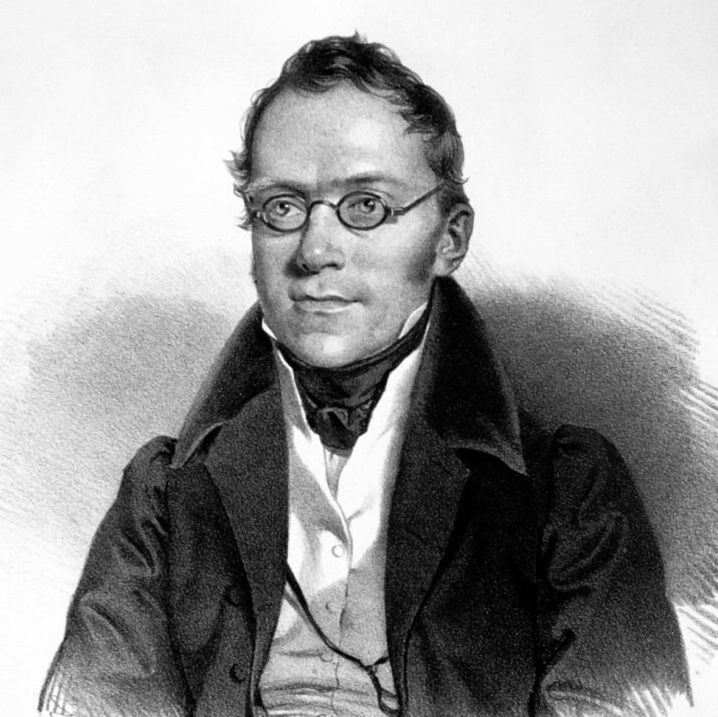
Carl Czerny (1791–1857)
With Hoffman Academy Premium, you’ll be able to download hundreds of sheet music pieces for free, including valuable student exercises!
What is the purpose of Czerny’s exercises?
Carl Czerny’s exercises give piano students a comprehensive set of musical skills. They are specially tailored to address finger strength and speed, music theory, and a variety of musical textures.
Finger dexterity
Many Czerny exercises focus on melodic patterns that help the fingers become more agile and independent. Similar to Charles-Louis Hanon’s The Virtuoso Pianist, Czerny exercises provide repetitive cycles of notes that target certain fingers. For example, number 1 from the 101 Exercises, Op. 261 helps strengthen the 4th and 5th fingers on the right hand by doubling back over the notes E, F, and G:

Music theory: melodic and harmonic patterns
Scales and arpeggios, the foundations of music theory, feature prominently in Czerny’s exercises. Unlike Hanon’s The Virtuoso Pianist, which simply drills these patterns, Czerny incorporates them into more tuneful and interesting études. He gives phrasing and harmonic direction to arpeggios in “Exercise No. 3” from The School of Velocity, Op. 299:

Musical texture and voicing
Czerny exercises delve into a range of musical textures, from chordal patterns and Alberti bass to multiple voicing on the same hand. This allows students to practice balancing a melody against an accompaniment, a skill often needed in real compositions:

Is Czerny good for beginners? How difficult are Czerny’s exercises?
Czerny exercises can be effective for early-level students, but not absolute beginners. His easiest collections are The Little Pianist, Op. 823, The Five Fingers, Op. 777, and the Practical Method for Beginners, Op. 599. The exercises are designed to be progressive, so while some of the first exercises in these sets are within reach of elementary-level students, the difficulty level quickly rises.
“Number 2” from The Five Fingers is a good example of an elementary-level exercise. It features only I and V7 chords on the left hand and simple eighth and sixteenth note rhythms on the right, with no moving of the right hand outside the C major pentascale. A student who is somewhere between Units 5 and 8 of the Hoffman Method will find an exercise like this one just right:

By “Number 3,” however, we have a broken-chord waltz accompaniment on the left hand, which places the exercise more at late elementary level, or Hoffman Academy Units 9 through 11:

Then, “Number 4” already has an Alberti-style left hand accompaniment in sixteenth notes. Although the hand stays centered on the C major pentascale, this kind of musical texture is better suited to early intermediate students in Hoffman Academy Units 12 through 14:

At a more intermediate level, Czerny focuses on rapid repeating notes and finger substitution, as in the 101 Exercises, Op. 261, No. 21. By Hoffman Academy Units 15 through 18, students should be ready for exercises like this one:

Advanced-level Czerny exercises prepare students for the most demanding repertoire, including sonatas and piano concertos. The Art of Finger Dexterity, Op. 740, No. 4 features fast-tempo right hand tremolos against octave leaps on the left hand:

You can find two collections of Czerny exercises in the Hoffman Academy Store: our Nine Easy Czerny Exercises for late elementary students and our Thirteen Progressive Czerny Exercises at the early intermediate level.
Are Czerny’s exercises still relevant?
Czerny’s exercises remain a valuable staple of any piano student’s regimen. In particular, their melodious quality goes a long way to alleviate the usual drudgery of exercises. By inviting the same attention to musicality that students give their repertoire pieces, Czerny exercises develop expressiveness as well as technical skills. In addition, some of the easiest exercises make for excellent sight reading practice.
What is the difference between Hanon and Czerny?
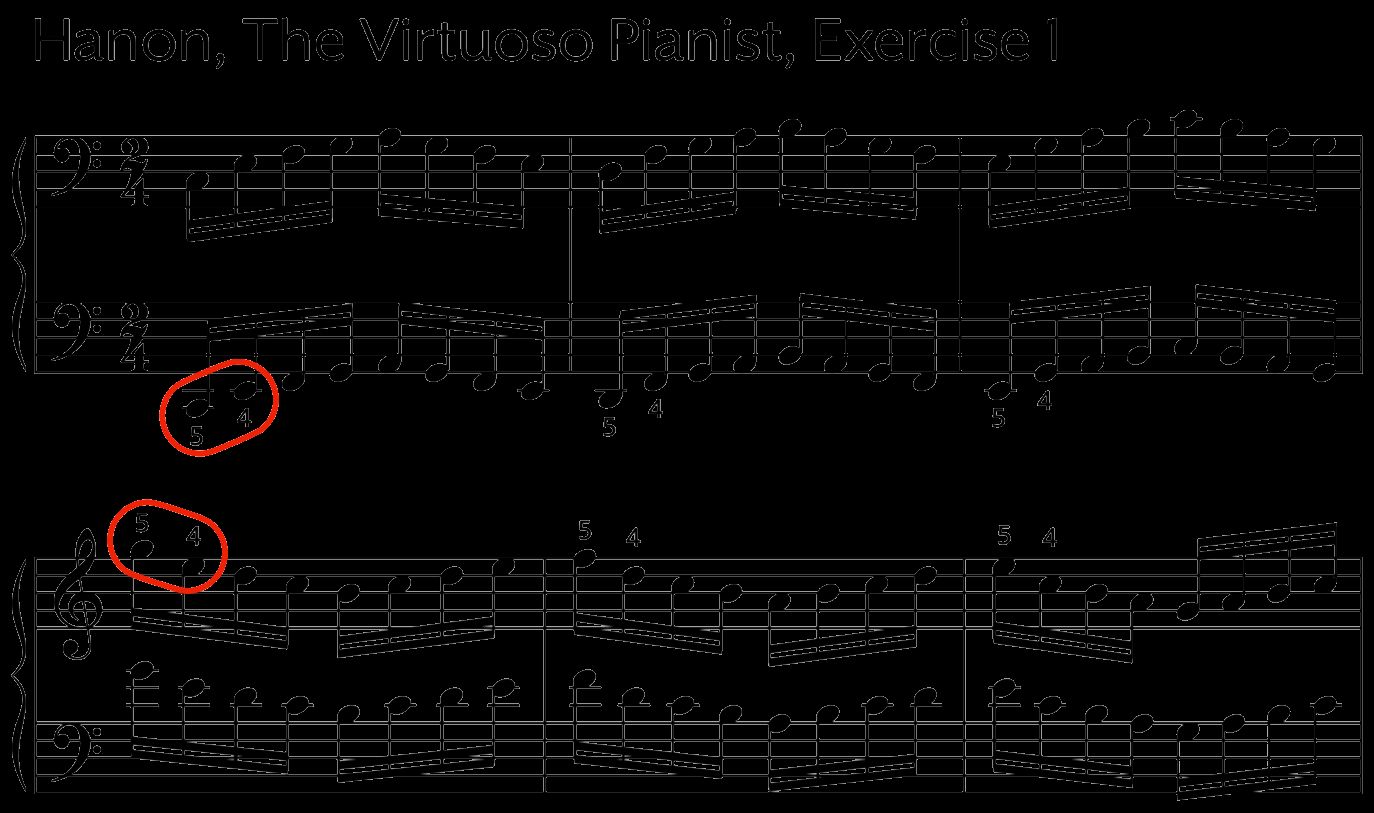
Hanon’s The Virtuoso Pianist is known for its finger drills, while Czerny exercises are more concretely musical. Hanon starts with a two-beat note pattern in sixteenth notes and then keeps transposing it a step higher or lower. This targets different fingers for repetition and helps them develop more independence and dexterity. The well-known first exercise from The Virtuoso Pianist allows the student to practice stretching a third from fingers 4 to 5, first on the left hand, then on the right. Over time this can help make these two weak fingers more agile:
The drawback to these drills is a lack of musical interest. On the other hand, many Czerny exercises sound like short compositions and are sometimes used in student recitals. Czerny gave his technical studies more harmonic and rhythmic variety, which avoided the exhaustive repetition of Hanon. “Number 55” in The Practical Method, Op. 599 tackles a broken-chord left hand figure with dotted rhythms and scales on the right. But the tunefulness and phrasing make this exercise more of a gavotte-like dance movement:

What are the core practice tips for Czerny exercises?
Czerny exercises allow you to focus on musical playing, physical awareness, and practicing with purpose.
- As with any technical exercises, be sure to play with the same musicality called for in your repertoire. Pay attention to phrasing, dynamics, and articulation in order to deliver a musical execution of each study.
- By focusing on just one or two skills at a time, Czerny exercises free you up to notice your posture and hand alignment. As you master each exercise, notice your use of arm weight and wrist relaxation, as well as your distance from the keyboard and arm movement.
- As much as possible, choose exercises that correspond to the technical challenges in your current repertoire rather than trying to learn every exercise in the collection. It’s one thing to be a well-rounded musician, but you don’t want to get so bogged down in a whole book of exercises that you have no time left for the music you want to play.
What was Czerny famous for?
Czerny was one of the most influential musicians and piano teachers of the 19th century.
- Czerny was a child prodigy whose early musical inclinations were comparable to those of Mozart. His public debut was at age nine, when he performed Mozart’s Piano Concerto in C minor. This was no less a feat in 1800 than it is today.
- One of Beethoven’s most successful piano students, Czerny premiered Beethoven’s first and fifth piano concertos in Vienna. Czerny was also one of the first people to notice the early stages of Beethoven’s deafness.
- Together with his symphonies, choral works, and piano works, Czerny wrote well over a thousand compositions, starting at age seven.
- Czerny’s students included Franz Liszt, Stephen Heller, and Beethoven’s own nephew Karl. There is an impressive teaching lineage that runs from Beethoven through Czerny, and continues through Liszt down to Rachmaninoff, Ernst Dohnányi, and Artur Schnabel.
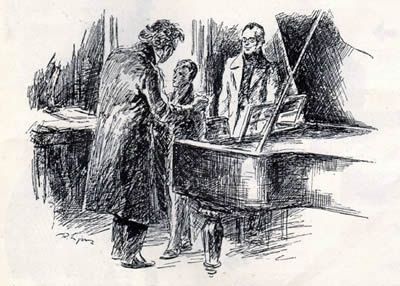
Carl Czerny introducing Franz Liszt to Beethoven
Getting started with Czerny at home
You will get the most out of Czerny’s exercises if you focus on exercises that fit the techniques in your repertoire. If you’re working on a sonatina by Clementi or Kuhlau, pick exercises that deal with Alberti bass in the left hand and rapid scale passages in the right. You’ll target the specific skills demanded by your repertoire instead of arbitrarily tackling entire volumes of exercises. This kind of moderation lets you balance technical drills with the actual pieces you want to play. It’s a great way to benefit from Czerny without burning yourself out!
Hoffman Academy Premium makes that balance easier, with practice plans, sheet music, and audio backing tracks that keep your technique work tied to the pieces you want to play.