





What is the sonatina form?
The sonatina is a classical form that is best known as a teaching tool and style of performance piece for intermediate pianists. Sonatinas also exist for advanced pianists, violinists, and other instrumentalists and ensembles. Discover sonatina form’s structure, its origin, and famous examples that you can learn below.
Learn classical music with Hoffman Academy! Discover your piano potential and learn piano online with the world’s best piano learning system.
What is the sonatina form structure?
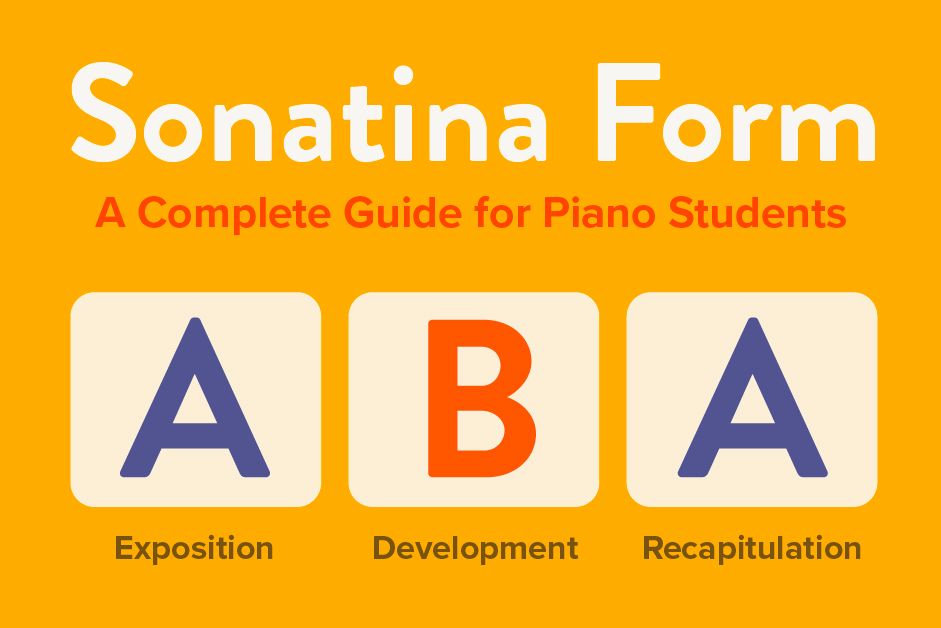
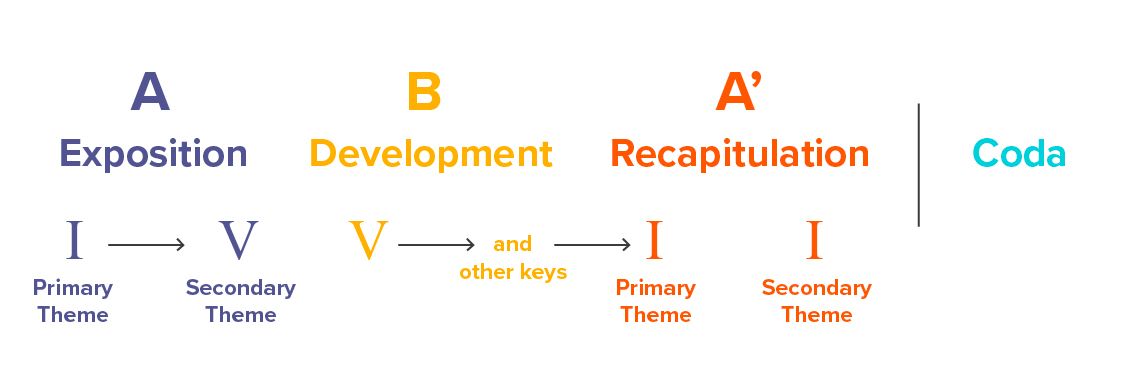
The sonatina form is basically a simplified version of sonata form. Here are the three sections of a sonatina:
- Exposition: A statement of the main theme or themes. If there are two themes, the first theme is in the tonic key (I) and the second theme is often in the dominant key (V).
- Development: A short section where the main theme or themes are interwoven, moved into other keys, and the pianist sometimes gets to play around with quicker scalar passages.
- Recapitulation: A restatement of the main theme or themes. If there are two themes, both the first and second themes reappear in the tonic key (I).
For more information on sonata form, read our blog article “Piano Sonatas 101”!
Sonatinas typically feature multiple movements, similar to sonatas, usually with two lively movements framing a slower, central movement. Sonatinas and sonatas both contain fast scalar passages, arpeggios, and other technical challenges, but sonatinas tend to be lighter in tone.
What’s the difference between a sonatina and a sonata?
Originally, piano sonatinas were intended to be shorter versions of sonatas, but they can sometimes be difficult to distinguish from piano sonatas. For example, Muzio Clementi wrote 110 pieces that he labeled as sonatas, but some are considered to be sonatinas due to their shorter lengths. For example, Maurice Ravel’s Sonatine, M. 40 contains three movements and runs for around 10 minutes, but Haydn’s Sonata in C Major, Hob. XVI:1 also contains three movements and runs for only around 8 minutes.
Piano sonatas were also originally designed to follow a standard sonata form that was composed of four movements, similar to a classical symphony, but many do not follow this format. Some sonatinas contain the same number of movements or even more movements than some sonatas do.
What is the origin of the sonatina?
The sonatina originated first with Baroque composers, such as Johann Sebastian Bach, but the title was often assigned to pieces that were quite different from the modern usage of the term. J.S. Bach composed several short orchestral introductions to large vocal works that he called sonatinas. During the Classical period the term became more associated with piano pieces that resembled shorter sonatas. The following video is the Sonatina from Bach’s sacred cantata “Gottes Zeit ist die allerbeste Zeit” Actus Tragicus, BWV 106 and is scored for two flutes, two violas da gamba, and basso continuo.
What are famous examples of the sonatina form?
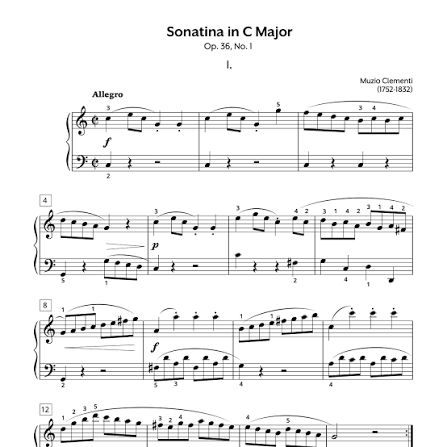
Some of the most famous examples of the sonatina form for piano include Muzio Clementi’s Sonatina in C Major, Op. 36, No. 1, Friedrich Kuhlau’s Sonatina in C Major, Op. 20, No. 1, and Ludwig van Beethoven’s (attributed) Sonatina in G Major, Anh. 5, No. 1 and Sonatina in F Major, Anh. 5, No. 2. These are all pieces that are appropriate for intermediate level piano students. There are also famous sonatinas that are appropriate for advanced piano students, such as Maurice Ravel’s Sonatine, Béla Bartók’s Sonatina, Sz. 55, BB. 69, and Aram Khachaturian’s Sonatina in C Major.
Antonín Dvořak’s Sonatina for Violin and Piano, Op. 100, B. 183 is a famous example of a sonatina that was not designed as a piano solo.
Examples we have in the Hoffman Academy store:
Muzio Clementi – Six Sonatinas, Op. 36 (includes the famous Sonatina in C Major)
Ludwig van Beethoven – Sonatina in G Major, Anh. 5, No. 1 & Sonatina in F Major, Anh. 5, No. 2
Friedrich Kuhlau – Sonatina in C Major, Op. 55, No. 1
Visit the Hoffman Academy store to discover more piano scores!
Who are famous sonatina composers?
Muzio Clementi is the most famous sonatina composer who composed over 110 piano sonatas, many of which are considered to be sonatinas due to their simplicity and short durations. Friedrich Kuhlau and Ludwig van Beethoven are also well known for their contributions to the genre, although it is unknown as to whether Beethoven truly composed his sonatinas or if they have been misattributed. Other famous sonatinas have been composed by Thomas Attwood, Béla Bartók, Maurice Ravel, Ferruccio Busoni, Charles-Valentin Alkan, and Aram Khachaturian.
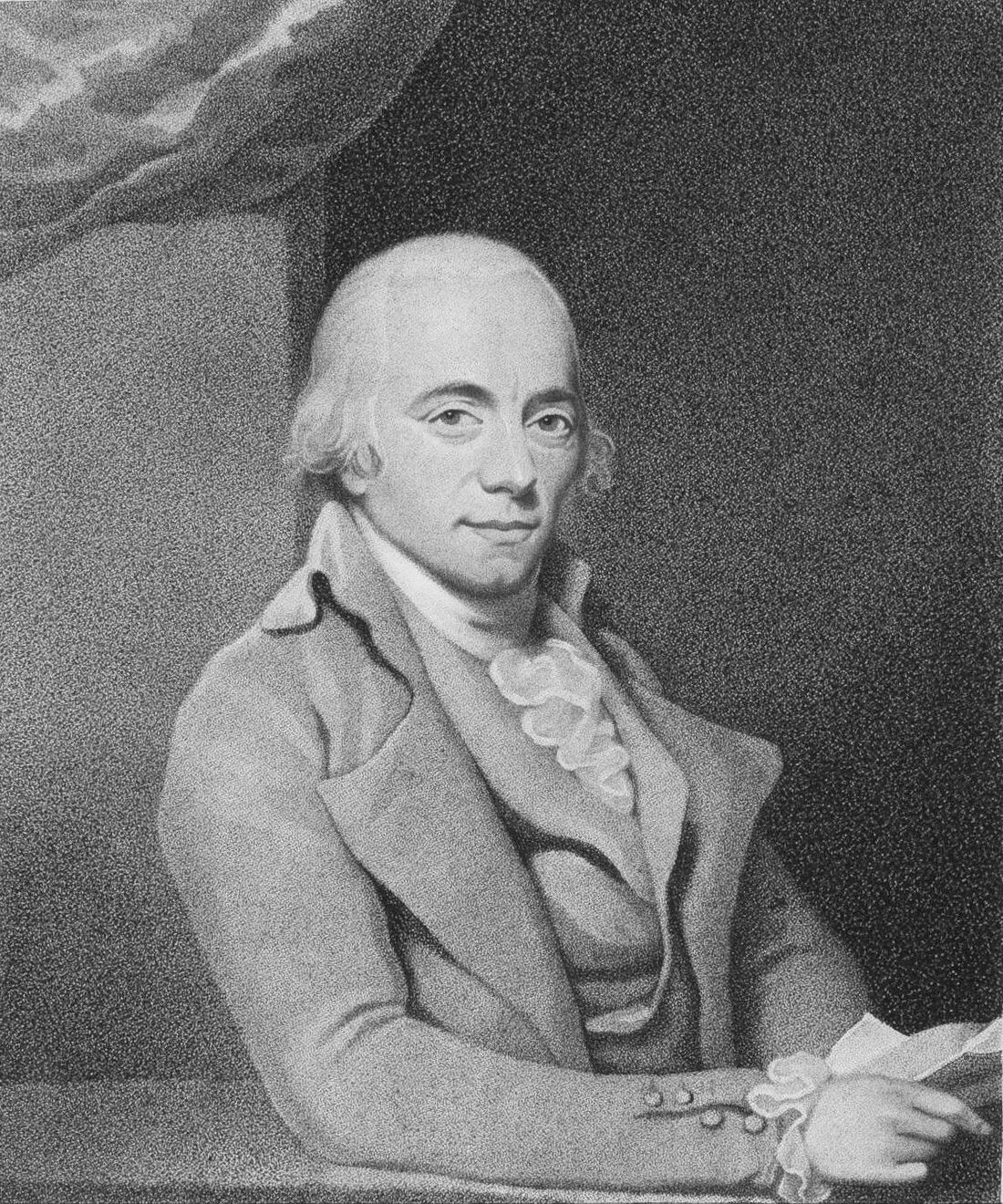
Muzio Clementi, Italian composer (1752-1832)
Are sonatinas good for beginners?
Sonatinas aren’t normally intended for beginners due to the technical challenges within the piece and their overall lengths. They are excellent pieces for intermediate piano students who would like to develop their knowledge and proficiency in classical music. Sonatinas are also a great way to dip your toe into longer pieces and get ready to tackle more challenging pieces such as a Beethoven or Mozart sonata.
What level should you be to play a sonatina?
Most sonatinas are intended for early intermediate pianists, but there are more advanced sonatinas.
Is it difficult to memorize a sonatina?
Sonatinas can be challenging for students to memorize. This will be especially true for those who are experiencing a sonatina for the first time. Learning to memorize takes time and practice; it’s important to begin memorizing with a simple piece and then work up to more complex and longer works, such as sonatinas. For tips on learning how to memorize, check out this article!
Is it hard to compose a sonatina?
A sonatina isn’t too difficult to compose if a student has a good understanding of music theory, including the form of the sonatina, how to compose a working harmony that supports a beautiful melody, and how to develop these melodies. If you are interested in composing a sonatina, I recommend learning to play a few sonatinas and becoming familiar with their details, which will go a long way in helping you compose your own. Another helpful resource in understanding sonatinas is the following video on sonatina form.
Why the sonatina is worth learning
Sonatinas are a great way for young pianists to start learning about sonata form and a gateway into classical music. Now that you are more familiar with this fascinating form, I recommend listening to one or more of the many examples above, finding your own sonatina to learn, and/or perusing the sonatina sheet music on Hoffman Academy’s website. I hope that you find a piece that you enjoy and one that inspires you to explore more classical music.