


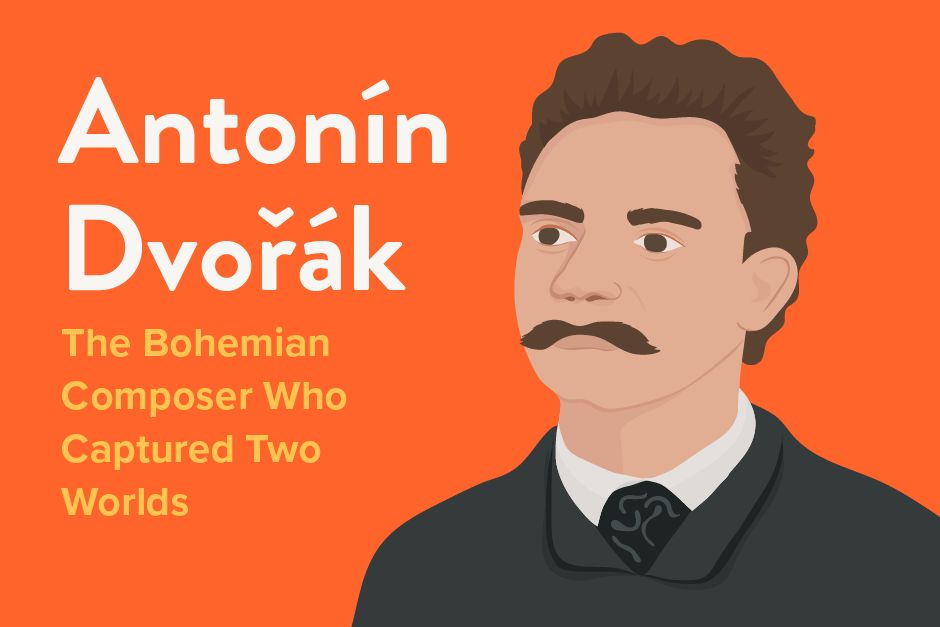
Who was Antonín Dvořák?
Dvořák was a Czech composer who fused Czech folk music with classical forms and traditions. He is very important to the history of American classical music as well, having forged a path for American composers to embrace their homegrown musical styles with his famous “From the New World” Symphony No. 9. Read on to learn more about this fascinating composer!
Learn classical music with Hoffman Academy! Discover your piano potential at Hoffman Academy with the world’s best piano learning system.
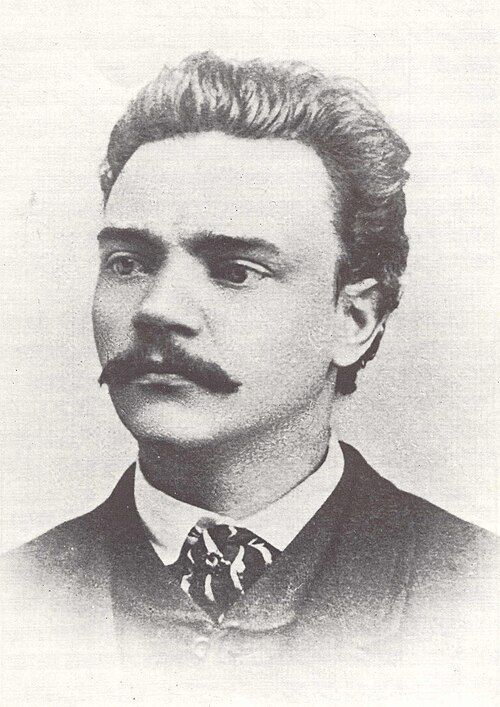
Antonín Dvořák was born on September 8th, 1841 in the village of Nelahozeves in the Austrian Empire. This village is located in the historical region of Bohemia, which is a Czech-speaking land that now makes up the western part of the Czech Republic. His father František was an innkeeper and butcher who was also a zither player and was well versed in Czech folk music. František urged young Antonín to learn the violin, and Antonín quickly showed promise on the instrument. At the age of 13, Antonín went to live in the town of Zlonice with his uncle to learn German. Soon he was using his German language skills to study violin, piano, and organ with Antonín Liehmann. Dvořák progressed quickly in musical skill and was admitted to the prestigious Prague Organ School at the age of 16.
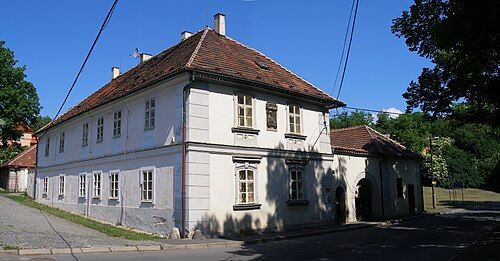
Dvořák played viola in various orchestras in Prague that were conducted by famous composers such as Richard Wagner and Bedřich Smetana. His pay as an orchestral violist during this time was only worth $206 a month, so he supplemented his meager income by teaching piano lessons. It was through these lessons that he met Anna Čermáková, whom he married in 1873. Together, they went on to have nine children. Their daughter Otýlie also grew up to become a composer. Anna was a contralto and was often featured as a soloist in performances of Dvořák’s compositions, such as the Requiem & Stabat Mater.
In 1874 at the age of 33, Dvořák submitted his work to apply for the Austrian State Stipendium for Composition. On the jury was famous German composer Johannes Brahms, who became enthralled by Dvořák’s music and awarded the young composer the prize. Antonín entered and won this competition again in 1877. Following these two wins, Brahms became a major champion of Dvořák’s music and helped to promote and popularize it outside of the composer’s homeland.
Throughout his career, Dvořák was quite prolific and composed hundreds of pieces. These include ten operas, nine symphonies, mazurkas, polkas, impromptus, dumkas, humoreques, piano pieces, fourteen string quartets, three string quintets, four piano trios, two piano quartets, two piano quintets, chamber works for violin and piano, cello and piano duets, a piano concerto, and many others. His works are still performed worldwide today.
The composer passed away at the age of 62 on May 1st, 1904 after suffering through five weeks of an “attack of influenza.” Unfortunately for the world, he left behind a plethora of unfinished compositions. He was buried on the grounds of Vyšehrad Castle in Prague.
What musical style defined Dvořák’s compositions?
Dvořák is well known for his Czech nationalist style of Romantic-era composition. Inspired by Czech folk music and fairy tales, he often incorporated elements from these traditions into his own compositions. This is similar to other Czech composers from the 19th century, such as Bedřich Smetana and Leoš Janáček. The opera Rusalka is a great example of Dvořák’s Czech nationalist compositional style by fusing high-Romantic musical taste with a Czech folk story about a rusalka (water nymph) from Slavic mythology.
“Song of the Moon” sung by Kristine Opolais at the Metropolitan Opera
What are Dvořák’s most famous works?
Dvořák was a prolific composer and many of his works are still regularly performed. The most well known include the famous “From the New World” Symphony No. 9 in E Minor, Op. 95, the piano Humoresques, Op. 101, the orchestral Slavonic Dances, Op. 46 & 72, the opera Rusalka, the Stabat Mater, Op. 58, and Te Deum.
Humoresque No. 7 in G-flat Major, Op. 101 played by Ivo Kahánek
Slavonic Dance. No. 2 in E Minor, Op.72 played by Alexander Tharaud and Mariam Batshashvili
Fun Fact: Even though the Slavonic Dances are now most famous as orchestral pieces, the composer originally composed them as four hand piano pieces before re-arranging them for orchestra.
Stabat Mater, Op. 58 performed by Frankfurt Radio Symphony, MDR Rundfunkchor, and conducted by Andrés Orozco-Estrada
What is Dvořák’s New World Symphony?
His best-known work, the “From the New World” Symphony No. 9 in E Minor, Op. 95 was written during the composer’s time in the United States. He was particularly inspired by the music of Native Americans and African Americans, such as early blues, ragtime, and spirituals. While composing this piece, he fused the inspiration he gained from these American genres with the form of the classical symphony.
How did Dvořák’s time in America influence his music?
From 1892 to 1895, Dvořák spent time in New York City as the director of the National Conservatory of Music. After arriving in the United States, he researched local musical cultures, specifically the music of African-American and Native American communities. This study and his personal connection to African-American composer Harry T. Burleigh greatly inspired him during the 1893 composition of his “From the New World” Symphony No. 9. The majority of American composers at this time were having trouble identifying their own musical sound and Dvořák believed that they should look to existing American musical cultures rather than to European composers for inspiration. By composing his 9th symphony, Dvořák believed that he had shown other composers how to harness these sounds.
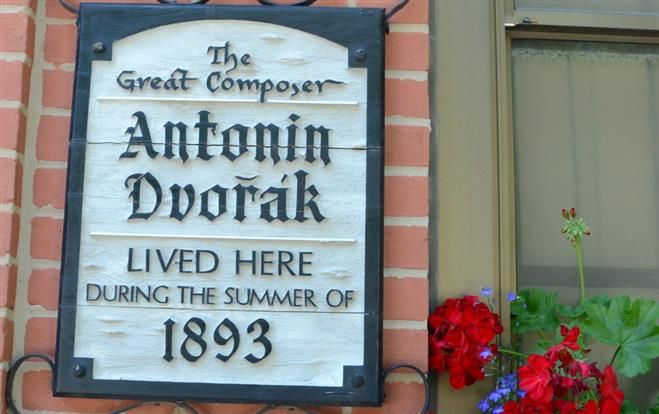
His secretary in New York was from Spillville, Iowa, a community full of Czech-speaking immigrants. After getting homesick, Dvořák decided to spend the summer of 1893 with the family of his secretary. During that summer in Iowa, he composed both the “American” String Quartet in F Major and the String Quintet in E-flat Major.
Explore Dvořák on the piano with these sheet music arrangements
It’s really fun to listen to Dvořák’s music, but it’s even more exciting to learn how to play it. Here at Hoffman Academy, we have arranged some of his music for different levels so that you can learn it at home and/or during lessons.
Elementary students can learn how to play the fourth movement from Dvořák’s New World Symphony.
We also have several excerpts arranged for intermediate level students.
Early advanced students would really enjoy learning this Mazurka in B-flat Major.
Advanced students have several fun options, including excerpts from the New World Symphony and several pieces composed for piano.
What was Dvořák’s life like outside of music?
As the son of a village innkeeper/butcher, Antonín Dvořák was a man who was known to prefer rural life to high society. Large gatherings made him anxious and he preferred daily walks in nature. He was an expert on bird calls, devoted to his family, very religious, and especially loved trains and pigeons.
What is Dvořák’s legacy? Why every music lover should explore the music of Antonin Dvořák
Antonín Dvořák is an incredibly important composer who made a lasting impact on both Czech and American culture and music. His music is not only important, but it also employs beautiful melodies, rich harmonic textures, and is a lot of fun to play. Now that you know more about this composer, I encourage you to listen and play his music on your own.