


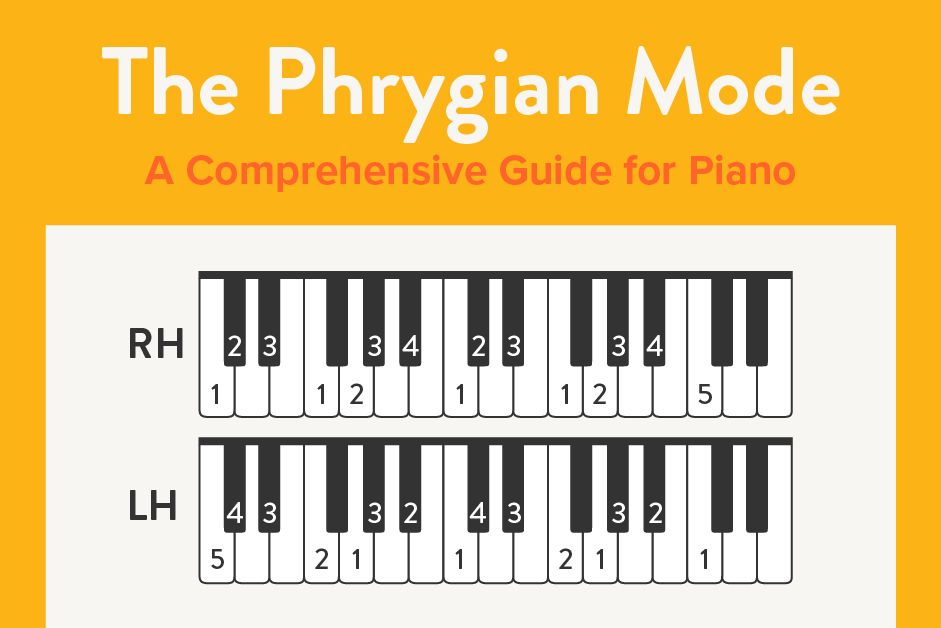
What makes the Phrygian mode?
The Phrygian mode is built using a minor scale and it includes a lowered second degree. On a piano, it can be created using all the white keys starting on E. Atmospheric and moody, Phrygian is similar to other minor modes. You can hear that strange lowered second degree in music in flamenco guitar, modal jazz choral music, and classical pieces.
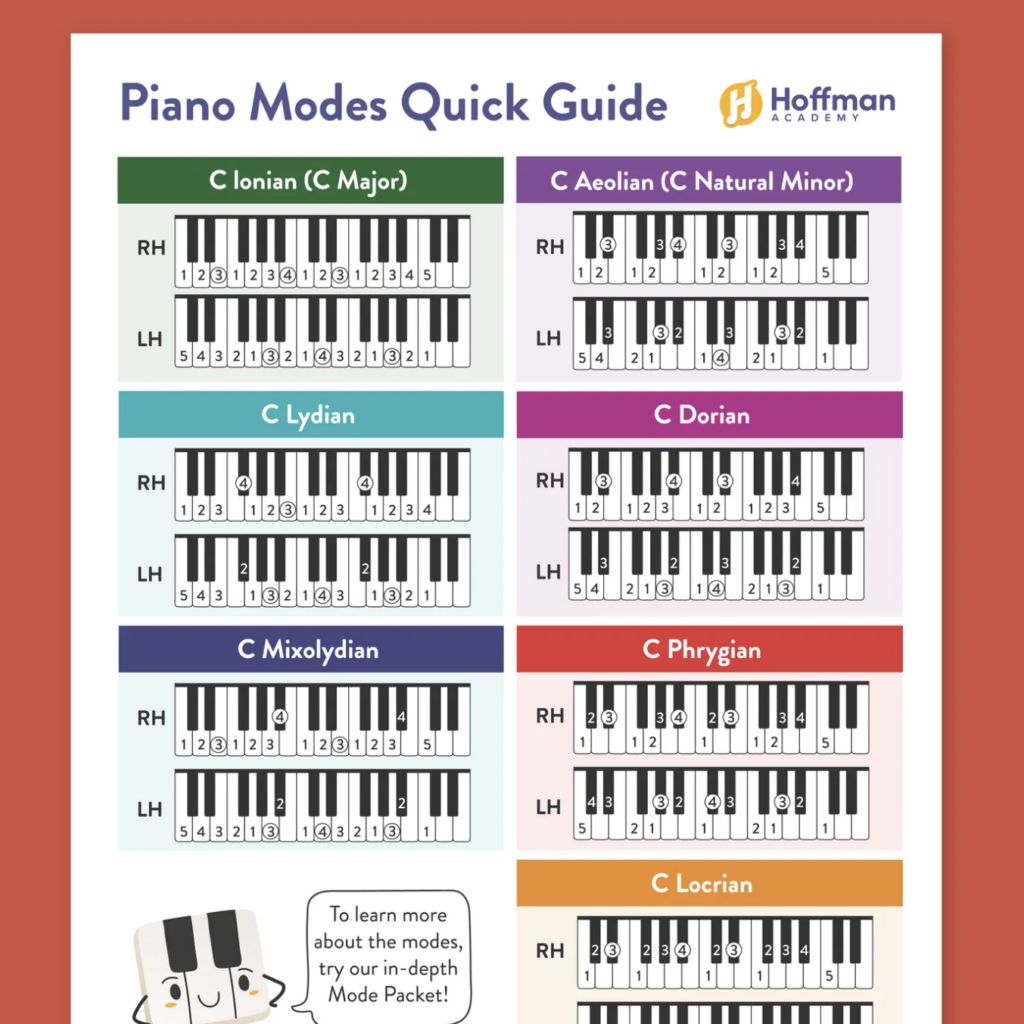
Ready to make more music with modes? You can create modes on every note with our free Piano Modes Reference Chart. This guide has all the modes on every starting note and includes two-octave finger numbers on keyboard layouts.
What is the feel of the Phrygian mode?
This mode feels similar to a natural minor scale, with the lowered second lending it an extra gravity and seriousness. Samuel Barber’s heartrending Adagio for Strings features Phrygian and its lowered second scale degree as a passing tone. The half-step between the tonic and the second degree creates a feeling of inward reflection. The scale doesn’t pull strongly forward or yearn the same way that Aeolian minor does. To me, it feels like a foggy, drizzly day, instead of a moonlit night.
How do you find the Phrygian mode?
This mode is related to the Aeolian mode, or the natural minor scale. To change a minor scale into Phrygian, lower the second degree. You can also find E Phrygian by playing all the white keys on the piano starting on E.
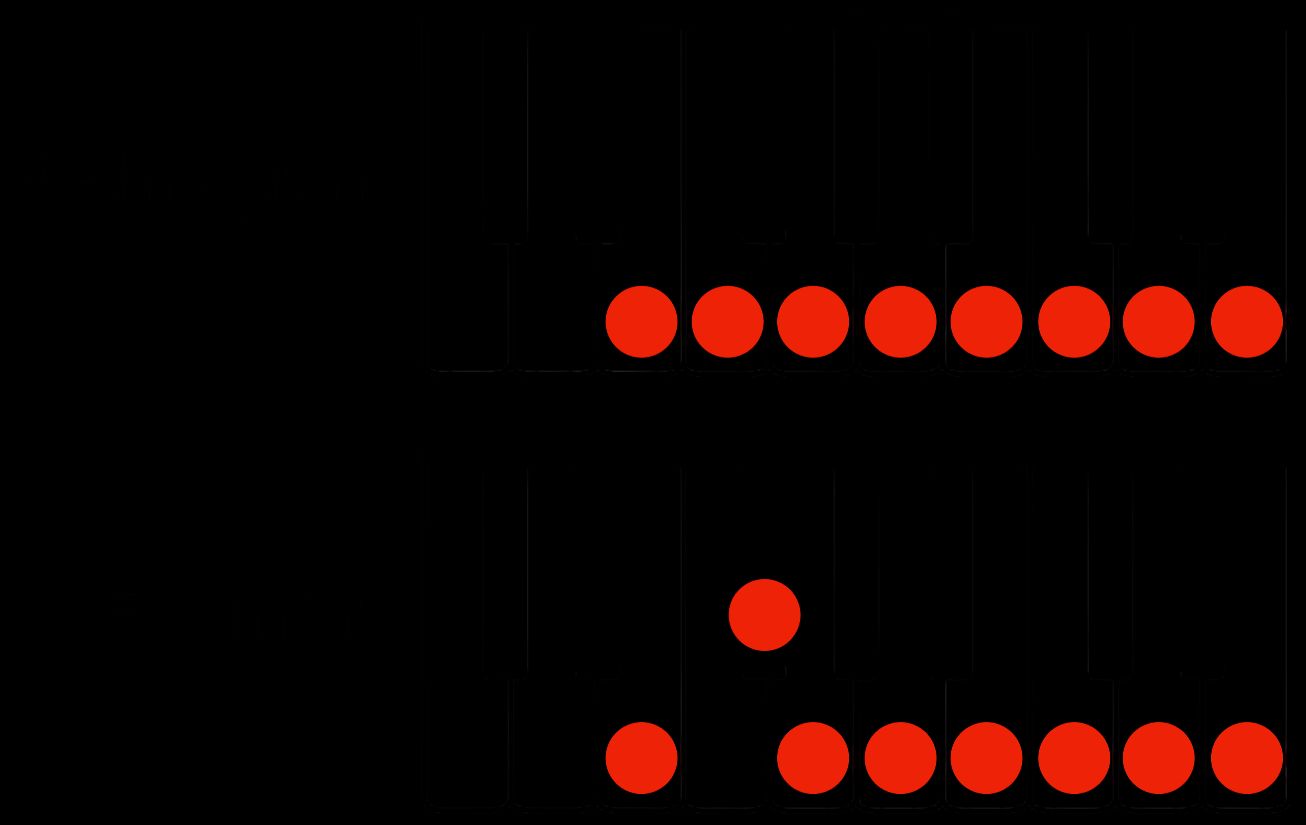
To learn how to make all the modes, use our Music Modes Chart Packet | Free PDF Reference Guide.
When do you use Phrygian in music?
In classical music, Phrygian creates atmospheric and otherworldly feelings. It is particularly common in Medieval and Renaissance choral music or Eastern European folk songs. You can also hear the Phrygian mode in flamenco dance music. From those flamenco roots, that lowered second degree crept into rock and metal guitar.
What is the formula for the Phrygian mode?
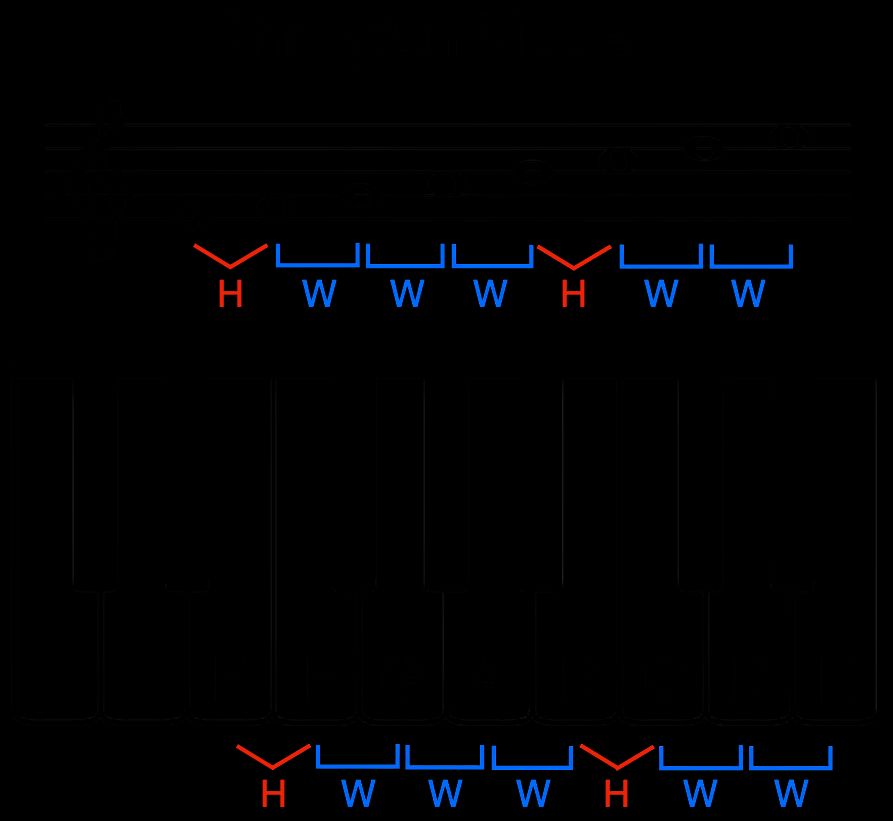
The modern Phrygian mode is built from the following scale degrees: a root, minor second, minor third, perfect fourth, perfect fifth, minor sixth, minor seventh, and octave. This produces the following pattern of whole and half steps characteristic of the mode: half, whole, whole, whole, half, whole, whole.
Examples of the Phrygian mode
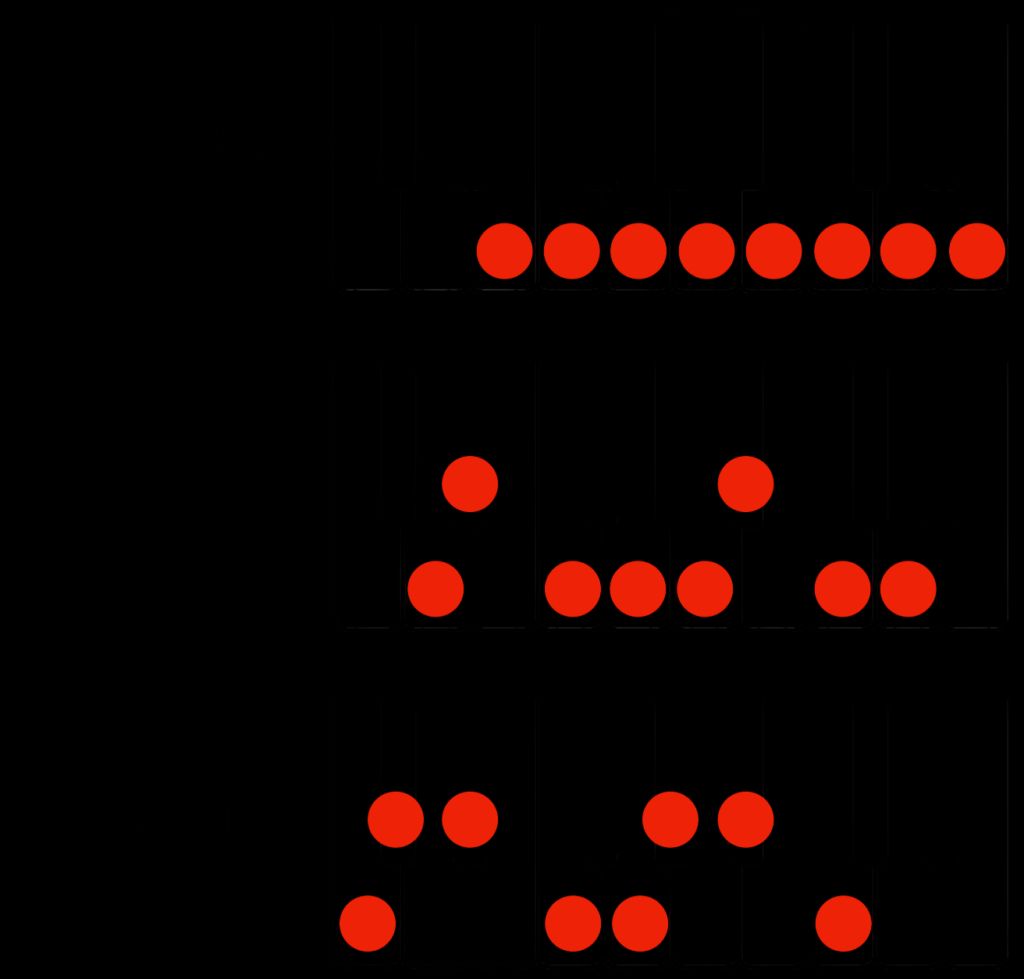
E Phrygian is the white-key version of this mode you can play easily on the piano. Using white keys, start on E. Then play F, G, A, B, C, D, and back around to E.
D Phrygian uses the notes D, Eb, F, G, A, Bb, C, and D
C Phrygian uses the notes C, Db, Eb, F, G, Ab, Bb, and C
Are there Phrygian mode chords?
Phrygian produces chords that reflect the unusual scale. One special chord, the flat major II chord, is a “Phrygian chord.” Built on the flatted second degree, it is also referred to as the “Neapolitan.” Jazz musicians often alternate between this ♭II and the minor i chord.
Pop, rock, and metal musicians often prefer to use more conventional chord progressions borrowed from the major or minor scale. This roots our ear in familiar tonal harmony, while the guitar player gets to explore riffs that lean into the lowered second scale degree.
Songs that use Phrygian
You’ll sometimes hear this mode in choral music from the Renaissance and Baroque. The lowered second degree lends the music tension compared to a natural minor scale. You can hear the distinctive pull of the lowered second degree in the opening bars of this Thomas Tallis canon Why Fum’th in Sight. And the Prelude in A minor, BuxWV 152, from Baroque composer Dieterich Buxtehude also showcases the Phrygian mode. Buxtehude himself called this “Phrygish” in his own handwriting.
Though not quite as common in rock music as Dorian or Mixolydian, you’ll hear some heavy rock and metal bands incorporate riffs using Phrygian. Listen to the guitar licks and notice if the melody creeps up just a half step from the tonic. That lowered second lends a degree of menace that makes the music feel a bit heavier than the more common minor scale.
What is the Phrygian dominant scale?
This scale is also known as the Spanish scale. It keeps the lowered second and raises the third degree of the scale. This creates a major third and produces a major chord. You’ll hear this scale sometimes in flamenco or guitar music. Pianists playing more advanced works may also encounter this in pieces by Alberto Ginastera as well as other composers who were influenced by flamenco music. Finally, modal jazz, developed in part by Miles Davis, uses the Phrygian dominant scale in his 1959 album “Kind of Blue.” You can it clearly in “Flamenco Sketches,” in addition to other modes as the basis for improvising.
What is a Phrygian half cadence?
This cadence is used to create tension in minor keys. In it, a piece resolves from a iv chord in first inversion to a root position dominant chord. The bass steps down by half step. That half-step motion echoes the motion in Phrygian from the lowered second scale degree to the root, which is where the cadence gets its name.
Tips for playing the Phrygian scale on piano
To play this mode on piano, start with the all-white-key E Phrygian scale. You can also build this scale from any minor key by lowering the second scale degree. Our free Piano Modes Reference Chart is another great resource for pianists looking to play all the modes on piano.
The Phrygian mode can lend your music a hint of spice. With its lowered second degree, you’ll hear it everywhere from flamenco music and modal jazz to choral pieces from the 16th century. Listen to the pop pieces and examples from those genres – you’ll develop your musical ear and gain an appreciation for the use of this interesting mode!