


What is the Dorian mode in music and why does it stand out? Here’s a closer look at how it works, how it sounds, and why so many musicians turn to it.
Let’s face it: sometimes in music, minor keys are just too gloomy. It can be refreshing to shine a ray of light on an otherwise grim soundscape. Listen to the chorus of Mad World by Tears for Fears:
Although this song is in a minor key, the second chord you hear is a major triad, which does a lot to lift the somber mood. The effect is achieved because this song makes use of the Dorian mode, a scale that differs slightly from the minor scale. Listen to them side by side. This time, the first phrase uses Dorian, but the second phrase uses the natural minor scale:
The difference is quite stark. Dorian mode brings a compelling juxtaposition of major and minor sounds into music, and in this article you’ll learn how to build this mode and when to use it.
You can find excellent information on Dorian and all the other modes in the Hoffman Academy Store! Try our free Piano Modes Quick Guide.
How can you tell if a song uses Dorian mode?
Let’s first look at how to construct this mode. Below are the notes of an A natural minor scale. You’ll notice that we only need to change one note of this scale to produce the Dorian mode. Simply raise the sixth note of the natural minor scale a half step–in this case, F to F-sharp–and we get the A Dorian mode:

This obviously changes the sequence of intervals in the scale. The natural minor scale has a very distinctive half step between the fifth and sixth notes, or SO and LE in solfège. This creates one of the most characteristically plaintive sounds in minor keys. But Dorian has a whole step between the fifth and sixth notes. The usual LE is raised to LA. This shifts the mode’s final half step to the sixth and seventh notes, LA and TE:

In other words, the order of whole and half steps in the Dorian mode is W-H-W-W-W-H-W, while a natural minor scale has the order W-H-W-W-H-W-W.
Here is a reduction of Mad World by Tears for Fears. The song is technically in the key of F minor, but you can see the raised sixth note of the scale at the arrows. The usual D-flat has been raised to D-natural:

It’s important to understand that, despite the similarities, Dorian is not simply a variant of the natural minor scale. Like all the other modes, it is a unique scale in its own right, giving rise to a distinctive set of harmonic possibilities.
Is D Dorian the same as C Major?
Nope! D Dorian and C major are relative scales, which means that they share exactly the same notes. Both scales use all seven white keys on the piano, but while the C major scale has its tonic, or “home” note, on C, D Dorian begins on D, and this changes everything. The entire sense of what key we’re in is called tonality, and it’s determined by the order of whole steps and half steps in relation to the tonic. If that order is changed, it creates a totally different grounding–a gravitational pull, if you will–for the tonic note. The C major scale has this grounding on C, while D Dorian is centered around D:

You can also think of Dorian as a major scale’s “second mode,” since it begins on the second note of a major scale. Any relative scale can be considered in this way. The natural minor scale, for example, is the sixth mode of its relative major scale, and so on.
Chords in Dorian Mode
Chords can be built on the notes of Dorian just as with major or minor scales. But because of its unique sequence of whole and half steps, this mode will produce diatonic chords that differ from those in a minor key. Here is a comparison:
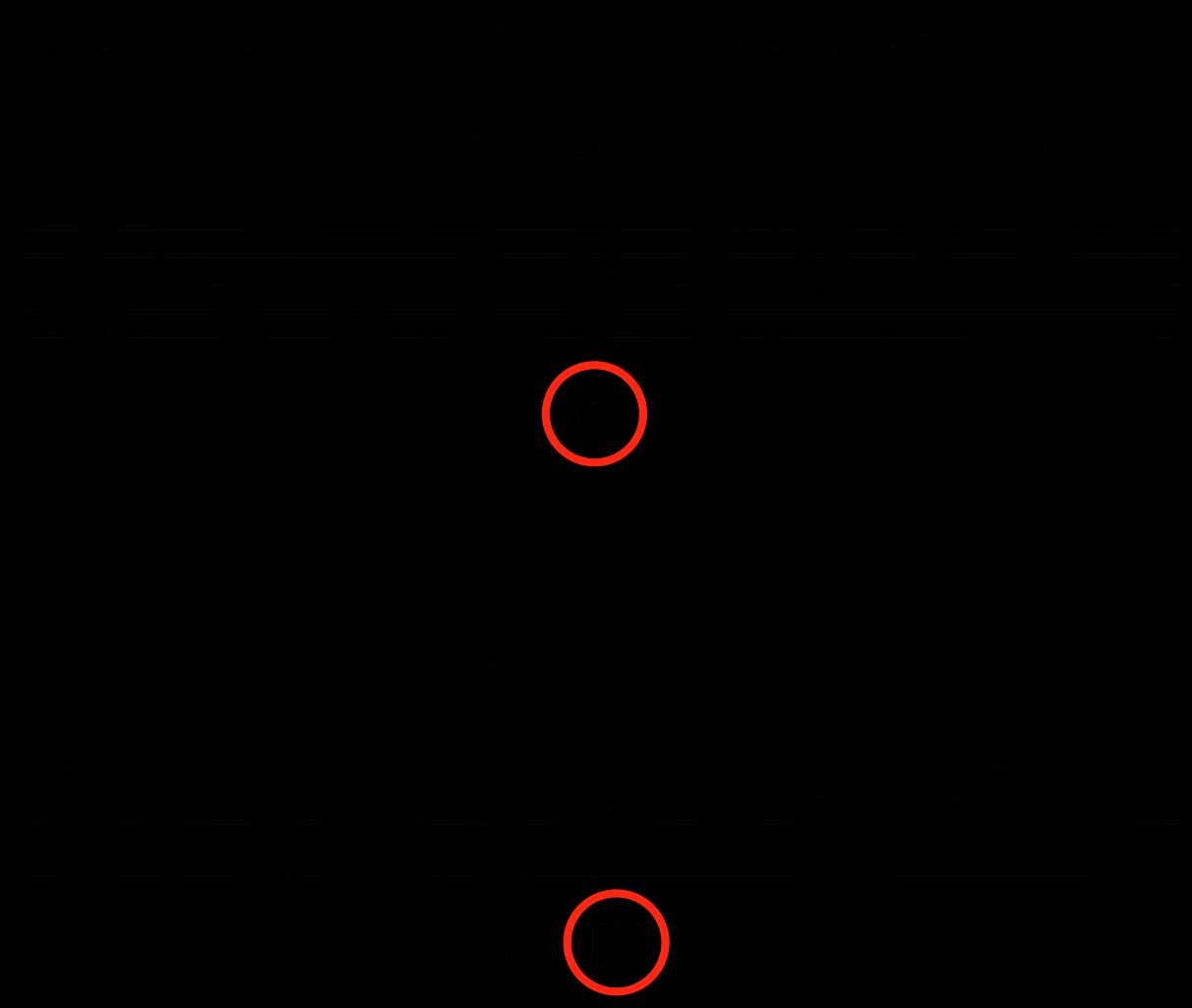
At top are the chords built on a D natural minor scale. The chords for D Dorian are below, and you can see the raised 6th degree of the scale, B-natural. Both scales give rise to the same number of major, minor, and diminished triads. The difference is where they occur. Dorian’s second and sixth notes produce completely different chords from the same scale degrees in minor. You’ll also notice the circled G minor iv chord using D minor, as opposed to the G major IV chord using Dorian. In both keys, that’s the chord that offers the most recognizable contrast.
What emotions does the Dorian mode elicit? When should this mode be used?
Now that you know the diatonic chords made available by the Dorian mode, we can explore why this mode offers a brighter array of colors than minor keys. The most drastic difference is in the plagal cadence: the IV chord moving to i. Both the minor scale and Dorian mode produce a minor tonic chord. But in minor keys the iv chord is also minor, while Dorian results in a major IV chord. Listen to the difference, first with a minor-key plagal cadence, then with the same cadence using Dorian:
In minor keys, the plagal cadence is dour and fatalistic, partly from that falling half step between LE and SOL, and also from hearing two minor chords in a row. But Dorian’s major IV chord is like opening the curtains on a dark room. The contrast between i and IV is far more dramatic, and creates a sense of optimism. It’s therefore best to use this mode when you want the melancholy of minor, but with a dash of hope mixed in.
Songs and pieces that use Dorian mode
The beautiful and compelling harmonies of Dorian have made it a favorite of composers and songsmiths for centuries. Enjoy these notable examples from 14th Century sacred music all the way up through modern jazz and film scores.
Late Medieval Period
Guillaume de Machaut, Notre Dame Mass, Kyrie
From the Fourteenth Century, this is the first complete Latin mass known to have been written by a single composer. Start at the beginning. The soprano’s first notes are SO and LA in solfège, the most distinctive tones in the Dorian mode.
Early Renaissance
Guillaume Dufay, Motet, Ecclesiae militantis
Fifteenth-Century motets like this one were based on Gregorian Chant melodies. A few seconds in, you’ll hear the major IV chord of the Dorian mode.
Folk
What Shall We Do with the Drunken Sailor
This traditional sea chantey reveals that it’s in Dorian on the third iteration of “drunken sailor.” Listen again for that raised 6th note of an otherwise natural minor scale.
Scarborough Fair (late elementary version)
Scarborough Fair (intermediate version)
Try these two versions of this famous English folk ballad in our Hoffman Academy store. This song is perhaps best known today from Simon and Garfunkel’s rendition in 1968. You’ll hear the raised 6th at the word “rosemary.”
Late Romantic Era
Béla Bartók, Romanian Folk Dance No. 2
This sheet music is available in the Hoffman Academy store. Listen to the audio sample. This short piece is in the key of D Dorian, and right away you can hear the raised 6th, B-natural, in the melody. You’ll also hear the chord progression D minor to G major, the minor i to major IV progression so typical of the Dorian mode.
Jean Sibelius, Symphony No. 6, 3rd movement
The flutes play a jaunty melody using the A Dorian mode.
Pop
The melody features TE – LA – SO, emphasizing the raised 6th note of the Dorian mode. Here’s what the melody would sound like had the Beatles decided to write this song in an ordinary minor key:
This is the same music heard at the beginning of the article.
Jazz and Jazz Fusion
Miles Davis, So What from Kind of Blue
The acoustic bass melody uses D Dorian, with the raised 6th, B-natural, at the red arrows. Also, the piano chords showcase the characteristic fall from LA to SO.
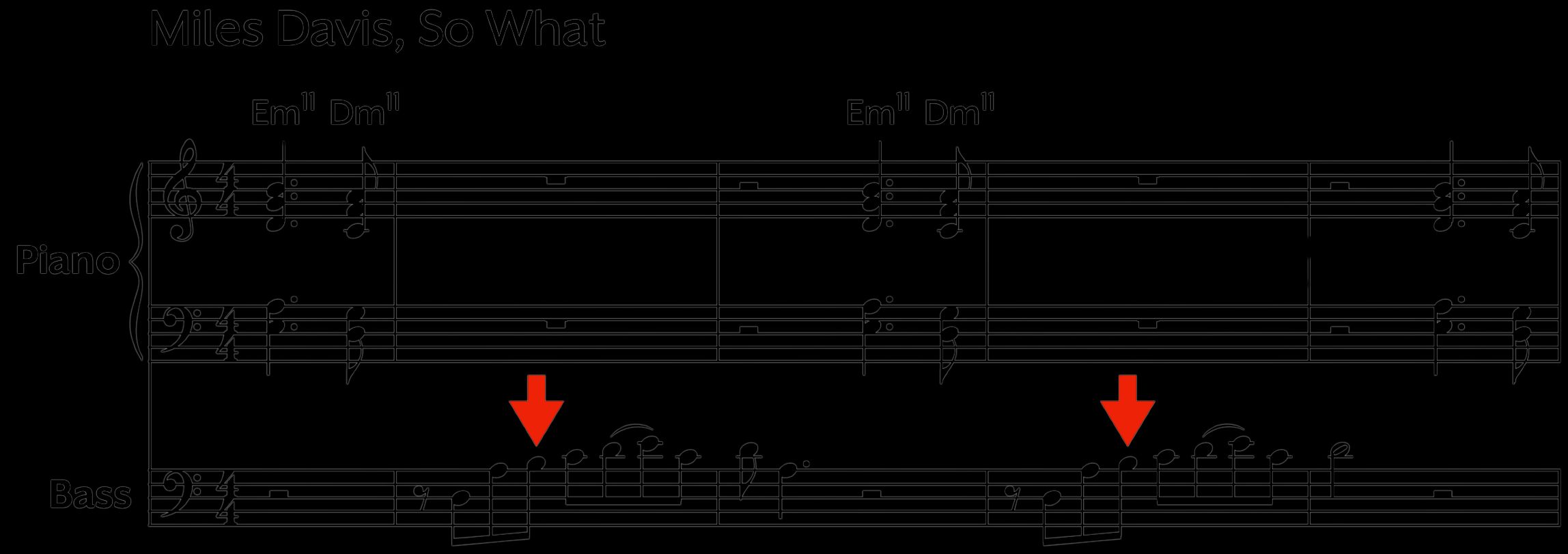
There are only two chords: a B-flat minor 7th and an E-flat 7, but these represent the minor i and major IV chords built on a B-flat Dorian mode. You’ll also hear the raised 6th of the B-flat Dorian, G natural, in the melody.
Film
Howard Shore, The Lighting of the Beacons from The Return of the King
One of the more splendid Dorian i – IV progressions you’re likely to hear!
Video Games
Koji Kondo, Song of Storms from The Legend of Zelda
The chord progression is i – ii – III – ii, and you can once again hear the raised 6th note of the Dorian mode. The ii chord is minor here, while in an ordinary minor key it would be a diminished triad.
Martin O’Donnell and Michael Salvatori, Halo Theme
Begin listening at 0:13. The melody is highly reminiscent of Gregorian Chant.
Piano playing tips
The easiest Dorian mode is D Dorian, which uses all the white keys on the piano from D to D:

The characteristic LA-TE half step is between B and C, and this does not alter the fingering from a D minor scale. In fact, the fingering for all Dorian modes that begin on white keys, the fingering is the same as for their corresponding minor scales. In other words, you can use identical fingering for E natural minor and E Dorian, F natural minor and F Dorian, and so on. However, for Dorian modes that begin on black keys, the fingering often has to be modified slightly.
For a detailed guide on how to play all modes, try our free Modes Packet in the Hoffman Academy Store!
Keep listening, learning, and playing with the Dorian mode in mind
Now that you have some familiarity with this mode, you may be surprised to hear how common it is in many different genres. Listen for songs and pieces in which the minor-key desolation is pierced by the sudden flourish of a major IV chord. Even better, if you can already play a song in a minor key, try raising the 6th note of the scale a half step and see how it sounds. Heathens by Twenty-One Pilots would certainly be transformed by a little touch of Dorian: