





What is a cadence in music?
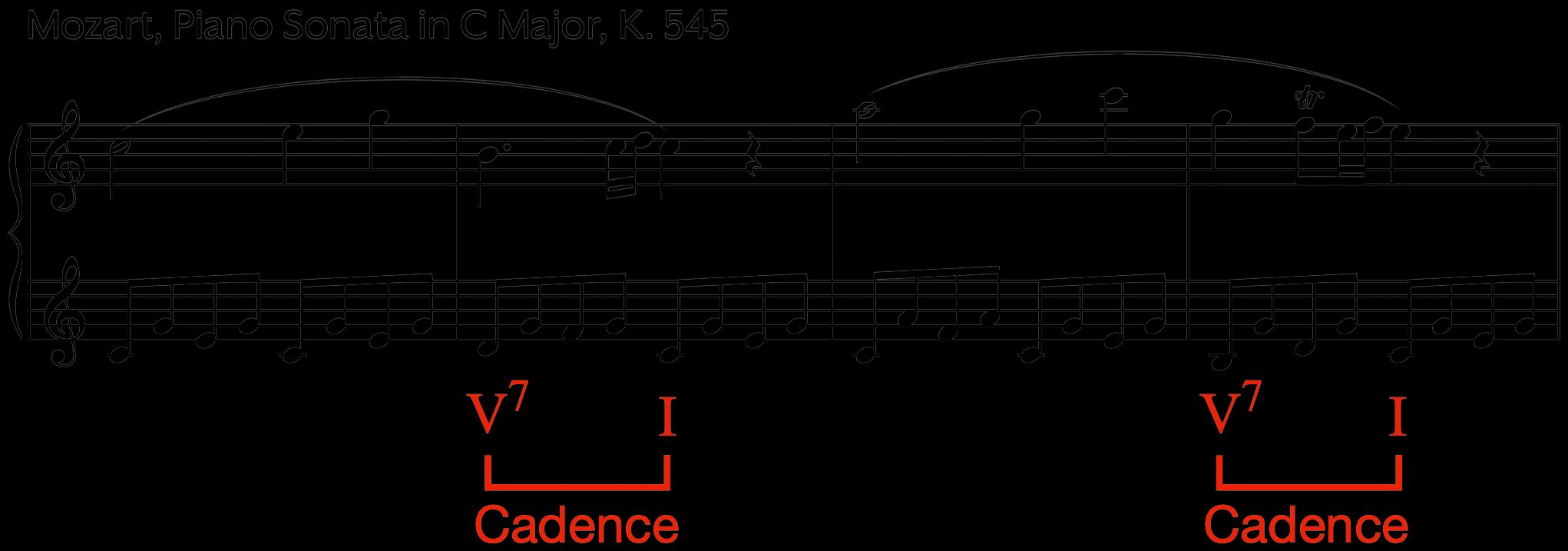
If language had no punctuation, our speech would be a formless stream of words and ideas, vague and easily misunderstood. Punctuation organizes our ideas into sentences and brings each to a logical finish. Music operates in much the same way. A melody is made up of separate phrases, which can be understood as musical sentences. As each phrase ends, rhythm and harmony work together to create a sense of resolution. This musical punctuation is called cadence, and it’s as important in music as a period is at the end of a sentence:
What are the types of cadences in music?
Authentic Cadence
Cadence is most often achieved through harmony. Certain successions of chords bring a sense of finality to the ends of phrases. The strongest and most convincing chord progression is V to I (or V7 to I), known as the authentic cadence. The Mozart C Major Piano Sonata you saw above contained two melodic phrases, each with an authentic cadence at the end. However, some authentic cadences are stronger than others, and so are distinguished as perfect or imperfect.
Perfect Authentic Cadence
In this cadence, both the V and I chords will be in root position, and the highest voice, or soprano, ends on scale degree 1. In the excerpt of Scott Joplin’s Maple Leaf Rag below, the key is A-flat major. At the cadence, the V7 and I chords are both in root position, which means their root notes are in the bass. This bass jump from SO to DO creates a very resolute authentic cadence. In addition, the melody ends on DO (scale degree 1, A-flat). When these two conditions are met, the authentic cadence is as strong and convincing as possible:
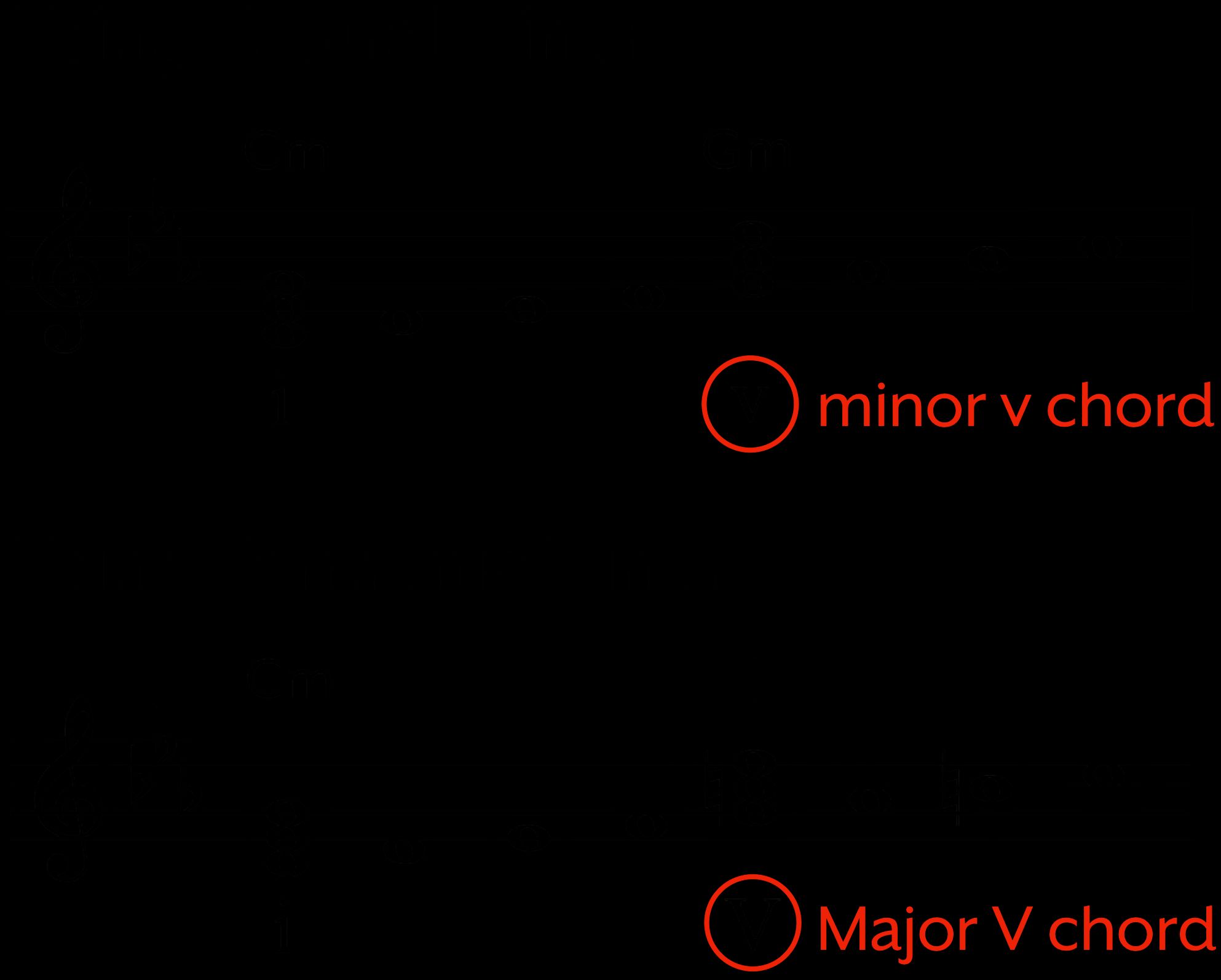
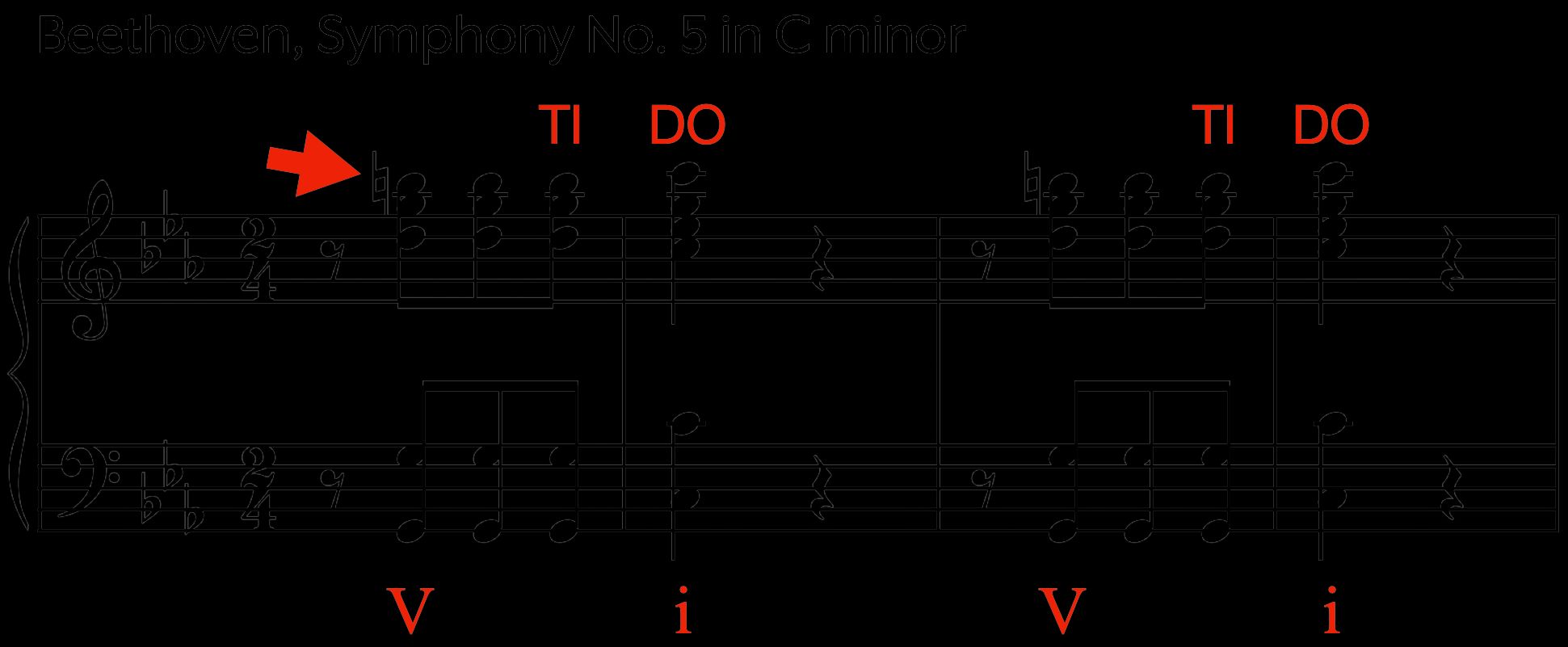
The same rules apply in minor keys, but one more step is needed. The natural minor scale produces a minor v triad, which has a far weaker tendency toward the tonic. For this reason, the harmonic minor version of the scale is used. By raising the seventh note of the scale a half step, the v chord becomes a major triad, which now creates an authentic cadence when followed by the i chord:
In Beethoven’s Symphony No. 5, the harmonic minor version of C minor is used. The red arrow shows the seventh note raised from B-flat to B-natural, giving us a G major triad for the V chord. Now we have an authentic cadence. Both the V and i chords are in root position, and the soprano (the highest voice) ends on DO, so this authentic cadence is also perfect:
Imperfect Authentic Cadence
Even with the strong V–I progression, some authentic cadences provide weaker endings to a phrase. These are called imperfect, and there are three situations in which they occur.
Root position chords, soprano doesn’t end on DO
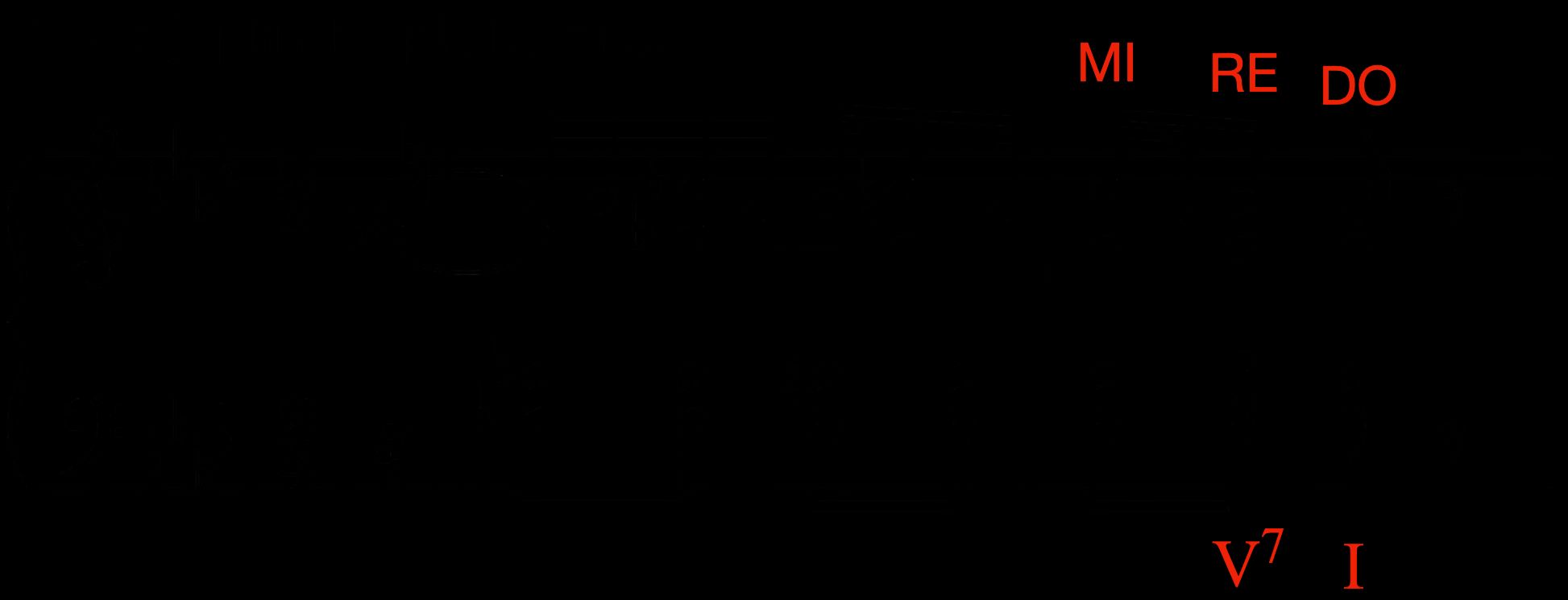
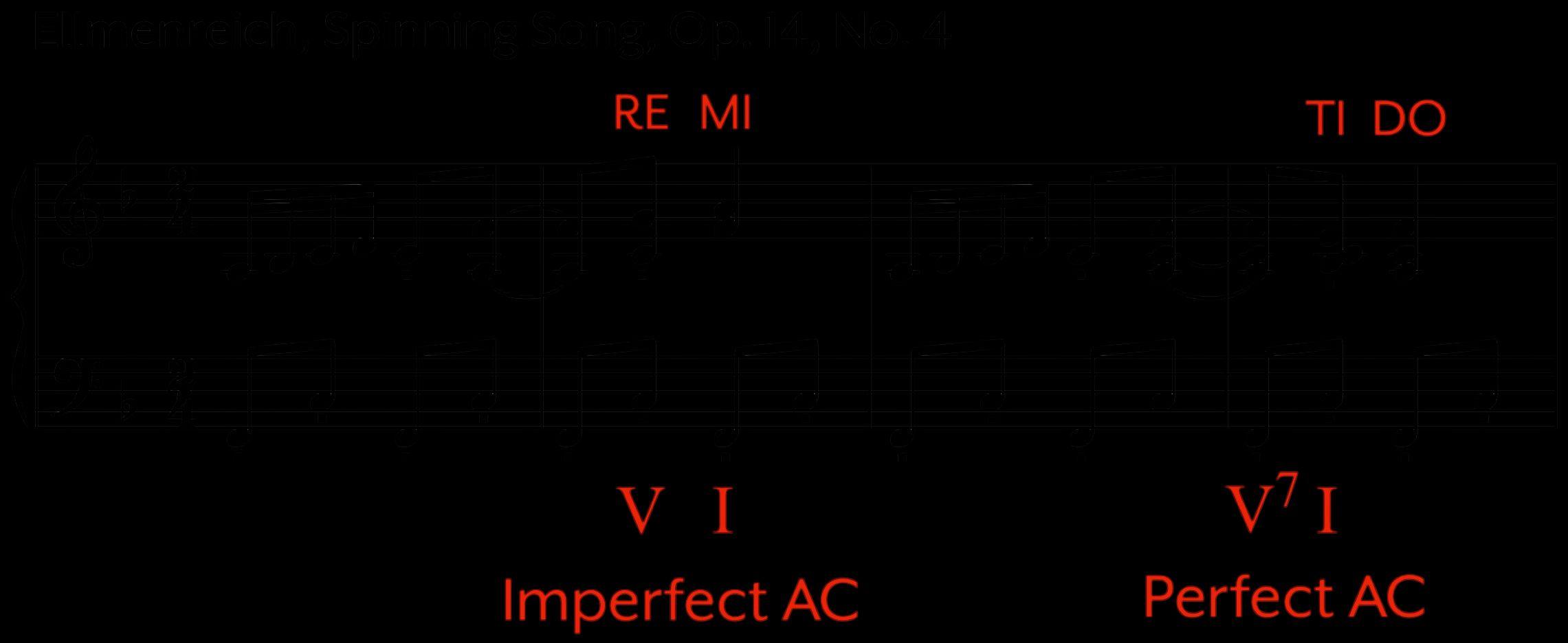
Both the V and I chords are in root position, but the soprano voice does not end on scale degree 1, or DO. Ellmenreich’s Spinning Song clearly shows the difference between this kind of imperfect authentic cadence and a perfect one. The first has the soprano end on MI, while the second offers the more resolute finish on DO:
You can learn this piece with Mr. Hoffman in our unit 16 tutorial video!
One or more chords not in root position
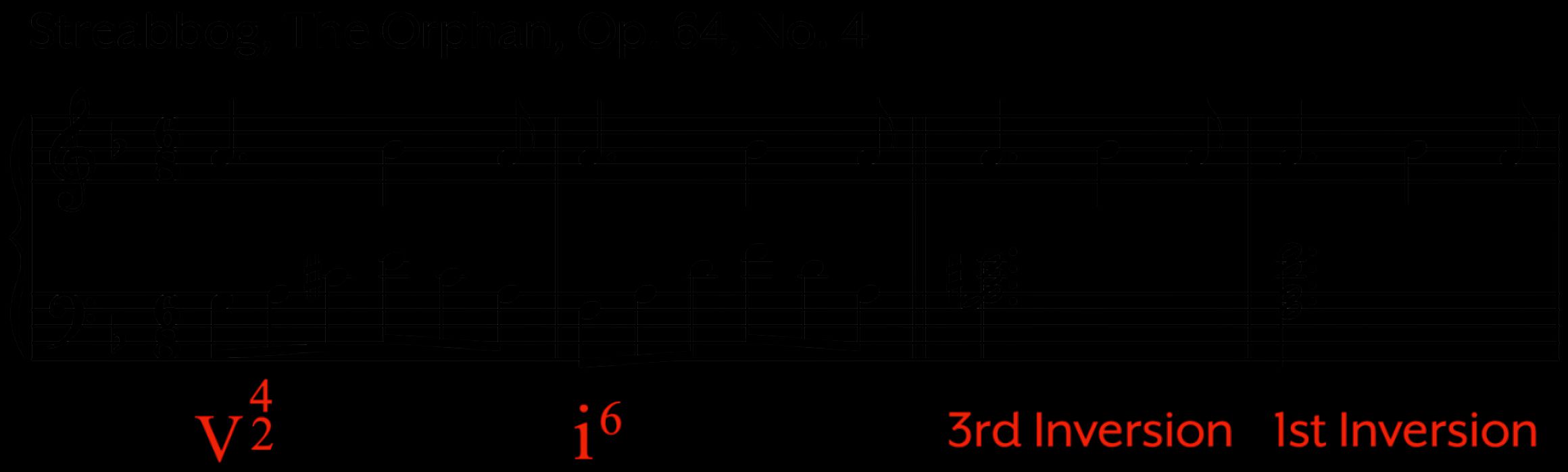
Weaker still is an authentic cadence in which one or both chords appear inverted. In Streabbog’s The Orphan, the V7 chord is in third inversion (V 4/2), which resolves to the i chord in first inversion (i6). While this is certainly an authentic cadence, it’s far less convincing than if both chords were in root position:
Substituting the V chord with the leading tone diminished
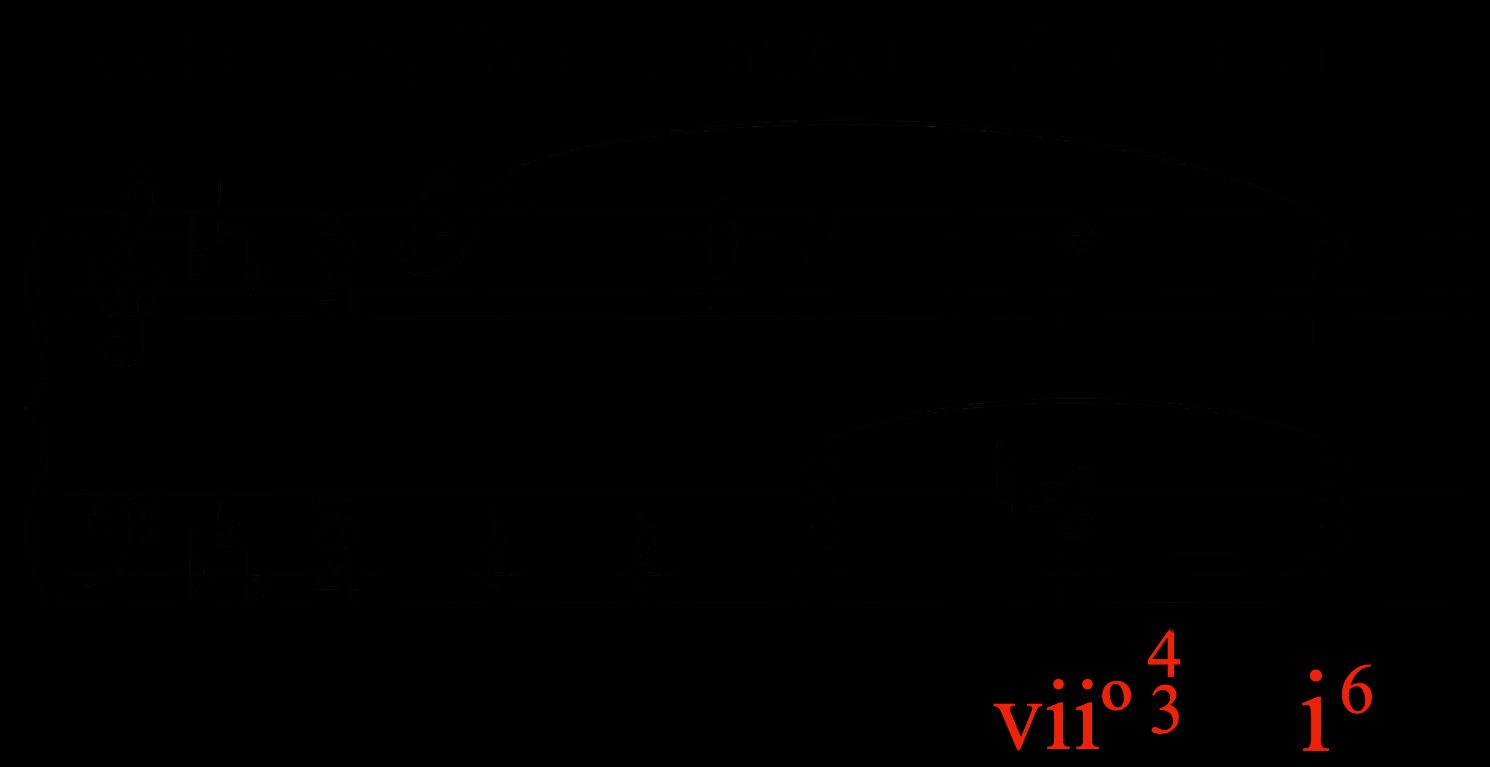
In classical music, the vii diminished chord often replaces the V or V7 chord in an authentic cadence. This offers a subtle, somewhat more temporary way back to I. In minor keys, a seventh is often added to the vii chord, creating a more anguished approach to the tonic. Beethoven’s Piano Sonata No. 5, Op. 10, No. 1 shows a vii diminished 7th chord in second inversion resolving to the tonic in first inversion. It’s an authentic cadence, to be sure, but a very tentative one:
Half Cadence
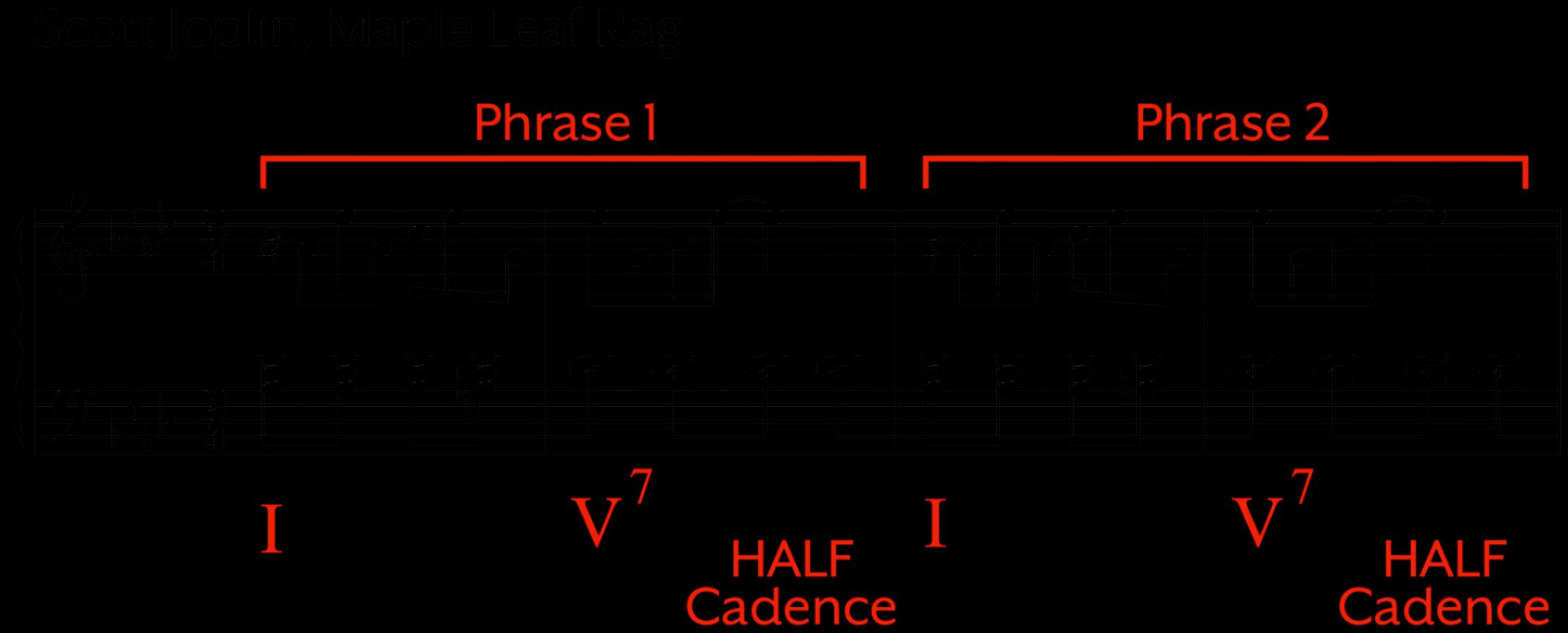
Often a phrase will end not on the I chord, but on V. This is called a half cadence, and it makes a phrase sound unresolved, like a question. In this reduction of Maple Leaf Rag, the first half cadence leaves it to the next phrase to return to I, making the second phrase sound like an answer to the first:
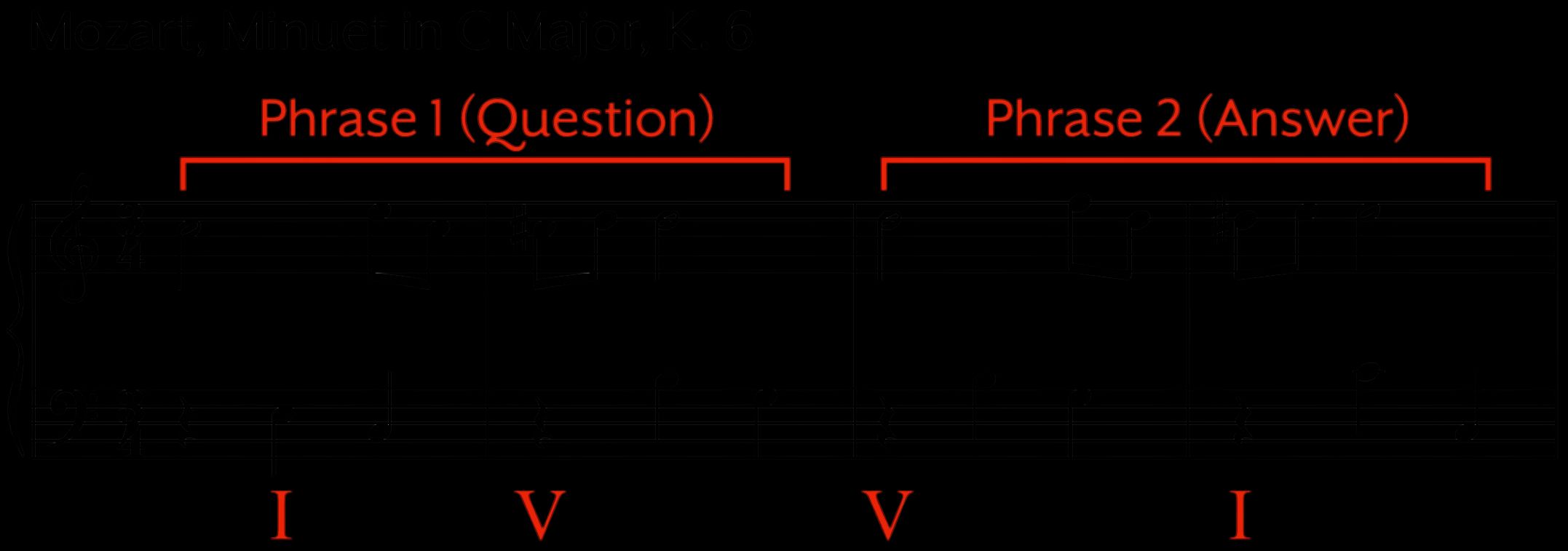
This question-and-answer effect is even more pronounced when a half cadence is followed by a phrase that begins on V and ends on I. The two phrases in this example are also known as antecedent and consequent phrases:
Phrygian Half Cadence
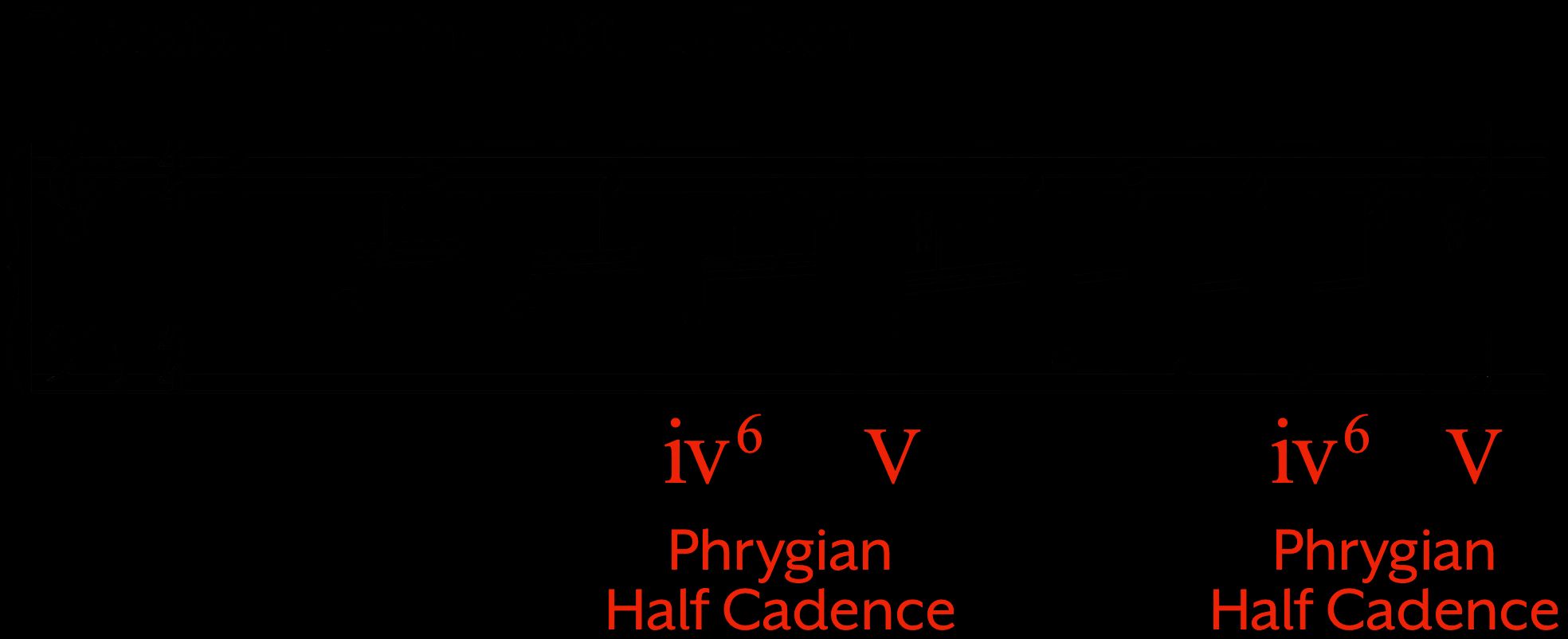
In minor keys, a special type of half cadence is created when the V chord that ends the phrase is approached by a first-inversion iv chord, or iv6. This Phrygian half cadence consists of iv6 to V, and the half step drop in the bass line is reminiscent of the Phrygian mode’s first two notes. The Toccata in D minor is one of the most famous examples of this cadence:
Plagal Cadence
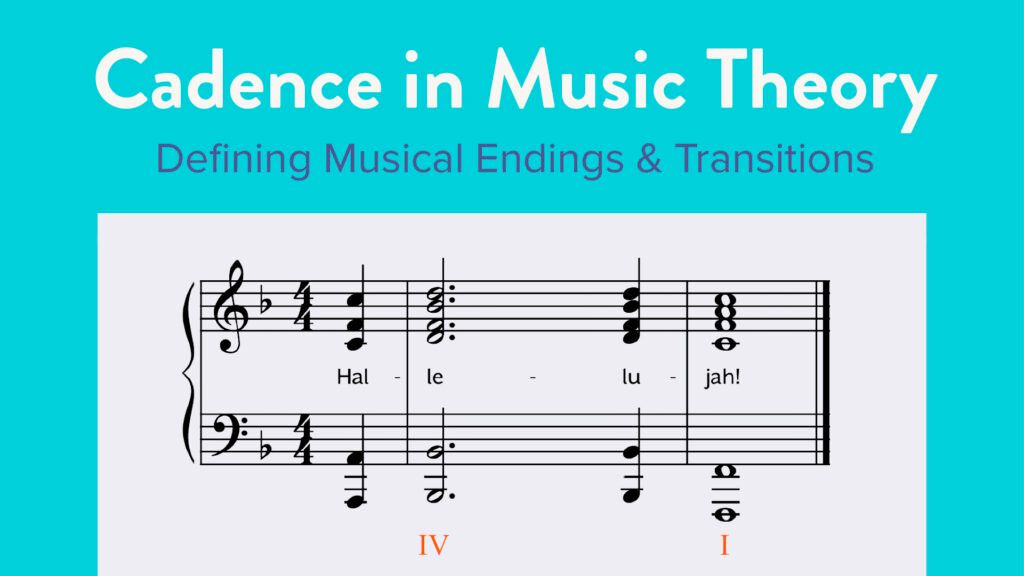
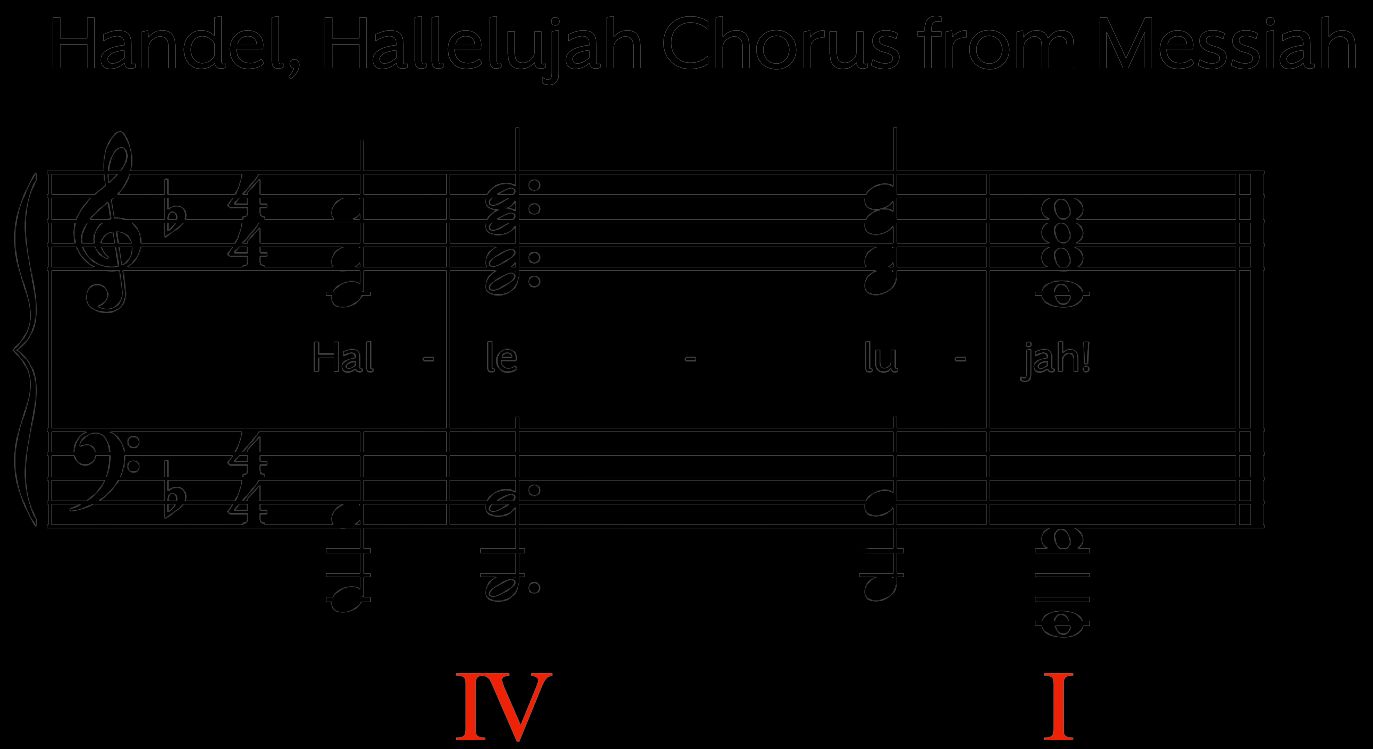
The I chord can easily be approached by IV instead of V. The IV to I progression is called the plagal cadence, and is a common fixture of church music. One of the most spectacular plagal cadences ends the Hallelujah Chorus by George Frederick Handel:
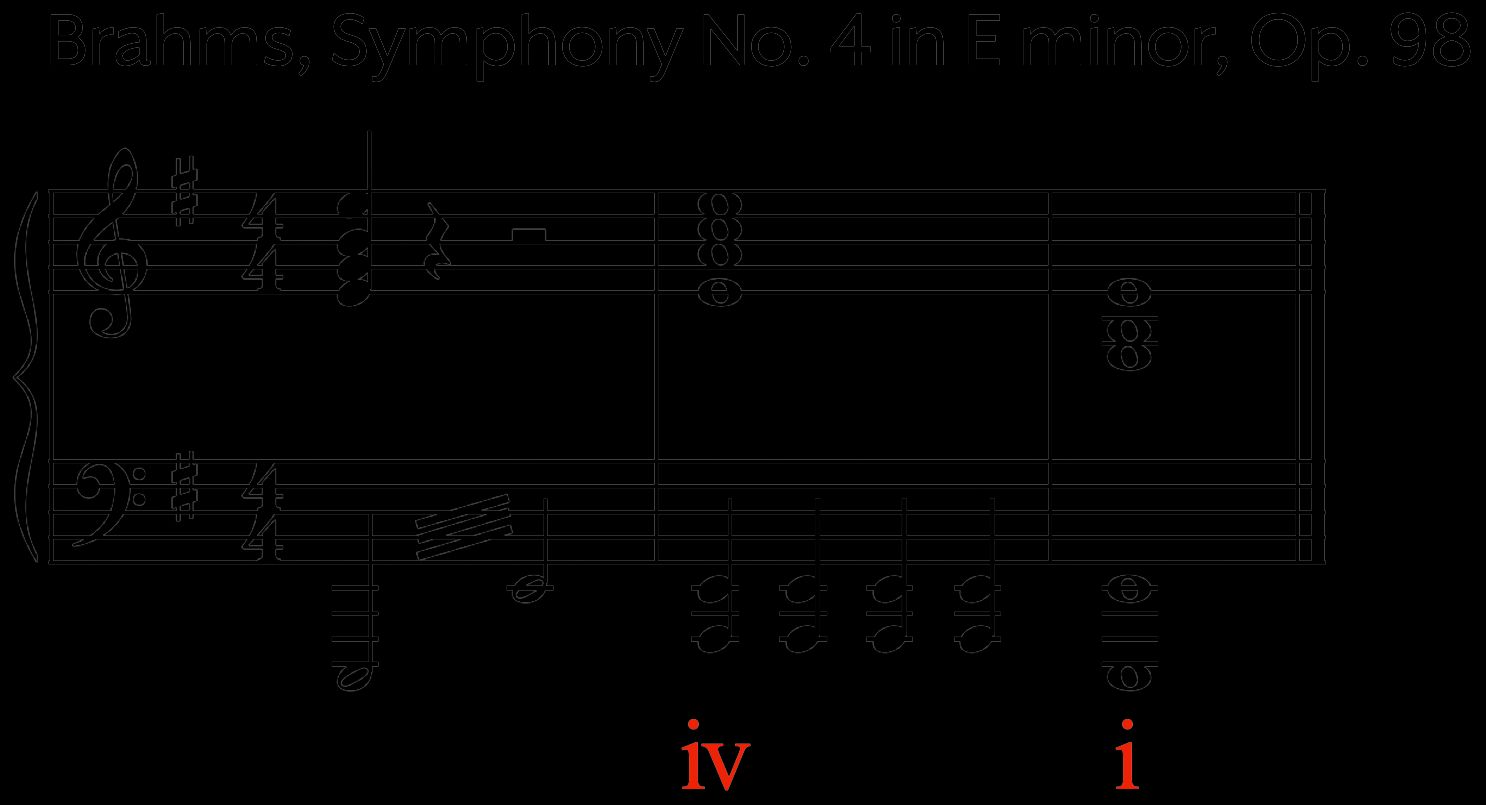
This cadence works equally well in minor keys, and can be all the more dramatic. The first movement of Brahms’s Symphony No. 4 in E minor thunders to a fatalistic close on a plagal cadence:
You’ll find an advanced-level arrangement of this piece in the Hoffman Academy Store!
Deceptive Cadence
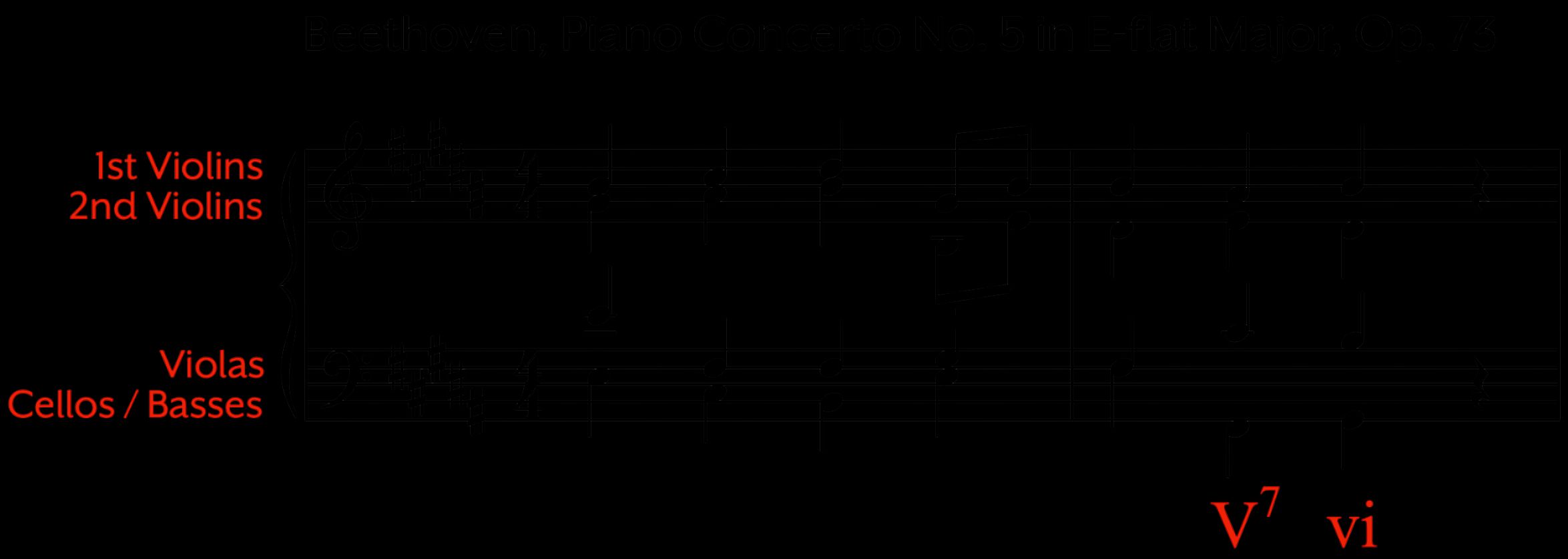
Sometimes V resolves to a chord other than the tonic. The expected authentic cadence (V to I) is skirted in favor of another chord, and this is called a deceptive cadence. The most common example is when the V chord resolves to vi, as in the second movement of Beethoven’s “Emperor” Piano Concerto:
What is the most common cadence in music?
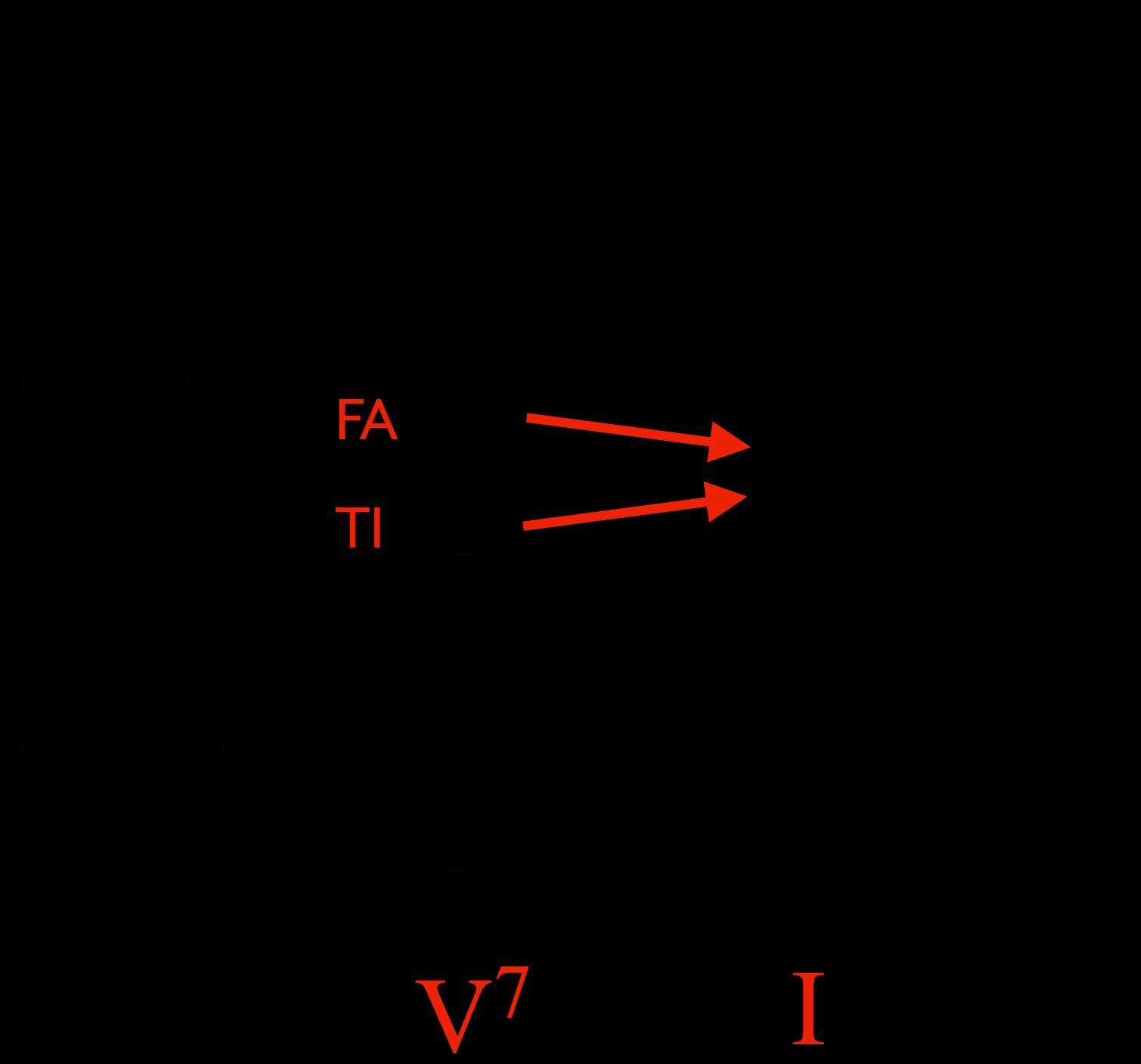
The authentic cadence is by far the most often heard in music. Centuries of harmonic development in Europe, from the High Middle Ages through the Renaissance, have culminated in the strong, resolute V – I cadence that is still in use today. In particular, the V7 chord has two tendency tones, FA and TI (scale degrees 4 and 7), whose unstable quality drives the music inexorably back to the I chord:
Examples of cadences
Authentic Cadence in music
We Are the Champions by Freddy Mercury
You’ll hear IV – V – I after “my friends.”
The Entertainer by Scott Joplin
This is a perfect authentic cadence, with the melody ending on DO.
Symphony No. 40 in G minor by Mozart
This is a string of perfect authentic cadences over and over.
The first authentic cadence is imperfect, as the melody ends on MI rather than DO, but it’s followed immediately by a perfect cadence.
Half Cadence in music
My Bonnie Lies Over the Sea
The second phrase, ending on “sea”, is a half cadence.
Piano Sonata No. 8, Op. 13, 2nd movement by Beethoven
The long phrase that opens this movement actually has two weak authentic cadences before the half cadence on V.
Pineapple Rag by Scott Joplin
The long phrase ends on V, making it sound incomplete.
The first phrase has a deceptive cadence on the word “room,” but the second phrase ends with a half cadence on V.
Plagal Cadence in music
Symphony No. 3, Op. 90, 2nd movement by Johannes Brahms
The first IV chord returns directly to I, making a plagal cadence. This contrasts with the next IV chord, which instead goes to V.
Lachrimosa from the Requiem, K. 626 by W.A. Mozart
This is one of the grandest “amens” in classical music, with an extended IV chord resolving at last to I.
Sweet Home Alabama by Lynyrd Skynyrd
The chord progression is I – bVII – IV, with the IV chord returning to I each time.
Deceptive Cadence in music
The Star Spangled Banner by John Stafford Smith and Francis Scott Key
The American National Anthem begins with a deceptive cadence, going from V to vi, and follows it up with a half cadence on V.
Every Breath You Take by The Police
The chord progression here is IV – V – vi, with the deceptive cadence occurring after “I’ll be watching you.”
Symphony No. 9 in D minor, Op. 125 by Beethoven
This passage is in the key of B-flat major. The progression is IV – I – IV – I – V (Eb – Bb – Eb – Bb – F), but rather than returning to the expected tonic, the F chord moves to D-flat major, the flat major VI chord, for a very dramatic deceptive cadence.
Do cadences have to be chords?
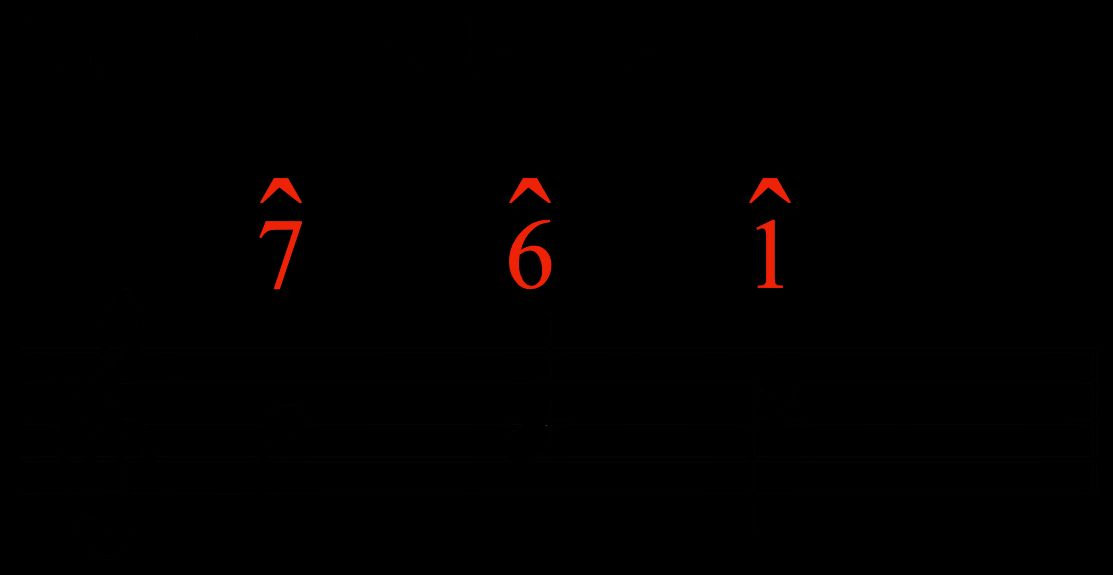
Although cadences are most often the result of chord progressions, they can also be achieved through melodic or rhythmic motion. In the 14th and 15th Centuries, European composers like Landini, Machaut, and Dufay often used a melodic device at the ends of phrases to effect a cadence. The most famous was the Landini Cadence, in which a voice ended a phrase with the solfege TI – LA – DO, or scale degrees 7 – 6 – 1:
The Landini Cadence could function without any support from the harmony. You can hear plenty of them in early Renaissance songs such as De plus en plus, a 15th Century French chanson by Gilles Binchois.
Rhythm can also be used to create cadences in music. A sudden change in rhythmic pattern can bring about a sense of cadence, as in the famous bugle call Reveille:

The same quarter-and-eighth note pattern is heard three times, but then is interrupted by a new rhythm in the final measure. This brings a sense of closure to the melody, and is yet another way to create cadence without harmony.
Are there rules for cadences?
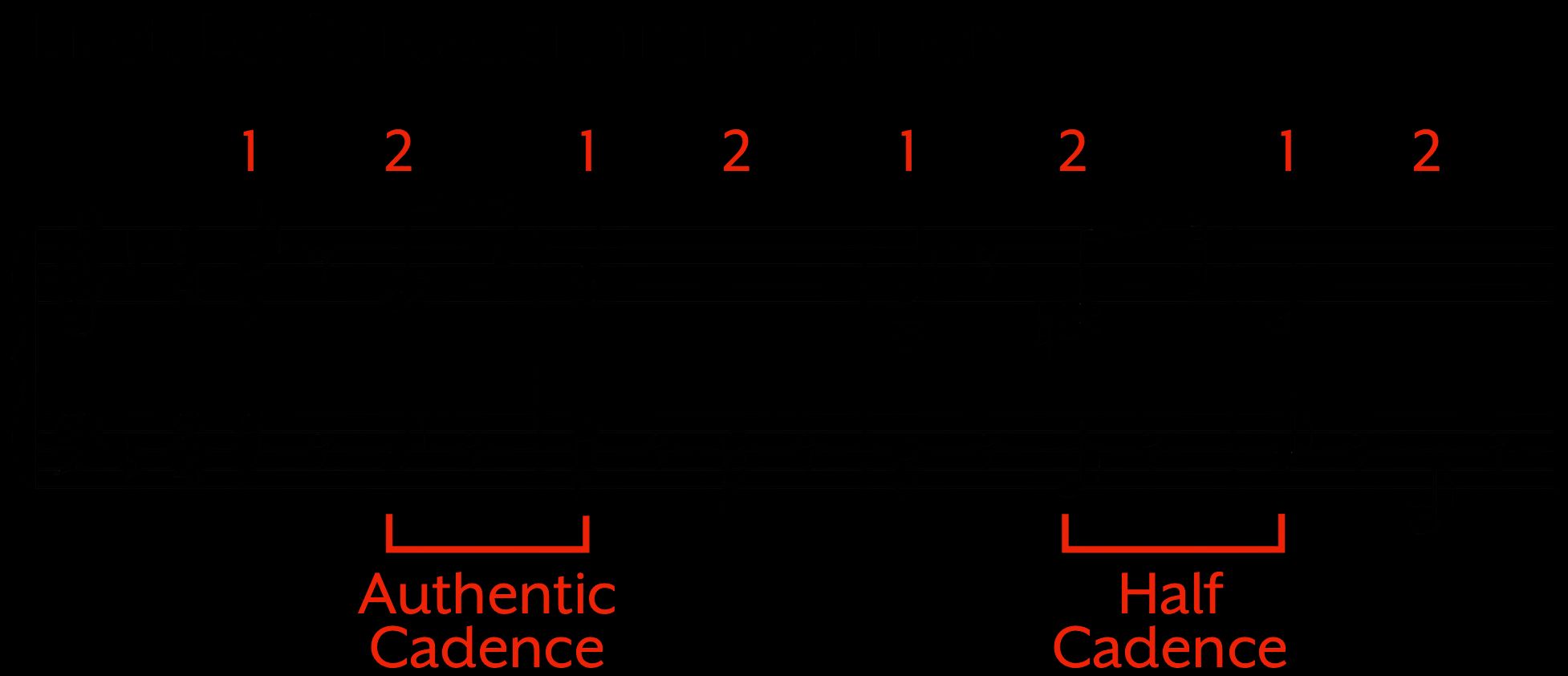
While cadences can occur on any beat in a measure, they are most effective when landing on a strong beat. This reinforces the established meter and actually heightens the cadence’s sense of resolution. In the Toreador Song from Bizet’s Carmen, both the authentic cadence in measure 2 and the half cadence in measure 4 land on the downbeat, leaving us in no doubt of the piece’s two-beat march feel:
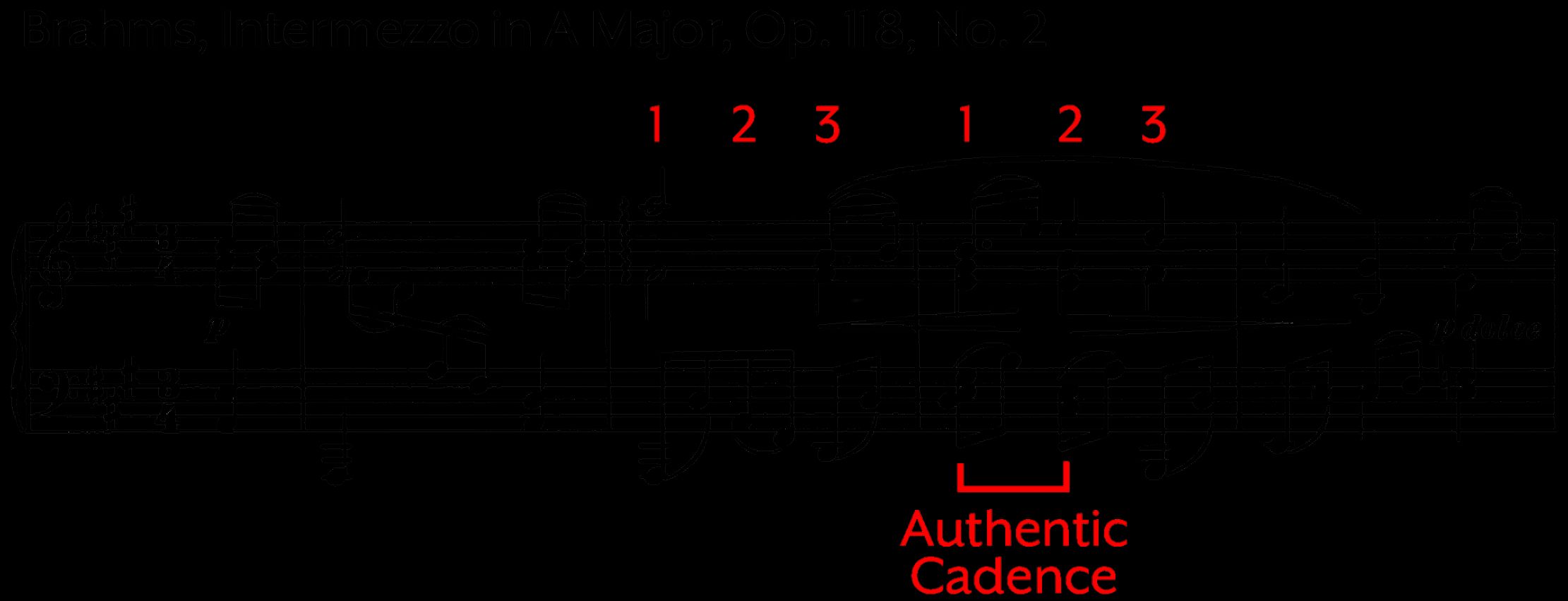
Occasionally, however, composers enjoy disorienting our sense of meter, and deliberately place cadences on weak beats. The Intermezzo in A Major, Op. 118, No. 2 shows Johannes Brahms at his most devious, placing an authentic cadence on the second beat in 3/4 time. This destabilizes our sense of the downbeat and creates the effect of changing meter:
Cadence in music: Bringing it all to a perfect close
Listen to as many different genres of music as possible, and hear how cadences work to organize phrases and create structure. If you’re still not sure about the powerful closure that cadences bring to music, let the introduction to Richard Strauss’s tone poem Also Sprach Zarathustra convince you.