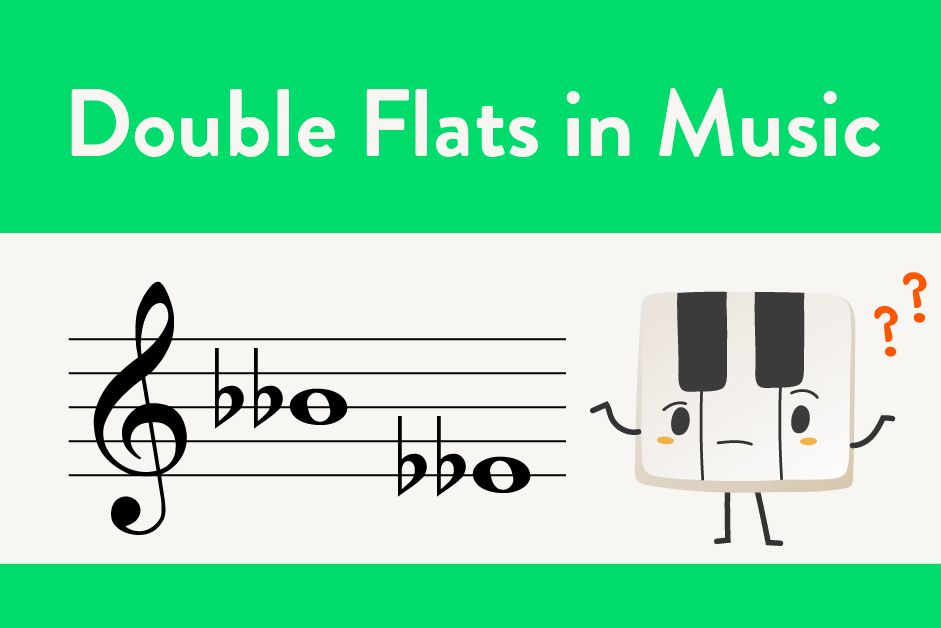
What does a double flat mean and how does it change a note?
Pop quiz: what piano key is this?
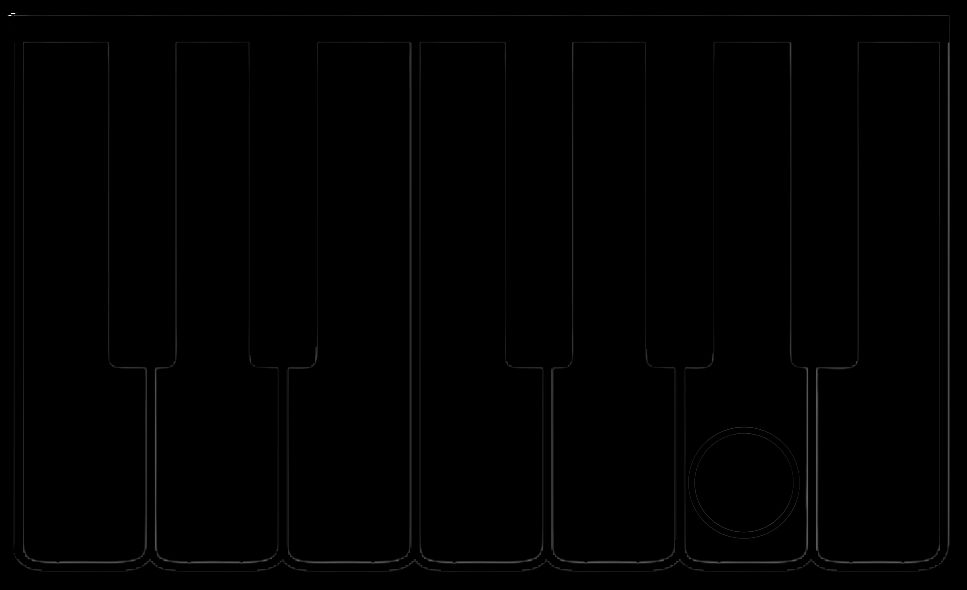
If you said “A,” you’d be right ninety-five percent of the time! But there are moments when, according to the dictates of music notation, this very same white key has to be called B double flat. Like double sharps, double flats are accidentals that, while less common than ordinary sharps or flats, are sometimes called for. They lower a pitch by two half steps, or one whole step. Lower the white key B on the piano by a half step to B flat, then lower it another half step to B double flat.
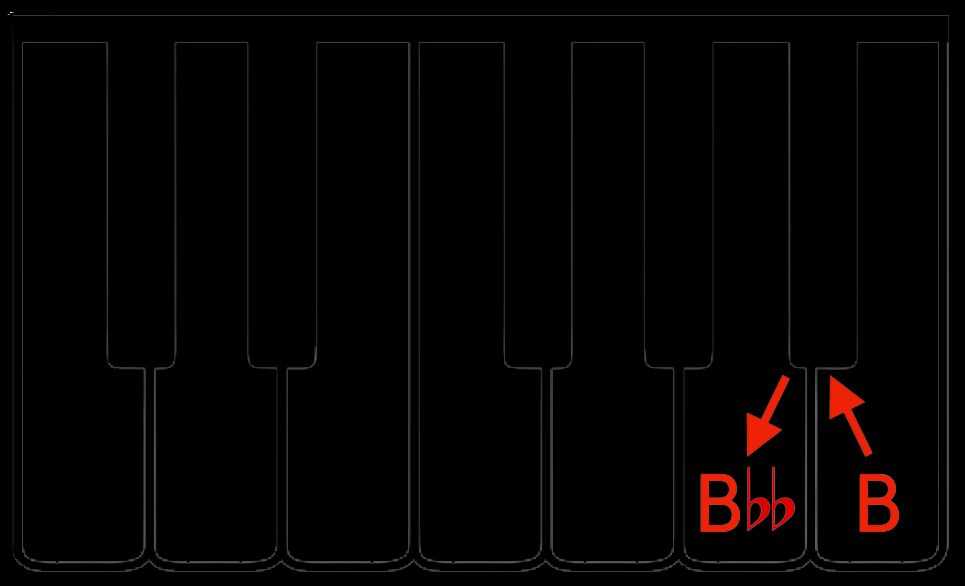
You might be wondering what the point is in calling this white key anything other than A. This is where the rules of music theory take over, so let’s find out why double flats exist.
You can also learn about the opposite of a double flat by reading this article on double sharps!
How do you read double flats?
Fortunately, they have a sensible appearance. They simply looks like two flat signs pushed together. As with all accidentals, they’re placed on the same line, or in the same space, as the note they affect:

Why do composers use double flats?
Major and minor scales follow the rule of diatonic spelling, which means they must use adjacent letter names, with none skipped or repeated. Occasionally a composer will write in a key that’s already loaded with flats, and that’s when double flats tend to appear.
Let’s start with an E-flat major scale. The notes are:

Every letter name is accounted for, with no skips or repeats. Now, here’s a plagal cadence (a IV–I chord progression) in the key of E-flat major. The chord names are A-flat major and E-flat major:

Notice the A-flat major triad’s C is the sixth note in the E-flat major scale. Now, if the composer wants to turn this into a minor plagal cadence, the A-flat major chord must become A-flat minor. Its third is lowered a half step, so C becomes C flat:

We’re stuck with the letter name C because–sharp, flat, or natural–this is the correct letter name for the sixth note in the E-flat major scale: E-F-G-A-B-C-D-E. That’s why we have to call this note C flat, and not B natural.
Let’s take a look now at the key of D-flat major, with five flats:

The IV–I chord progression in this key now uses the G-flat major and D-flat major triads. Keep an eye on the IV chord’s B flat, the sixth degree of the D-flat major scale:
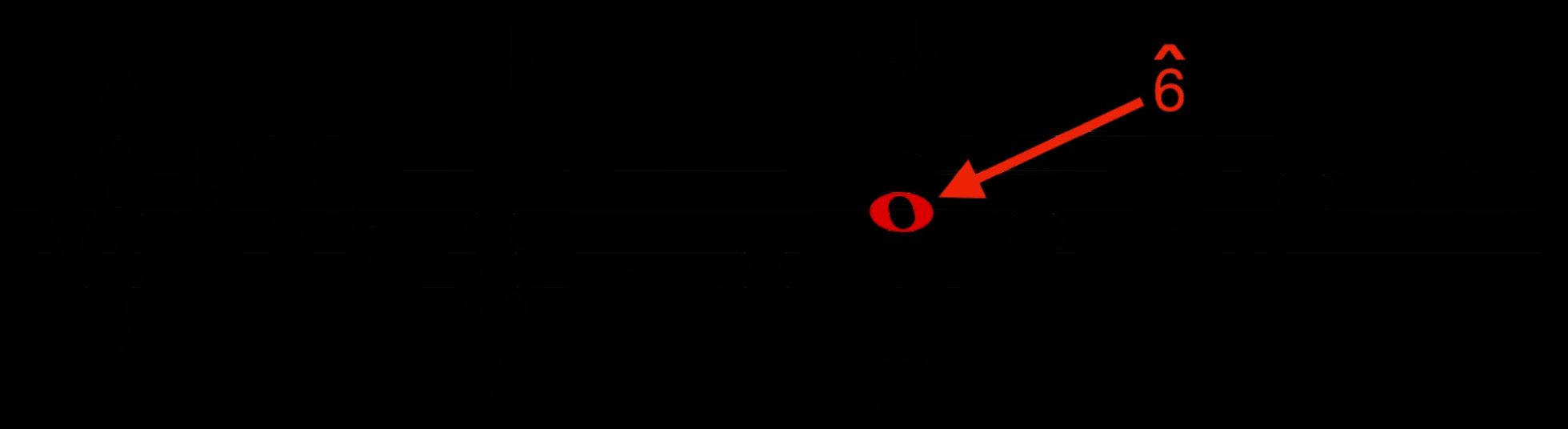
If we want a minor plagal cadence again, the IV chord will have to change from G-flat major to G-flat minor. Once again, the third of the chord must be lowered a half step. This time it’s B flat, and if we bring it down a half step while keeping the original letter name, we have no choice but to call it B double flat:
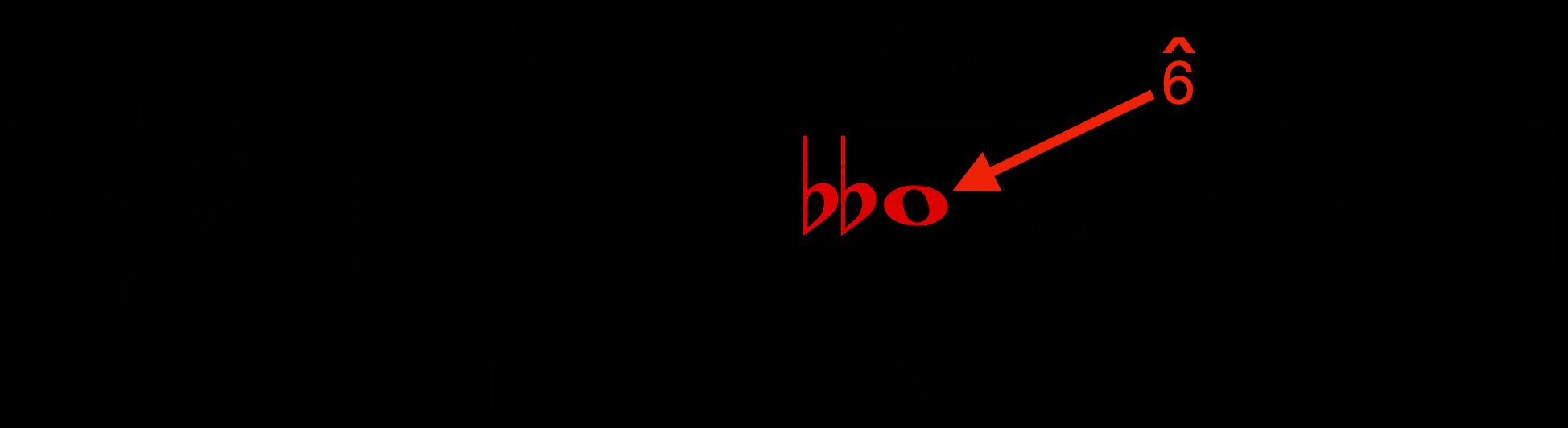
This brings up a second reason why the note can’t be called A. Chords have their own grammatical rule: in root position, they’re spelled in thirds, which means their letter names must skip. In a G minor triad, the letters are G-B flat-D. To turn this into a G flat minor chord, each note lowers a half step but keeps its original letter name. G lowers to G flat, D lowers to D flat, and–you guessed it–B flat lowers to B double flat:

By having its middle note spelled A, the G-flat minor chord would no longer be spelled in thirds, and would actually look more confusing to read:

Double flat enharmonic equivalents
Every double flat has an enharmonic equivalent, a note with the same pitch but with different spelling. Try not to think of enharmonic equivalents as the same note, but rather two different notes–with different musical meanings–that happen to sound the same. They’re the musical equivalent of homonyms.
You can learn more about enharmonics here!
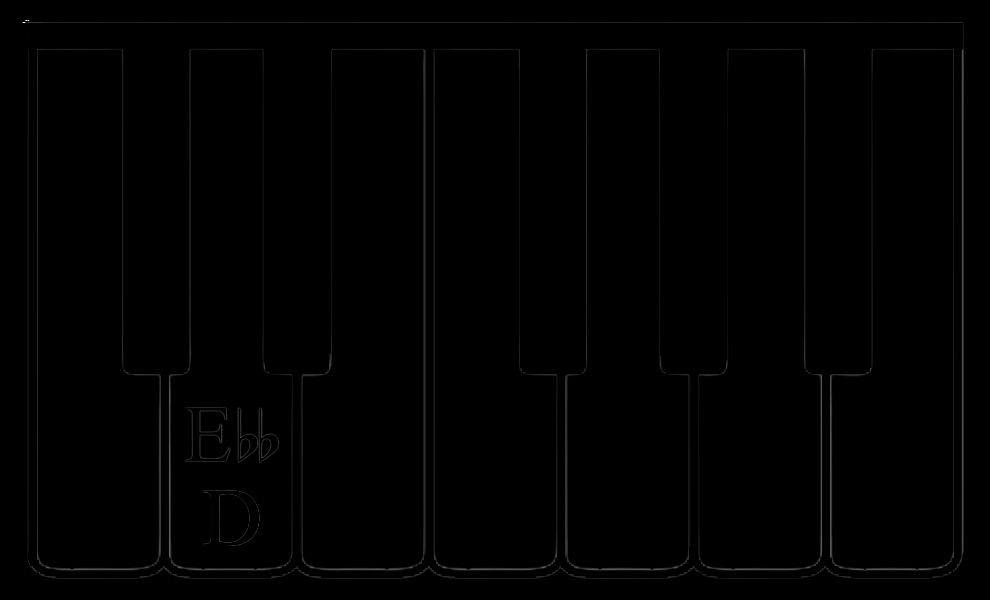
E double flat is enharmonic with D:
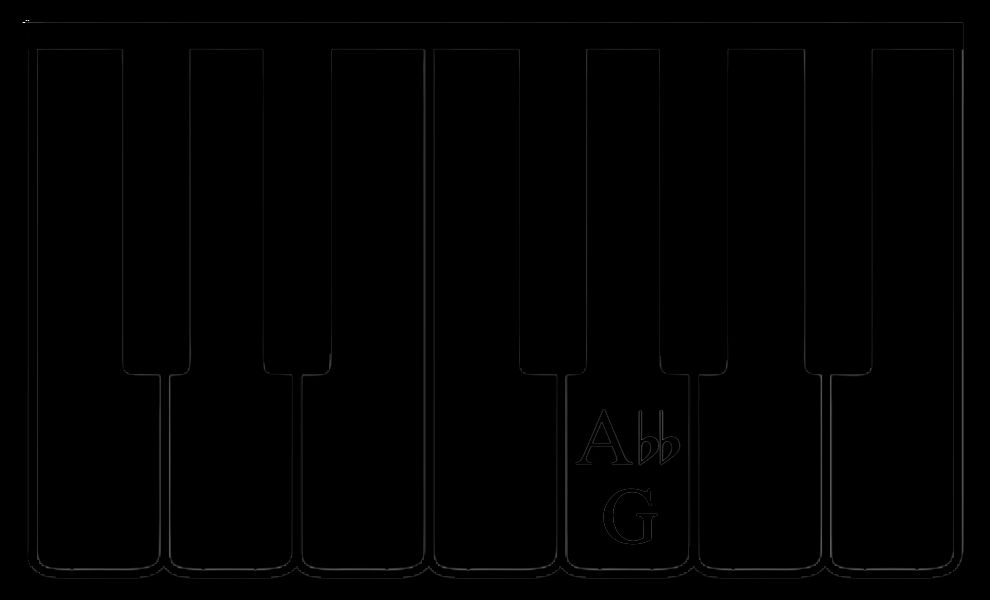
A double flat is enharmonic with G:
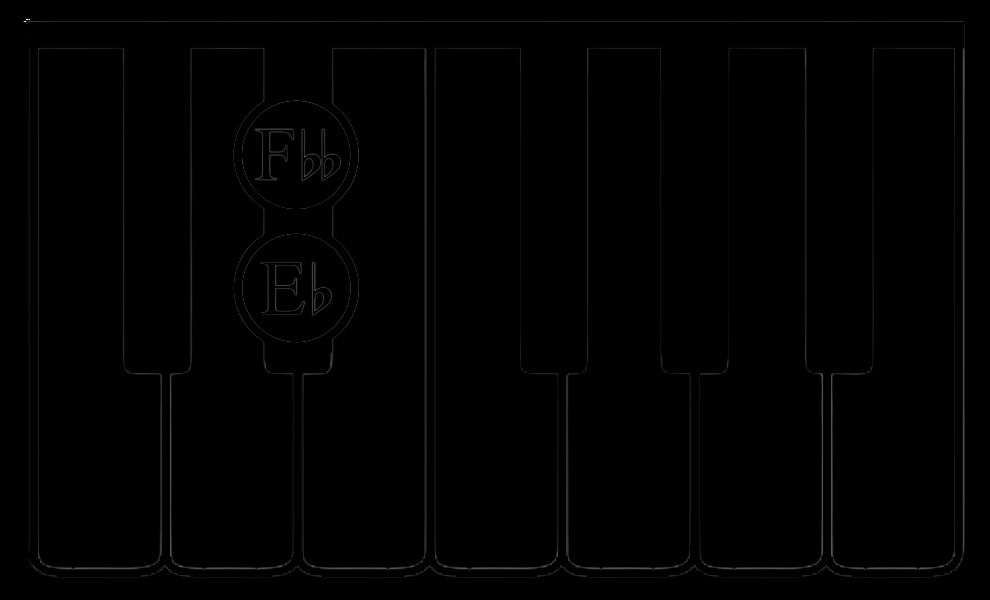
And here’s one you’re not very likely to see. F double flat is enharmonic with E flat:
What are examples of double flats used in sheet music?
In Edvard Grieg’s Puck, Op. 71, No. 3, you’ll start seeing them in measure 27.
Albert Loeschhorn uses several B double flats in his Etude in D-flat Major, Op. 171, No. 27.
The Fugue in A-flat minor, WoO 8 by Johannes Brahms is overflowing with them, which is hardly unexpected in a key that already uses seven flats!
Chopin’s Nocturne in D-flat Major, Op. 27, No. 2 uses both double flats and double sharps in the same passages. This is likely to occur only in music that uses extreme chromaticism, for which Chopin was famous.
Keep an eye out for double flats as you read and play music
Just like double sharps, double flats become a bit less intimidating the more you see them. Look for pieces whose key signatures have at least four flats:
A-flat major and F minor,
D-flat major and B-flat minor,
G-flat major and E-flat minor,
and finally C-flat major and A-flat minor.
In keys like these, composers are likely to use double flats when accidentals are needed. Of course, it’s also possible to simply change key signatures when double flats become double-obnoxious!