





What is a double sharp?
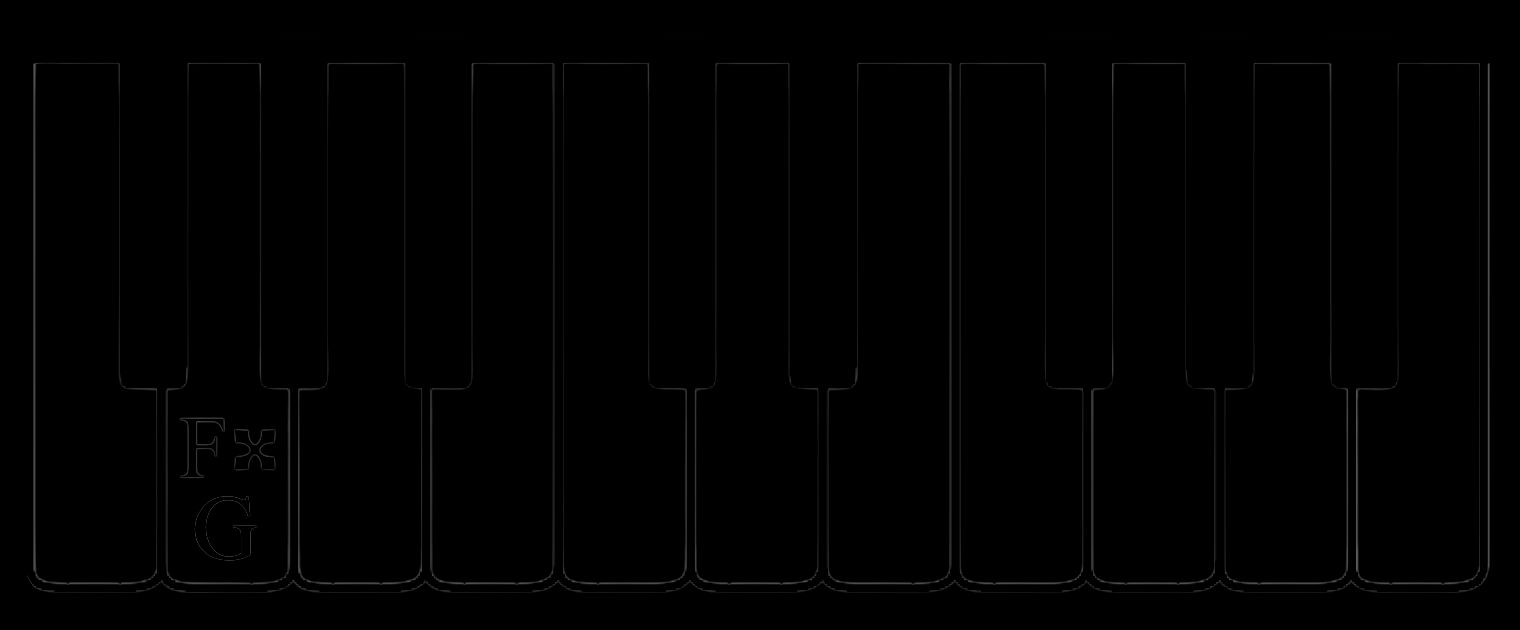
If you’ve ever played a piece in a key with a lot of sharps, there’s a good chance you’ve run into one of these pesky symbols. The double sharp is a type of accidental, a music symbol that alters the pitch of a note. When a double sharp is placed in front of a note, it raises the pitch by two half steps, or one whole step. Take any white key on the piano, such as F, raise it a half step to F-sharp, then raise it another half step to F-double sharp.
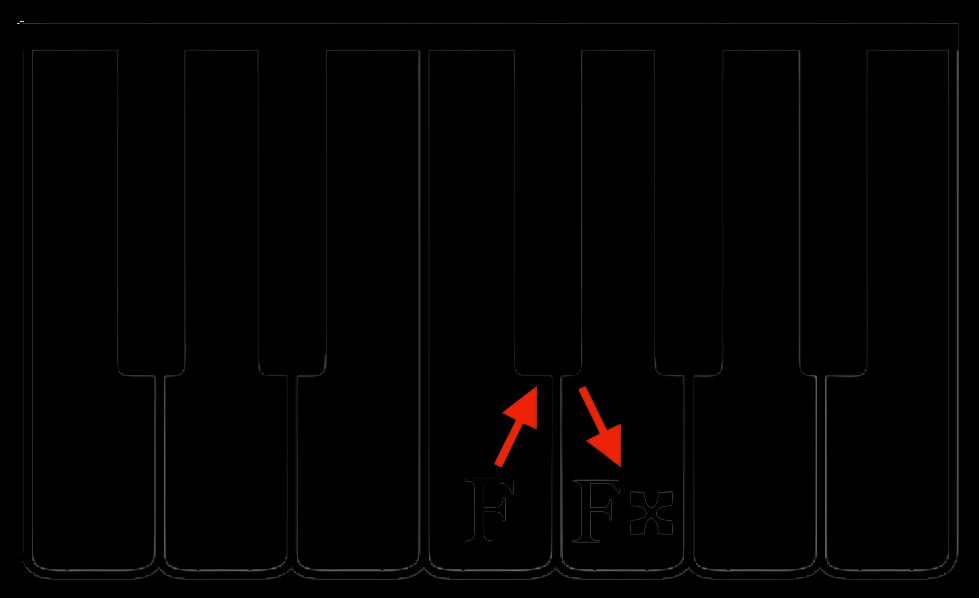
Notice that this note is enharmonic with G, the more common name for this white key. F-double sharp and G may sound the same, but they’re entirely different notes with different musical meanings. Let’s find out why we sometimes have to face the music and use these strange note names!
Learn even more with Mr. Hoffman’s video lesson from Unit 17!
What does a double sharp look like?
Double sharps appear as small “x” symbols with tiny, square-like shapes at each end. They are more compact than sharp, flat, or natural signs. Like all accidentals, they are placed on the same line, or in the same space, as the note they affect:

Why are double sharps used?
Major and minor scales have a grammatical rule called diatonic spelling, which means all the notes of the scale must have adjacent letter names. We’re not permitted to either skip or repeat any letters. An A minor scale consists of the letters A – B – C – D – E – F – G – A, and we simply go forward through the alphabet with no skips or repeats. This holds true for every major and minor scale, and includes harmonic and melodic minor.
Try the B minor scale. In its natural version, the notes are:
B – C-sharp – D – E – F-sharp – G – A – B.
To make this into B harmonic minor, we need to raise the seventh scale note up a half step. So A is raised to A-sharp, and we retain the diatonic spelling by keeping the original letter name, A. If we called the pitch B-flat, we would end up with two notes with the same letter name, B-flat and B, which is not allowed.
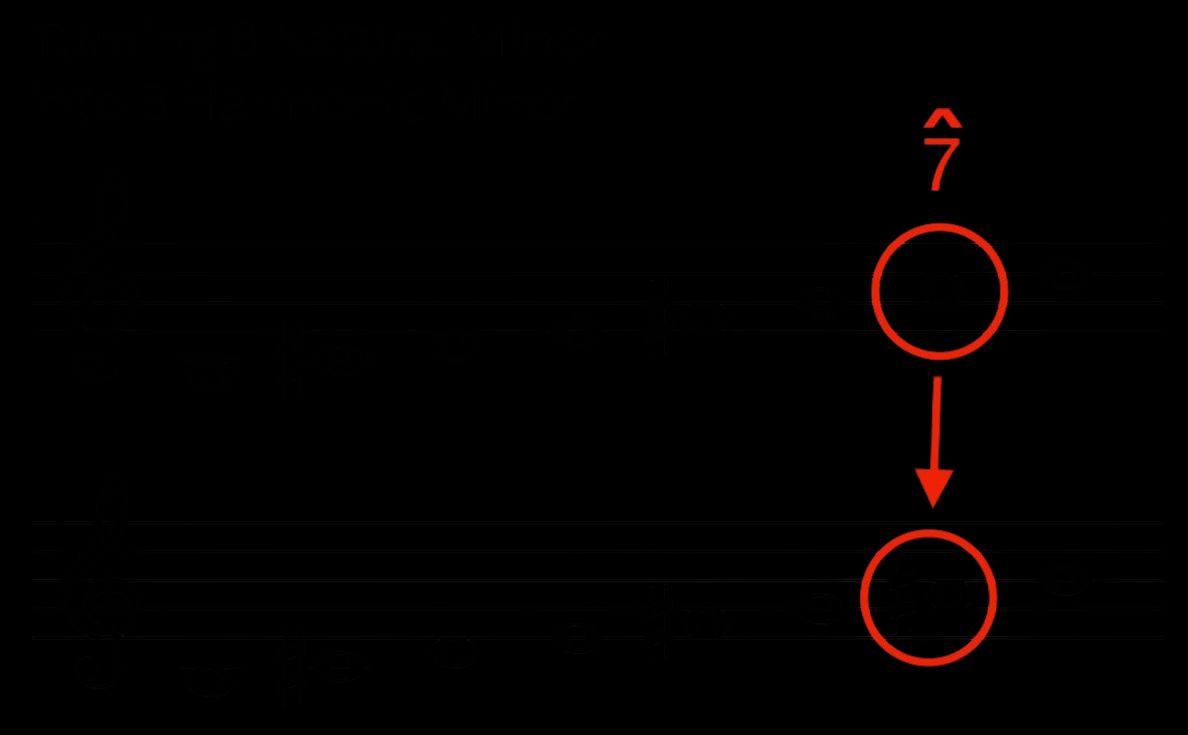
B minor had only two sharps to start with. Now let’s try this with a scale that already has five sharps, like G-sharp minor. The natural version is:
G-sharp – A-sharp – B – C-sharp – D-sharp – E – F-sharp – G-sharp.
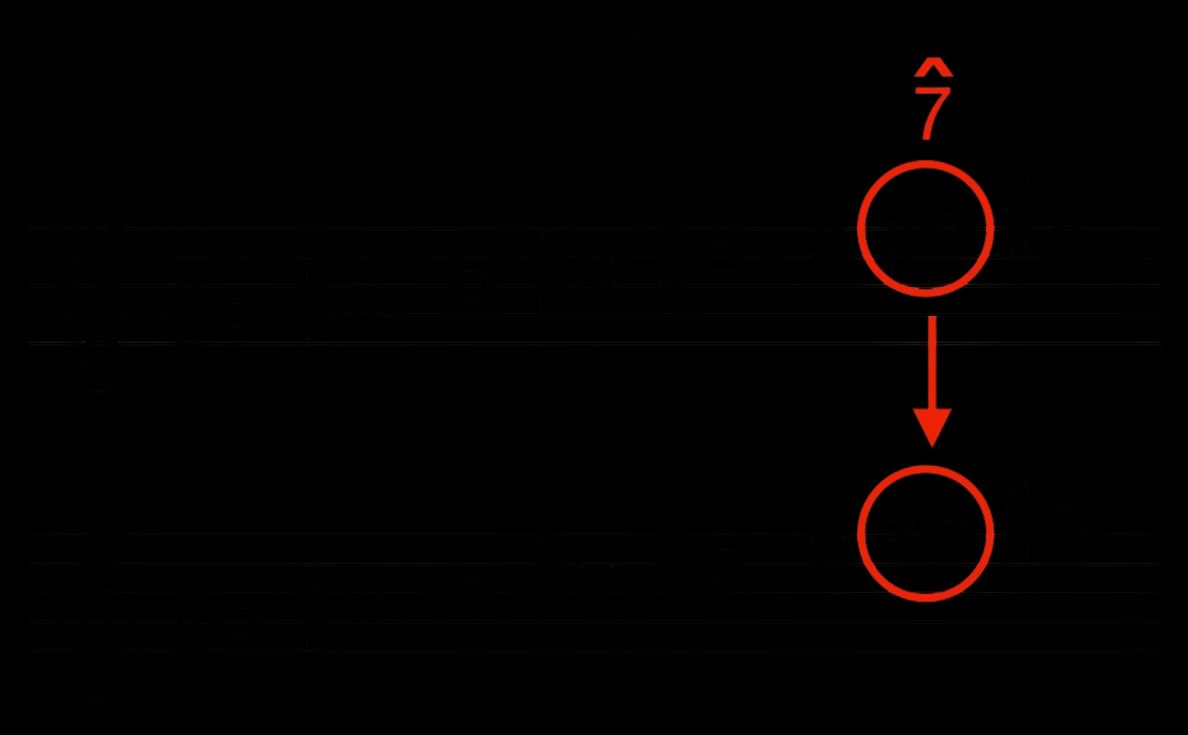
To get the harmonic minor version, we do the same as before: raise the seventh note a half step. This time, it’s a note that’s already sharp. Raise F-sharp a half step and you get a white key on the piano that we’re accustomed to calling G. But, because we have to keep the seventh note’s original letter name, F-sharp becomes F-double sharp. It’s the only way to ensure we have diatonic spelling. Calling this note G means we’re doubling up on the G letter name: G-natural and G-sharp. Again, diatonic scales are simply not spelled this way.
Another reason you might see a double sharp has to do with chord spelling. Triads are spelled in thirds, which means their notes skip letter names. The D major triad has the letter names D – F-sharp – A. If we want a D-sharp major triad, we have to raise each note a half step. D becomes D-sharp, A becomes A-sharp, and yes, the F-sharp in the middle becomes F-double sharp. The original, skipped letter names (D-F-A) have to be kept, and for this reason the chord is much more often spelled as E-flat major, with the notes E-flat – G – B-flat.

Do double sharps carry through the measure?
They do! Just like the more common accidentals like sharps, flats, and natural signs, double sharps remain in effect for the rest of the measure, unless canceled before the barline. An older way to return a double sharp note to a simple sharp was to write a natural and a sharp sign in front of the note. However, today’s practice is to simply write a sharp:

What are examples of double sharp enharmonic equivalents?
Every double sharp has an enharmonic equivalent, a note with the same pitch but with different spelling. F-double sharp, as we’ve seen, is enharmonic with G:
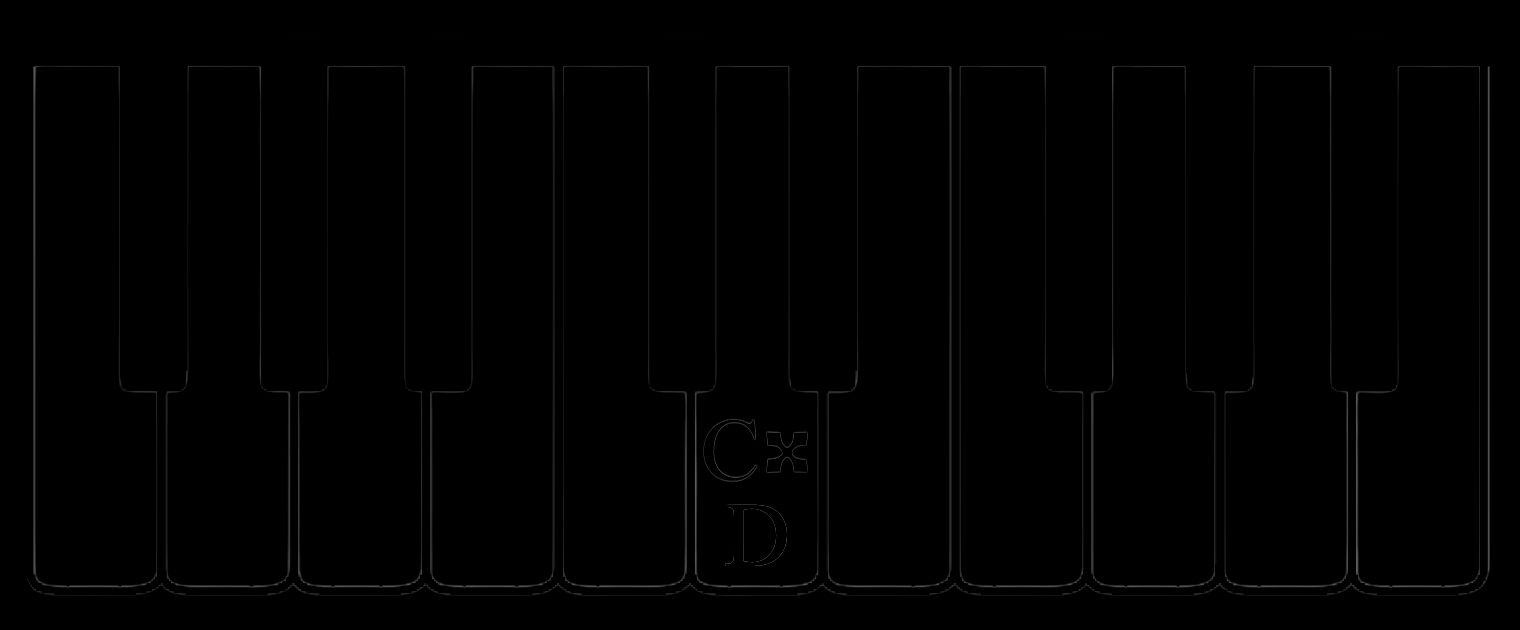
C-double sharp has D as its enharmonic equivalent:
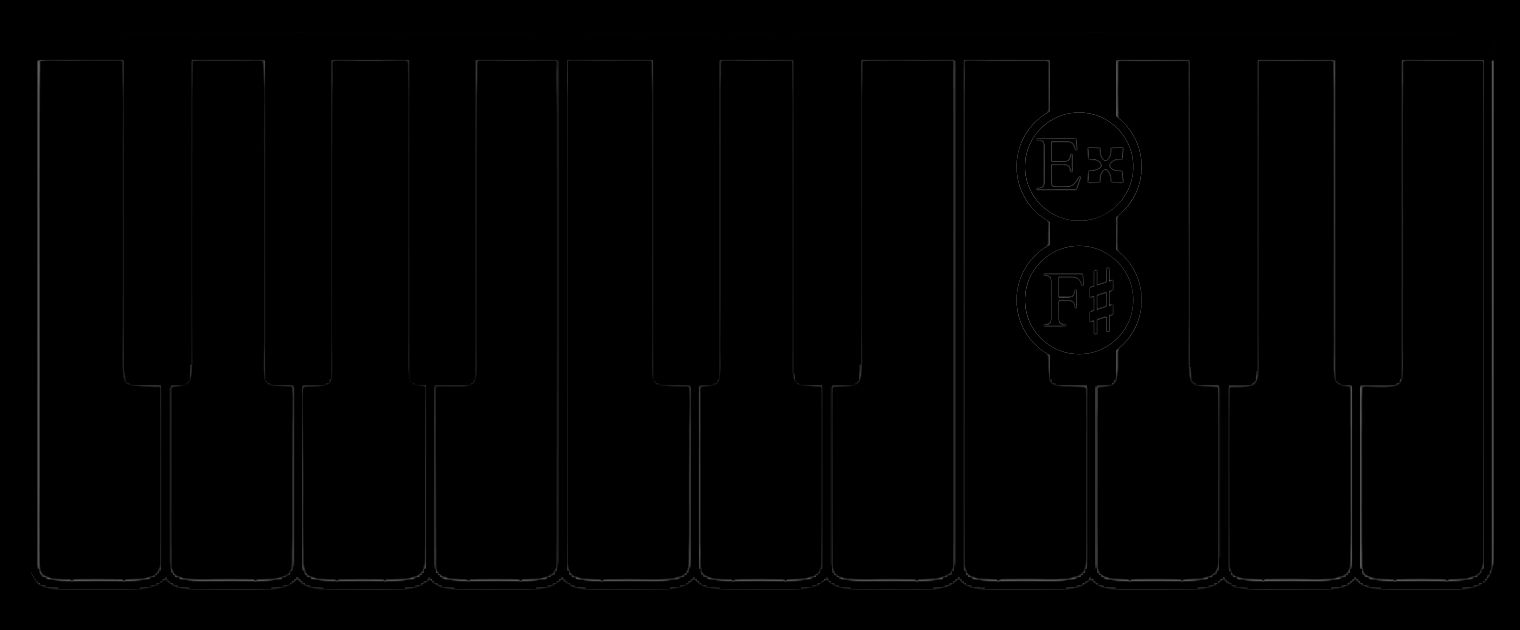
E-double sharp is enharmonic with F-sharp:
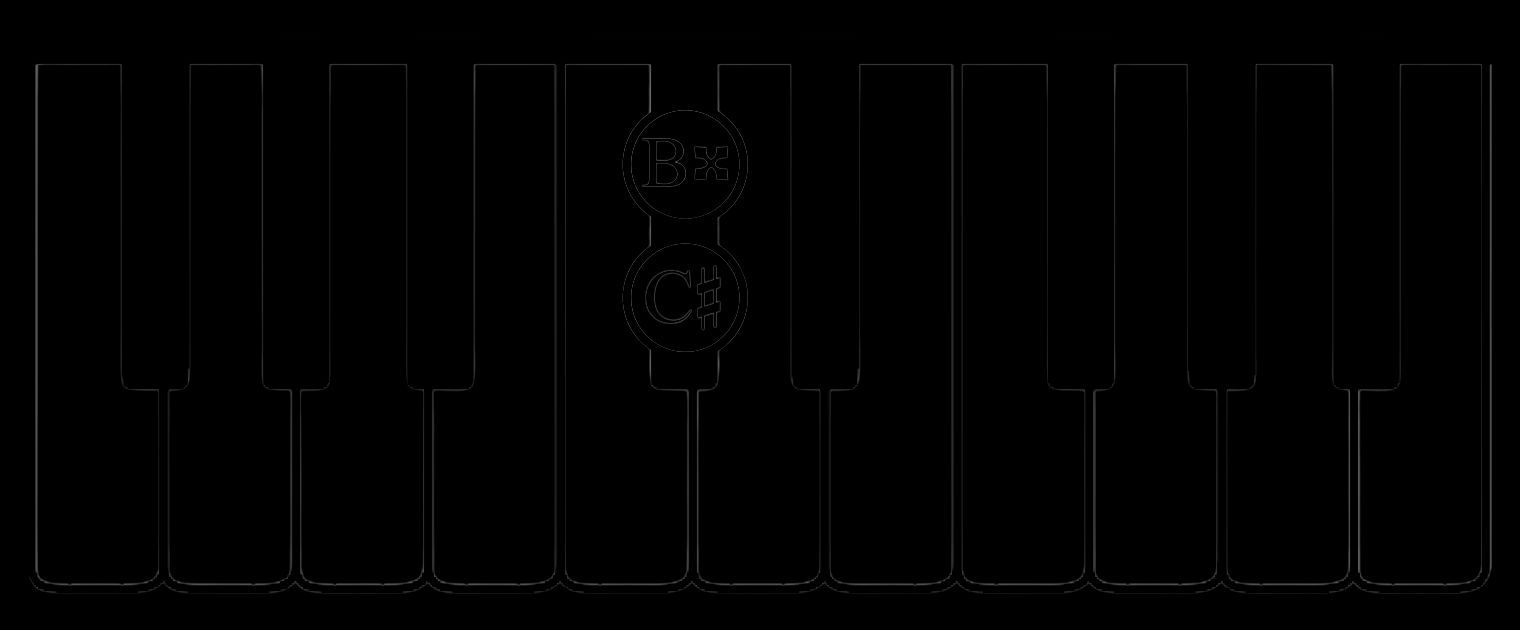
B-double sharp and C-sharp are enharmonic:
What should a piano player know about double sharps in music?
The two double sharps you’re most likely to see are F-double sharp and C-double sharp. That’s because F and C are the first two notes to become sharp in the key signatures, and the first to require double sharps after all seven sharps have been exhausted. After C-sharp major, the next sharp key would be G-sharp major, whose leading tone is F double sharp. Next follows D-sharp major, which adds a C double-sharp:

Occasionally you’ll find an A-double sharp or even a D-double sharp. But usually (or rather, hopefully) the composer decides that enough is enough and changes to an enharmonic flat key. G-sharp major is much more easily read as A-flat major, with four flats, and D-sharp major converts to E-flat major, with just three flats. Much kinder to the performer!

Do key signatures have double sharps?
They do not. Sharp key signatures represent major and minor scales, which use between one and seven sharps. After C-sharp major and A-sharp minor–the scales with all seven notes sharp–that’s it. The next sharp major scale would be G-sharp major, which requires an F double sharp. Although this scale does exist, it’s much easier to enharmonically respell it as A-flat major, which has only four flats. So sharp key signatures only go up to seven sharps. Double sharps are always written as accidentals, never appearing in the key signature.

What are examples of pieces that use double sharps?
These great classics are available in the Hoffman Academy store!
Ludwig van Beethoven’s Moonlight Sonata, Op. 27, No. 2
Johannes Brahms’s Waltz in B major, Op. 39, No. 1
Sergei Rachmaninoff’s Prelude in B major, Op. 32, No. 11
Follow along on the score as you listen to these masterpieces.
Johann Sebastian Bach’s Fugue in C-sharp major, WTC Book I
Chopin’s Nocturne in C-sharp minor, Op. 27, No. 1
Keep a double sharp eye out!
A good way to see double sharps at work is to play or read through pieces that have key signatures with a lot of sharps. Be on the lookout for keys with at least four sharps:
E major and C-sharp minor,
B major and G-sharp minor,
F-sharp major and D-sharp minor,
and finally C-sharp major and A-sharp minor.
These are the keys in which composers are most likely to resort to double sharps. As you familiarize yourself with their function and see them more often, you’ll find they’re a lot less frightening than they look!