


Some of the links in this article are Amazon affiliate links, which allow us to earn a commission when you make a purchase. This helps us to keep creating music education experiences for everyone to enjoy!
Whether you are shopping for your first piano or upgrading your instrument, purchasing a piano is a long-term investment. In this guide to top piano brands, we’ll help you evaluate your needs and offer tips as you choose your next instrument.
We’ll start by sharing some information about the top piano brands from history: Steinway & Sons, C. Bechstein, Bösendorfer, and Blüthner. This article also includes a discussion of modern piano brands, including the excellent upright pianos by Yamaha and Kawai. For students with limited spaces or budgets, we’ll list the top digital piano choices, such as Casio.
Before you buy, we recommend setting a budget and measuring the space for your piano. Once you’ve narrowed down the brands you’re interested in and set a budget, you’ll want to play several pianos before making your decision. After all, you’ll be spending many hours at your piano bench, and you want to make sure you’ll enjoy it!
Who are the big four piano makers?
Historically, the four most prominent piano makers were Steinway & Sons, C. Bechstein, Bösendorfer, and Blüthner. All of these companies originated in the mid 1800’s, and many elite concert pianists still partner with the big four. From the bright lights of New York City, where Steinway & Sons is based, to Vienna’s classical architecture and the home of Bösendorfer, let’s journey through the history of the four top piano brands.
Bösendorfer began crafting pianos in 1828 in Vienna, the capital city then of the Austro-Hungarian empire. These handcrafted pianos are the piano of choice for artists ranging from the monarch Napoleon III to Billy Joel to Richard Wagner to Leonard Bernstein to Liszt. Built using spruce wood, each Bösendorfer piano takes 6 years to assemble.
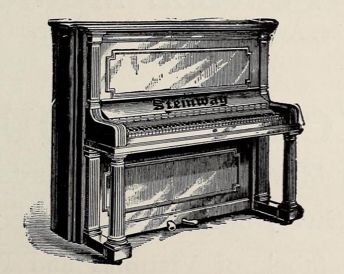
The U.S. piano of choice, Steinway and Sons, began crafting pianos in 1853. Steinway Hall in New York City, now Carnegie Hall, remains a focal point of the American concert scene. Sergei Rachmaninoff and Vladimir Horowitz were Steinway Artists, and played these famed pianos in concert. Today, many music majors in the U.S. have built their artistic careers at the bench of a Steinway because of the Steinway Schools project, where colleges partner with this piano brand.
Founded in the same year as Steinway (1853), C. Bechstein’s grand pianos graced imperial courts. The hub of musical life in Berlin, Bechstein’s instruments were the choice of Liszt, Brahms, and Wagner. (Clearly, Bösendorfer did not have an exclusive deal with Liszt and Wagner!)
Another piano maker founded in 1853, Blüthner manufactures pianos in Leipzig, Germany. They created a striking line of crystal grand pianos and an avant-garde “sculpture piano” series. The clear acrylic lids on some of their grand pianos make for a bespoke and beautiful, if non-traditional, instrument. These pianos also have a unique patented “fourth string” for each note, which resonates in unison with the note played to create a richer sound.
Even today, new piano brands are emerging on the concert scene. The Italian piano brand Fazioli even invented a fourth pedal! Another choice for concert halls in Europe is the Estonia piano. Of course, any discussion of the top piano brands cannot forget Yamaha, as Yamaha concert grands rise to ascendancy in the concert halls of S.E. Asia.
What brand of piano is the best?
The best piano brand for your home or music studio will depend on several factors, including which pianist you ask, your personal taste, and the amount of space you have for a piano. For those with the space for a grand piano, Steinway & Sons rates as a consistent favorite among American concert pianists. To this day, many European pianists (and some American singers like me) favor the warm clarity of Bösendorfer’s instruments for recitals and concert performances. If you are looking for an upright piano, Yamaha and Kawai offer an excellent entry point for the home. Other brands offering consistency and playability include Kawai, Boston, and Schimmel.
What is the best budget piano?
Generally, even a used upright piano in good condition will start at around $4,000. For the budget-conscious pianist, digital pianos, like Casio and Yamaha, offer a price point between $1,000-$3,000 alongside a weighted action that replicates the feel of playing on an acoustic piano.
There are also some keyboard options between $200-$700, with Casio and Yamaha being our top choices for good quality. We recommend the Casio CDP Series, which offers 88 weighted keys for about $650. The slightly less expensive Yamaha PSR series has a 76-key option costing around $580.
What is the best brand of piano keyboard?
Keyboards offer an affordable entry point to the world of playing piano. However, they don’t entirely replicate the experience of playing on an acoustic instrument. The best piano keyboards include 88 weighted keys and a pedal. Look for the phrase “scaled hammer-action keys” or “true-touch weighted keys” in listings for piano keyboards.
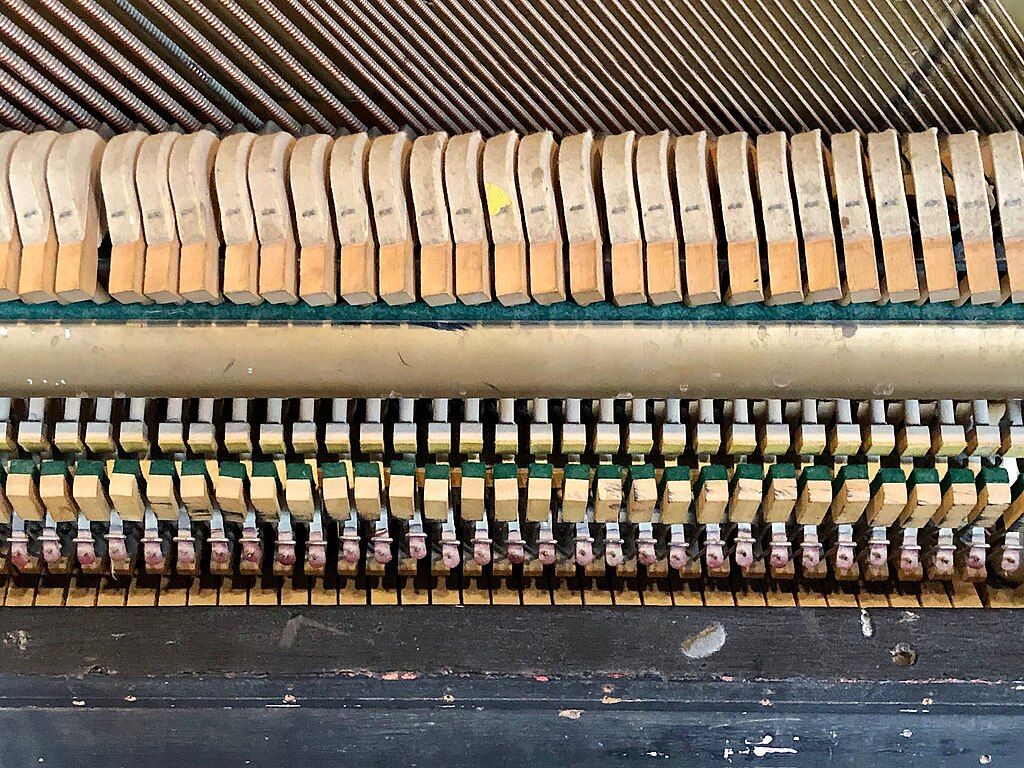
Why the weighted keys? You’ll notice in the image above the unique hammers that hit the strings on an acoustic piano. To become a skilled pianist, you’ll need the hand strength to press down the keys on a piano or a keyboard without fatigue. Our favorite keyboard brands are Yamaha and Casio because they offer a feel close to an acoustic piano. Roland and Korg also make weighted-key instruments.
Which brand has the best digital pianos?
With digital speakers instead of a soundboard, digital pianos offer 88 keys and a beautiful sound with a smaller footprint for the space-conscious musician. Kawai, Roland, Casio, and Korg offer a high level of consistency and are among the top electric piano brands. The best digital pianos draw upon a consistent, high quality sound library while more closely approximating the experience of playing an acoustic piano. With weighted keys that mimic the resistance of an acoustic piano, they also offer a more affordable entry point to piano ownership.
At Hoffman Academy, the Casio Privia series of digital pianos remains one of our top picks. The Privia approximates the touch and feel of an acoustic piano at a price under $1,200. For a pick offering the closest feel to an acoustic piano, the Yamaha Arius series of digital pianos are another great option. One excellent feature of Yamaha’s digital pianos is the “Silent Piano” feature, which will let you practice all night with headphones while the rest of the world is sleeping.
What is the best brand for upright pianos?
An excellent choice for piano students of all ages, the Yamaha upright pianos feature a clear, bright tone and consistent action. The Yamaha U1 remains a favorite of several Hoffman Academy musicians.
Kawai upright pianos like the K 300 are another excellent choice. Since these pianos use more carbon-fiber parts than wood, they may require less maintenance. Because wood expands and contracts with temperature fluctuations in the house, some families find that the carbon fiber Kawai pianos need fewer visits from the piano tuner than other types of pianos. One member of the Hoffman Academy team owns a Kawai which has withstood 15 years of tropical heat and humidity very well.
Schimmel uprights start at a higher price point and can be somewhat tricky to find in America. Manufactured in Poland from Bavarian wood, Schimmel’s W 118 Upright offers excellent clarity of tone and expressive dynamic options.
What is the best brand of piano to buy used?
Many of our students find that used Yamaha pianos make a great musical investment. Yamaha pianos tend to retain their value across time, and a used Yamaha instrument is a solid upright piano option. With consistent maintenance and upkeep, a Yamaha piano will last your family through several piano students. Similarly trusted for their reliability, used Kawai pianos make another excellent choice. Because of their use of composites, they may last longer than wooden pianos and be easier to maintain.
When buying a used piano, we recommend having a piano technician check the piano, especially if you are buying privately rather than from piano dealer. Your piano tuner might also have some good leads on a well-maintained instrument if another customer is planning to trade up. The piano tuner will “look under the hood” so to speak as they check the action of the keys as well as the soundboard for signs of problems or maintenance issues. Age is another consideration when purchasing a used piano. In general, pianos over the age of 25 years or so require additional maintenance work.
How do you tell if a piano is good?
Your definition of a great piano might differ from another pianist’s. Some aspects, like touch and tone, are the personal preference of each musician. Other considerations might include budget and the size of the room for your piano.
Playing many different pianos can help you find the right instrument for your home. Be sure to name any budget and space constraints before you start shopping; nailing these down first can prevent you from falling in love with an instrument that’s, quite literally, not the right fit for your music room. Also, trying before you buy a piano is essential. Spend some time playing each instrument to get a sense for the action of the keys. As you play, take time to notice details like how the keys feel, and if the edges are rounded or square.
If you fall in love with a piano from a brand that’s not on this list, but it meets your needs, then that’s the right choice for you! There are lots of good mid-level American piano brands or older instruments from companies that have been absorbed by other brands. For example, my two-musician household loves our Miller piano, though it’s not on any top-10 lists. We picked it for its touch, tone, price, and the fact that it had been lovingly maintained. (When one of us is practicing, the other gets to use the Casio PX- 770 – the digital piano with a nice enough touch that we don’t mind sharing!)
Bringing it all together: Top piano brands at a glance
Whether you are drawn to the historically prominent Steinway & Sons and Bösendorfer, or are looking for the consistent appeal of a Yamaha, knowing the top piano brands can help you make your piano purchase! We hope this guide has you ready and excited to start your piano buying journey!
Looking for piano lessons to go along with your newly-purchased piano? Learn with Hoffman Academy!