





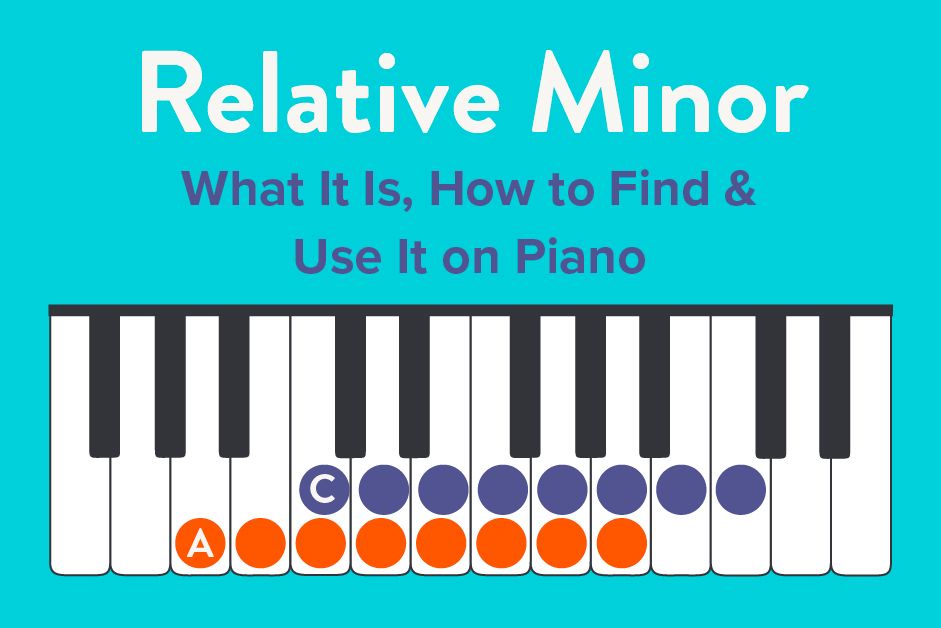
Relative scales are close cousins to each other. In fact, their notes are identical; only their starting notes differ. If you’re already familiar with major and minor scales, you may have come across the concept of relative minor. Why don’t we let Mozart take it from here?
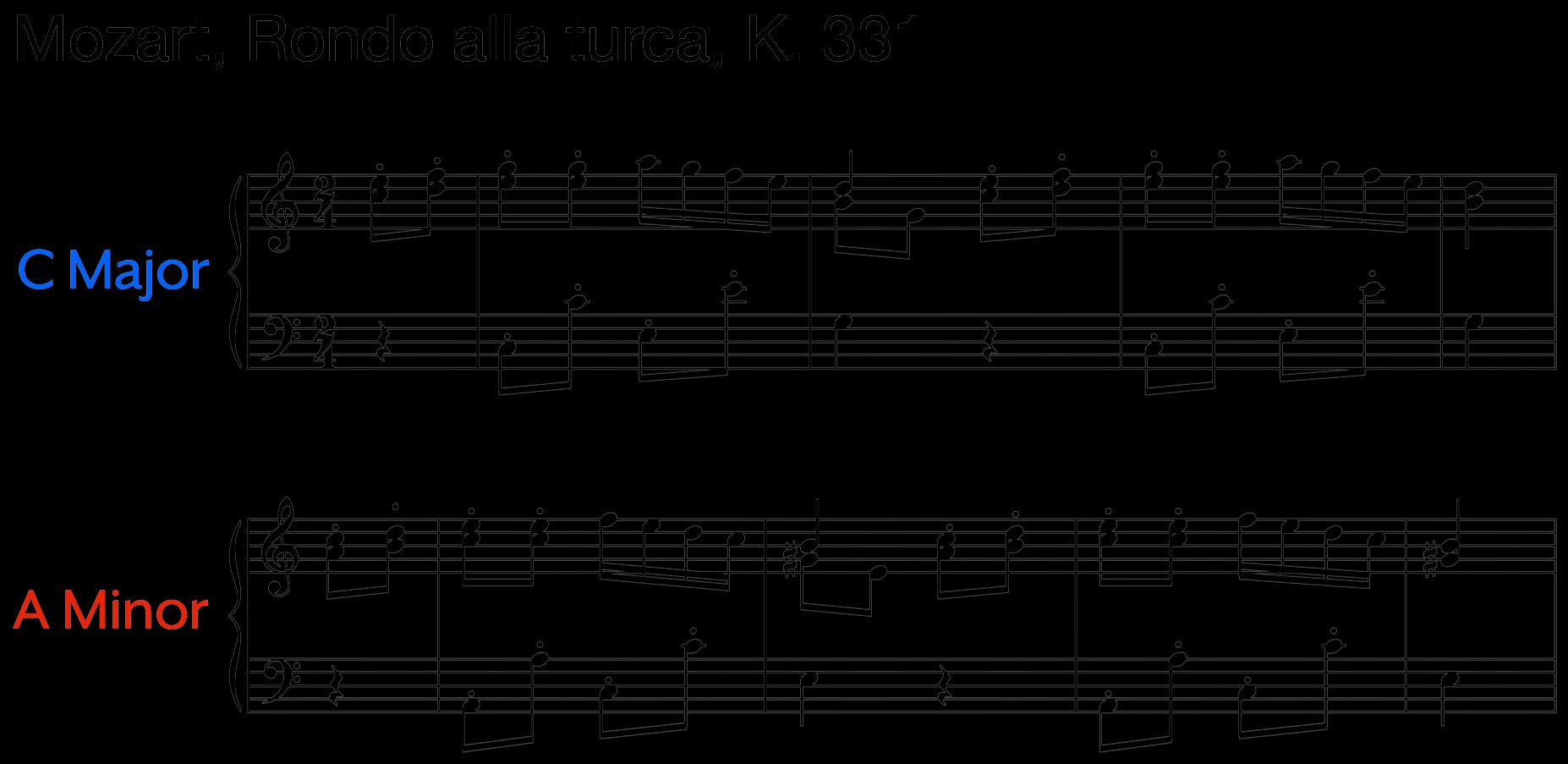
This is the famous Turkish March from Mozart’s Piano Sonata No. 11. The music at the top is in the key of C major, which means it’s based on the C major scale. The bottom line features the exact same music, but this time using the notes of the A minor scale. You can also hear the difference; the bright, joyful melody we just heard is now more sullen. Mozart has shown us a textbook case of relative keys, which use the same notes, but focus on different tones and chords. We’ll also discover that relative minor plays a part in the circle of fifths, key signatures, the way composers change key, and much more.
What is relative minor? How does it relate to the major scale?
Every major scale has its own relative minor scale. Both use exactly the same notes, but their starting notes differ. The C major scale has its tonic, or starting note, on C, and uses only the white keys on the piano. If we start on the sixth note of this scale, A, and continue to limit ourselves to the white keys, we get A natural minor. This is the relative minor scale of C major: same notes, different tonic:
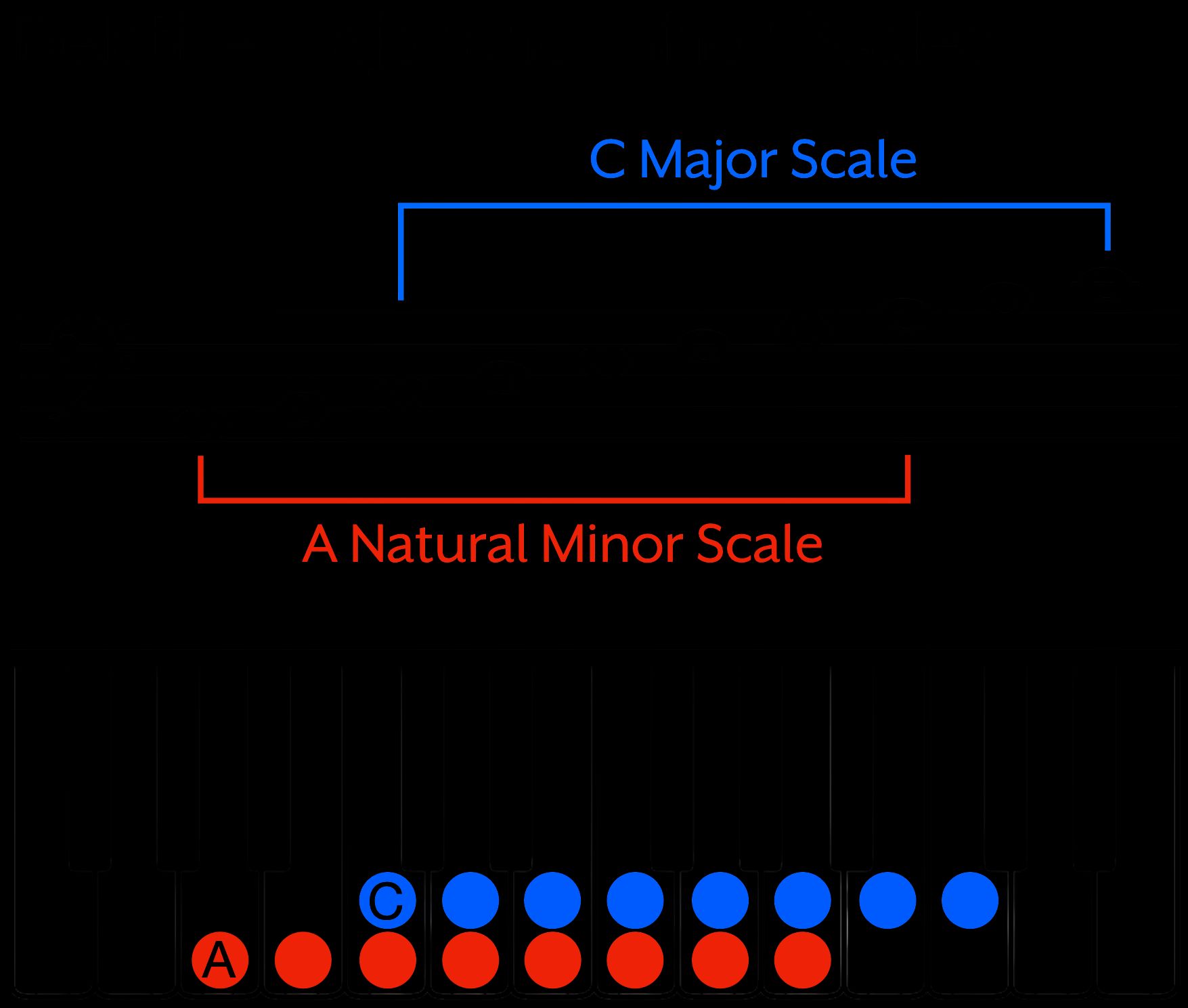
You might wonder how a different starting point matters if the two scales use the same notes. But it has a huge effect on the sense of key we’re in. Listen to the chord progression I – V – IV – I based on the C major scale:

Having the tonic on C sets up our tonal orientation around the C major chord, and the progression has a characteristic major-key sound. Now listen to the same progression if we use the A minor scale instead:

With the tonic on A, our “home” chord becomes A minor giving us a more somber progression.
How to find the relative minor of any major scale on the piano
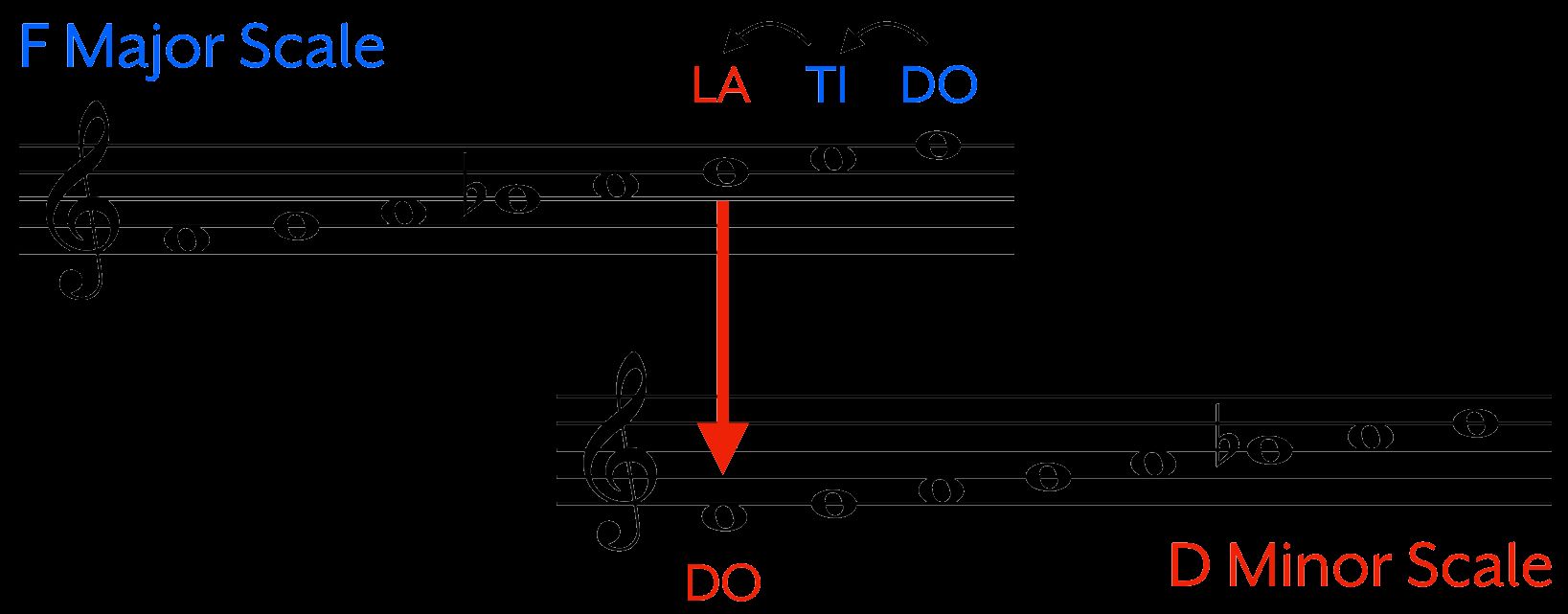
The relative minor scale is easy to find. Start with any major scale and go to the sixth note, or LA in solfège. This is the relative minor scale’s starting note. You’ll find it even faster if you start on the major scale’s tonic, or DO, and simply go backward: DO – TI – LA. Let’s get some practice with a few examples.
To find the relative minor of the F major scale, start on the tonic, F, and move backward: DO – TI – LA, or F – E – D. This leads us to the D minor scale. Notice again that both scales use the same notes, but with different tonics. The note D is LA in the F major scale, but it becomes DO in D minor:
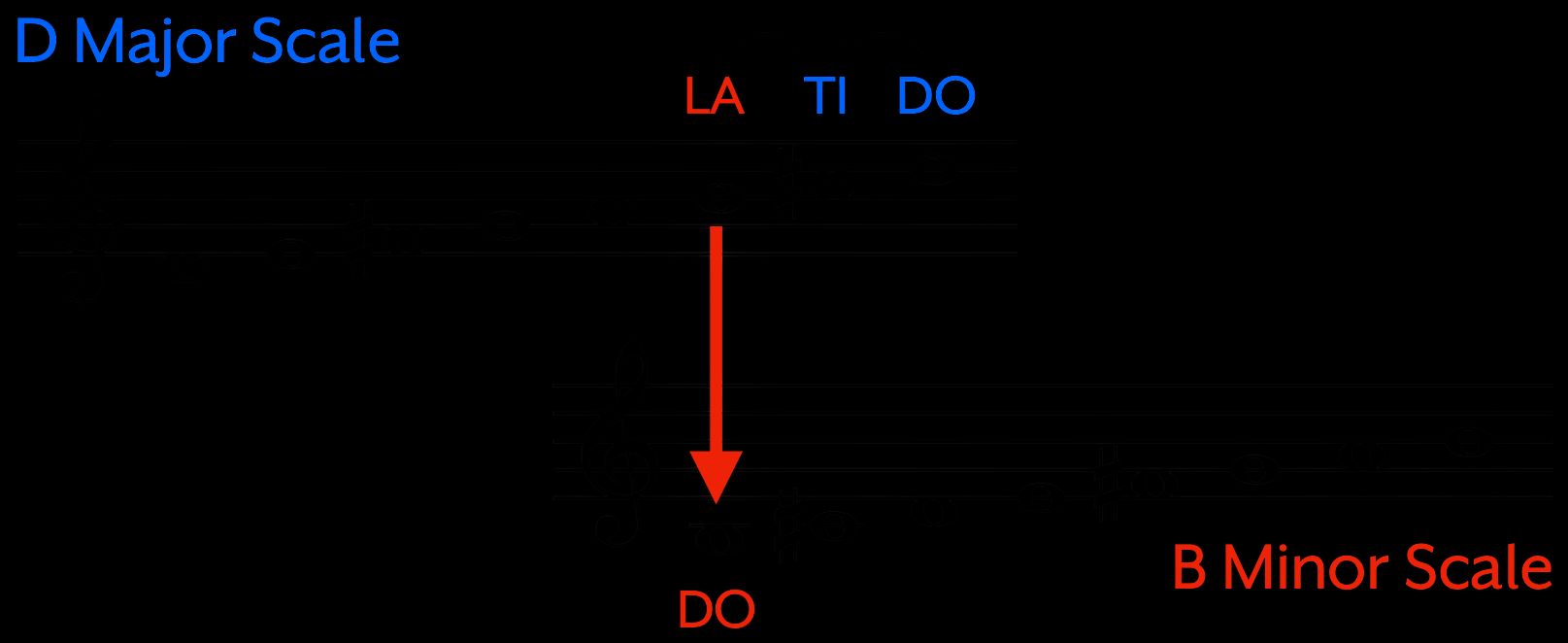
For D major, start on D and go backward again. Counting DO – TI – LA takes us to the relative minor scale, B minor:
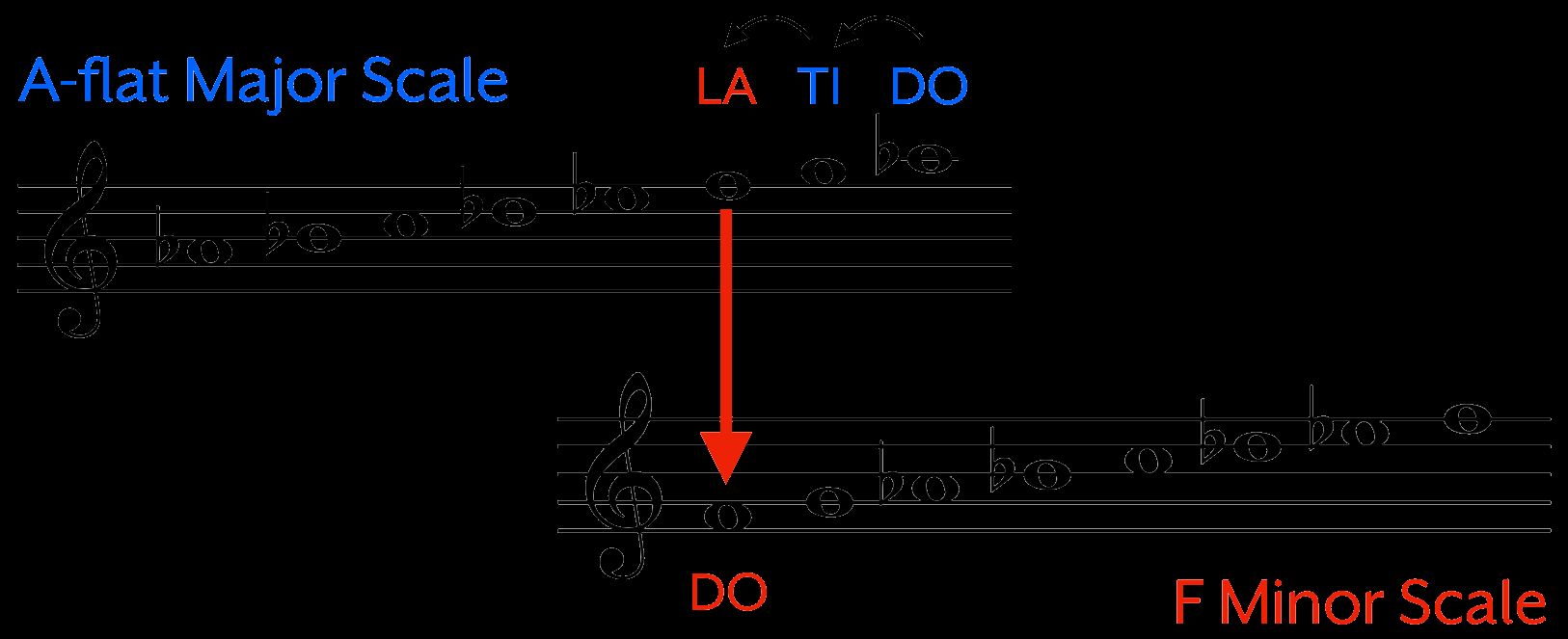
One more: the relative minor scale of A-flat major is F minor:
Relative Minor vs. Parallel Minor
A parallel minor scale will have the same starting note as its parallel major scale. G major and G minor are parallel scales; their tonic is the same, but several of their notes differ:
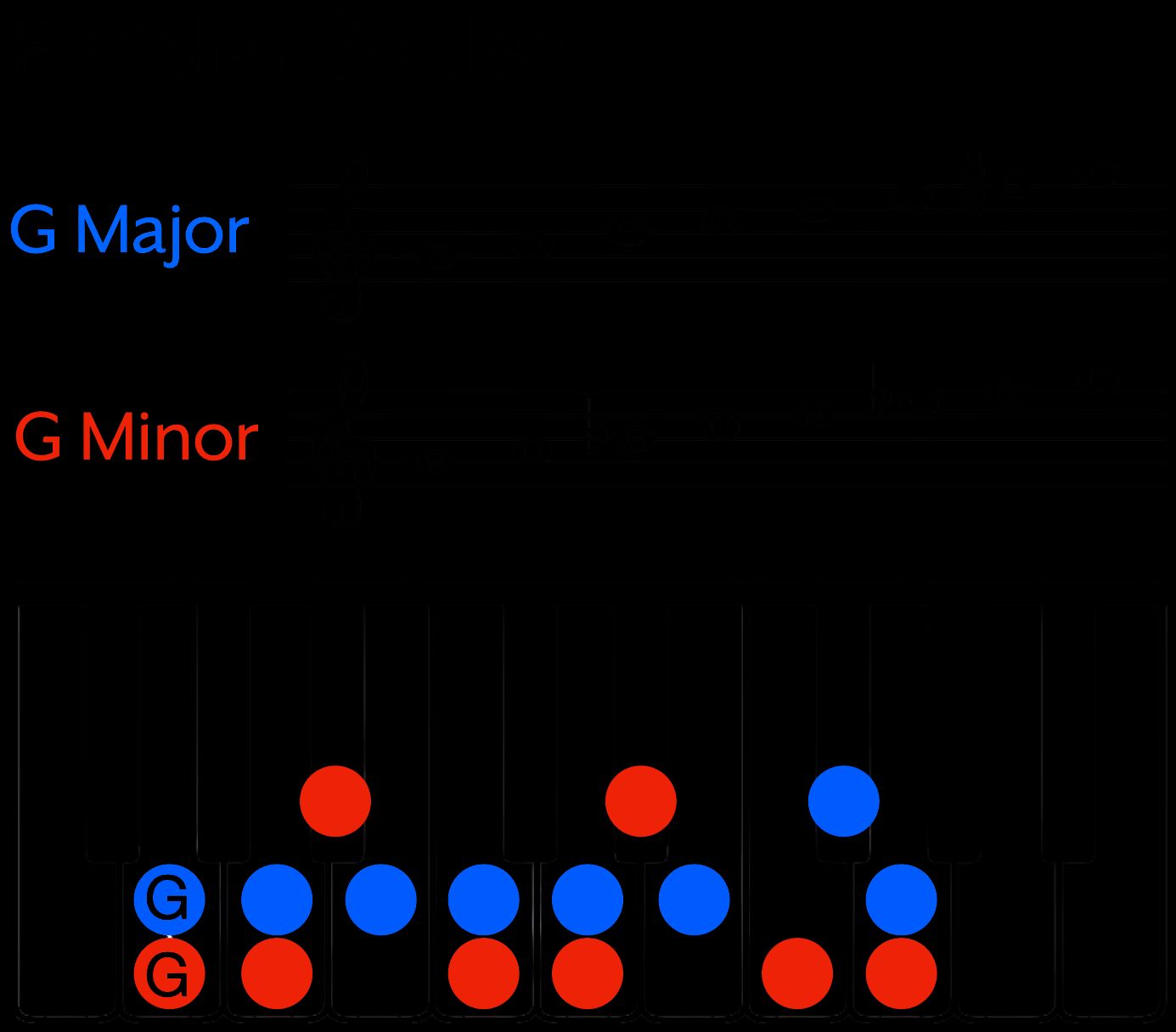
The G major scale uses one sharp, while G minor uses two flats. This is because major and minor scales have different sequences of intervals. G major has its half steps at MI–FA (scale degrees 3 and 4) and TI–DO (7 and 1), while G minor’s half steps are at RE–ME (notes 2 and 3) and SO–LE (5 and 6).
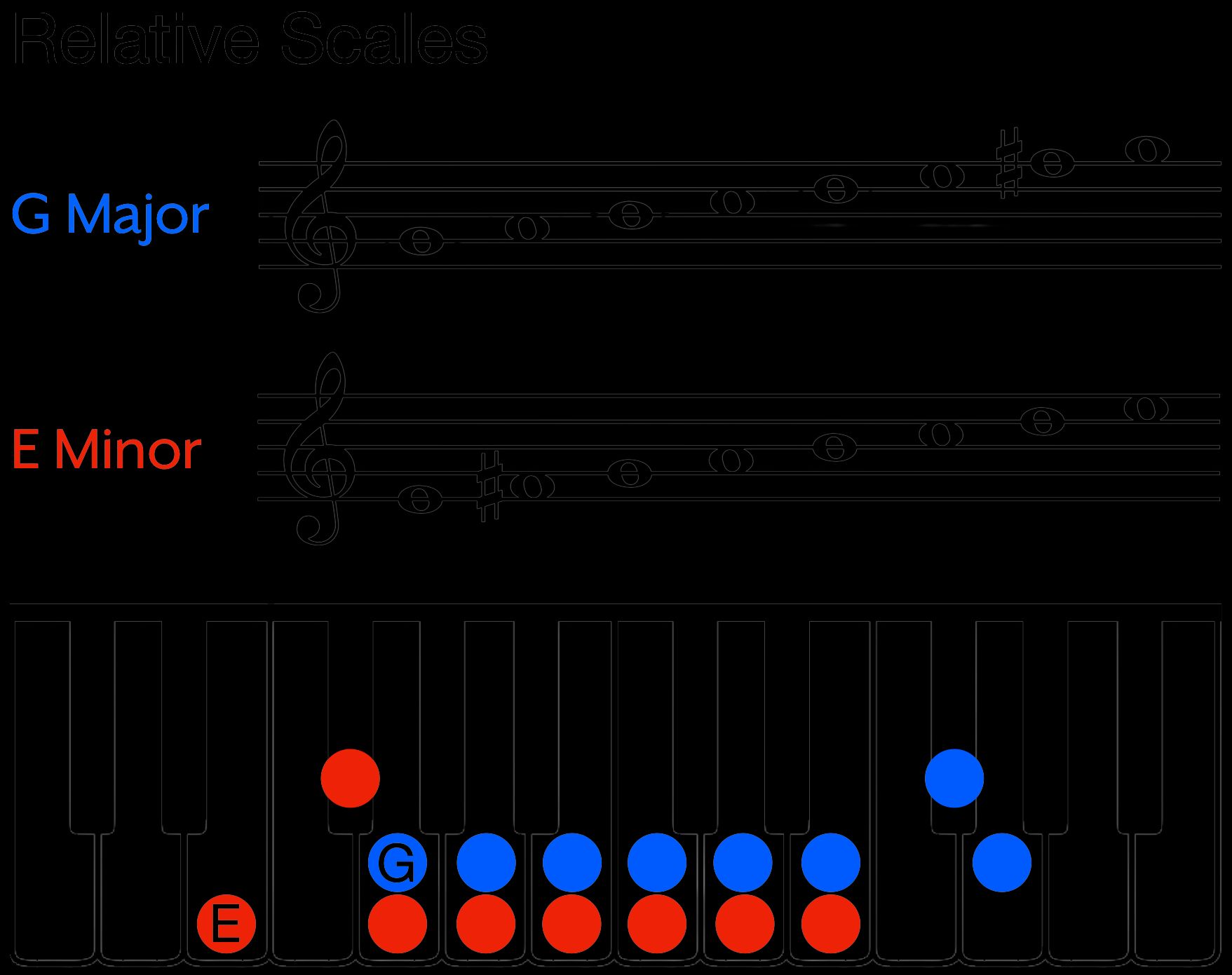
By contrast, relative scales use exactly the same notes, but not the same tonics. G major and E minor are relative scales:
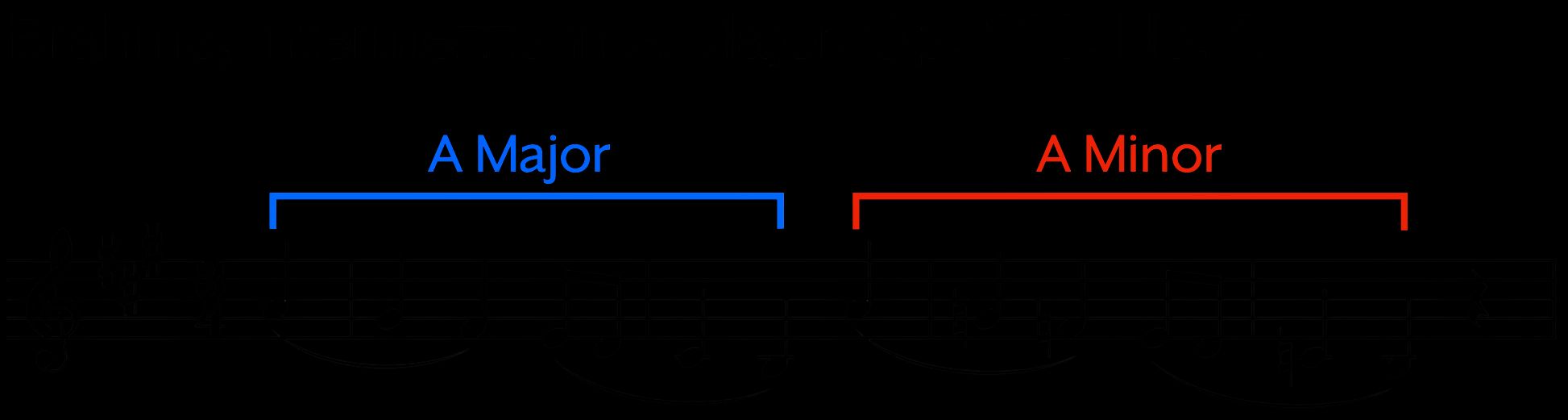
Composers sometimes change from a major scale to its parallel minor when a subtle, expressive shift in tone is called for. Brahms poignantly changes from an A major scale to A minor in his Intermezzo, Op. 118, No. 2:
How the relative minor relates to the circle of fifths
Now it’s time to organize all the minor scales by adding them to the circle of fifths. You’ve probably had a good look at this visual theory tool while you learned all your major scales. Because each major scale uses the same notes as its relative minor scale, each key signature represents both a major key and its relative minor key. On the graphic below, you’ll see capital letters for all the major keys in the outer circle. The lowercase letters on the inner circle are for all the relative minor keys:
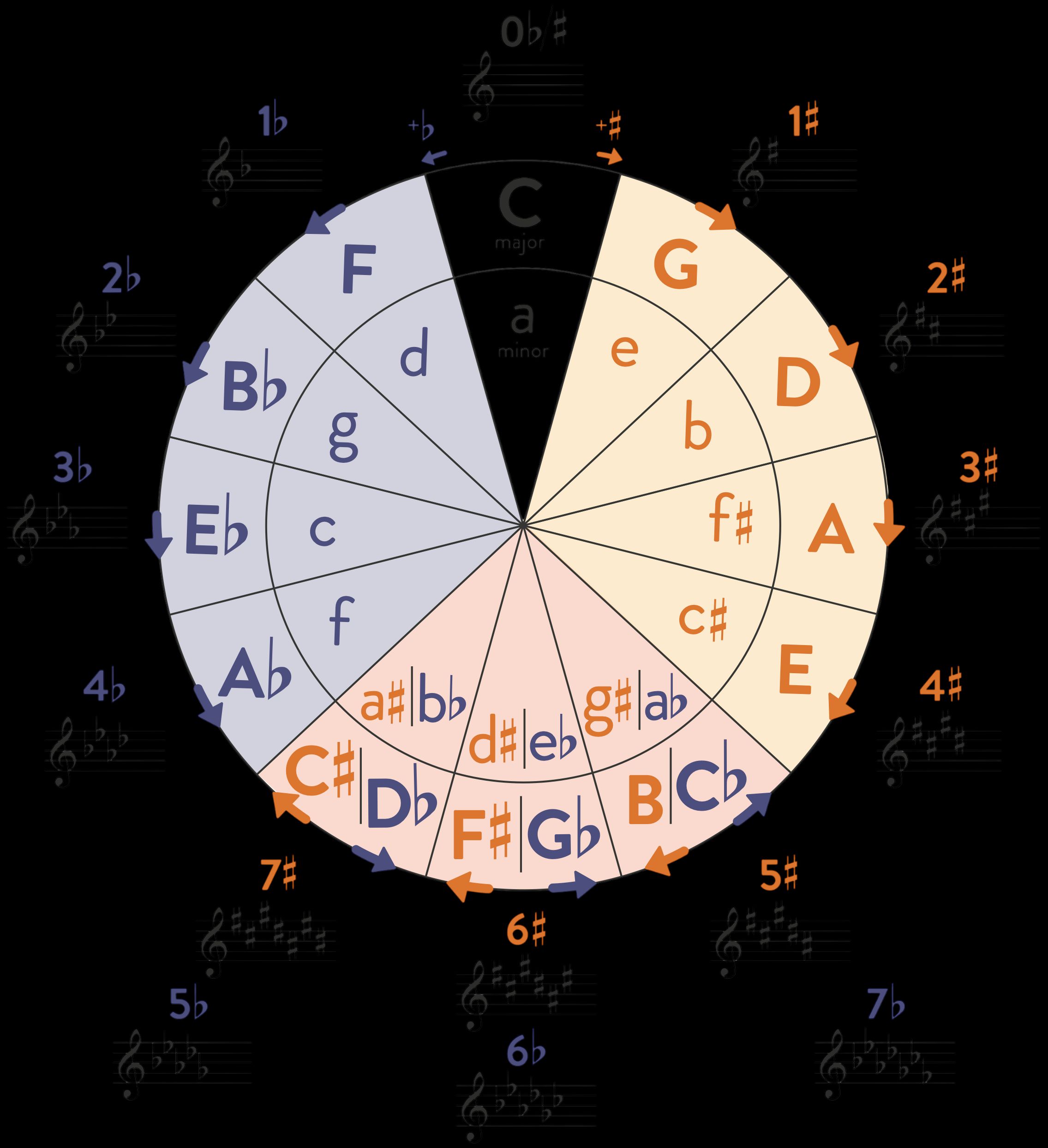
Notice that the relative minor keys follow the same ordering of sharps or flats as their relative major keys. Working clockwise on the circle of fifths, we keep adding sharps to our scales, while we add flats by moving counterclockwise. Finally, at the bottom, we encounter the enharmonic minor scales, just as with major scales. D-sharp minor, for example, is just a respelling of the same pitches used by the E-flat minor scale.
You can download our enharmonic key signature guide for free!
How to play relative minor scales on piano
Knowing how to play your major scales on the piano is a helpful foundation for learning relative minor scales. Natural minor scales that start on black keys will always have the same fingering as their relative major scales, just with different starting fingers. C-sharp minor, for example, uses the same fingers on the same keys as E major:
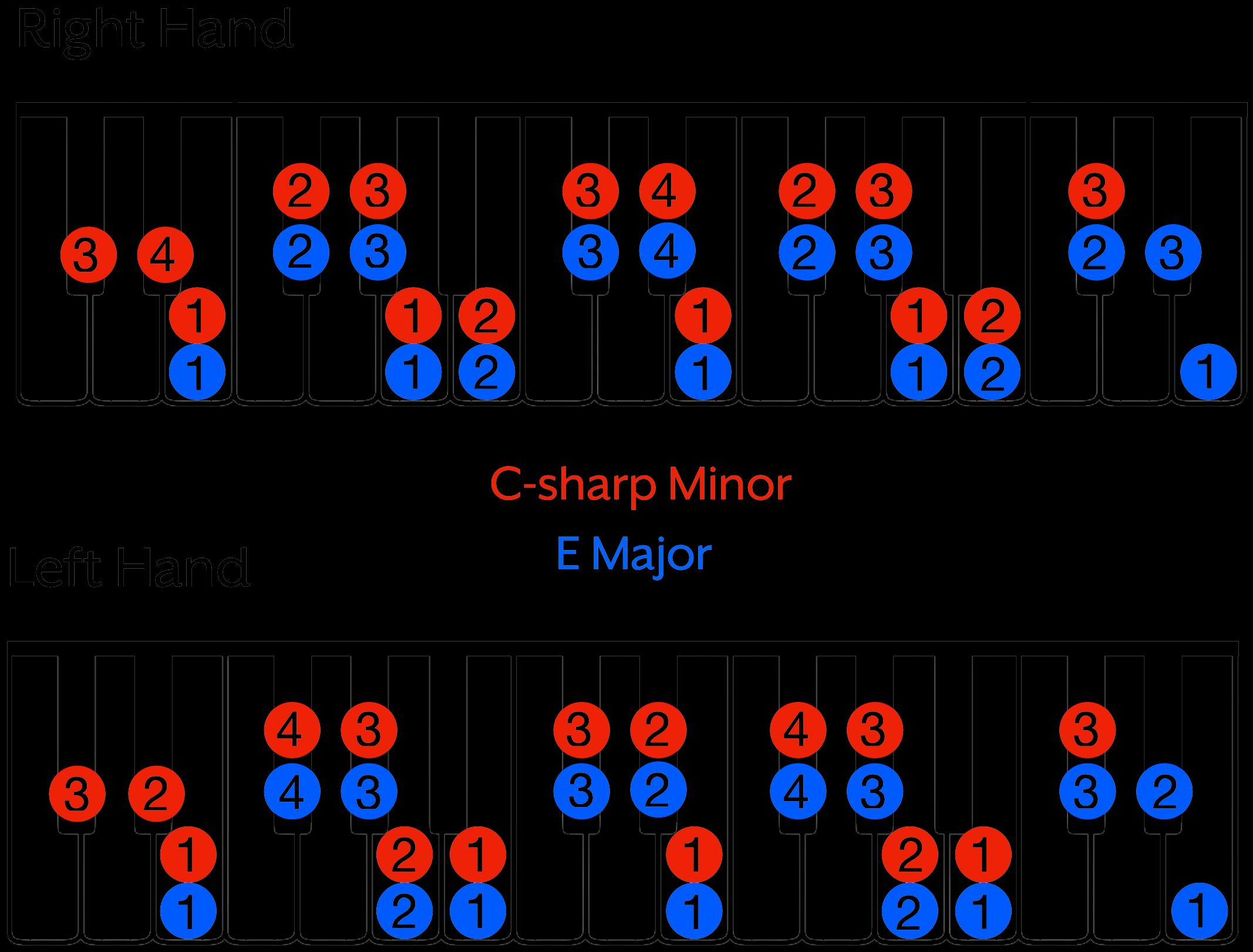
Note that this holds true provided that you continue playing the relative major scale (E major) for multiple octaves. When reaching the top on the right hand or the bottom on the left, finger 5 will substitute for finger 1 in E major.
Here are all the pairs of relative scales that use the same fingers:
- E major – C-sharp minor
- F-sharp/G-flat major – D-sharp/E-flat minor
- C-sharp/D-flat major – A-sharp/B-flat minor.
- A major – F-sharp minor
- B/C-flat major – G-sharp/A-flat minor
There are also two natural minor scales starting on white keys that use the same fingers as their relative major scales:
- E-flat major / C minor
- A-flat major / F minor
The remaining natural minor scales use completely different fingerings from their relative major scales:
- D minor
- E minor
- G minor
- A minor
- B minor
If you need more assistance, we have a free Minor Scales Fingering Guide to help you learn the fingering for all minor scales!
Why the relative minor matters for piano players
Relative minor is the counterpart to all major keys on the circle of fifths. By first learning the major scales in order of sharps or flats, you can make short work of all the relative minor scales. And, since relative scales have the same key signatures and use the same notes, piano players quickly double the number of keys they can play in by learning relative minor.
How composers and songwriters use the relative minor
Composers and songwriters use relative minor to bridge the worlds of major and minor keys. Modulation, or changing key, is quite effortless with relative minor. If the music is in a minor key, you can simply repeat a phrase in the relative major key without any intervening steps:
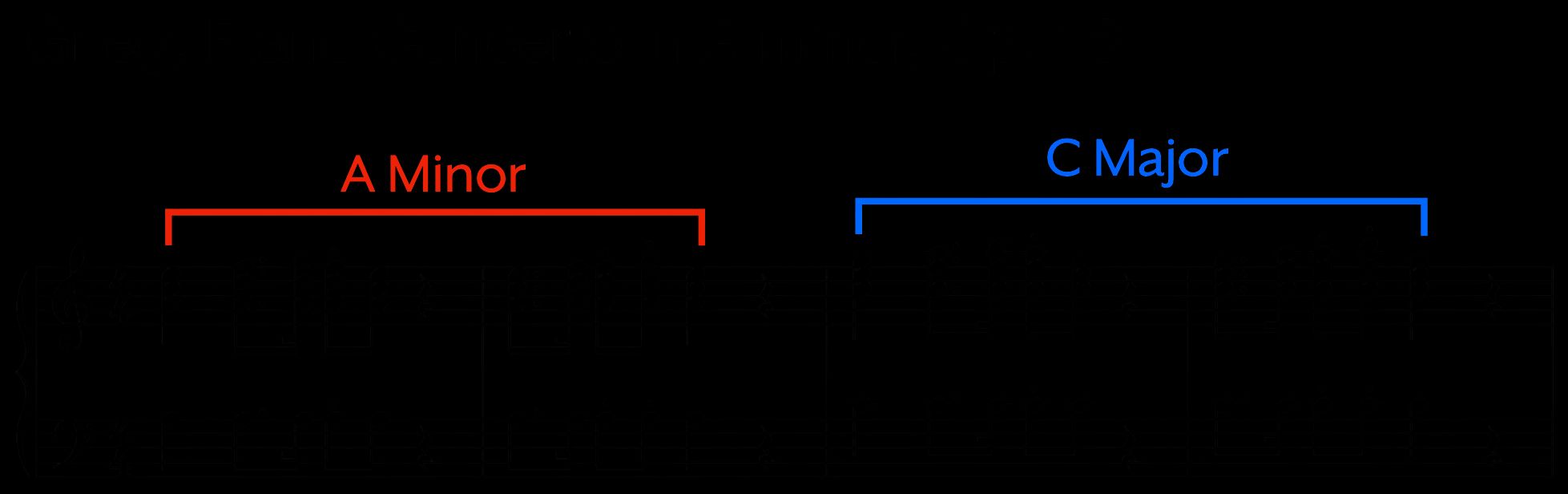
This is once again because C major and A minor, being relative keys, use exactly the same notes. Shifting back and forth poses no awkwardness, and makes sense to the ear. There’s no need for the more typical harmonic process of setting up a secondary dominant, a chromatically altered chord that creates a V-I cadence in the new key. With relative keys, you can simply hop back and forth, and you’re done.
Popular songs that use the relative minor you can play on piano
The first four chords simply alternate between C major and its relative, A minor. You can break these into arpeggios for a beautiful left-hand accompaniment to the melody:
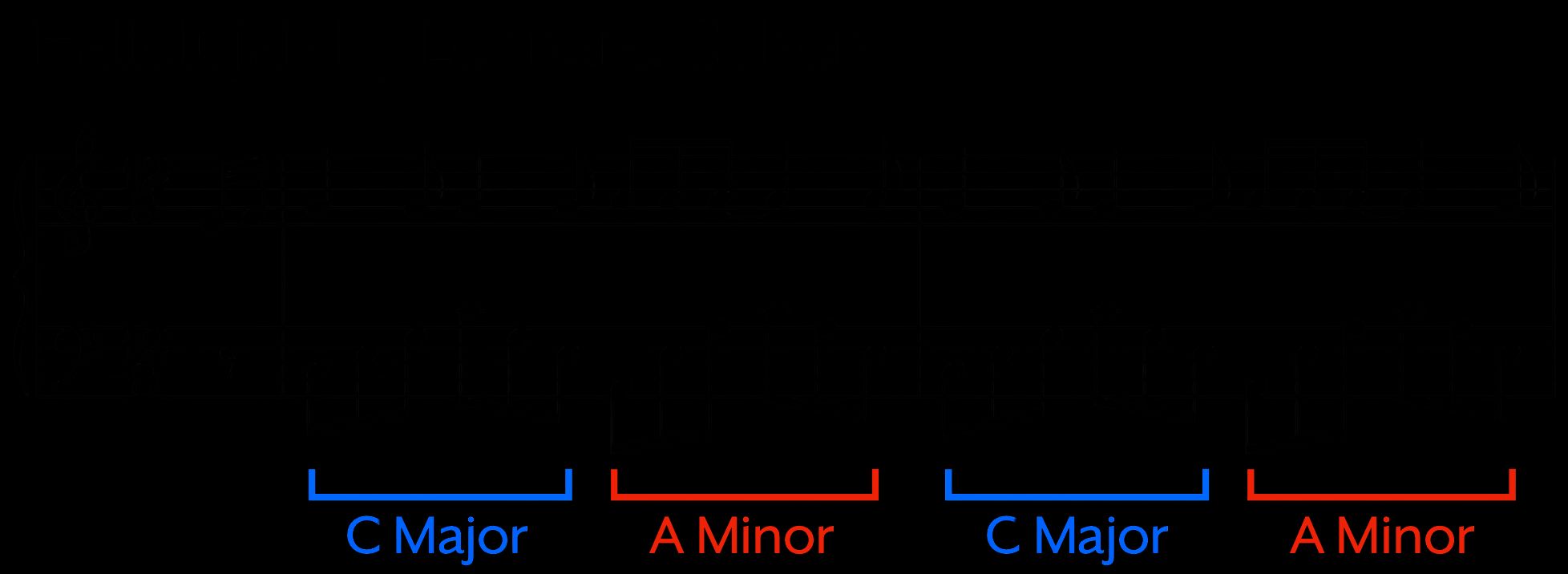
The A section of this famous piece also shifts between the relative keys C major and A minor.
The song is in the key of B major, but listen for the refrain “lie-a-lie,” which shifts dramatically to the relative key of G-sharp minor.
This song starts in G minor, then shifts immediately to the relative major key, B-flat major. A simple reduction of these chords on piano gives you a good starting point to improvise with relative keys:

Morning Mood from the Peer Gynt Suite by Edvard Grieg.
In measures 5 to 6, and again in measures 13 to 14, the D major chord changes to its relative, B minor.
How Hoffman Academy teaches relative minor and music theory
The Hoffman Academy video lessons start with the key signatures and the ladder of fifths for sharp major keys in Unit 8. Then we continue with the ladder of fourths for flat major keys in Unit 10. In the next several units, you’ll learn how to play each major scale, followed a few lessons later by its relative minor scale. Mr. Hoffman carefully shows how all the notes of the major scale have been shifted down, to illustrate that relative scales use the same notes. For some examples of this approach, try these lessons:
F major and D minor, Lesson 196 and Lesson 198.
B-flat Major and G minor, Lesson 205 and Lesson 210.
Where will the relative minor take you next?
To see how versatile relative minor can be, take any melody in a major key and simply move it down a minor third (three half steps). This will reorient the notes around the tonal center of the relative minor key. If it was good enough for Beethoven’s Emperor Piano Concerto, Op. 73…
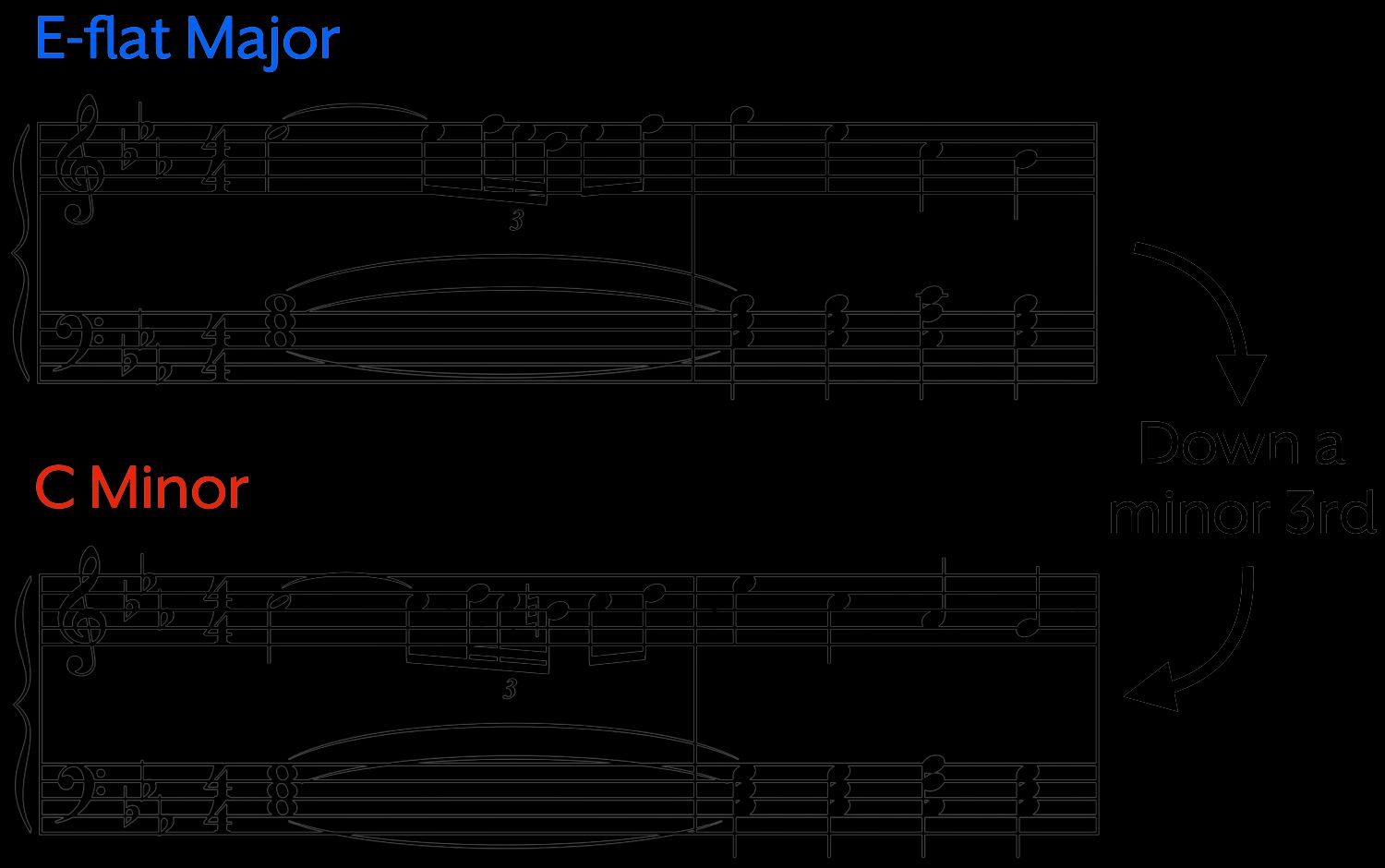
…you can do it with just about any tune! Try it with your favorite melodies and enjoy the depth that relative minor brings to music.