





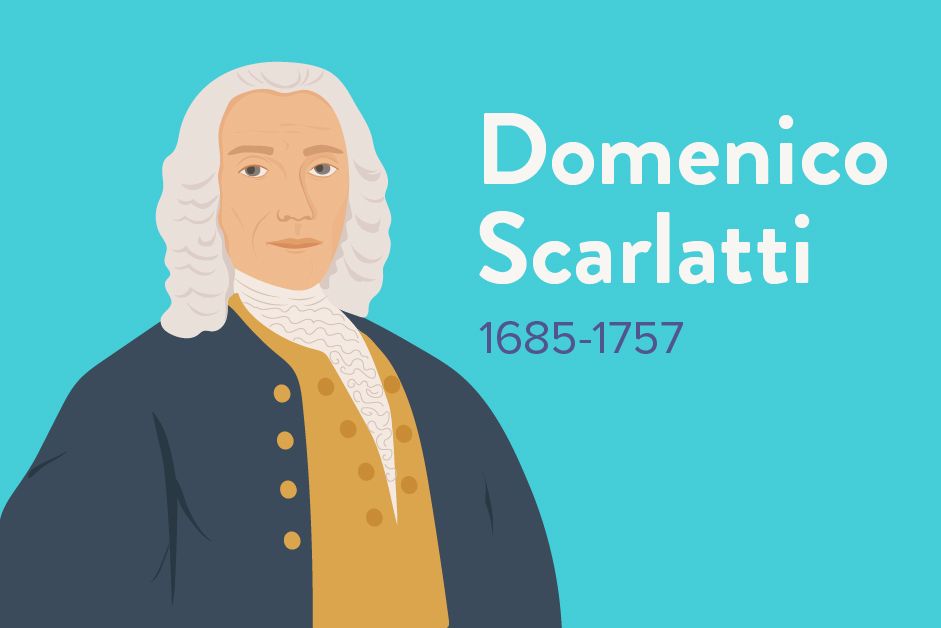
The same year that brought Johann Sebastian Bach and George Frederick Handel into the world also produced a third giant of Baroque music. Giuseppe Domenico Scarlatti was born in Naples on October 26, 1685, one of ten children. His father, Alessandro Scarlatti, had been a founder of the opera-centered Neapolitan School, and was his son’s first music teacher. Domenico showed such promise as a keyboardist that at age 15 he was appointed an organist and composer for the Chapel Royal of Naples. Like much of southern Italy, this chapel was an arm of the Spanish Court, and Domenico’s service there ushered in a long association with Iberian music styles.
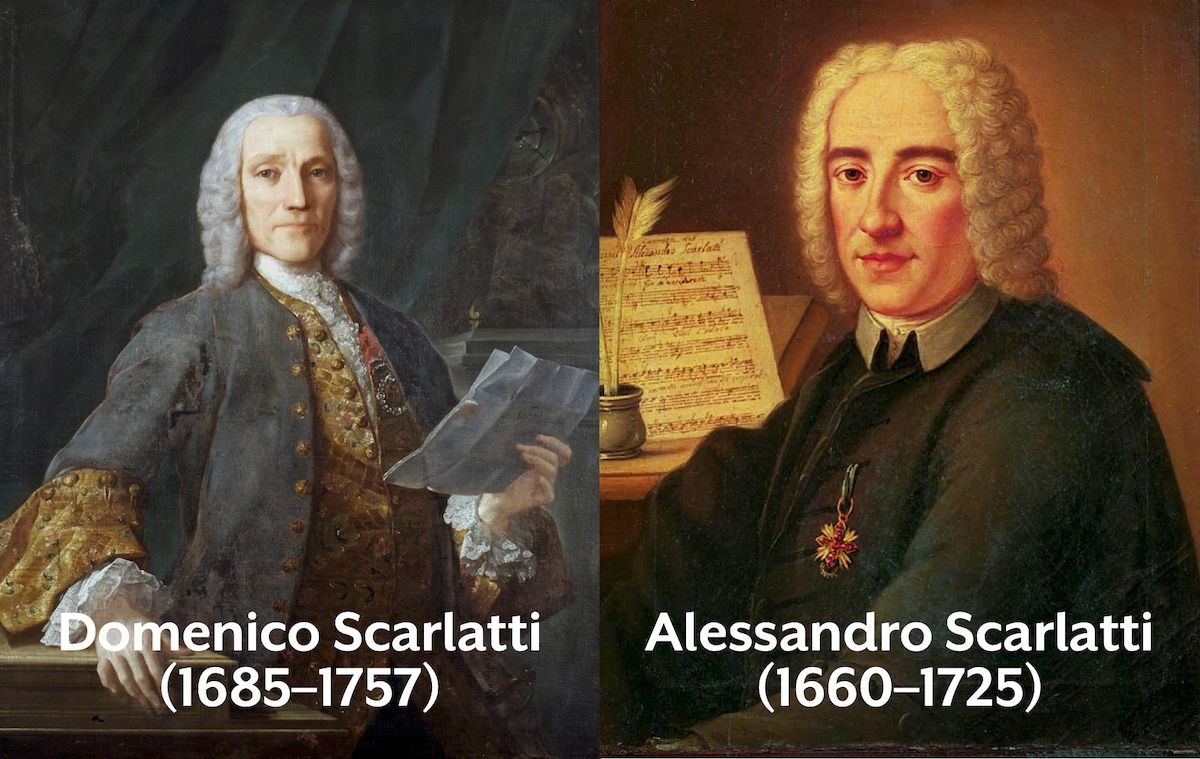
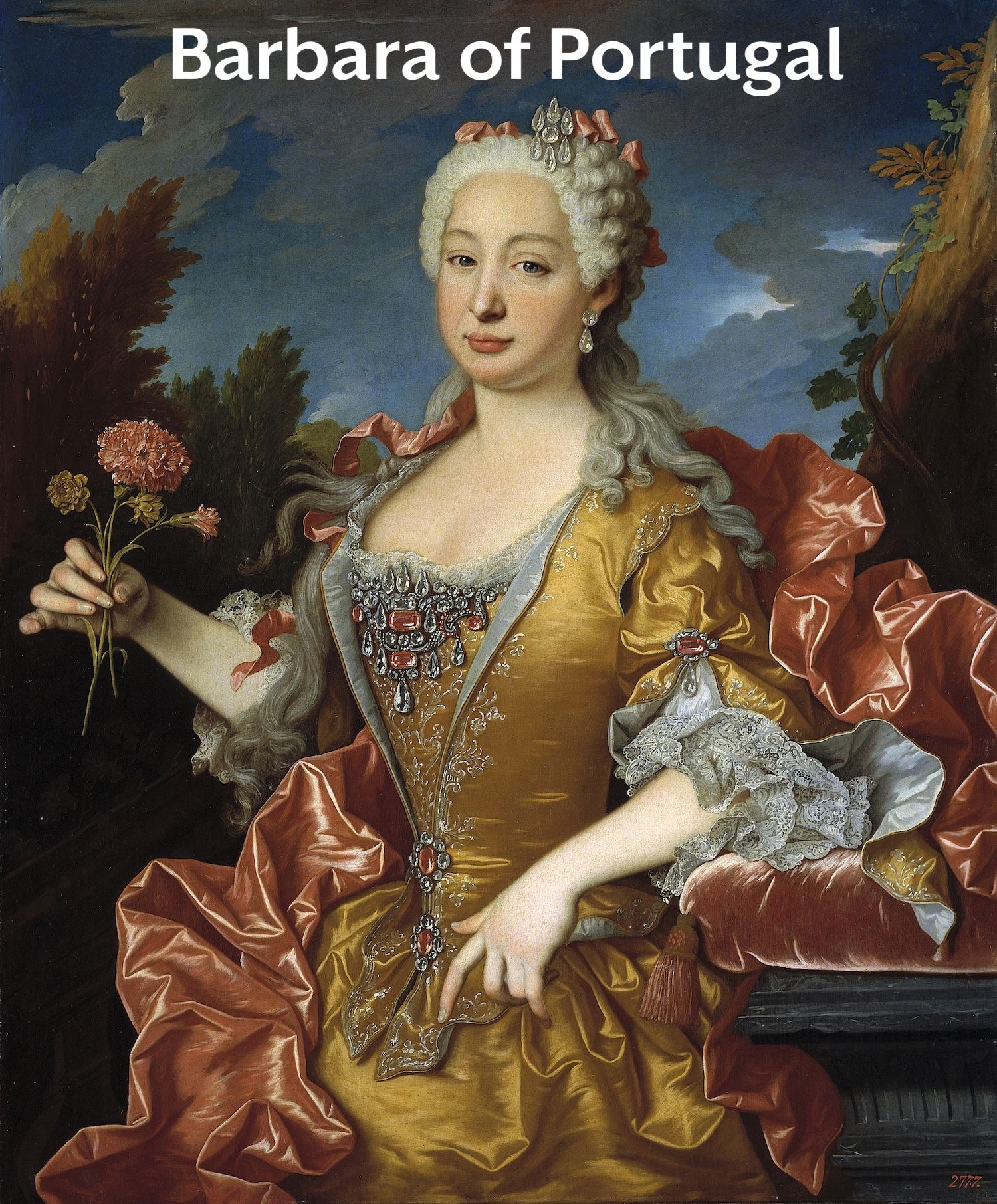
In 1709, after some time spent in Venice, Scarlatti came to Rome, where he met George Frederick Handel. Scarlatti spent four years as Maestro di Cappella at Saint Peter’s Basilica in what is now Vatican City. In 1719 he settled at the Portuguese Royal Court in Lisbon. Here he became music teacher to Princess Maria Magdalena Barbara, herself an outstanding keyboardist and musical patron.
After Scarlatti returned to Rome in 1727 and married Maria Caterina Gentili, the two of them moved to Seville. In 1733 Scarlatti resumed teaching Maria Barbara, who had since become queen consort to Ferdinand VI. The rest of Scarlatti’s life was spent in service to the Royal Court at Madrid, where he wrote most of his keyboard sonatas. He had five children with Maria Caterina, and died in 1757.
Let’s enjoy the ingenuity and expressive power of Scarlatti, and find out why his music endures to this day.
Browse the Hoffman Academy store for more than 800 sheet music titles, covering everything from Scarlatti to Scott Joplin!
What is Domenico Scarlatti most famous for?
Scarlatti wrote an impressive 555 keyboard sonatas, which have since become his greatest claim to fame. They were intended either for harpsichord or the earliest fortepianos, but they adapt beautifully to the modern piano.
Most of these sonatas are single movements in binary form, and they show an emotional range and stylistic diversity that set them apart from many other Baroque composers. They also vary in difficulty from relatively easy, such as the Sonata in D minor, K. 43, to advanced-level fugal showpieces like the F major Sonata, K. 82. For modern piano students, they are as indispensable to the Baroque repertoire–and any study of counterpoint–as the inventions and fugues of J.S. Bach.
The “K” numbers refer to a catalog of Scarlatti’s sonatas by 20th Century musicologist Ralph Kirkpatrick, not to be confused with the Köchel numbers used to catalog the works of Mozart.
Coming soon to Unit 18, Joseph Hoffman will be introducing lessons on how to play the minuet from Scarlatti’s Sonata in A major, K. 83! In the mean time, you can get the sheet music here.
What makes Scarlatti’s music unique? What were his influences?
A distinct mixing of international styles, great emotional depth, aggressive use of the keyboard, and harmonic boldness all characterize the keyboard music of Scarlatti.
Italian and Iberian Influences
Although Scarlatti was Italian, his long service to the royal courts at both Lisbon and Madrid brought him into contact with the musical styles of the Iberian peninsula. The resulting blend of Spanish and Italian approaches makes his keyboard sonatas stand out in the repertoire. Unlike the keyboard suites of J.S. Bach, which showcase movements that use different European dance forms, Scarlatti’s sonatas attempt to synthesize the instrumental approaches of both Spanish guitar and Italian keyboard music.
The Sonata in A minor, K. 149 offers many examples of rapid repeated notes, which resemble guitar picking:
In the B minor Sonata, K. 27, guitar-like arpeggios evoke an even more characteristic Spanish flavor:
This passage also shows harmonies typical of Spanish and Portuguese Fandango dance music. The descending bass line with scale degrees 1 – 7 – 6 – 5 supports a chord progression that ends in a Phrygian cadence, with the iv6 chord dropping a half step to V. This often-heard progression has since become iconic of Iberian music.
A juxtaposition of Sicilian and Spanish styles is clearly seen in the B-flat Major Sonata, K. 202:
Alongside Scarlatti’s use of the Phrygian cadence is the Siciliana rhythm, a pastoral staple of Italian and Sicilian music in 6/8 meter:
Expressive power
The emotional variety in Scarlatti’s music is impressive, from light, dancelike passages to works of the deepest sincerity and introspection. The minuet from the Sonata in A major, K. 83 sounds much like a court ball:
By contrast, the pathos and melancholy of his B minor Sonata, K. 87 are difficult to surpass, especially in the hands of pianist Vladimir Horowitz. Click the link above to hear his performance!
Keyboard technique
Scarlatti’s keyboard writing demonstrates a bold command of the instrument. His sonatas make full use of the keyboard’s range, an approach that would later inspire the sonatas of Mozart and Beethoven:
The same piece features an even more characteristic challenge: frequent wide leaps, sometimes with barely enough time to execute them. Note the left hand here:
Finally, Scarlatti called for plenty of hand crossings, still an adventurous technique in the early 18th Century:
Harmonic innovations
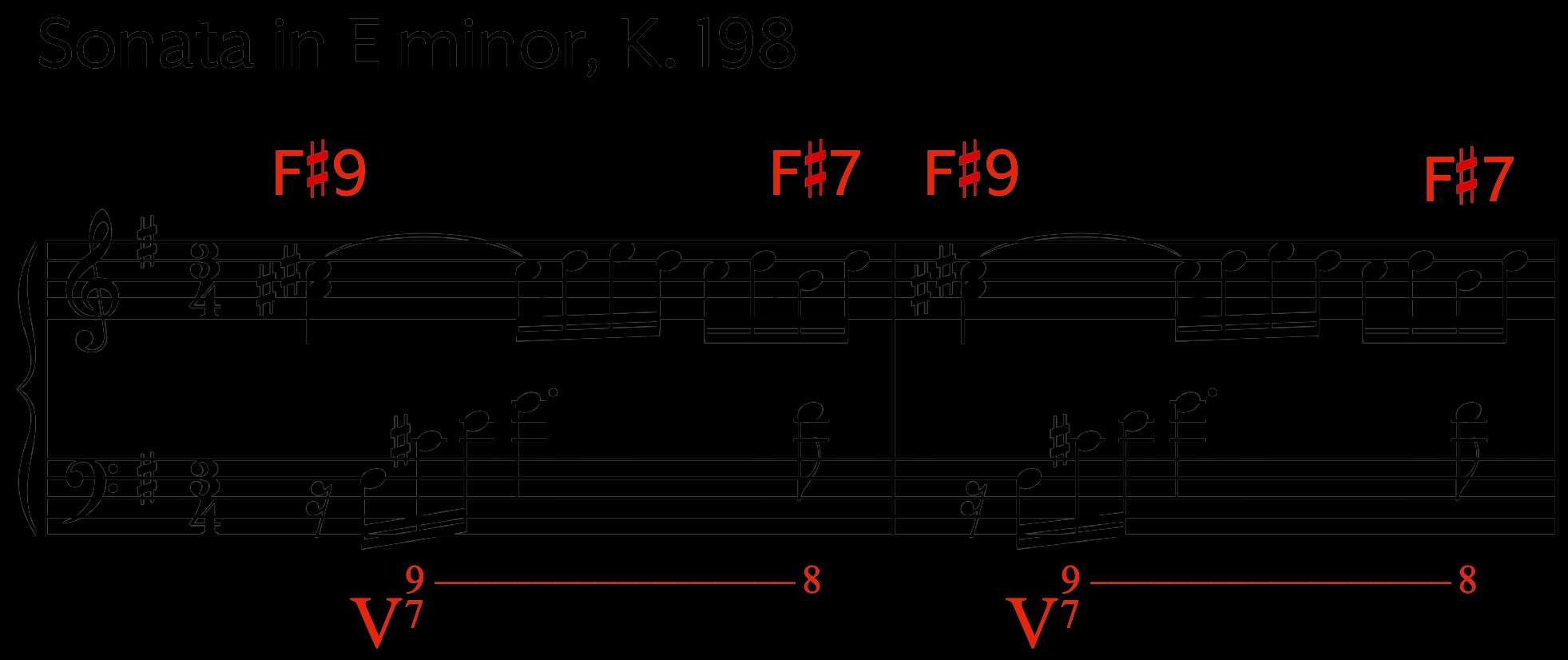
Scarlatti’s use of chromaticism (notes that are foreign to a particular key) was at times comparable to that of J.S. Bach. This made for dissonances that were fairly striking for his era. The Sonata in E minor, K. 198, has frequent ninth chords sustained over entire measures. Below you can see these dominant seventh chords with added ninths acting as suspensions:
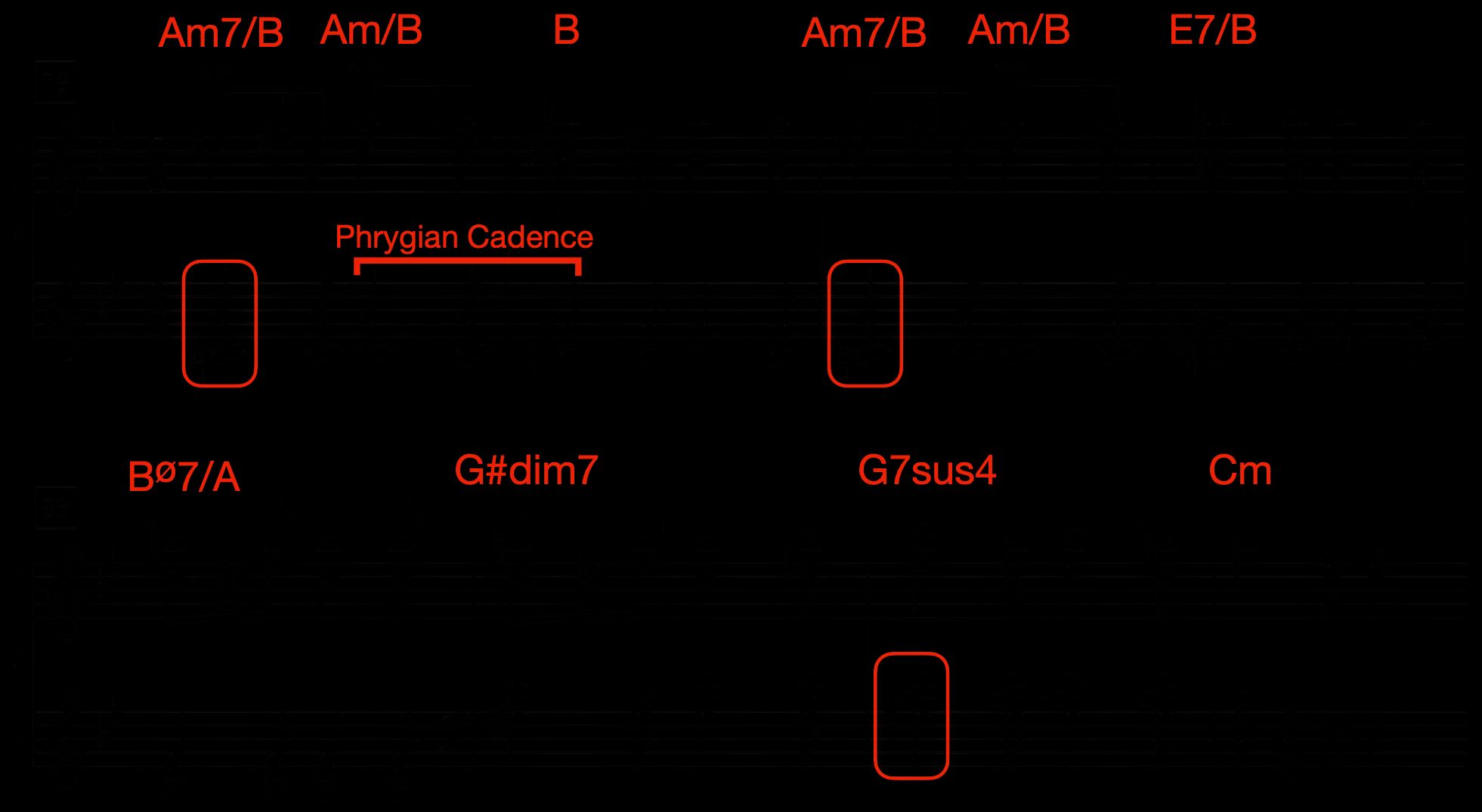
Returning to the Sonata in B-flat Major, K. 202, we see Scarlatti pushing the envelope even further. In the excerpt below, the Phrygian cadences take place over a pedal tone, B, which clashes with the left hand’s C (note the first two red boxes). A similar dissonance happens in the penultimate measure, where the right hand’s leading tone B clashes with a stubborn C in the left hand. Finally, through an unexpected series of chords including half diminished and fully diminished sevenths, a passage that started in the key of E minor winds up in C minor. This is a very intrepid harmonic journey for a late Baroque composer.
What are Domenico Scarlatti’s most famous pieces?
Scarlatti’s Sonata in G minor, K. 30 is popularly known as the Cat’s Fugue. The three-part counterpoint is based around a main theme that sounds like a cat stealthily climbing the notes of the staff. The theme’s strange, almost non-tonal sequence of intervals and numerous syncopations throughout the piece have made this one of Scarlatti’s most enduring favorites.
The Sonata in E Major, K. 380 is another often-performed keyboard work by Scarlatti, and this performance is on harpsichord, the most likely instrument on which it would have been played.
Who are the contemporaries of Scarlatti?
Both Johann Sebastian Bach and George Frederick Handel were born the same year as Scarlatti. Other contemporaries included Georg Philipp Telemann and Antonio Vivaldi (whom Scarlatti may have met as a young man in Venice before coming to Rome). These composers represented the towering figures of the late Baroque period, whose careers occupied the first half of the 18th Century.
What are some fun facts about Domenico Scarlatti?
Scarlatti and George Frederick Handel met in Rome around 1709. They had a contest of skill at the palace of Cardinal Ottoboni, where Scarlatti was judged the better harpsichordist, and Handel the better organist. After this friendly exchange, the two remained lifelong friends, and Handel’s prowess at the organ inspired Scarlatti to make further study of the instrument.
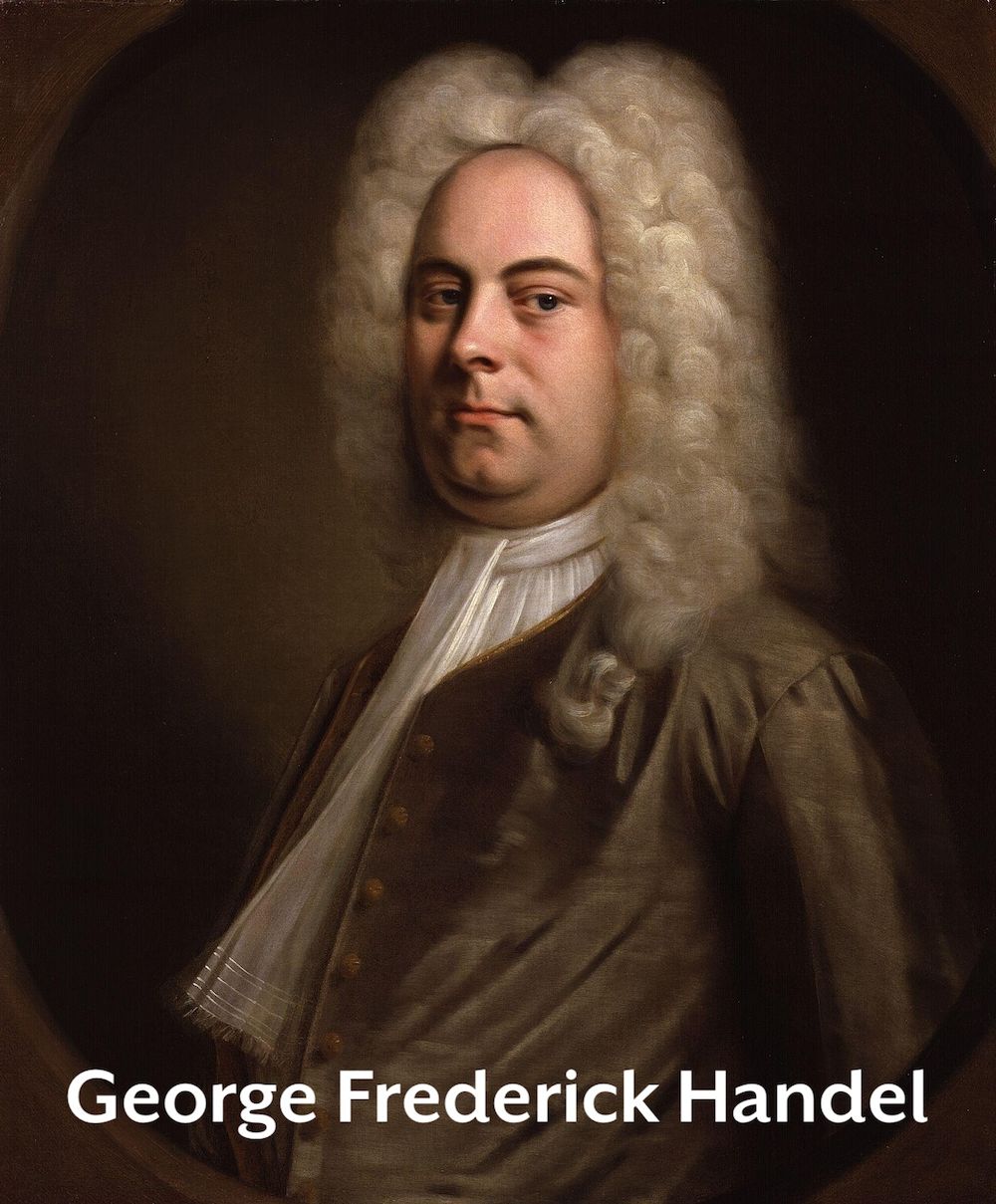
Neither Scarlatti nor Handel ever met Johann Sebastian Bach, despite being exact contemporaries. This was likely because Bach never left the German states, while Scarlatti was much more cosmopolitan.
After serving as Maestro di Cappella at Saint Peter’s, Scarlatti went to London in 1719 to premiere his opera Narciso for the King’s Theater. He was there only for a matter of months, possibly due to a lukewarm reception, and left for Lisbon late in the year.
Like Bach, Scarlatti was better known in his lifetime as a performer and teacher rather than as a composer. It would not be until the 19th and 20th Centuries that his true compositional impact was recognized.
Unlike his father, Alessandro, whose career was centered on opera, Domenico Scarlatti composed only a handful of operas. He also wrote sacred choral pieces including a Mass, Magnificat, and Te Deum, and a number of secular cantatas.
When Ferdinand became king in 1746, he hired the famous castrato Farinelli as opera director, whose correspondence with Scarlatti ensured the survival of the composer’s life details.
Scarlatti sheet music
You can find a number of Scarlatti’s keyboard sonatas in the Hoffman Academy Store, and if you have an appetite for more, check out the International Music Score Library Petrucci (IMSLP) for all 555 of these remarkable pieces!
Why Scarlatti still matters to musicians
J.S. Bach, Mozart, Beethoven, Chopin, Brahms, and Bartók were just a handful of the composers who praised Scarlatti’s musical style and considered him a serious influence. The great 20th Century pianist Vladimir Horowitz championed him right alongside Chopin and Rachmaninoff. And Scarlatti’s keyboard sonatas remain a masterful assimilation of Italian and Iberian methods.
Today, many graduate-level recitals include a Domenico Scarlatti piece to demonstrate both virtuosity and expressiveness. No study of Baroque music is complete without a long look at Scarlatti’s imitative counterpoint. And, for listeners, one could hardly do better than an afternoon with a Scarlatti sonata or two!