





What is an augmented chord? Learn the definition, formula, and sound
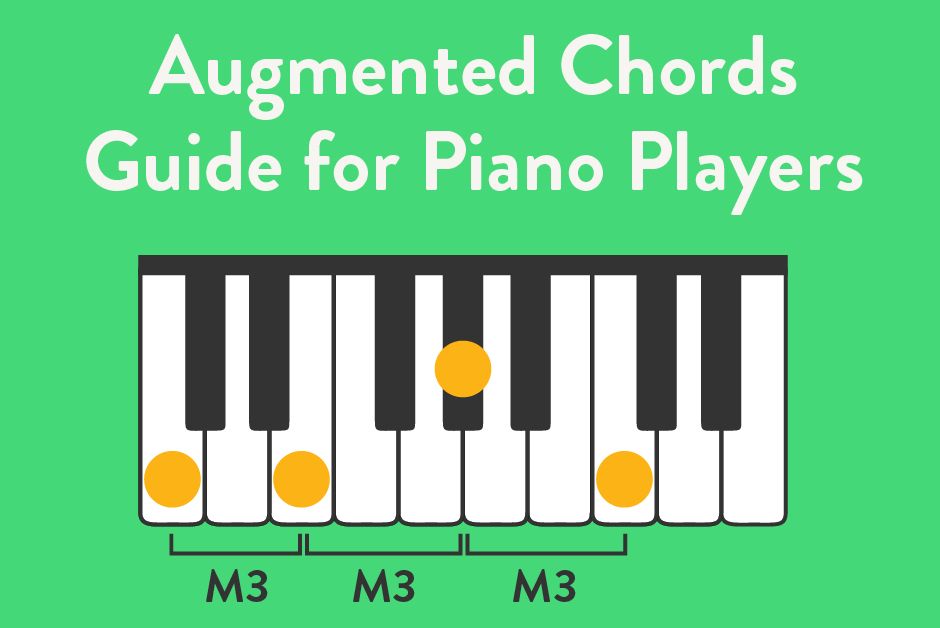
An augmented chord is a triad, or three note chord, created by stacking two major thirds on top of each other. It’s different from the major chord, which has a major third on the bottom and a minor third on top, the minor chord, which has a minor third on the bottom and a major third on the top, and the diminished chord, which is made from two minor thirds.
Every type of chord has a sound that gives it a unique “personality.” Major triads sound bright and cheerful, minor triads are grim and somber, and diminished chords project anger or confusion. But there is another triad that sounds like it’s just waking up from a dream. You can hear a whole soundscape of them in Paul Dukas’s The Sorcerer’s Apprentice:
These are augmented triads, which seem to drift in a fantasy realm, free from any grounded key area. They add strange, beautiful colors to a passage, and function well as passing harmonies and modulation devices. We’ll take a deep look at these mercurial chords, and discover what gives them their magic.
Put all the chords at your fingertips with Hoffman Academy’s Ultimate Piano Chord Chart.
What is unique about an augmented chord’s structure?
Like the diminished seventh chord, the augmented triad is symmetrical. It’s built from only one interval, the major third, which is made up of four half steps. Stack one major third on top of another and you have an augmented triad. On the keyboard, simply choose any key, go up four half steps, and then up another four:
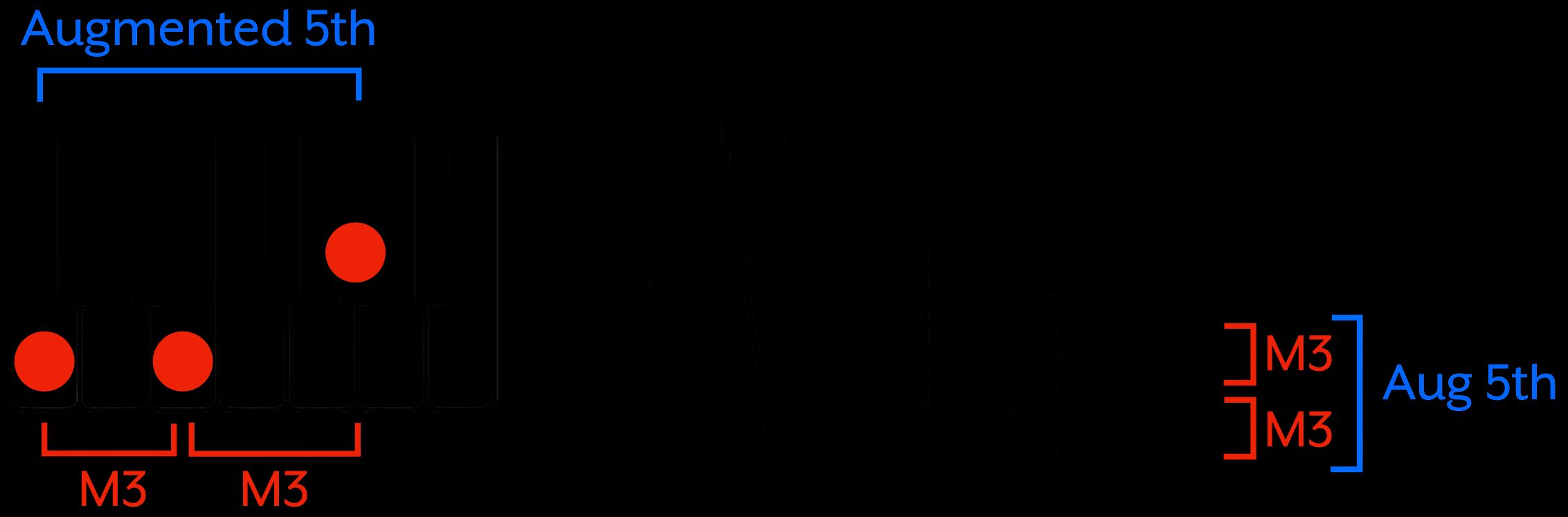
If we stack yet another major third on top of the augmented triad, we reach the octave and simply repeat our starting pitch:

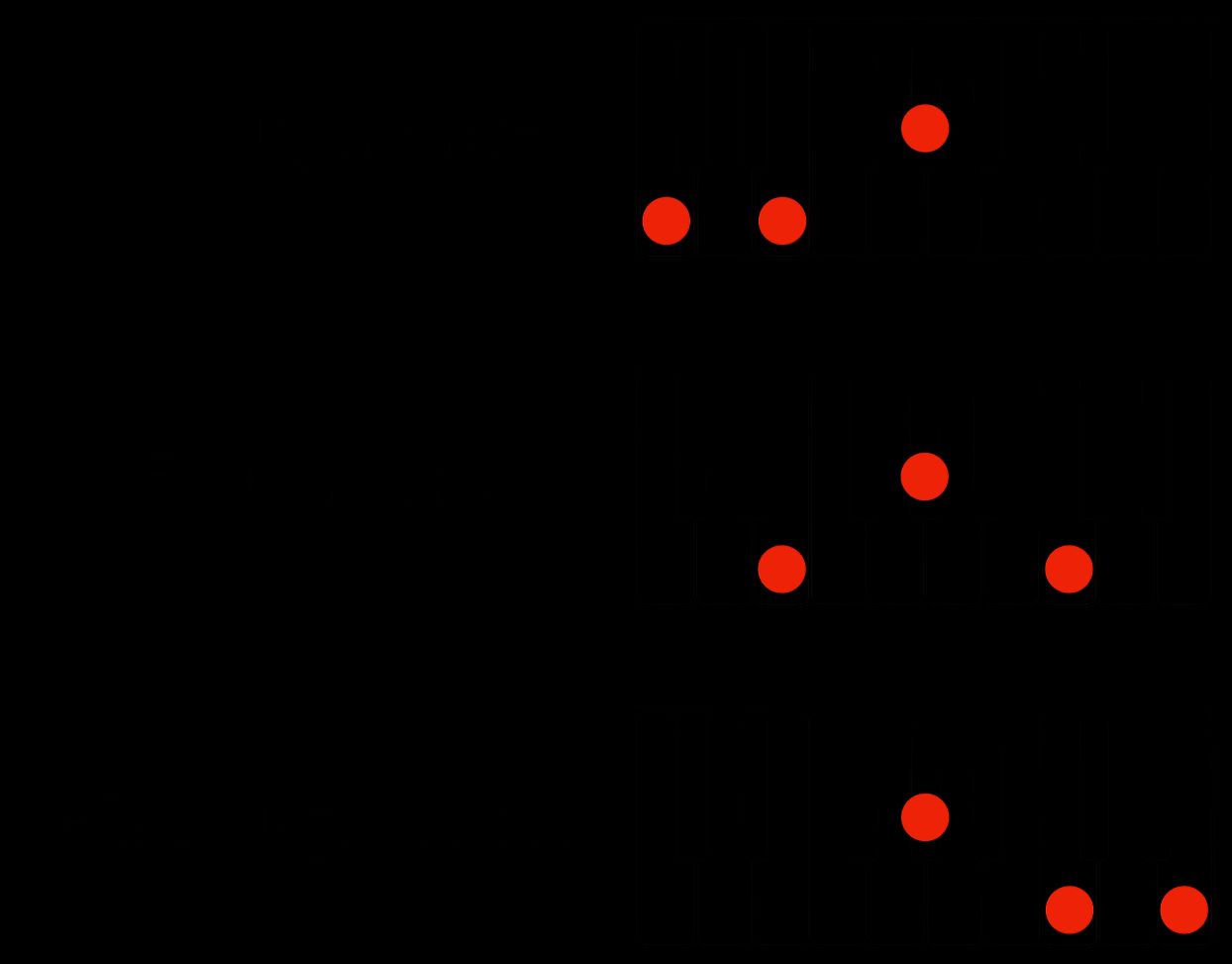
This symmetry means the augmented triad retains the same intervals when inverted. A C augmented triad inverts to an E augmented, which in turn inverts to a G-sharp or A-flat augmented. All three pitches, C – E – G sharp, can function as the root of a different augmented triad:
What is the symbol for an augmented chord?
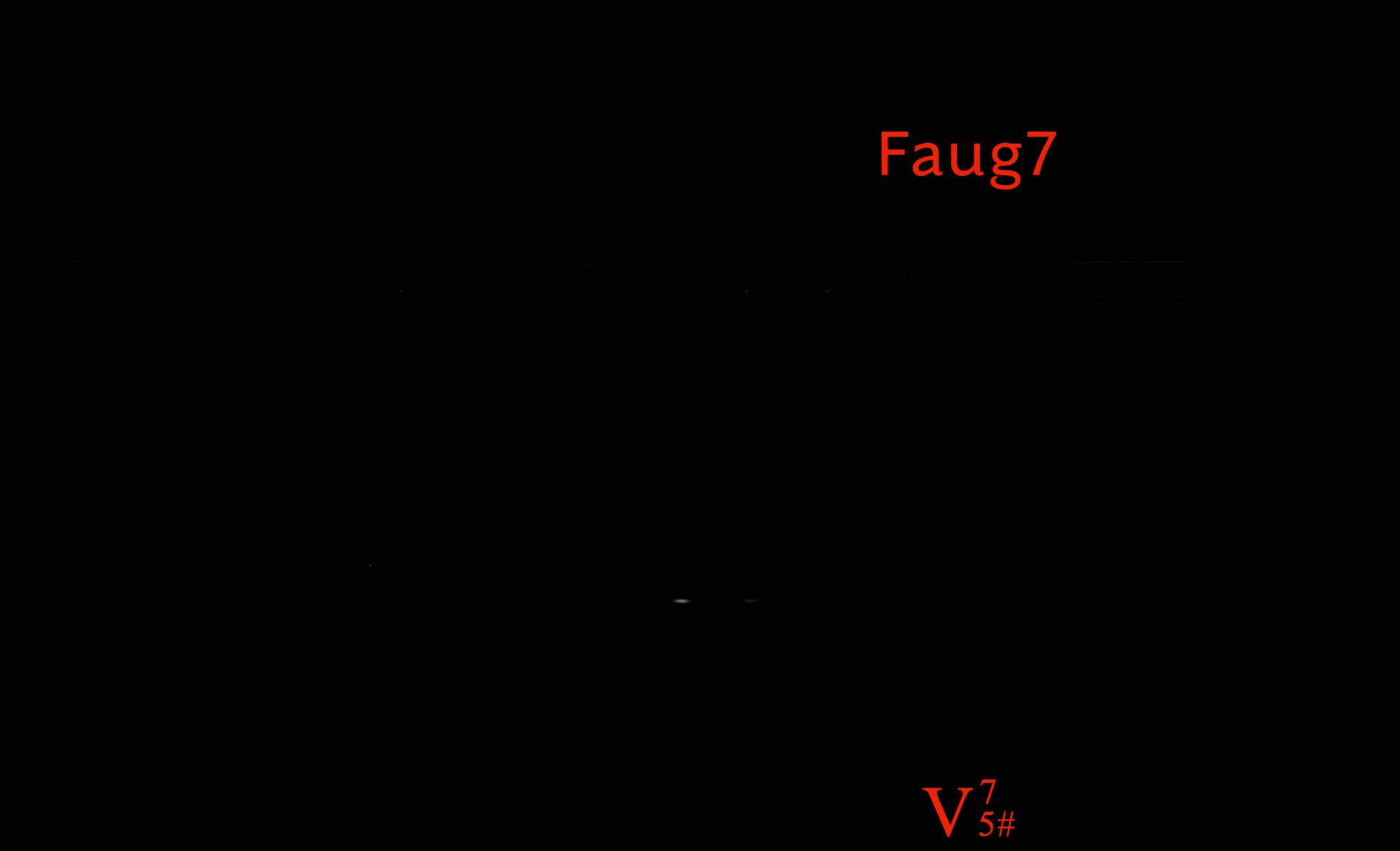
In figured bass, augmented triads are indicated with a + sign after the chord name. The chord symbol has the abbreviation “aug” after the letter name:

When to use augmented chords on piano: Understanding the purpose of these chords
Sound Quality
Triads are outlined by the interval of a fifth. But, while major and minor triads contain a perfect fifth–giving them a stable, restful quality–agumented triads are outlined by an augmented fifth. This makes them sound unanchored and restless. In a middle-treble register they can even have the quality of a faraway train-whistle:
Augmented triads are most at home in music where dreamlike, fantastic, even supernatural associations are called for. Because European composers of the 19th Century were fascinated by old legends, the Romantic Period boasts music rife with augmented triads. The final opera of Richard Wagner’s Ring Cycle, Götterdämmerung, makes extravagant use of them:
Passing Chords
Let’s start with a I chord in the key of C major. Then raise the fifth, G to G sharp, turning this C major triad into C augmented. Raise the augmented fifth one more half step, and now it’s a major sixth, giving us a first-inversion vi chord, A minor. So the interval of an augmented fifth makes an effective passing tone between the C major chord’s perfect fifth and the major sixth of the A minor chord:

As a result, augmented triads often function as passing harmonies between more stable chords. You can hear one in the 1963 Lesley Gore version of It’s My Party by Herb Weiner, John Gluck Jr., and Walter Gold. The backup vocals change the I chord to an augmented triad on the first “cry if I want to,” on the way to a IV chord:

Beethoven makes similar use of an augmented chord in the third movement of his Symphony No. 9, Op. 125. You’ll hear it first in the strings, then immediately after in the winds. This passage is in the key of B-flat major, and you’re hearing the V chord (F major) resolving to I (B-flat major). But the fifth of the F chord, C, raises to C♯, stretching the fifth into an augmented fifth and making it yearn poignantly for resolution up to the D of the I chord. You’ll also notice that the V chord has an E flat added, making it an F7 chord. So Beethoven’s augmented triad is really an augmented seventh chord, giving extra dissonance and color:
Modulation: six places to go with one augmented triad
The symmetry of augmented triads allows them to slip effortlessly into different keys. Simply lower any note a half step and the chord becomes a new major triad. In a C augmented triad, lower the root, C, a half step to B and you’ve got an E major chord:

Lower the third, E, to E flat and that gives us an A-flat major triad (the G sharp has been enharmonically respelled):
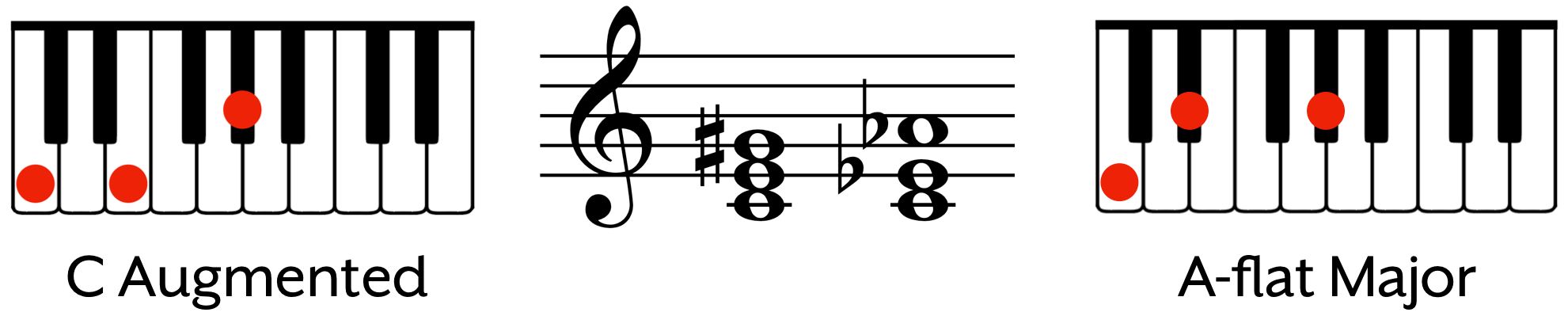
Finally, lowering the G sharp to G brings us to a C major triad:

Now listen to the way a C augmented triad sounds when it moves to all three chords: first to E major, then A-flat major, and finally C major:
In addition to three major key areas, a single augmented triad can also move to three minor keys. This time we’ll raise each note a half step, producing a different minor triad each time. Raise the root of our C augmented triad a half step to get C-sharp minor. We can also get F minor by raising the third, and A minor by raising the fifth:
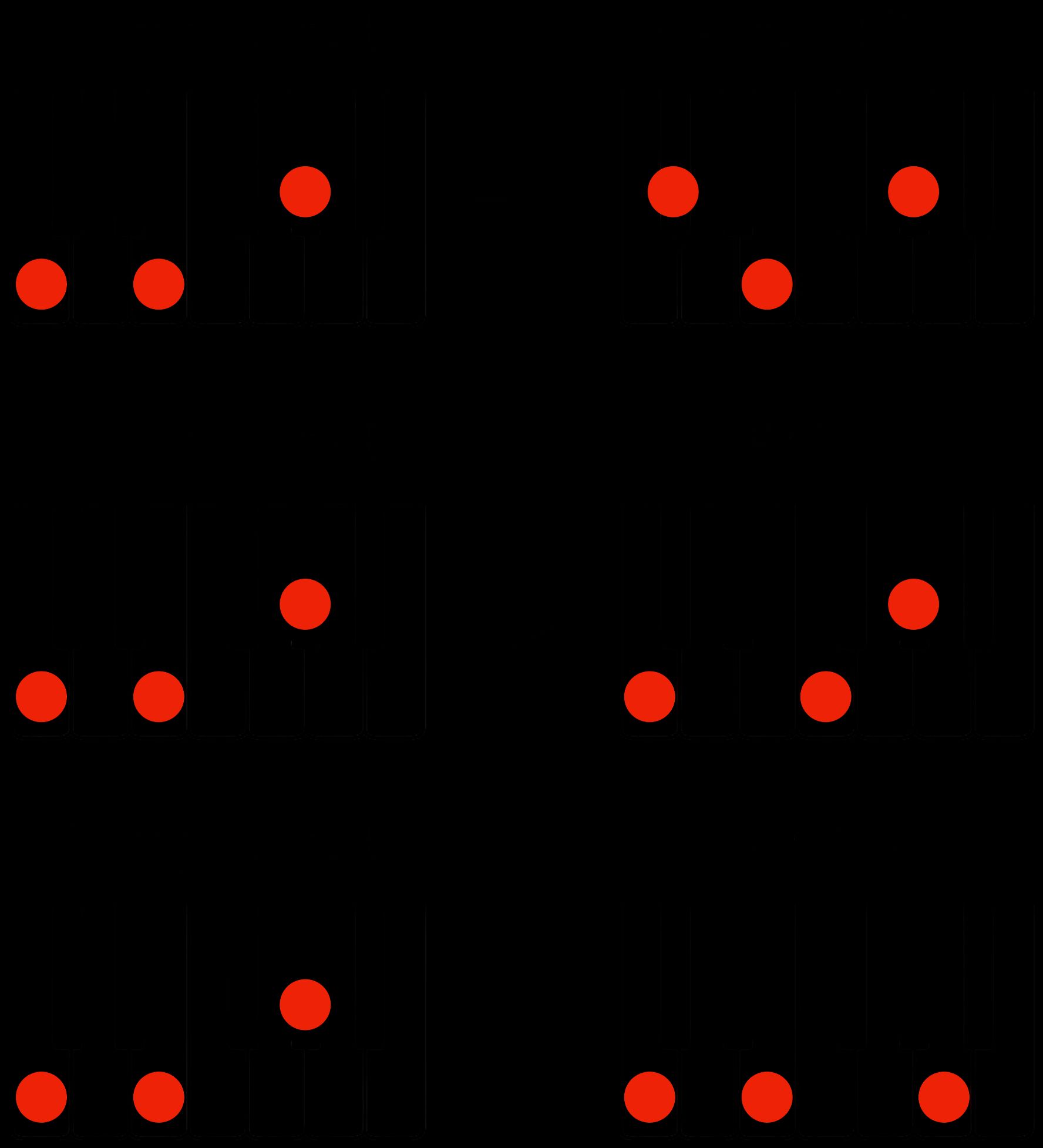
This “sliding” into different keys permits augmented triads to modulate more easily than the conventional process of tonicizing a new key area. As a result, you’re more likely to hear it in late 19th Century music, when established tonal practices were unraveling.
What scales produce augmented triads?
Augmented triads are unique in that they can’t be built from diatonic scales, like major, natural minor, or the modes. They require chromaticism, and there are three commonly used scales in which you’ll see them.
Harmonic and melodic minor
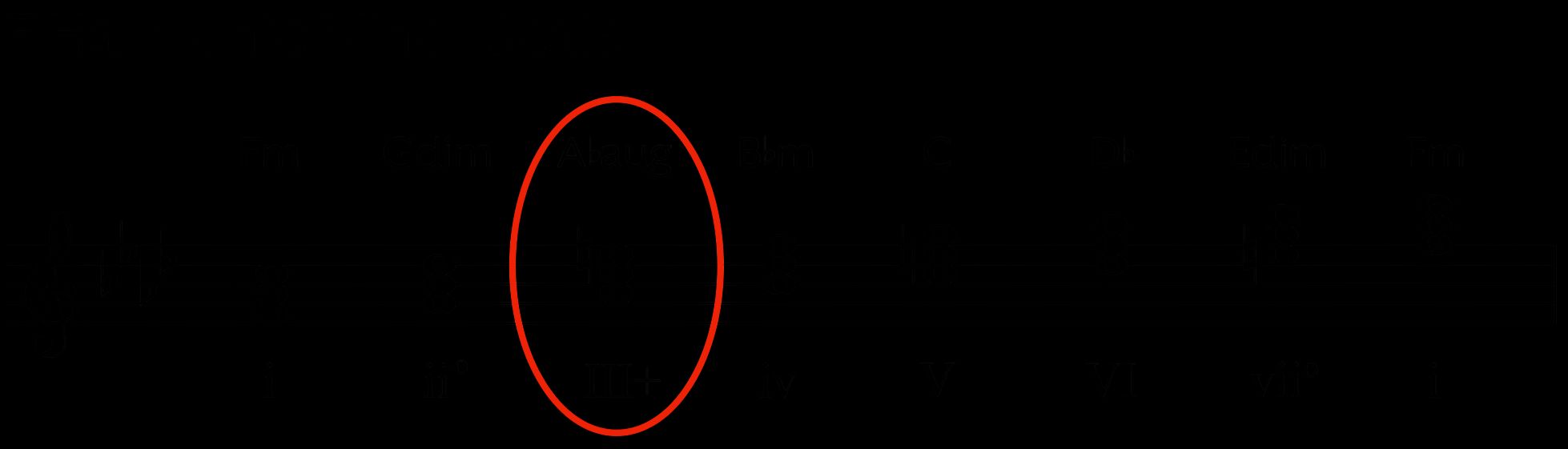
The natural minor scale results in a major III triad. But, by having their seventh scale degrees raised a half step, both harmonic and melodic minor scales produce an augmented III chord:
Whole tone scale
There is a scale that produces nothing but augmented triads: the whole tone scale. Made entirely from whole steps, it cannot produce perfect fifths–only augmented fifths. This ensures that, no matter which scale degree you build a chord on, they all come out as augmented triads:

For a comprehensive guide to every scale you can think of, try our One Book of All Piano Scales!
What’s the relationship between augmented and diminished chords?
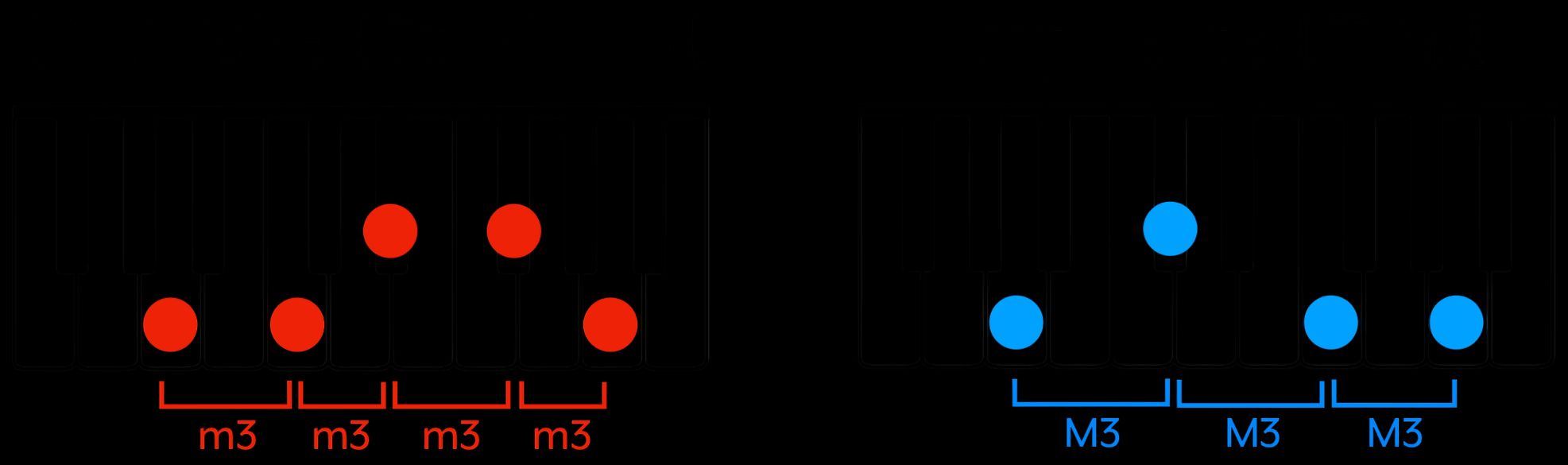
While sounding quite different, the augmented triad and diminished seventh chord are both intervallically symmetrical. The octave can be divided into four equal minor thirds, as in the diminished seventh chord, or three equal major thirds, as in the augmented triad:
Examples of songs that use augmented chords
Richard Rodgers, Some Enchanted Evening, from South Pacific
Listen for the orchestra’s quiet shift from the I chord to an augmented triad on the way to the IV chord. The augmented triad is a passing chord between the two harmonies.
Chopin, Prelude in D minor, Op. 28, No. 24
Listen to the stable D-flat major arpeggios of the left hand become D-flat augmented triads. When the music crescendos, the bass note moves up a half step to D, and the augmented triad becomes D minor. This is yet another example of an augmented triad being used as a passing chord.
Dukas, The Sorcerer’s Apprentice
In this famous symphonic tone poem, augmented triads are used more for their coloristic effect than for functional harmony. This exaggerated interest in timbre was one of several late 19th Century trends that led to the dissolution of common-practice tonality.
Debussy, Voiles, Préludes pour le piano, No. 2
This eerie piano prelude is composed almost entirely of whole tone scales. As the opening figure descends in thirds, the listener is washed in an atmosphere of augmented triads.
What are augmented sixth chords?
As with so many musical terms, the word augmented can apply to more than one concept. There is a class of chords based on a special interval: the augmented sixth. It’s enharmonic with a minor seventh, but it resolves in a completely different way. An augmented sixth above F, for example, is D sharp, and as you can see below, the interval resolves outward to an E octave:
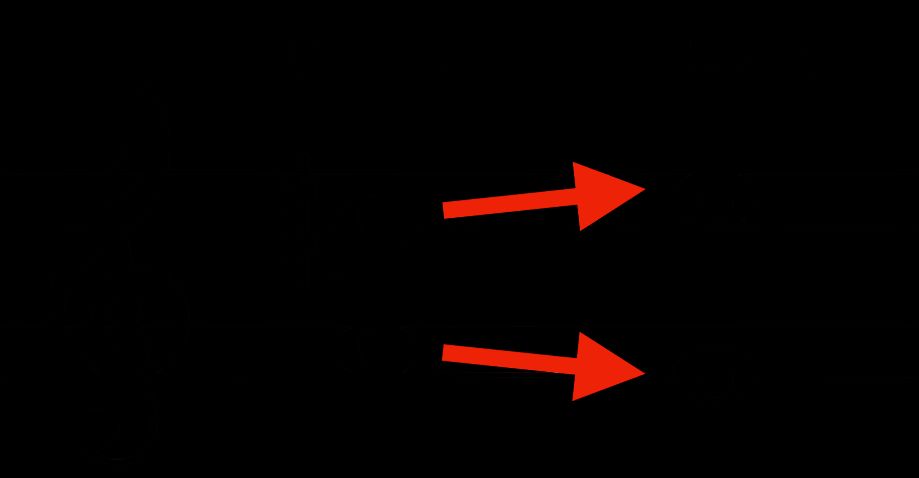
There are three chords that make use of this resolution, and, not surprisingly, they’re called augmented sixth chords: the Italian, German, and French sixths. In minor keys, they’re typically found with their bass notes on LE (a half step above SO), and resolve to either V or cadential 6/4. The three augmented sixth chords below would resolve to an authentic cadence in the key of A minor. This makes them pre-dominants, or chords that prepare for V:
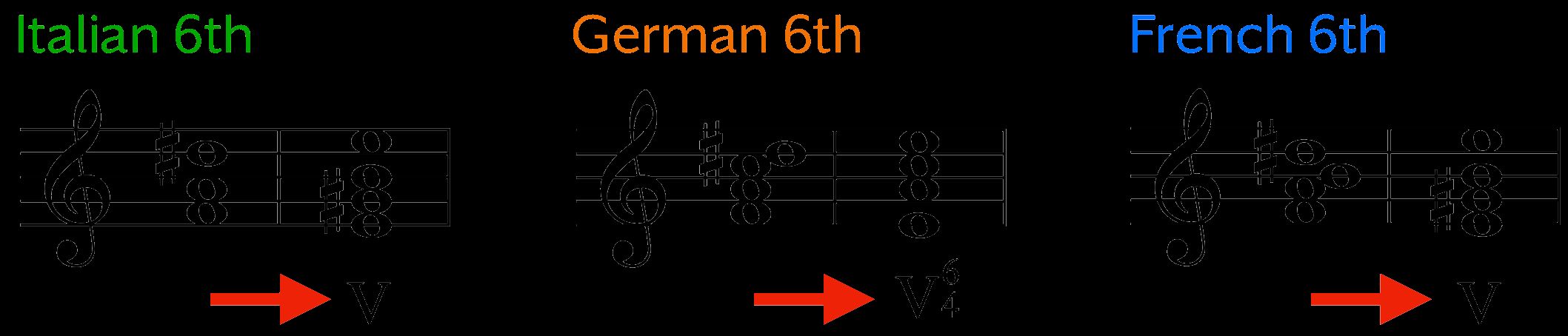
There’s even a Swiss augmented sixth chord, which is really a German sixth with altered spelling. As a note, these names were chosen for convenience and have no practical relation to their namesake countries!
Making augmented chords part of your musical language
If you happen to be a composer, try adding an augmented triad between two different chords and listen for the effect. Say you’re in a major key and headed from IV to ii. Turn your IV chord into an augmented triad on the way to ii and see if you find the sound appealing. Or you can try writing a piece using whole tone scales. You’ll have plenty of augmented triads and augmented seventh chords to play with. Enjoy going beyond major and minor chords to a broader menu of harmonic flavors that will give you so much more to choose from.