





What is a staff in music? Learn all about it below
A music staff is a set of horizontal lines and spaces that represent different pitches. It allows musicians to quickly read and learn music. In this article, we’ll learn what pieces are needed to create a music staff, what symbols are found on a staff, and how this information can help you to decipher and play music. Read on to learn more!
Learn to play piano with Hoffman Academy! Discover your piano potential at Hoffman Academy with the world’s best piano learning system.
How can we recognize a music staff?
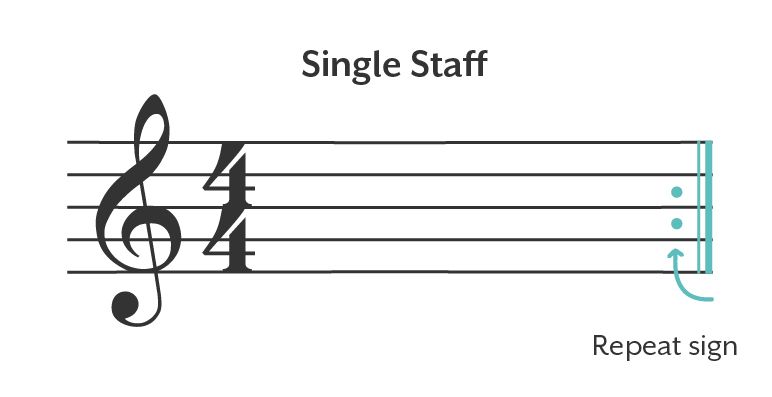
A staff is easy to recognize and create. It looks like five horizontal lines separated by four spaces. Here is an example, which also includes some common markings you’ll see on a staff, such as a clef, a time signature, and a repeat sign. We’ll go over some of these markings in more detail later in the article:
What are the parts of a musical staff?
The main parts of a music staff are the five horizontal lines and four spaces, but to start reading and writing sheet music, you’ll need to recognize several other parts as well.
A music staff will include clef symbols, such as the treble clef or bass clef. You can see several clef symbols illustrated below. The treble clef tells the musician that the music is written above middle C, and that the second line from the bottom of the staff represents treble G. The bass clef tells the musician that the music is written below middle C, and that the second line from the top of the staff represents bass F. The notes included on the clefs tell the musician exactly which key in which octave to play.
Depending on the instrument that you’re playing, there are other clefs that you’ll need to recognize. If you play the cello or bassoon you’ll need to recognize the tenor clef and if you play the viola you’ll need to recognize the alto clef. In each of these clefs, the lines and spaces of the musical staff represent different notes.

Other symbols that you’ll need to recognize include time signatures, key signatures, barlines, final barlines, the repeat symbol, and more. Keep reading to learn more about each of these symbols.
What symbols are found on a staff in music
Below is a list of some of the important symbols that are found on a music staff. We’ve included images so that you can identify them in your own music.
- Notes and rests tell the performer how long to play a note or how long to remain silent between notes. Examples of notes are sixteenth notes, eighth notes, quarter notes, half notes, and whole notes. Rests of the same duration have similar names, such as sixteenth rests, eighth rests, quarter rests, half rests, and whole rests.


- Articulations indicate how to play each note. For example, an accent instructs the musician to play a note with more force than the notes around it. A staccato means a note should be played bouncy and short. The legato symbol tells a musician that the notes under it need to be smooth and connected.
- Ledger Lines go underneath and above the staff and look like lines that are disconnected from the staff. They help performers to know what notes above and below the musical staff need to be played.
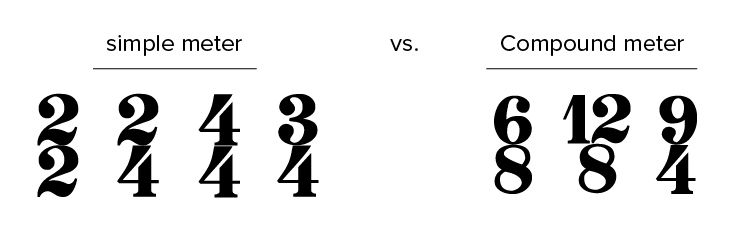
- Time signatures are normally given at the beginning of a piece of music. They tell the performer how many beats are going to be in each measure and which type of note equals a beat. Here are a few examples of time signatures:
- Key signatures are groupings of sharps or flats that are normally given at the beginning of a piece of music and then restated at the start of each new staff. The key signature lets the musician know which key the music uses as a home base.
- Accidentals are sharps and flats that appear separately from the key signature within a piece of music. The accidentals let the performer know if they need to play sharp or flat note that isn’t always sharp or flat according to the key signature.

- Barlines separate each measure so it’s easy for the musician to see the beats and rhythmic structure of the music.

- Final barlines go at the very end of a piece of music and indicate that the piece is complete.

- Repeat signs tell us if we need to repeat a section of music.

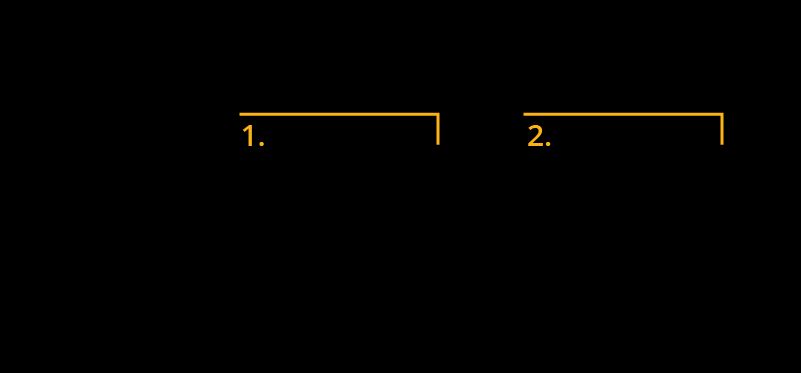
- 1st and 2nd endings go with repeat signs. They tell a performer to repeat a section, but the 1st ending is only played the first time through that section. The second time, the performer should skip the 1st ending and go straight to the 2nd ending.
- Dynamic markings tell the pianist if they need to play softly (piano), with force (forte), with some force (mezzo-forte), very softly (pianissimo), if they need to get louder (crescendo), or if they need to get softer (diminuendo/decrescendo).

- Tempo markings indicate how quickly or slowly the performer needs to play. Tempo markings include Largo (Very slowly), Adagio (Slowly), Andante (Walking tempo), Moderato (Moderately), Allegro (Quickly), Presto (Very Quickly), and Prestissimo (Very Very Quickly), among others. Tempo markings are usually in Italian, such as the previous examples, but can also be written in German, French, English, and other languages.
How many staves are there?
The number of staves depends on the instrument being played. Pianos use two staves: the treble clef and bass clef. Organs use three: normally one treble clef and two bass clefs. Violins, flutes, clarinets, and other melodic instruments use only one music staff (treble, bass, or other).
How to read notes on a staff
The easiest way to read notes on a staff is to learn the letter names that correspond to each position on the staff, and then practice until you can recognize them quickly. Watch this video for an introduction to reading C, D, E, F, and G on the treble staff.
Learning these five notes is not too hard, but with so many lines and spaces on the staff, it can quickly get overwhelming to memorize all the letter names. As you learn more notes on the staff, we recommend memorizing a few guide notes and then looking to see if a note is a step or skip above or below in order to find it on the keyboard. Watch this video for a demonstration:
What is the grand staff in music?
The grand staff is normally used for piano music and is a combination of two staves: the treble and bass staves. In total, the grand staff includes 10 lines and 9 spaces. The treble clef and bass clef are joined together with a curvy line called a brace. See the drawing below to see the difference between a single staff and the grand staff. Learn more about the grand staff with our Grand Staff Guide.

In order to read notes on the grand staff in music, it helps to learn about guide notes. Watch our video Staff Guide Notes to learn more!
Final notes on learning the music staff for confident reading
Learning the music staff and the symbols that appear on it is a crucial part of reading music. Knowing your way around the staff makes learning music much easier, even music that you’ve never heard before. You must have a good ear to be a good musician, and playing by ear is a wonderful skill to have, but a well-rounded musician should also be able to read music from a musical staff.
Now that you know more about the staff, you are ready to learn some music! Check out Hoffman Academy Premium for piano lessons, sheet music, and more. Have fun discovering and happy playing!