


The piano is a technological wonder–a string and percussion instrument in one with vast expressive powers. But great piano sound takes much more than hitting the right keys. A whole body of technique is needed to draw an eloquent tone from the instrument. When you watch a pianist’s physical movement during a performance, it’s more than just theatrics. They’re using years of kinesthetic training from fingertips to shoulders to avoid tension and mold a beautiful tone. Let’s take a look at how they do it.
With Hoffman Academy Premium, you’ll learn the best techniques for posture and piano sound in every lesson. Get started today!
How does a piano make sound?
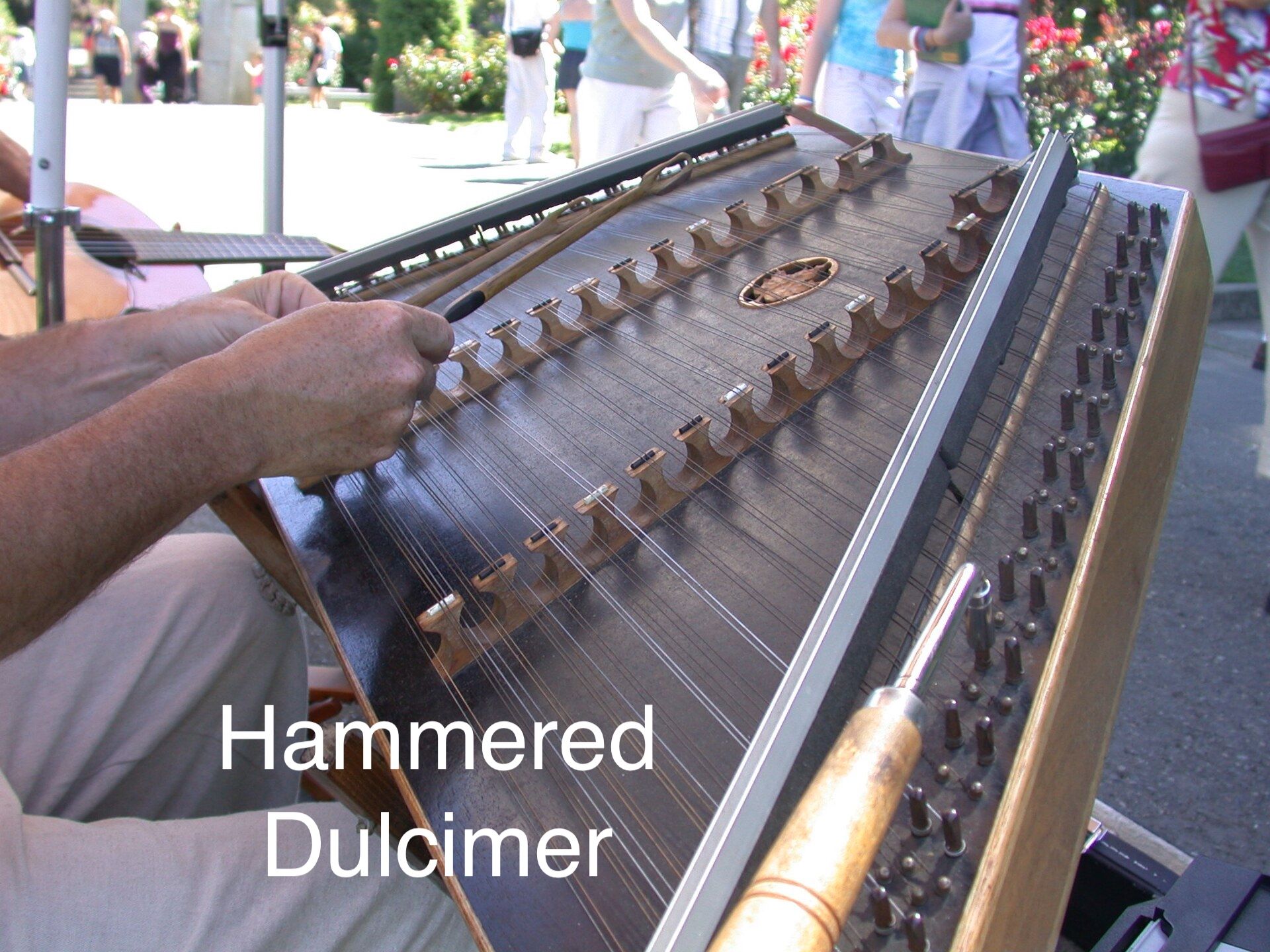
A piano uses specially designed hammers to hit steel strings within the instrument. The resulting vibrations resonate throughout the sounding board and body. When you press a key, you create sound the way a hammered dulcimer does. The piano simply puts a mechanized system of levers between your fingers and the strings:
When you remove your finger from a pressed key, the sound stops. This is because pianos have a row of dampers placed on the strings on the opposite side from the hammers. These dampers lift away from the strings when a key is pressed, allowing the strings to vibrate freely, but resume contact with the strings when you lift the key, stopping the vibrations:
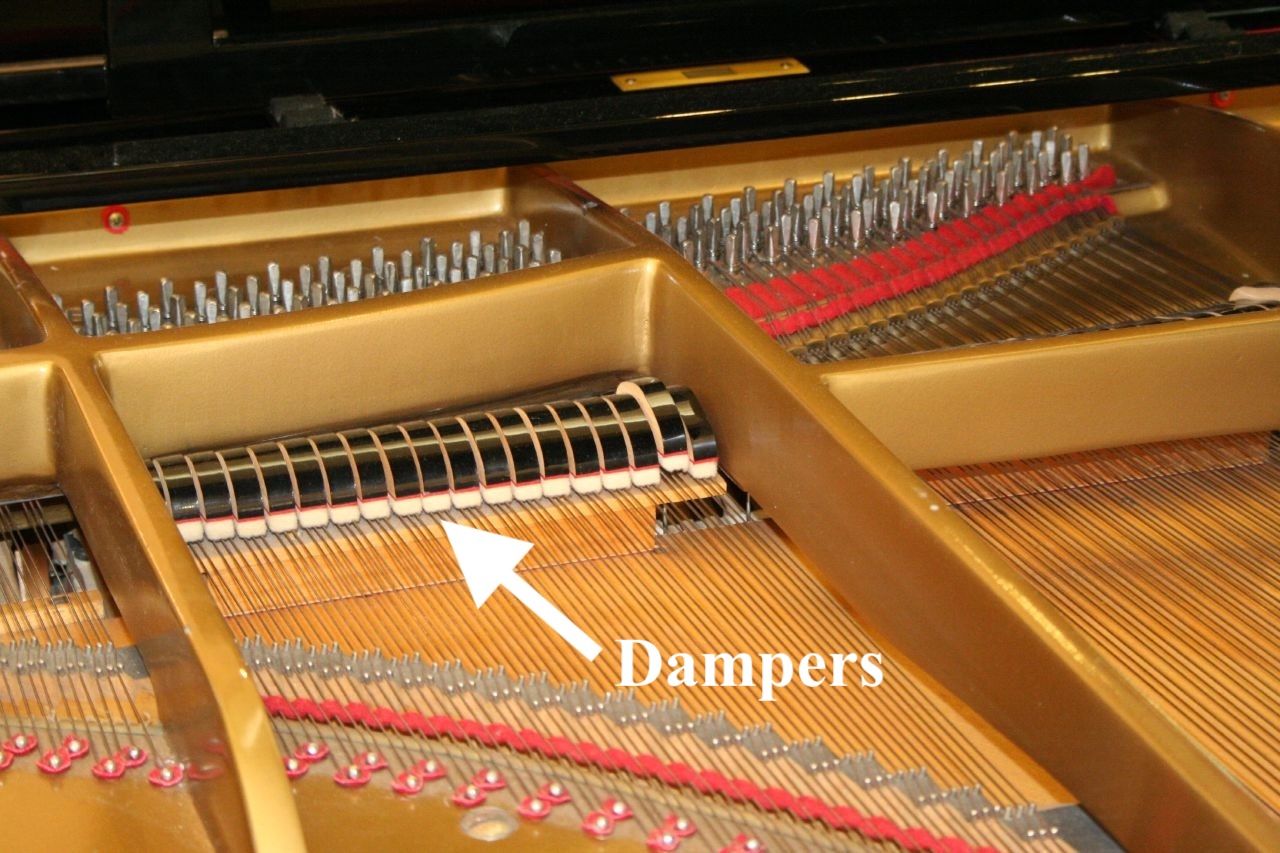
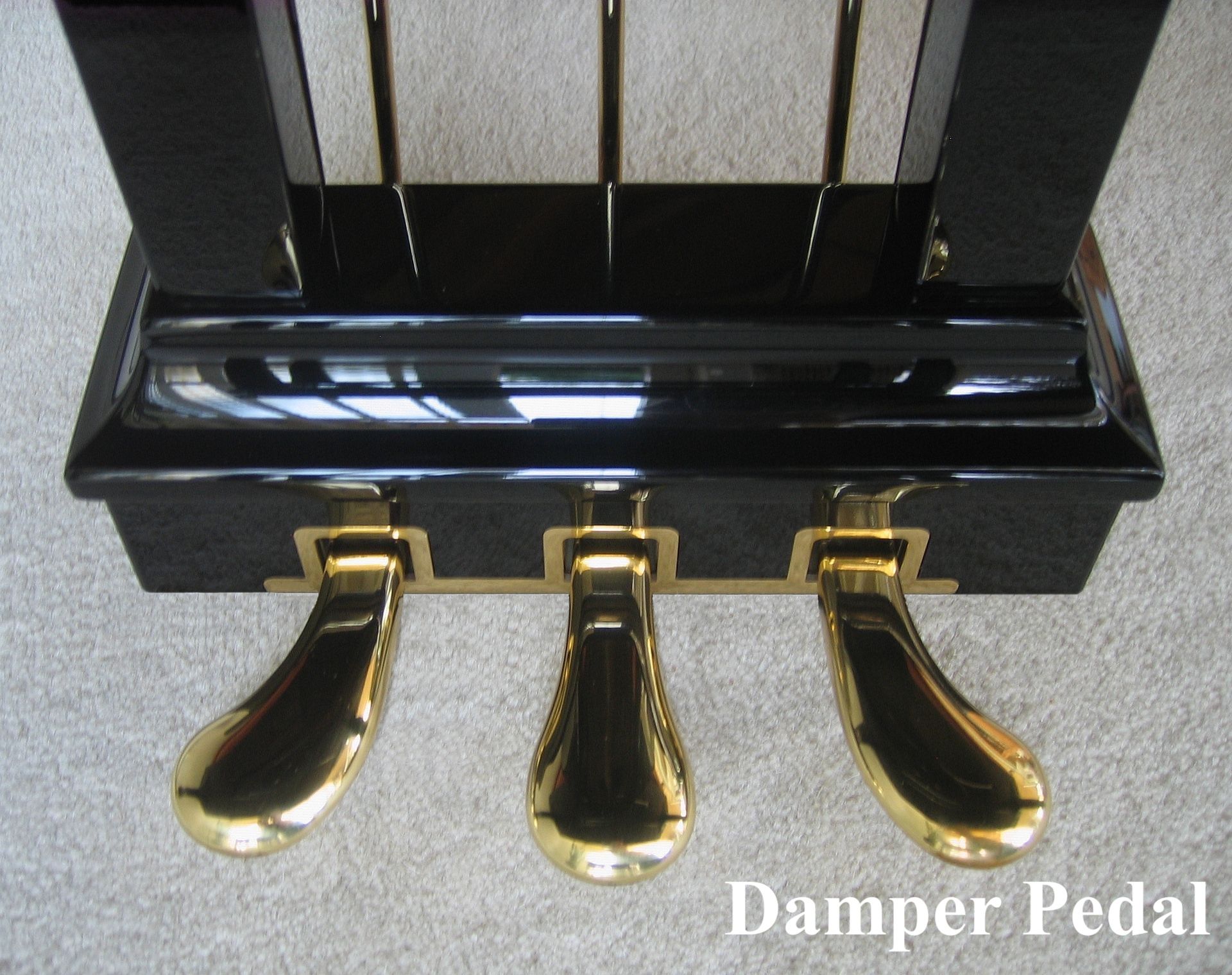
A piano will have at least two foot pedals, the rightmost being the damper or sustain pedal. Pushing the damper pedal down will raise all the dampers away from the strings, letting them vibrate even when your fingers leave the keys. The damper pedal is the most often-used, essential for filling gaps in the sound when your hands change positions:
Why does my piano sound dull and heavy?
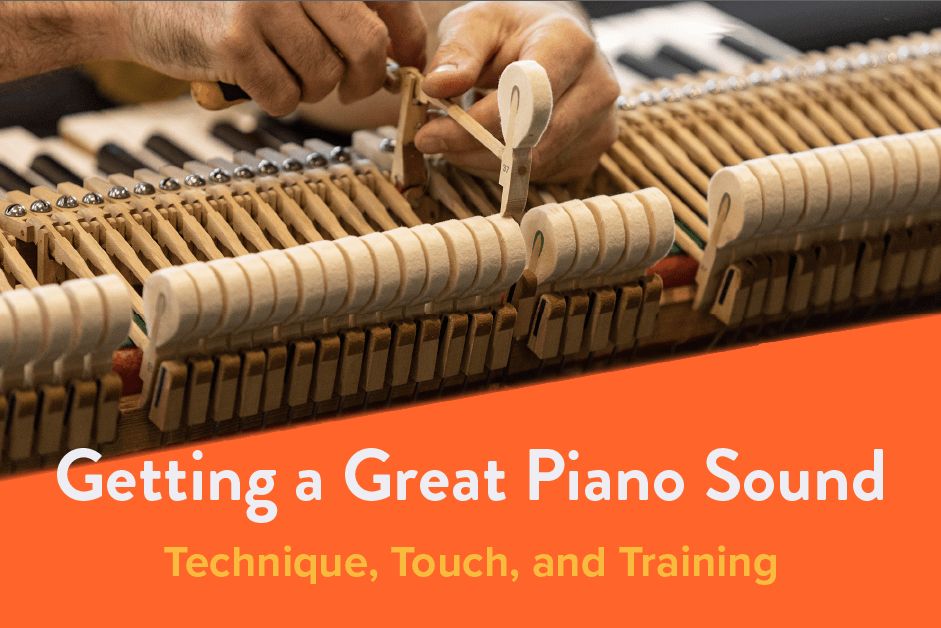
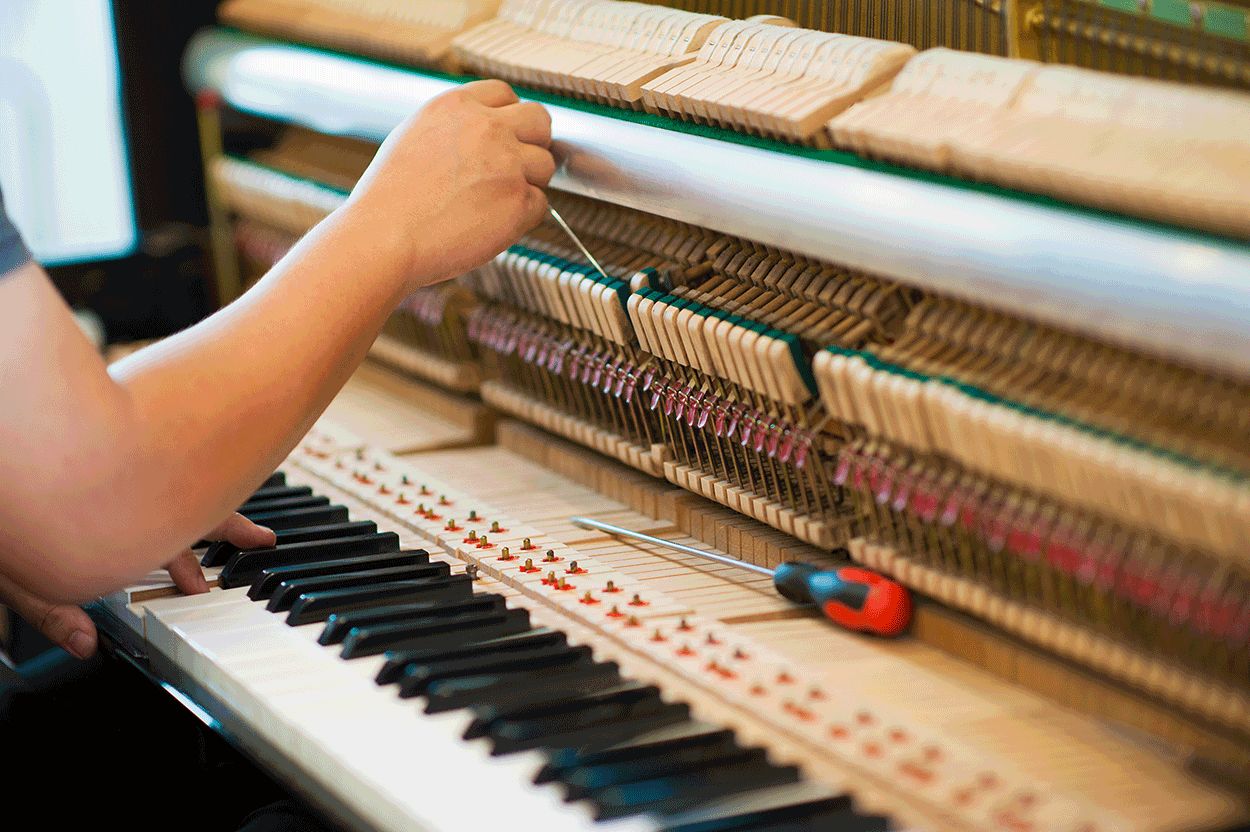
Piano sound is affected by the quality of materials used inside the instrument, from the felt lining on the hammers to the condition of the strings themselves. If the hammers are worn down from years of use, or if they are slightly out of alignment with the strings, you may get a muted or even twangy tone. The best solution is to find a a reputable piano technician who can fix or replace the hammers if they are grooved and worn. Your piano should also get regular visits from a piano tuner, who will readjust the tension on all the strings to bring the instrument back to concert pitch. If the strings are old, multiple tunings over several months may be necessary for a gradual adjustment to prevent the strings from snapping.
What does a good piano sound actually mean?
Decay
Once the hammers hit the strings, the tone begins to decay, or fade. A piano in good working order will have a long, more sustained decay, usually because the hammers are well “voiced.” This means they are centered over the strings and strike them all directly, not at an angle.
Consistent tone
Different piano octaves offer contrasting tone qualities, from the deep sub-contra of the low bass up to the high treble. This is a desirable effect, but the timbre should not change drastically from one register to the next. The transition should be smooth, and the player’s control over volume should be consistent across the entire keyboard.
Mellow vs. bright
Depending on the materials used in a piano’s construction, the sound may be either somber and dark or crisp and flashy. This is a subjective preference, since the performer’s choice of music will dictate the appropriate timbre. The type of piano, whether upright or grand, the kind of wood used in the body, and even the room you play in (carpeted or hardwood floor) all play a role in the kind of sound you’ll get. Generally, classical music is better delivered with a mellow, rounder tone, while a bright sound projects more in a jazz ensemble or pop band.
How does touch affect piano sound?
Legato vs. Staccato
Touch makes all the difference when it comes to the space between the sounds. The two extremes of touch are legato and staccato, or connected and detached. With legato, the motion of two different fingers is like a seesaw. One finger releases a key at the same instant that another finger presses the next key, resulting in smoothly connected tones with no gap. In this excerpt from Edvard Grieg’s In the Hall of the Mountain King, you can see the slurs that indicate legato touch and hear the effect:

However, Grieg wrote this piece with a short, disconnected touch called staccato. Each note has a dot below, calling for the player to release each key quickly before playing the next. The result is a bouncy articulation, almost as if the keys are too hot to touch:

Attack
While legato and staccato involve what happens between the notes, attack is all about the start of the sound. A heavier pressure on the keys will, of course, make the hammers strike the keys harder, resulting in a louder sound. But the quality of the initial strike will determine if the tone starts gently or suddenly. For the Intermezzo in A Major by Johannes Brahms, you’ll want to begin with a slow drop of the wrists to get an intimate piano tone. At the other extreme, the fortissimo octaves in Franz Liszt’s Sonata in B minor require a swift, vehement attack for a shocking effect.
What are releases and why do they matter for piano sound?
Release involves how you let go of a key once you’ve pressed it. The dampers are always waiting to stop the vibrations, but you can control how quickly this happens. If you want an abrupt sound cutoff, you can lift your fingers from the keys suddenly. This type of release is appropriate for Baroque keyboard music, which was intended for the harpsichord and needed a precise cutoff on each tone. A two-part invention from Johann Sebastian Bach, for example, would best be concluded by a crisp release to imitate the fast decay of a harpsichord. On the other hand, the atmospheric quality of much Romantic-era music is better served by a gradual release. You’ll want to lift the final chord of Maria Szymanowska’s Nocturne in B-flat major very delicately, allowing a slower decay. The damper pedal can be used in the same way, with a slow release of the foot for a tone that persists throughout the space.
How does hand and body position affect piano sound?
Body posture
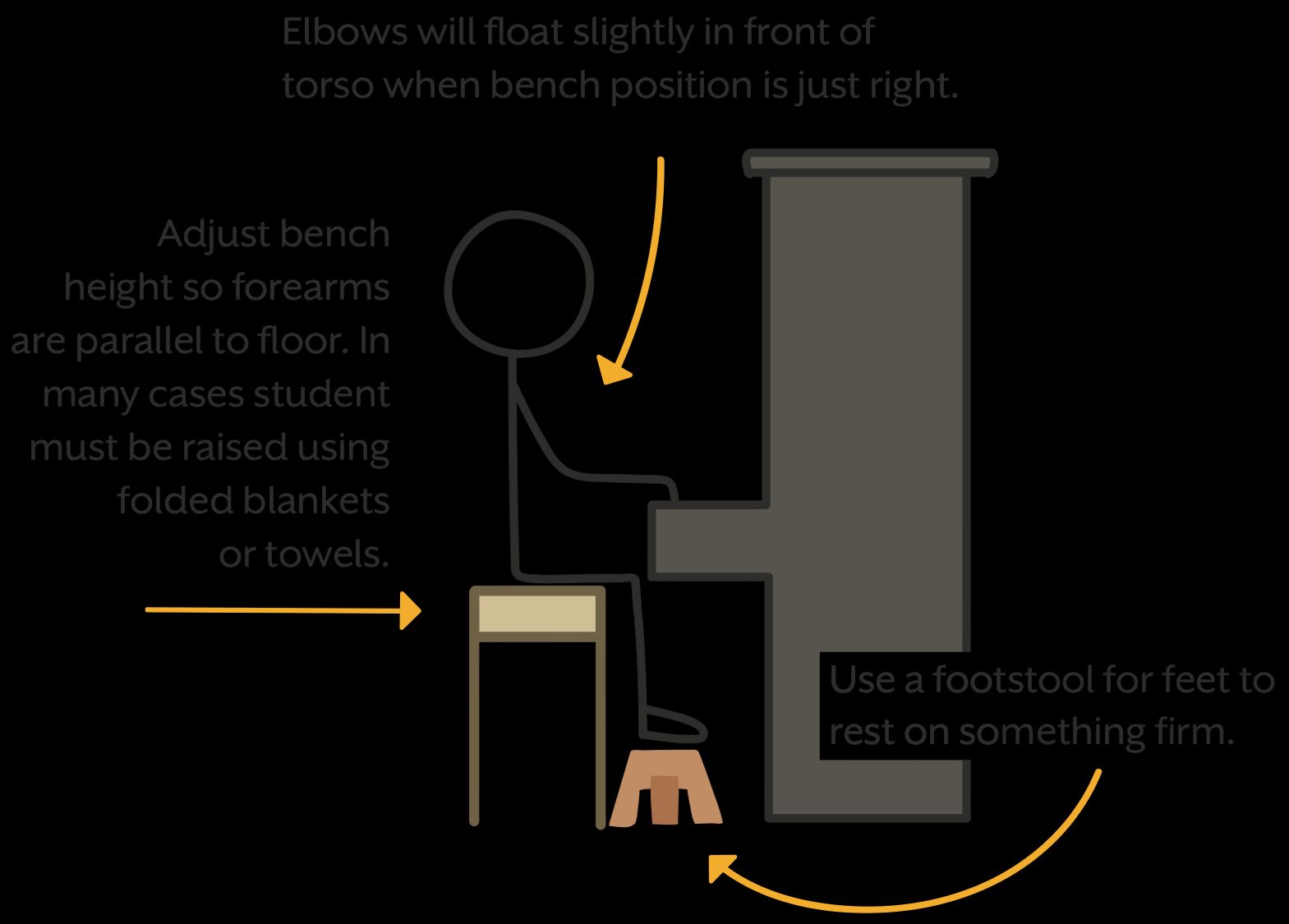
Your physical posture greatly affects how well your body moves, and how effectively you can deliver a good piano sound. Sit at the correct distance from the piano, with your knees just about at the edge of the keyboard. This ensures that your forearms can hang freely, level with the floor, not cramped uncomfortably against your torso. Also take care to relax your shoulders. They should not be raised or tightened while playing.
Arm weight
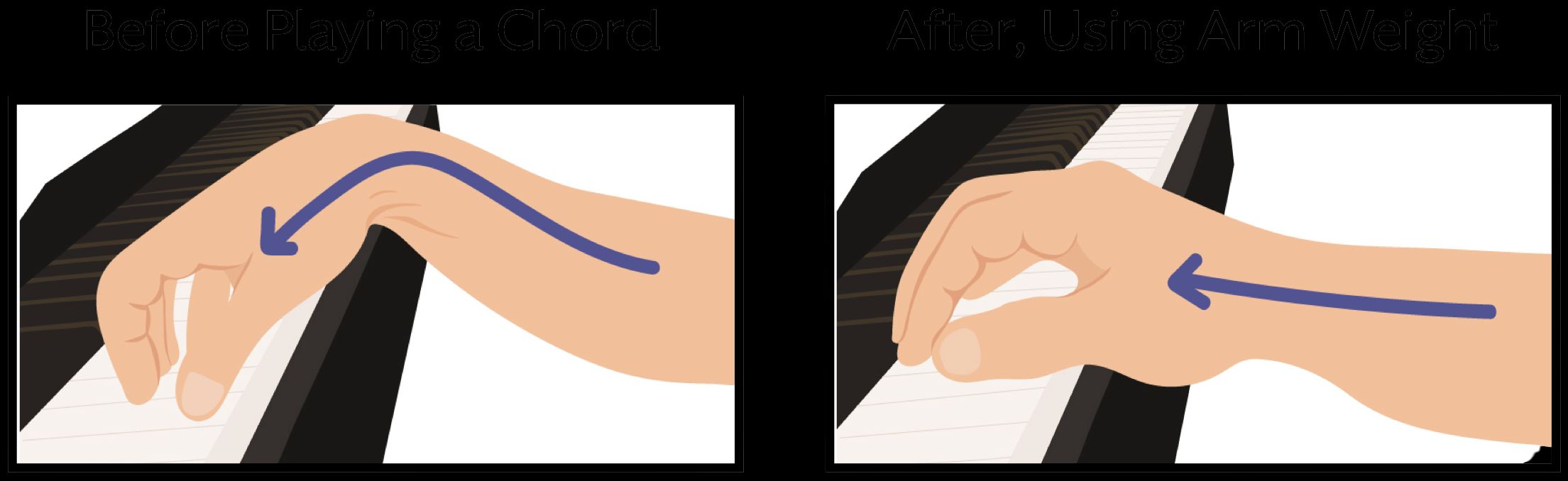
Much of the action in piano playing comes from arm weight. When playing chords, gravity should account for most of the hand’s downward motion. If you simply let your hand and forearm drop onto the keys, you can play chords without actually pressing down or tightening up the wrist. Before playing any chord, lift your wrist a few inches. You’ll notice the forearm also rises. Then let gravity take over and let the weight of the arm carry your fingers down. The resulting tone will be rich and deep, rather than forced.
Wrist relaxation
One of the most common problems in piano playing is a locked or tightened-up wrist. This prevents you from delivering weight from your arms to the keys, and results in a thin, mechanical tone. If you want to play flowing, beautiful arpeggios, you’ll need a wrist that is loose enough to rotate and freely move up and down.
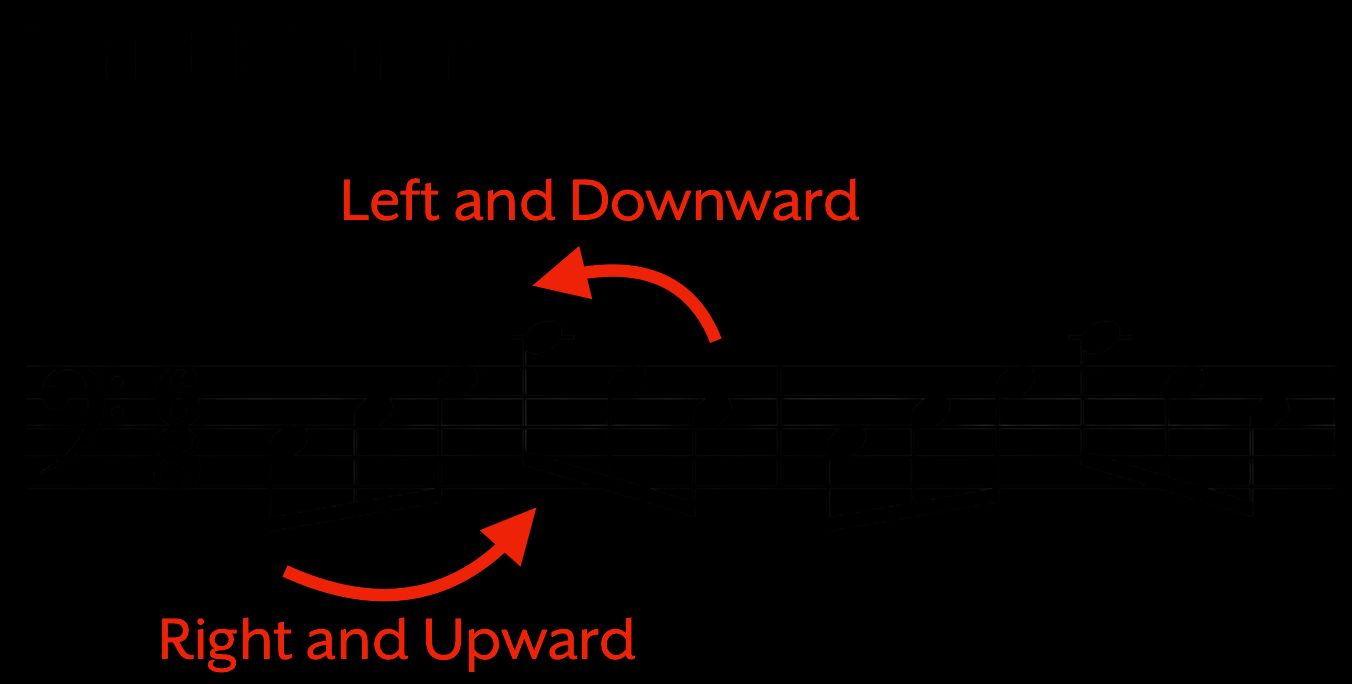
Try playing a C major arpeggio on the left hand with a rigid, motionless wrist. You’ll hear a “punchy,” robotic tone with an emphasis on each note.
Now relax your wrist and let it rotate in counterclockwise circles as you go up and down the arpeggio. Let the elbow move along with the wrist: to the right when ascending, left when descending. Suddenly the notes are de-emphasized, and the arpeggio transforms into a fluid, wave-like gesture:
To get a crisp staccato, you’ll want the same looseness in the wrist. Imagine a spring in the wrist that flexes when you push your hand up from the keys. Although the initial movement is downward, it’s really the quick upward rebound from the keys that produces staccato. The wrist’s greater strength helps the fingers “bounce” off the keys suddenly, creating a clipped, detached sound between each note.
How do you practice for a better piano sound?
Posture
When you first sit at the piano, be mindful of how you position your body. Are you at the right height? Are your knees at the edge of the keyboard? Are your forearms level with the floor and your shoulders relaxed? You can try our free Top Ten Piano Posture Tips for more information and practice.
Touch sensitivity
Exercises like Hanon’s The Virtuoso Pianist, along with your scales, can be practiced with both legato and staccato styles to help develop touch sensitivity. You’ll also be able to practice wrist rotation to help with smooth legato playing, and “pushing off” to assist with staccato.
Arm weight and wrist relaxation
Being relaxed and using gravity are skills that must be practiced during playing. Chords offer the best opportunity to use the weight of the forearms and avoid tension in the wrists. Our Ultimate Piano Chord Chart gives you a wealth of triads and seventh chords to work with. Each time you’re about to play a chord, lift the wrist, let the forearm come up, and then drop. Ideally, you should not have to press down at all to play a chord; arm weight is enough!
Why developing your piano sound is worth the effort
Music, like speech, is filled with a variety of different tones, emphasis, and motion. If we spoke with the same emphasis on every syllable, we’d sound like androids. Piano playing can sound just as mechanical without good posture, touch, and body movement. Listen to a MIDI-generated playback of your favorite Beethoven sonata:
and then to an actual performance by Daniel Barenboim. The difference could not be greater.
Finally, playing any instrument is a form of athleticism. You’re asking your body to repeat the same motions hundreds, even thousands of times. With the right techniques to avoid tightness and harmful posture, you can save yourself a lot of discomfort or even injury. In the process of developing your piano sound, you’re also taking good care of your body.
Beautiful piano sound is closer than you think
If you want to go beyond just the notes and learn to play musically, Hoffman Academy is the place to be! You’ll find a free lesson library with over 400 videos, and with Premium you’ll get sheet music, audio tracks to play along with, practice sessions, music games, and so much more. Let Mr. Hoffman show you how to bring your piano sound to the next level!