


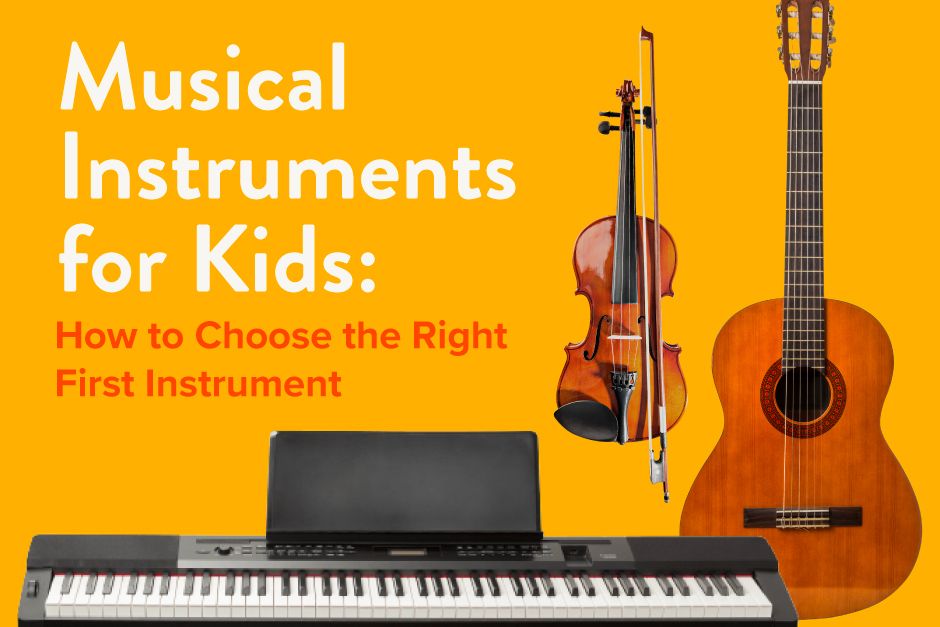
An instrument opens up the entire world of music for your child. Whether they want to learn to play piano, guitar, or violin, musical instruments for kids provide a cognitive challenge and an opportunity for creativity. The right first instrument will be the one that appeals to your child’s personality and interests.
When choosing your child’s first instrument you’ll want to work together with them to select an instrument that encourages their creativity and curiosity. A guitar opens up a world of acoustic accompaniments, the violin is primarily a melodic instrument, and the piano teaches both chords and melody.
If your child wants to learn piano, Hoffman Academy makes it fun and approachable for kids! Give us a try for free today.
Why are musical instruments good for kids?
Musical instruments for kids provide a creative outlet. Learning to play an instrument promotes the development of hand-eye coordination and finger dexterity. Watching consistent practice of a new instrument lead to successful progress encourages your child to develop patience and reasoning skills.
Cognitive benefits aside, learning an instrument gives children the lifelong gift of music. A child who learns guitar can play with friends around a campfire later in life. The young pianist learning “happy birthday” can play it for friends and family members. All in all, learning musical instruments sets children up to connect to people in their life through music.
What age should a child start learning an instrument?
Most children should wait until around 6 years old before starting formal musical training on an instrument, but there are lots of things you can do with younger kids to help them get ready. During the toddler years, immerse your child in music. Listening, moving, and grooving to songs of many genres develops a 1 to 3 year old’s musical year and steeps them in the language of music. This age enjoys clapping games and singing songs and nursery rhymes. Explore moving to music together to develop a sense of rhythm. From ages 1-3, let music be fun for both you and your child. Some Suzuki method teachers may start children as young as three on the violin or piano, but most methods begin formal instruction later.
As your child approaches the ages of 4-6, they may be ready to start formal lessons. Kids who can focus for around 15 minutes and are developing their reading skills may be ready to enjoy the challenge of learning an instrument. This age also represents a peak time for developing motor skills and learning new languages, including the language of music. Most children in this age group develop the finger strength and dexterity necessary to start learning piano, ukulele, or a ⅛ or 1/16 size violin or cello. In these early years of kindergarten and first grade, children will be learning the basics of posture, rhythm, ear training, and reading music for any instrument.
As children grow beyond age 7, other instruments become accessible. Many public schools introduce children to the recorder around 3rd grade. In a public school that has an elementary school band program, most children can start learning a wind instrument around 5th or 6th grade.
How do I choose the right musical instrument for my child?
Talk to your child about what music interests them when choosing an instrument. Expose your child to lots of different types of music by going together to different types of concerts and listening to recordings. Take your child to see an orchestra perform, attend a piano recital, a high school talent show, or even watch performance videos on Youtube and then talk about what instruments moved them.
For a child who loves listening to Baby Mozart and wants to hear “Eine Kleine Nachtmusik” on repeat, a violin might speak to their passions. The kid who requests “Moonlight Sonata” over and over again might enjoy piano lessons. Children who love the songs on the radio, depending on genre, might want to learn guitar or piano.
Tap into your child’s goals to pick their musical instrument. Many instruments serve as stepping stones for the next instrument. A kid who wants to be a singer will be well served by learning to play the piano or guitar. The child who dreams of drumming in a rock band will benefit from learning to play the piano first as well.
What is the easiest musical instrument for kids to learn?
The classic starter musical instruments for kids are the piano, the recorder, and the ukulele. These three instruments teach foundational techniques around chords and melody.
Recorders utilize the breath in a natural way to make music. Truly, these are ancient instruments. We humans have been blowing into tubes with holes for thousands of years – the oldest bone flute found so far was carbon dated to 60,000 years ago! A child who learns the recorder learns the basic fingerings that are used for a saxophone or tin whistle. Recorders also teach breath control useful for wind instruments and singers alike.
The keyboard of a piano maps musical notes through the visual connections of the black and white keys. Learning keyboard geography makes it clear to students the connection between pitches and scales. Since you can play multiple keys at the same time, children who learn piano learn to play chords. Because chords form a foundation of Western music, learning chordal music prepares students to tackle everything from pop music to church music to classical music.
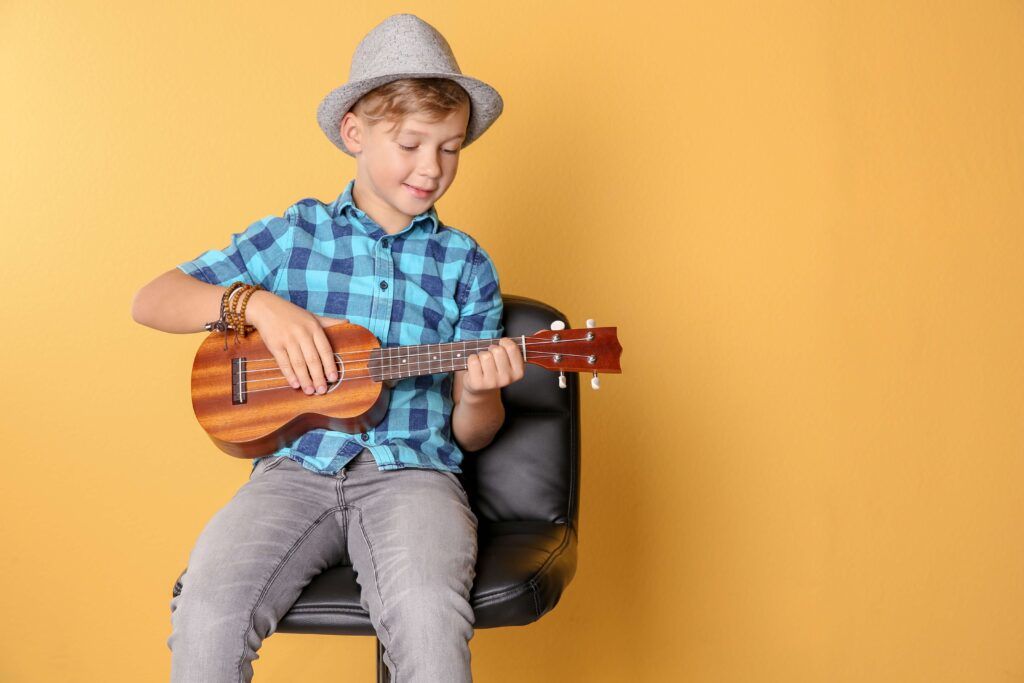
Ukuleles introduce children to a stringed instrument. These small, guitar-like instruments have nylon strings, which are gentler on littler hands than the wire strings of most guitars. Ukuleles are also charmingly sized for kids.
While piano, ukulele, and recorder are common first instruments, if your child is passionate about starting on a different instrument, consider reaching out to a teacher of that instrument. The most important thing is that your child is excited to learn. For example, even though the violin is considered a more challenging first instrument to learn, many violinists begin lessons as young as 3-4 years of age.
Is piano a good first instrument for kids?
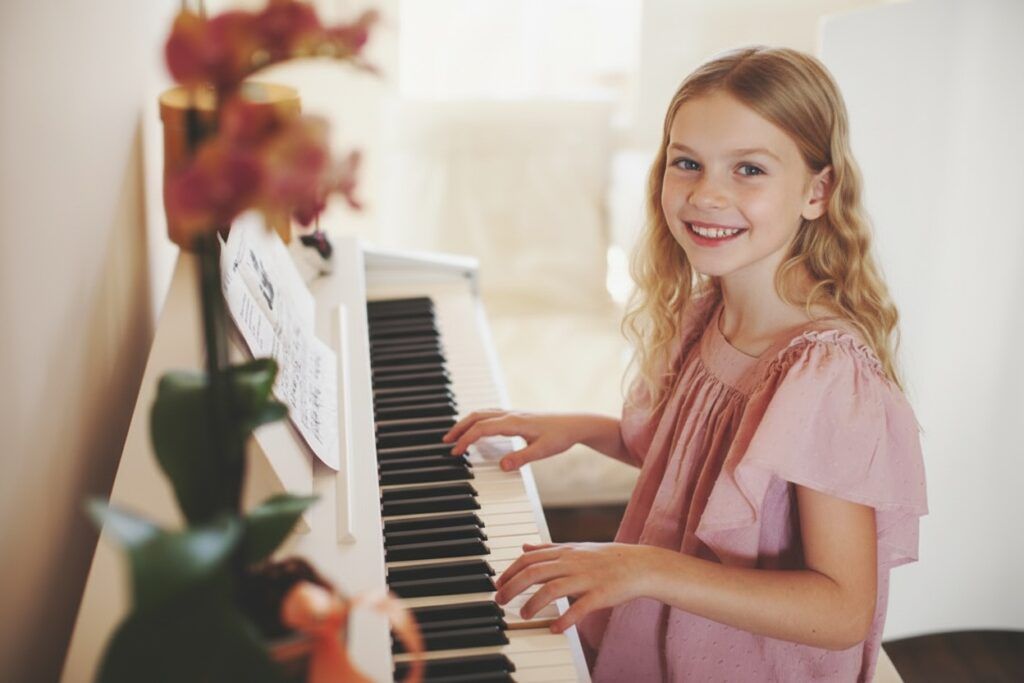
Piano provides an incredible foundation for kids. Pianists learn to use both hands independently. Since pianists learn to read in treble and bass clef, learning to play the piano develops strong musical literacy. Similarly, with different left and right hand parts, pianists master complex rhythms. It’s a great instrument for training a future drummer.
The chordal structure of piano music, especially pop and rock tunes, transfers well to instruments like guitar. Learning to play piano teaches children how to accompany a melody line. They’ll also learn how to “jam out” and add interest and rhythm in a left-hand part.
For children who aspire to be the next Ariana Grande or Taylor Swift, piano makes a wonderful first instrument for singers. Pianists learn to read melody lines by sight. Because the notes on the piano represent fixed pitches, playing this instrument helps train the ear to recognize intervals common in singing. The same chordal understanding that makes a good player of an accompaniment serves future singers well.
Are toy instruments good enough, or do kids need real musical instruments?
Real musical instruments for kids support their development. Toy instruments lack the feel and texture of a real instrument. A keyboard with only 25 keys makes it hard for a child to generalize to an 88 key piano. Similarly, a toy guitar might not have the right number of strings.
A real musical instrument does not have to be expensive to provide kids a great learning opportunity. For a child interested in guitar, a ukulele and ukulele lessons might make a great starting point for little hands to learn the feel of strings.
Similarly, kids who want to play piano can learn on a keyboard. Children need a set up with weighted keys so they develop the muscle strength to play piano. Starting with a keyboard with 88 keys is ideal because it gives them a full range of notes to work with.
How much should you spend on a child’s first instrument?
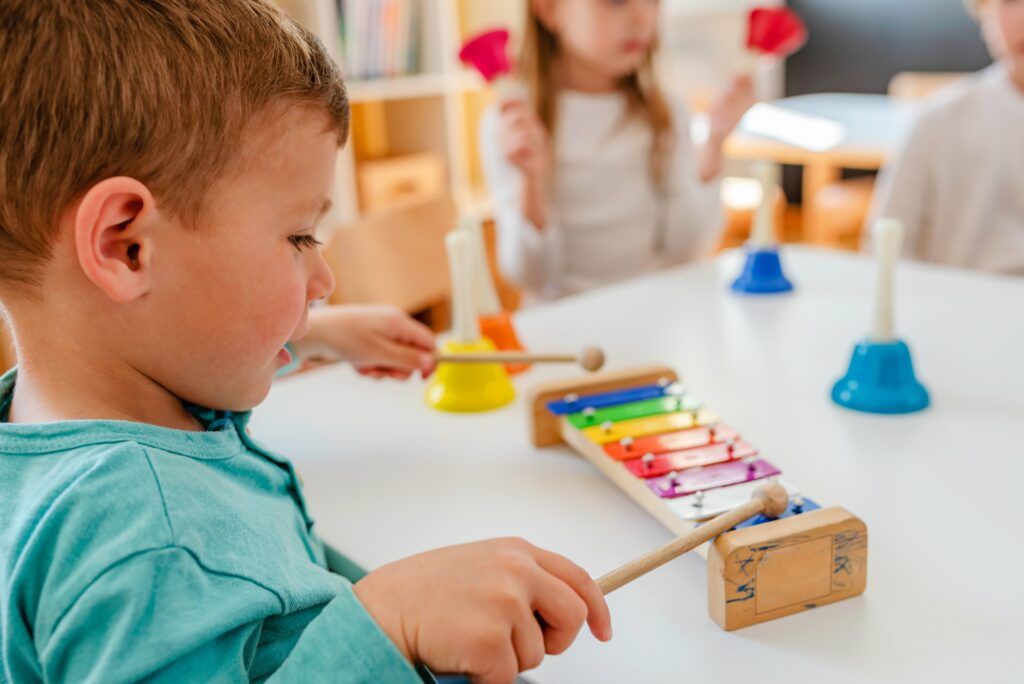
For a child’s first instrument, prioritize finding an instrument within your family’s budget. For the first months of lessons and practice, families can try a rental instrument. Cost effective options include used instruments, but when choosing a used instrument make sure it is in good condition. An instrument that doesn’t hold tune or with keys that don’t work will cause frustration and may even create poor playing habits.
Do kids need formal lessons, or can they learn at home?
Students learning to play an instrument become part of a musical lineage through their music lessons. Musical skills – from learning to play by ear or to read by music – and techniques traditionally pass from a teacher or community to a student. Whether your student learns guitar by ear with a teacher who shows them the chords, or violin by the Suzuki method, they are taking part in the process of passing music down from musician to musician.
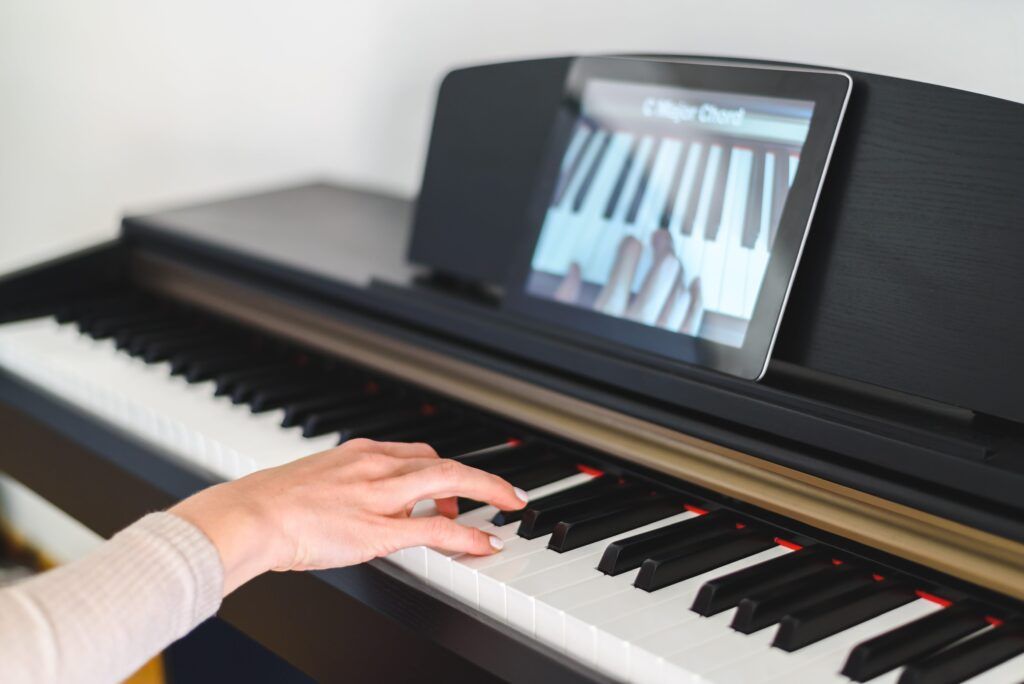
Students can learn piano in the comfort of their home thanks to technology. Online platforms, including Hoffman Academy, make learning an instrument more accessible than ever before.
How long should kids practice each day?
The amount of time kids practice each day is not as important as the consistency of the practice. For most young beginners, 10-15 minutes of practice time every day will be enough at first. This amount of time will increase to 20-30 minutes as the student learns more and has more material to practice. For more tips about practicing piano, check out our article of Top Piano Practice Tips for Beginners.
What should you do if your child wants to quit or switch instruments?
First, talk to your child about why they want to make this change. Keeping them working towards their goal of learning their current instrument could be as simple as switching the songs they are learning or changing their practice routine. Your teacher may be able to help them find more exciting songs to play.
Whether the replacement dream in your child’s head is a different instrument or soccer or gymnastics, you can support them in this decision by structuring this as a new commitment. Together you can agree on trying lessons in the new subject for several months to a year to foster consistency. After that time period is up, check in again with your child. Respecting your student’s dreams and desires and providing steady structure and support will help them find success in a new practice.
Helping your child start their musical journey
Giving your child the opportunity to learn music is a great gift that will benefit them throughout life. Start by experiencing lots of music together! By listening to music together and going to different types of concert experiences, you can help your child discover which musical instruments for kids they might want to learn. Once they decide on an instrument, find a good teacher, an instrument that’s in good working order, and be ready to help your child develop a habit of daily music practice.
Hoffman Academy is here to support you as the parent of a music student! If piano is your child’s choice, check out our hundreds of free video tutorials that will take them from earliest beginner to confident musician.