





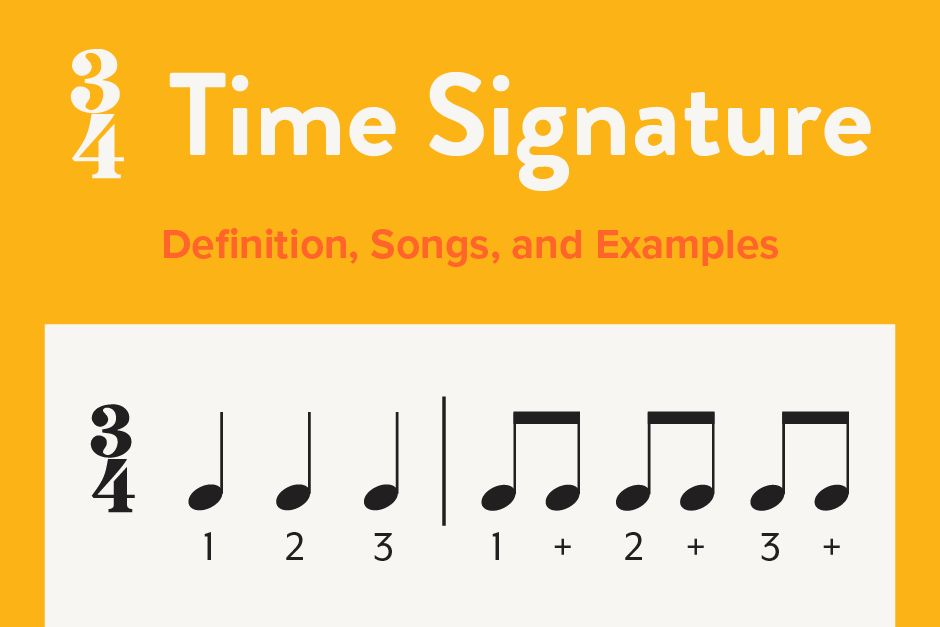
Time signatures are important musical symbols found at the beginning of written music. Time signatures indicate the meter of a piece and which rhythm receives one beat. The 3/4 time signature is used across a wide variety of genres. In classical music, it is closely associated with the waltz and minuet. Continue reading to dive deeper into this time signature and how to play in triple meter.
What is 3/4 time signature?
The 3/4 time signature indicates that there are 3 beats in a measure with the quarter note receiving one beat. It is written with a number 3 on top and a number 4 on the bottom.
How do you count in 3/4 time?
Count each measure in 3/4 time with counts 1-2-3. The strongest beat in 3/4 time should be felt on the first beat – ONE two three ONE two three. For more complex rhythms, use 1+2+3+ to subdivide the beat, as seen in the examples below. 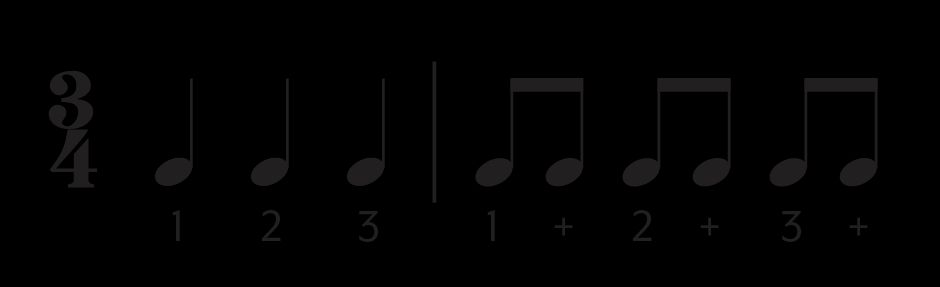
What is the difference between 3/4 and 4/4 time?
The biggest difference between 3/4 and 4/4 time is the number of beats per measure. In 3/4 time, each measure holds 3 beats. In 4/4 time, each measure holds 4 beats. Although seemingly a small difference, this change in the amount of beats per measure gives a different feel to the music. A 3/4 time signature can feel lilting, like an elegant dance. A 4/4 time signature can feel more grounded, steady, and driving with an emphasis on beats one and three.
What does 3/4 time feel like?
This time signature often feels light and bouncy and is sometimes described as “circular.” Because there are three beats in a measure, the return to the downbeat is quicker than in 4/4. This creates a rolling, uneven feel where the first beat is emphasized more than beats two and three. Contrast this with the 4/4 time signature which has a symmetrical emphasis of strong-weak-strong-weak beats. 4/4 is also described as more “square.”
Is 3/4 time the same as waltz time?
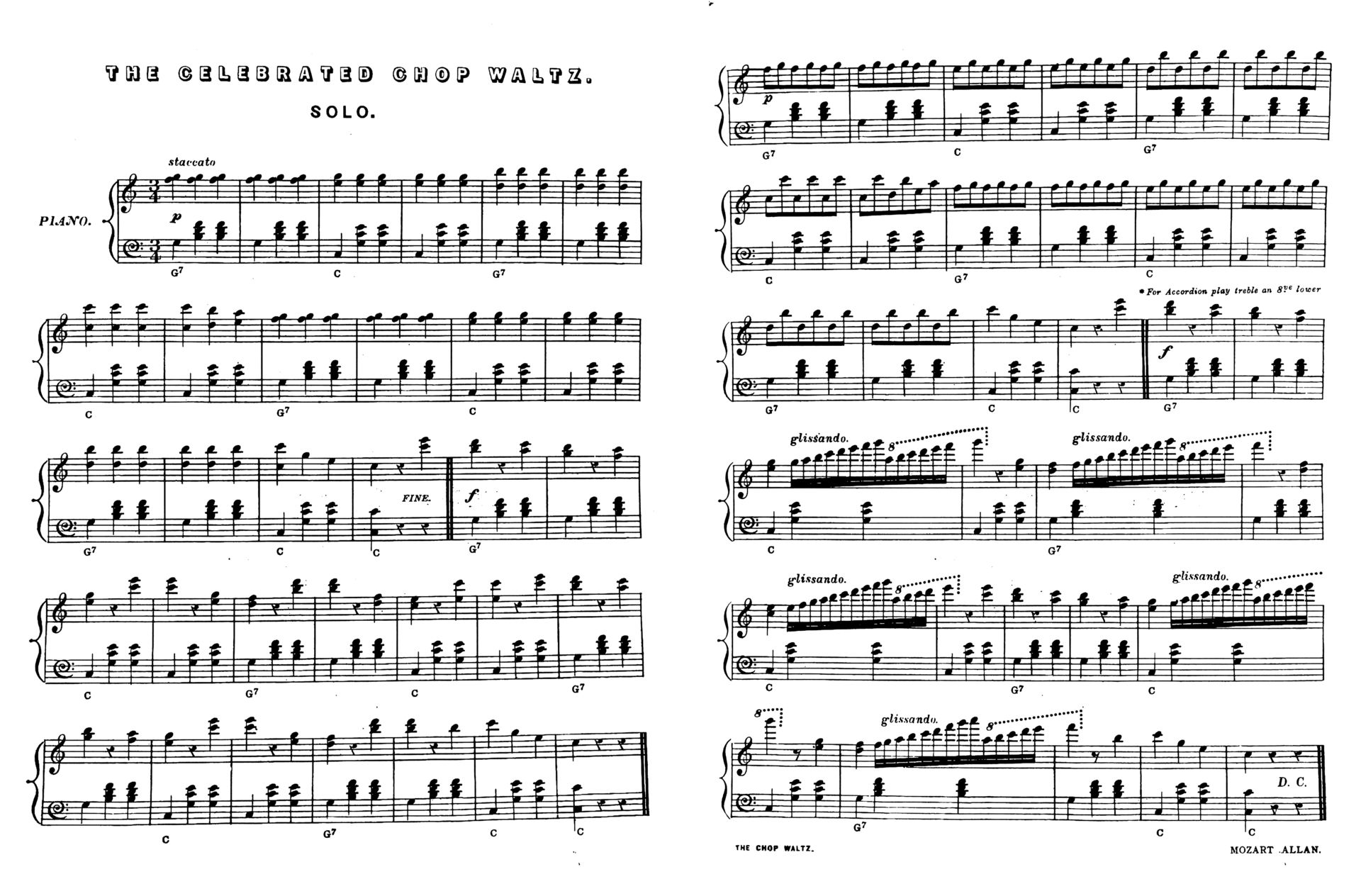
Yes! The 3/4 time signature is also known as waltz time. The waltz originated with peasants in the late 16th centuries but didn’t gain popularity until the early 19th century in England. By then, the dance was exclusively for the upper class. Waltzes had a scandalous reputation, as it was a dance for couples who would waltz so close their faces would touch. Waltzes were fast paced and easier to learn compared to the minuet. The minute was a group dance and was seen as more sophisticated than waltz. Despite its scandalous reputation, the waltz was a sensation that inspired composers to write their own waltzes in 3/4 time. At the height of the waltz craze, Franz Schubert wrote his own waltzes called 36 Originaltänze (36 Original Dances) which is also referred to as “First Waltzes.”
What is the difference between 3/4 and 6/8?
3/4 and 6/8 differ in how the beats are grouped per measure and which note receives one beat. In 3/4, there are three quarter note beats per measure. In 6/8, there are six eighth note beats per measure, often felt as two sets of three. One of the best ways to understand the difference between these two time signatures is to listen for the difference. Listen to Hallelujah by Leonard Cohen and notice the strong emphasis on beats one and four. The count goes ONE-two-three-FOUR-five-six, with two emphasized beats per measure. Then listen to Married Life from PIXAR’s Up by Michael Giacchino and notice how there’s a strong emphasis on the first beat. Both time signatures can feel similar, but listen to which beats are accented to hear the difference. This interactive article uses audio and visuals to explore the difference between the two time signatures.

What are some famous songs in 3/4 time?
Here are some famous piano pieces in 3/4 time, all free in our Hoffman Academy store:
- Für Elise (Early Elementary)
- Happy Birthday (Early Elementary Version)
- Amazing Grace (Early Elementary Version)
- Come, Thou Fount of Every Blessing
- My Country, ‘Tis of Thee (Early Elementary Version)
Outside of classical piano repertoire, there are many other songs in pop culture that use the 3/4 time signature: “Piano Man” by Billy Joel, “Kiss From a Rose” by Seal, “My Favorite Things” by Richard Rodgers, and “Rainbow Connection” by Williams and Ascher to name a few.
What types of music use 3/4 time?
Music from all genres use 3/4 time. Classical music is full of pieces in 3/4 time with waltzes, minutes, and ballet music. Folk and traditional music also leans heavily on 3/4 with American country music often using 3/4. Although less common, pop music and rock also use 3/4.
Tips for playing music in 3/4 time
Listening to music in 3/4 time is a great way to figure out how to play it. Spend some time listening to waltzes from Chopin, Strauss and Schumann. Tap along to these waltzes to get a feel for the time signature. Then, when learning 3/4 on the piano, start by counting out loud and emphasizing the beat on one: ONE two three ONE two three. Be sure to place a strong emphasis on the first beat of each measure when playing and counting. This can help distinguish the time signature from other time signatures on the piano.
Let 3/4 time signature open up a new world of music for you
From waltzes to minutes to hymns, learning how to play in a 3/4 time signature will open up a whole new world of piano repertoire. Take some time to explore the time signature and see what styles of 3/4 resonate with you!