





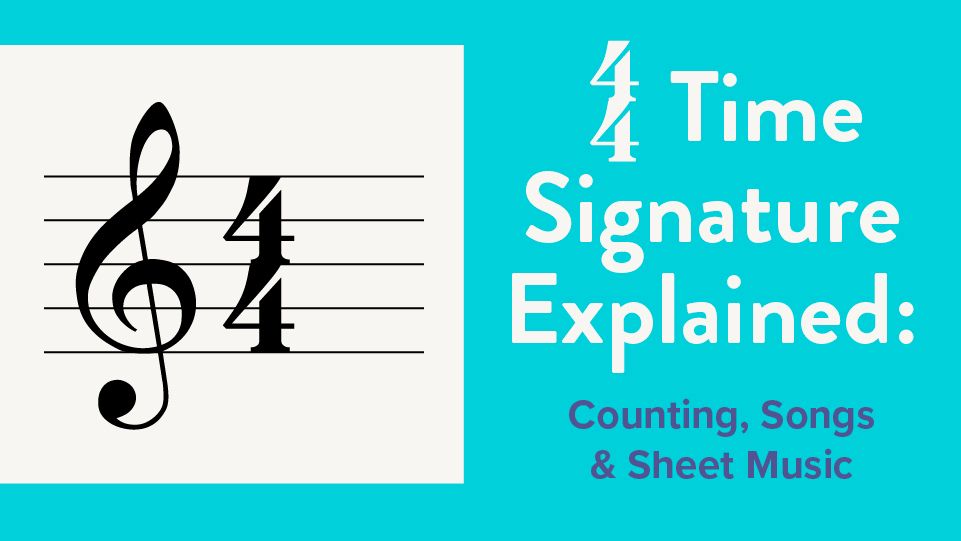
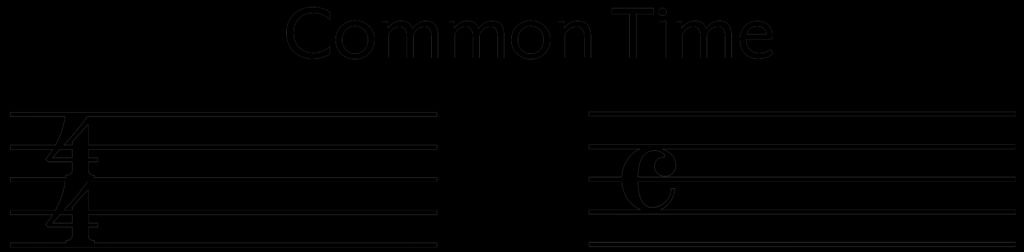
The 4/4 time signature divides each measure of music into four beats with each beat represented by a quarter note. 4/4 is the most often used time signature in the Western music tradition. In fact, 4/4 time is also called “common time” and can be represented by a capital letter C on the staff.
Read on to learn all about the 4/4 time signature and explore piano pieces in 4/4 time for pianists of all levels.
Grow your piano skills with the world’s best music learning system! Try Hoffman Academy today!
Is 4/4 a common time signature? Why is it used so much?
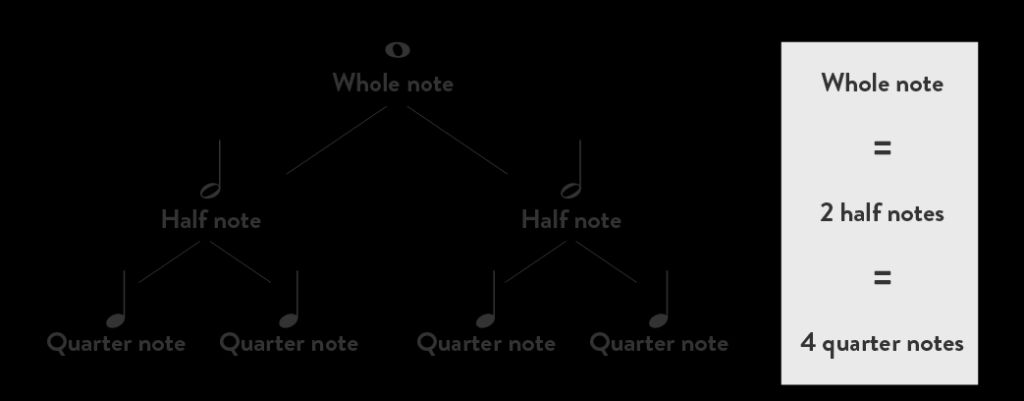
The 4/4 time signature occurs more often in music than any other time signature. One reason for this is the way time signatures came about. Before time signatures were invented, there were two types of meter in music. One divided the beats into three parts, and the other divided them into two parts. Dividing a whole note in half and in half again created a quarter note. This simple division of time in music evolved into the 4/4 time signature we use today.
I asked Aron Bernstein, our Hoffman Academy music theory expert, why 4/4 is used so much, and he said, “I think it’s just naturally been an “all purpose” meter for centuries. It conveys a lot of the rhythms found in walking and many dances, and creates measures long enough to let a lot of rhythmic complexity and variety play out.”
How does the 4/4 time signature work?
The 4/4 time signature works by dividing a piece of music into sets of 4 beats. Each measure of 4 beats becomes a set of notes and rhythms that contribute to the piece as a whole. While the rhythms vary from measure to measure, they’re built on a steady pulse, with the strongest emphasis on beat one and a lighter emphasis on beat three. Beats 2 and 4 generally get even less emphasis.
How do you count beats in 4/4 time?
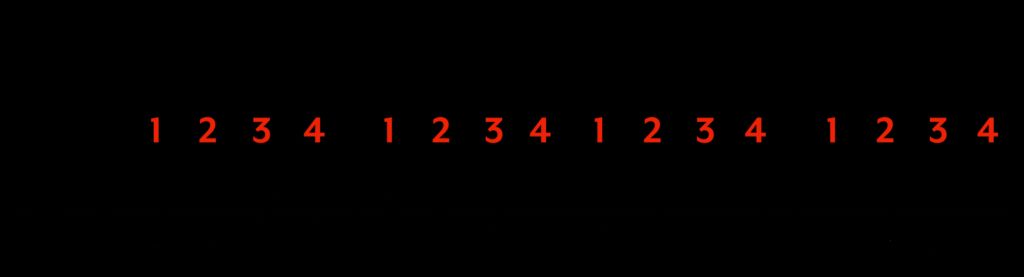
You count beats in 4/4 time by numbering each beat, 1 2 3 4. As you’re learning a piece of music, it helps to listen to the piece while counting the beats.
To help you count the rhythms, you can divide each beat into smaller parts, depending on the rhythm you’re trying to count. If the rhythm contains eighth notes, divide each beat in half and count 1 and 2 and 3 and 4 and. Write the count above each measure and circle which beat or part of a beat each note begins on to help you as you chant or play the rhythm.

If the rhythm contains sixteenth notes, divide each beat into four parts and count 1 e and a 2 e and a 3 e and a 4 e and a.

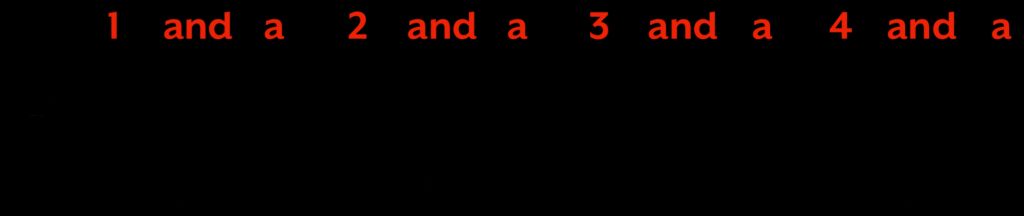
If a rhythm contains triplets, which divide a quarter note into three, count 1 and a 2 and a 3 and a 4 and a.
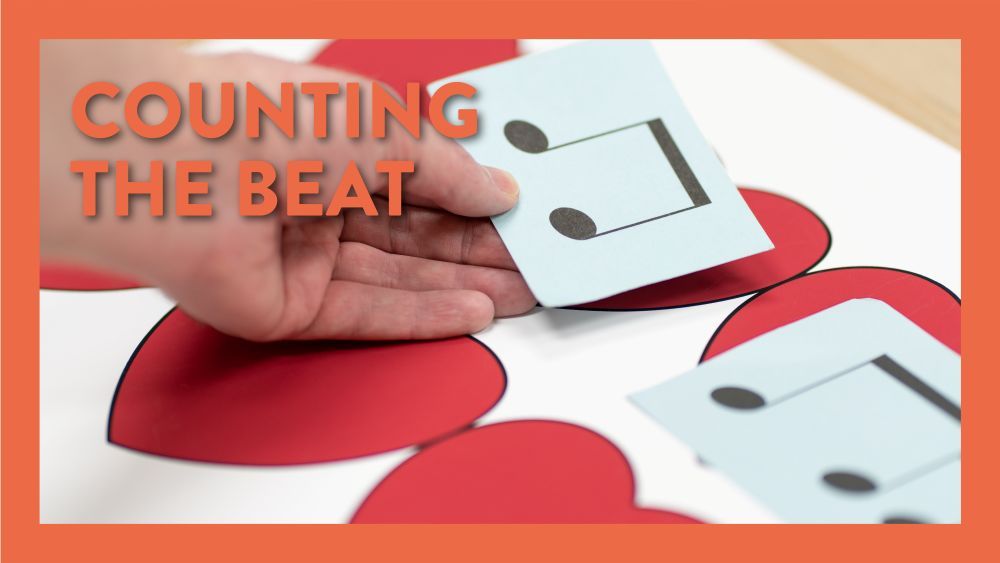
Watch this video to see Mr. Hoffman demonstrate how to count the beat!
What are examples of songs in 4/4 time for beginners?
Beginning pianists often learn their very first songs in 4/4 time signature. Here are a few familiar favorites to get you started.
What are examples of songs in 4/4 time for intermediate level pianists?
The 4/4 time signature offers a wide variety of complexity and challenge for intermediate level pianists. Explore these pieces to experience the wide range of styles 4/4 can encompass, from time-honored classics like “Canon in D” to the more modern sound of “The Memphis Blues.”
Learn Solfeggietto with Mr. Hoffman! Start watching here:
What are examples of songs in 4/4 time for advanced piano?
Advanced pianists will find a wide selection of impressive piano pieces written in 4/4 time. Here are a few of our favorites that you might want to add to your repertoire:
- Moonlight Sonata
- Reverie by Debussy
- Theme from 2001: A Space Odyssey by Ricard Strauss
- Invention No. 2 in C minor by J. S. Bach
Watch a beautiful performance of Bach’s Invention No. 2 in C minor by ten-year-old Kanji Daito:
What is the difference between 2/4, 3/4, and 4/4 time?
The two numbers of a time signature show the number of beats per measure on the top and the note that represents the beat on the bottom. In 4/4 time, there are four beats per measure and the quarter note (represented by the 4) gets the beat. In ¾ time, there are three quarter note beats per measure. You’ll hear this time signature in waltzes and ballads. The 2/4 time signature has two quarter note beats per measure. This strong 1 – 2 pulse drives march tempos and lively polkas, as well as slower boleros.
What’s the difference between 4/4 and 2/2 time?
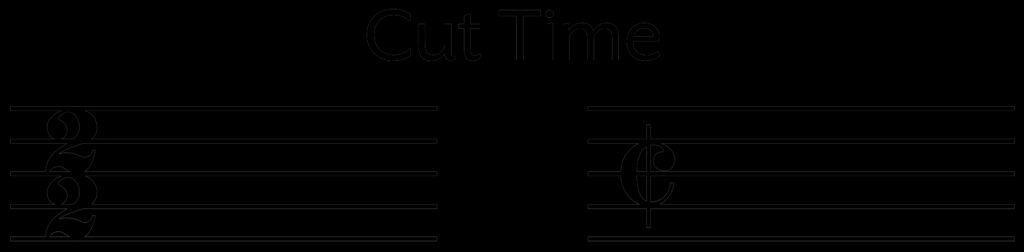
The 4/4 and 2/2 time signatures create a very different feeling because one has 4 quarter note beats per measure and the other has two half note beats per measure. In 2/2 time when the half note has the beat, the quarter notes, eighth notes, and sixteenth notes tend to be played much faster than when the quarter note itself has the beat. When measures are counted “ONE – two, ONE – two” the music marches along more quickly than when they’re counted “ONE – two – three – four, ONE – two – three – four.” In 2/2 time, it’s easier for conductors to lead fast music as they only need to show the beat twice per measure.
The 2/2 time signature is also known as “cut time” and can be represented by a C with a line through it.
Tips for practicing songs in 4/4 time
Practice songs in 4/4 time by counting out loud as you play. A metronome can help you keep a steady beat. When playing in 4/4, make sure each quarter note gets the same steady pulse. If you find you can’t play a measure with a steady beat, try slowing down and practicing only that measure until you have learned it well.
Our brains learn best when we experience a concept in a variety of ways. To learn a rhythm in 4/4, try some or all of these methods. Use a metronome to help you keep a steady beat as you do these activities:
- Count a steady beat out loud, “1 2 3 4,” while clapping the rhythm you’ll play, first for the right hand and then for the left hand
- Clap a steady beat while chanting the rhythm words
- Clap a steady beat while singing the melody
- Close the lid of the piano and, while counting out a steady beat, tap the right hand rhythm on the piano lid with your right hand, then the left hand rhythm with your left hand, and then tap the rhythm hands together
One of the most common problems for beginning piano players is rushing half notes, dotted half notes, and whole notes in 4/4 time. This is why counting is so important. Writing “1 2 3 4” above each measure can help you remember to hold out longer notes for the correct amount of time.
Ready to practice in the 4/4 time signature?
Hoffman Academy offers hundreds of video lessons and sheet music downloads in the 4/4 time signature. Check out our catalog of 4/4 music our store, and use the left sidebar to sort for musical style and experience level to find just the right piece for you. Many of these pieces are offered for free, while others can be purchased for a small fee.
All of our video lessons are 100% free for anyone to view, any time, and our Premium members get access to all the sheet music and music learning materials in our store, as well as online games that make note reading, rhythm, and ear training fun! Learn more about Premium and sign up today!