





What is the meaning of beat in music? Learn all about beat in music
Like the heartbeat of a song, the beat in music keeps steady time. Beats in music can be fast or slow, compelling you to clap your hands or lulling you to sleep. From pop to rock to classical piano, the beat synchronizes musicians, listeners, and dancers.
Beat is one of the fundamental elements of music. Strong and weak beats shape the structure of musical pieces. Understanding the beat helps pianists develop a sense of rhythm. Below, we’ll break down the role of beats in music and share how to identify and count the beat with confidence.
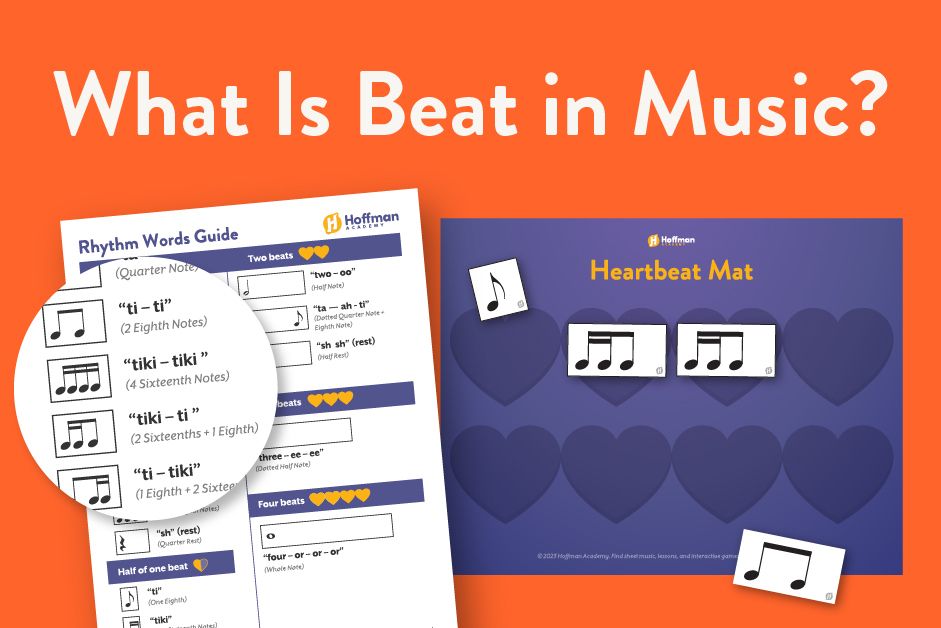
Take your understanding of beats in music to a new level today with Hoffman Academy’s Heartbeat Mat! This amazing tool for counting the beat and rhythm is included for free with Hoffman Academy Premium.
What is a steady beat in music?
A steady beat is a consistent pulse underlying the rhythms and melodies in a piece of music. Keeping time with the beat synchronizes musicians. For listeners, the beat provides a sense of order. Whether floating to a waltz or clapping to rock music, dancers move in time with the beat.
Examples of beats in music
Different types of music have different groupings of strong and weak beats. A waltz has a three-beat pattern (ONE-two-three, ONE-two-three). The strong first beat followed by two weaker beats helps a dancer sweep across the floor. In contrast, a march follows a two-beat pattern (ONE-two-ONE-two), making it feel steady and confident.
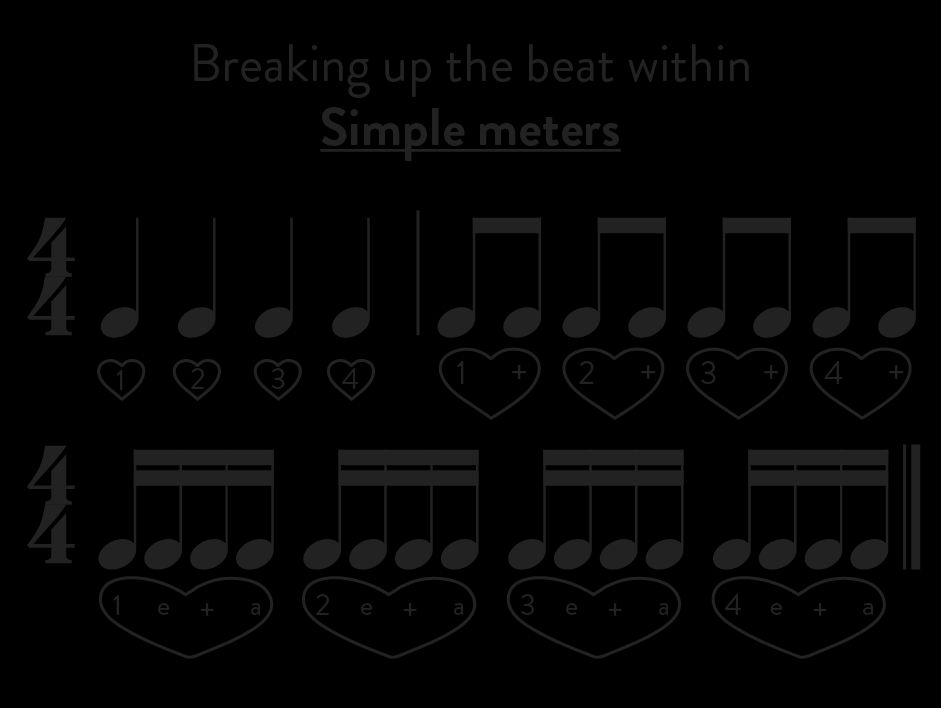
Meter in music describes the organization of beats and rhythms in songs. In sheet music, time signatures indicate the meter, how many beats are in each measure, and which type of note gets the beat. In simple meter, which includes 2/2, 2/4, 3/4, and 4/4, the quarter note gets the beat and divides into two eighth notes. In compound meters, each beat divides into triplets. The Simple Rhythm Chart and Compound Meter Guide compare the division of beats between simple meter and compound meter and can help students understand the beat in music.
How do you identify, count, and practice beats in music?
Watch Mr. Hoffman demonstrate how to find and count the beat below using the Heartbeat Mat.
The Heartbeat Mat includes interactive cut-out cards and a mat with hearts for each beat. This tool teaches students to connect the sense of rhythm – how we physically feel a beat – with the visual symbols of notes. Use the Rhythm Words Guide with the rhythm cards and the heartbeat mat to help build a physical association between the rhythm patterns we hear and speak and the way rhythms look. For more activities to help develop an innate sense of rhythm, check out Mr. Hoffman’s article What is Rhythm in Music?
The first step in practicing the beat is to find the strong beat. By listening and feeling the beat, you’ll be able to find out the meter of the piece. For pop and jazz musicians especially, finding the strong beats of 1 and 3 can help you find the backbeat. In those genres, musicians emphasize the off beats, 2 and 4, to create a sense of tension. Want to avoid clapping on beats 1 and 3? Try stomping your foot when you hear the bass drum on those beats, and you should find yourself clapping on the alternate beats of 2 and 4.
Is rhythm the same as beat?
Rhythm and beat are related terms. Rhythm is a pattern of long and short sounds and silences overlaid on top of the steady pulse of the beat. The “lub-dub” pattern of a heartbeat would be a type of rhythm, and the steady pattern of a single heartbeat is the beat.
Different types of rhythmic patterns exist in music in the same way that walking, running, and skipping sound different. Some of the most common rhythmic patterns are regular rhythm, syncopation, polyrhythm, and free rhythm. You can read more about different types of rhythms and how to count them in our article on Rhythm in Music.
Is tempo the same as beat?
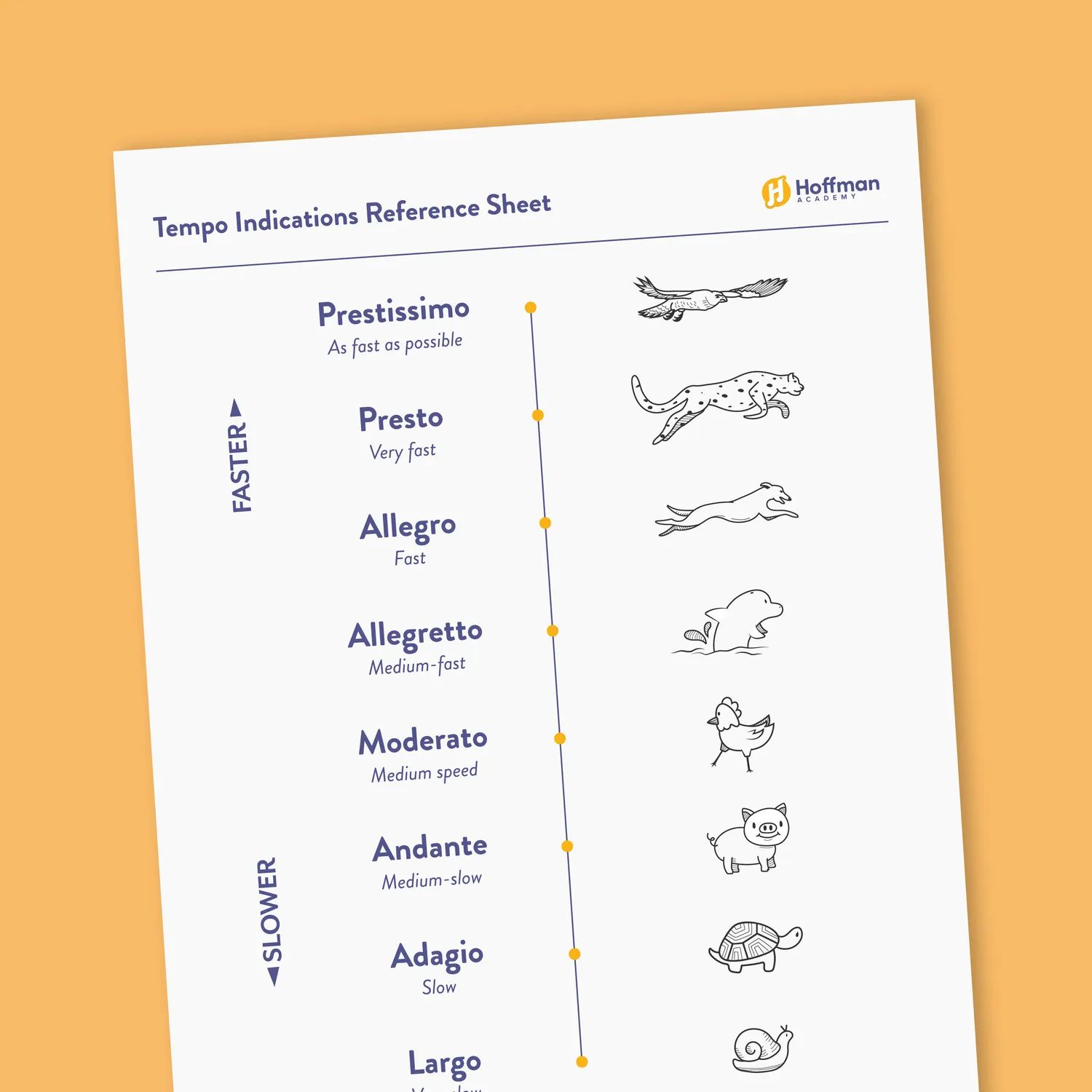
If the beat is like a heartbeat or pulse of the song, then tempo is how fast the beats occur. Tempo, which comes from the Italian word for time, describes the number of beats over a period of time. Tempos are measured in beats per minute. Depending on the tempo, the rhythm might be played at different speeds, but the pattern of notes remains the same.
Do songs need a beat?
Whether it’s the ONE-two-three of a classical waltz or a funky bass drum in a pop song, the beat keeps the song moving – and the listeners clapping and dancing along! The beat also helps pianists play rhythms accurately and in time, without speeding up or slowing down. Most songs need a steady beat to provide a foundation for listeners to feel the rhythm, though some styles break this pattern. Some styles of music, like free jazz, Gregorian chant, or some kinds of ambient music, do not have a steady beat. So, while not all styles of music need a beat, most songs do have one. Listen to an example of music without a steady beat:
The beat goes on: Key takeaways
The constant pulse of the beat provides a foundation for consistent timing and rhythm. Physically clapping to the beat helps students develop a sense of rhythm. You can also incorporate teaching tools like the Heartbeat Mat to learn and count rhythms in a fun and intuitive way. We hope the resources in this article have helped you learn more about the beat in music!