


Beginner pianists build key skills, including pitch matching and rhythm recognition, through singing games.
Singing makes up thousands of years of cultural tradition. It’s a key way people share emotions and stories and connect with one another all over the world. So, learning to sing taps into millennia of human connection through music.
Singing games are also an incredibly fun way to spend time with your students! Singing games form part of childhood music education because they are a key part of human culture. The chances are high that you remember a fun singing game from your childhood. If you learned the singing and clapping standard, “A Sailor Went to Sea,” you know a singing game to share with your beginner pianist!
Ready to unleash your beginner pianist’s musical voice? Try Hoffman Academy Premium today for 400+ videos, musical theory games, worksheets, and more.
Why singing matters for piano students
Learning to sing teaches piano students to relate their body to the music. Through singing, we connect our physical body and voice to our listening ears and our thinking brain. Activating the music processing regions of the brain enables beginner pianists to develop the skill of audiation. Audiation, the skill of hearing pitches in your head, forms a keystone of piano playing. Through audiation, musicians “hear” the notes they are going to play before they play them. This skill enables pianists to self-correct if they make a mistake and to learn to play by ear.
Where can I find singing games?
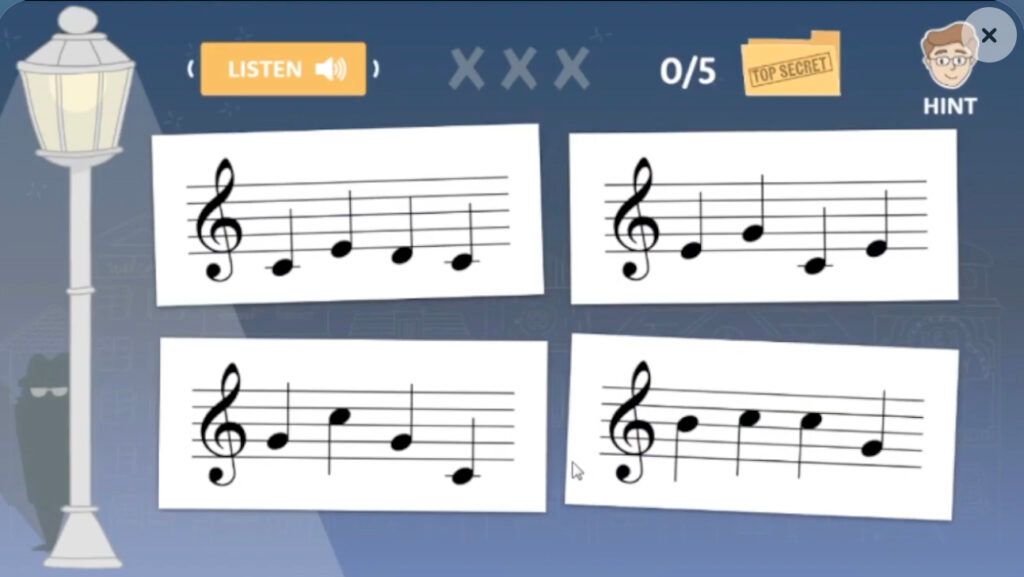
Hoffman Academy offers a variety of musical games that reinforce pitch and rhythm skills. You can modify these online games to include singing for beginner pianists. Try singing along to the Mystery Melodies game pictured below, or clapping and speaking the rhythms for the Rhythm Train game.
We also have an extensive collection of printable rhythm singing games in our Online Store. One favorite way to make singing and rhythm games includes our Heartbeat Mat. The heartbeat mat and rhythm flashcards work together to tangibly show students the rhythm. Singing pairs well with these teaching tools which visually illustrate the beat and the rhythm. To use the heartbeat mat with singing, first sing the song while you tap the heartbeats. Then, have the student join you in singing and tapping the heartbeats. Next, bridge this skill to singing the rhythm words. Finally, have the student “spell” their rhythm by putting the correct rhythm flashcards in order on the heartbeats. Have them check their work by singing the song and tapping again.
Singing games, like the ones you can play with the heartbeat mat, teach kids rhythm and musicality. These games are also a great way to spend time with your child. For more singing game ideas, check out our article on Singing for Musical Development.
What are the different types of singing games?
Singing games combine singing with movement and play to help students develop pitch, rhythm and coordination. Action and movement games, including “Head Shoulders Knees and Toes” and “London Bridge is Falling Down” link physical movement to sound. Connecting singing to body movement teaches students to feel the beat internally. It also gives students a chance to work out the wiggles!
Another type of singing game is the call and response game, where one person sings a “call” and the other person returns a “response.” Call and response singing games teach students pitch matching skills. “Boom Chicka Boom” teaches students to listen and sing what they hear. Echo songs and repeating songs, such as “My Aunt Came Back” and “Down By the Bay” also help with pitch matching.
Rhythm singing games
Clapping and singing games teach beginner pianists rhythm. We develop our sense of rhythm through singing and dancing. Any activity that moves our bodies with the beat will help your child learn to keep steady time. This includes classics like “A Sailor Went To Sea,” where your clapping and hand motions keep the beat steady.
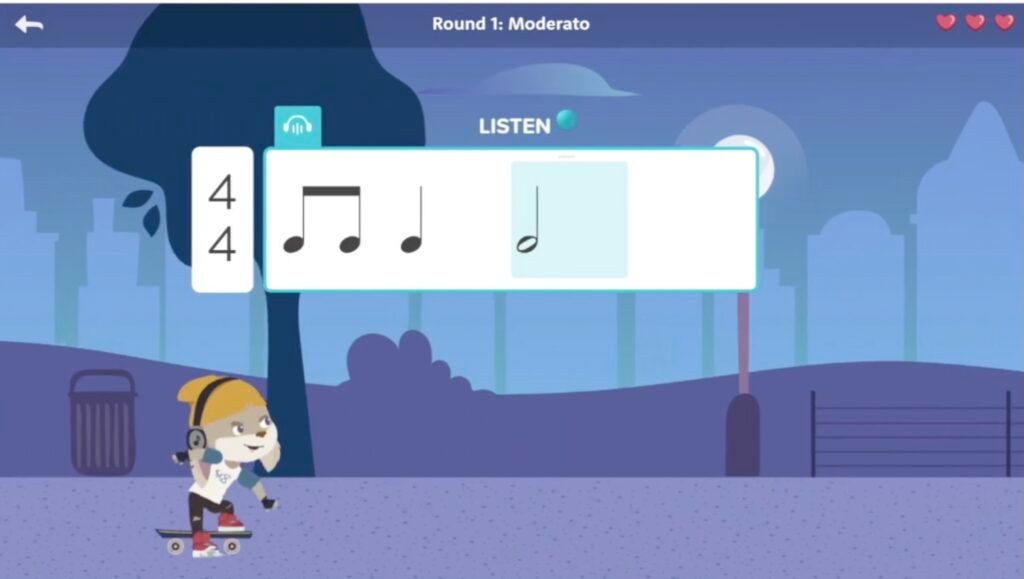
Movement is a key benefit of traditional singing games. Rhythm Shredder, our online rhythm game, invites students to tap and move the rhythm. Although there’s no singing in Rhythm Shredder, there’s still a physical echo the same as in-person clapping games. Your child will hear the rhythm first, then tap the rhythm using the spacebar to help the bunny do tricks on the skateboard!
Melody matching games
Melody matching games teach piano students to listen and repeat back the notes of a song like an echo. Echoing another singer and matching pitch helps piano students develop their audiation skills. This kind of game can be as simple as singing a short melody of a song you know but your child or student is unfamiliar with, and asking them to sing it back to you.
Adding solfège to a melody matching game will help students develop a sense of how notes relate to each other. Singing together also makes learning solfège fun! You can sing the song first and have your student echo back, singing the words. Next, sing the melody with solfège note names and have your student echo you in solfège.
When teaching a new song, our video lessons use solfège and melody matching games in this the same way. Solfège games teach students to hear and internalize the melody, which is key for self-correction when playing the piano.
The Mystery Listening Game helps students identify pitches. Your student can add singing to this game by listening, pausing, and singing back the melody. Singing back the melody teaches students to observe the steps, skips, and leaps that are used to identify the notes.
Musical expression through singing
Singing encourages children to express themselves musically. Singing organically conveys concepts like loud and soft, or speeding up and slowing down. The words we sing in songs will also help students connect to musical concepts like phrasing and dynamics.
Piano students should listen to their songs many times before beginning to play them! As you play a recording of the song, encourage your child to dance and sing along. Once they know the tune well enough to sing it back on their own, they’re ready to learn the song on the piano.
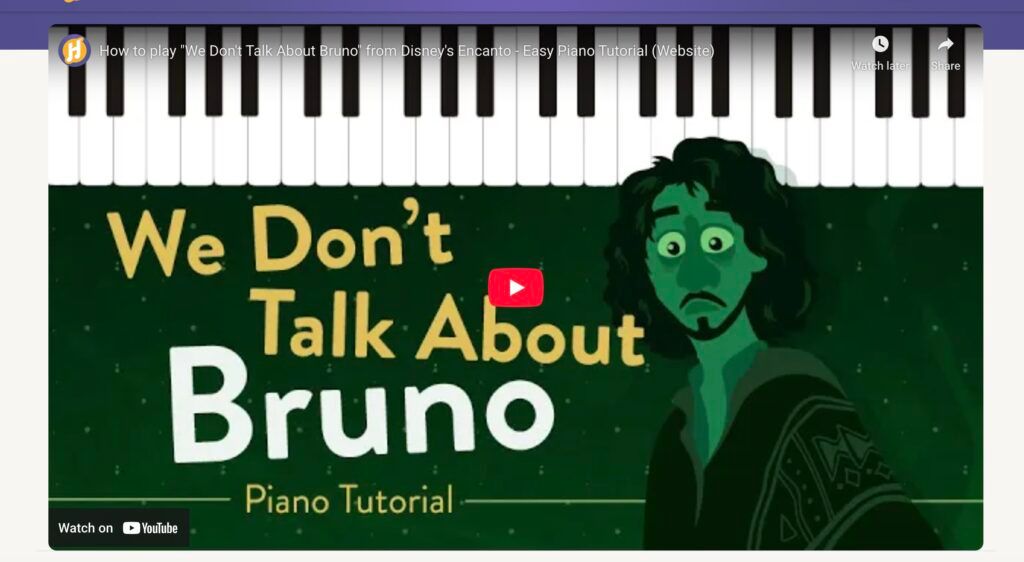
Our Popular Songs Library offers 100+ songs your child might already know and love! Chances are, your piano student already knows “We Don’t Talk About Bruno” from Encanto. Encourage your child to sing along with the song first. Then, have them try to play following the steps of our tutorial.
Games for reluctant singers
Even though some children can be nervous about singing, there are ways to encourage them! The first step is singing together and encouraging your child to sing and dance along with recorded songs.
Some music theory games for reluctant singers include our online music theory games, including Piano Street and Alphabet Towers. In Piano Street, students can practice singing the note name they see on the piano as they find the corresponding note. Alphabet Towers, where students practice with the music alphabet, teaches students how to order music notes.
Resources for more singing games
Numerous songs in the Hoffman Method, from “Oranges and Lemons“ to “Dance of the Wild Horses” can be used as singing games for your beginner students. Start by listening to the song together first. Then, make an echo game and take turns singing a line. Once you’ve taken turns echo singing, sing the solfège together. Then, pull out the rhythm mat and tap or clap along as you sing. It can be easier and a lot more fun fun for kids to learn a new song if they are encouraged to sing the song before they play it!
A paid resource many elementary teachers like to reference is The Singing Classroom. These singing games, like those referenced in this Music in Your Homeschool Article, are best suited to classroom settings or groups of kids.
Sing your way to piano success
Singing games make learning piano fun and impart crucial musical skills, such as improved pitch matching ability and rhythm. Sing your way to piano success with Hoffman Academy’s music learning resources. Try Hoffman Academy today!