





Simple and effective rhythm exercises for piano students
Rhythm is the most physical and dynamic part of music. It can also be easy to neglect rhythm and give melody and harmony the spotlight in early music teaching. But, if piano students have consistent rhythm exercises built into their very first lessons, they’ll be more likely to see rhythm as a fun and essential part of making music. When students realize that a note’s timing is at least as important as its pitch, they are well on their way toward a balanced musicianship. This article will show you the physical nature of rhythm and the best tools and exercises for reinforcing it.

How do you explain rhythm to a child?
Rhythm is much more effectively understood through direct experience rather than explanation. To simply memorize the number of beats in a note value is too abstract to help a young music student develop a sense of rhythm. Children need the physicality of clapping or movement exercises to feel the beat and hear the number of sounds associated with each beat. This tactile, ear-first strategy lets students internalize rhythm before they’ve seen their first note on the page. This way, rhythm becomes an action first: understood in the body and ear and visually reinforced by the notation later.
The same method is vital for introducing meter. Rhythm incorporates all the different note values–the combination of long and short sounds–that are set to the beat. Meter is about how we organize beats into repeating patterns, such as three-beat cycles, or four:
Rhythm:

Meter:

But again, trying to explain this to a young child will be largely ineffective without first providing an activity. An excellent way to start teaching meter is to play a well-known song while students walk together in a circle. At the downbeat of each measure, the students abruptly turn and walk the other way. This allows them to internalize the time span in each measure, and physically feel the meter starting over at each downbeat. Different songs should be chosen to help them experience duple, triple, and quadruple meter. Here are some ideal popular songs to choose from:
Duple Meter (two-beat pattern):
I Hear the Mill Wheel
Beethoven’s 7th Symphony (2nd movement)
The Stars and Stripes Forever
Triple Meter (three-beat pattern):
Oranges and Lemons
Lavender’s Blue
Amazing Grace
Quadruple Meter (four-beat pattern):
Ode to Joy
La Primavera
In the Hall of the Mountain King
How do you improve rhythm on piano?
When you’re learning a new piano piece, trying to master both the notes and the rhythm at the same time can be daunting. That’s why it’s a good idea to separate the two. Make learning the notes and correct fingers one task and the rhythm another. To do this, clap the piece’s rhythm values while either chanting the rhythm syllables or counting the beats. It’s very important to do this out loud to truly hear and feel the rhythms. Remember: rhythm is action, not notes on a page. Simply counting beats in your head is a little like trying to learn a sport without ever playing it.
If you’re learning “I Hear the Mill Wheel,” the first step is to listen to a recording of the song each day. Simply hearing the different rhythms is an excellent way to kick-start your sense of timing. Next, begin learning the song on the piano, and don’t worry about the rhythm just yet. You’re familiarizing your fingers with the notes they will play, and that can be a handful! You’ll then want to lift the rhythm out of the music and practice it separately. Break the music into short, one-measure pieces and clap the rhythm while saying the syllables out loud:

Practice each measure over and over until you can clap the rhythm confidently, without hesitation. Start with one measure at a time, and then put two together, then four. The final step is to put the rhythm back into the music, and play the notes while chanting the rhythm out loud. Remember to wait to put notes and rhythm together until your fingers really know the notes and you’ve had some good practice with the clapping.
If you’re more experienced, try this same process by clapping and counting the beats and subdivisions out loud, like this:

What are examples of rhythm exercises?
Rhythm Dictation
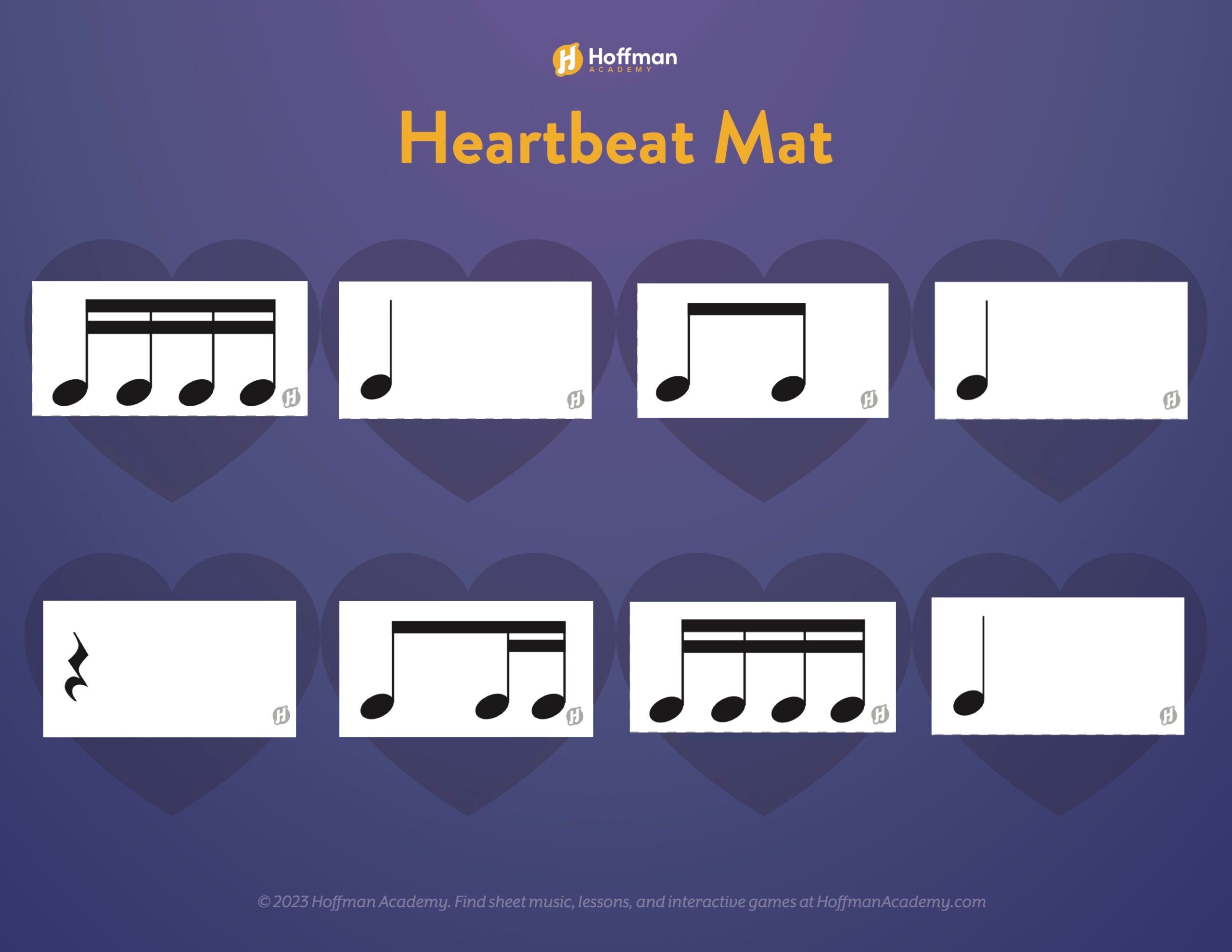
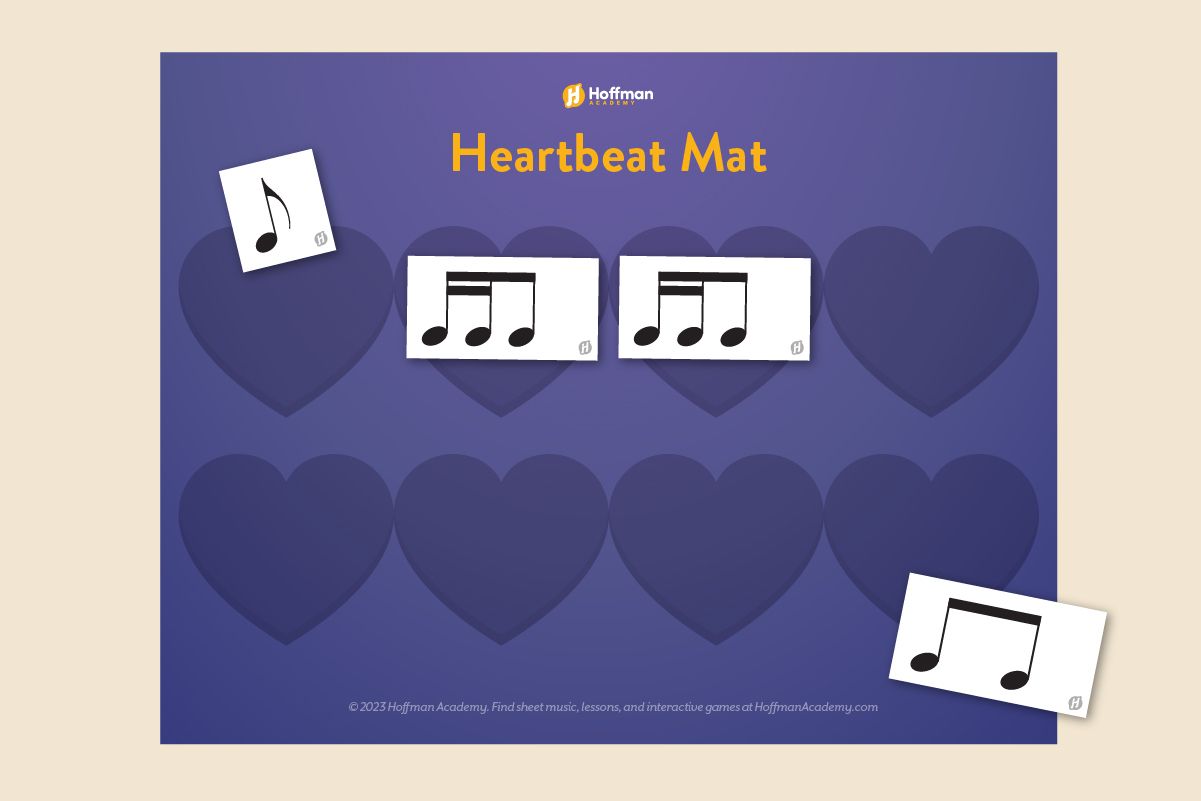
Rhythm dictation is one of the best ways to “explain” rhythm to children. This activity uses a Heartbeat Mat to visually represent the beats. Students first hear and sing the song a few times to begin the process of audiation, or hearing the music in their mind. The teacher then taps each heartbeat while chanting the song’s rhythms with a neutral syllable, such as “bah” or “dah.” Students can promptly tell how many sounds they hear per beat. From there it’s a simple matter of assigning note value cards to match what the students heard and then clapping while chanting the appropriate rhythm syllables.
Rhythm Composition
Students can also use the heartbeat mat to compose their own rhythms. This activity makes for an engaging game, playable in two ways. Kids can either randomly select rhythm cards and place them on the heartbeats, or they can first clap and chant a short series of rhythm syllables and then figure out which rhythm cards match. These are excellent ways for students to become fluent with different rhythm values while creating their own music!
Also, once students have filled out the heartbeat mat, they can assign note letter names to each rhythm card, effectively creating a melody based on their rhythms. Kids often enjoy the challenge of playing their own compositions on piano, and saying the rhythms aloud while playing can help improve their rhythmic accuracy.
Watch Mr. Hoffman demonstrate rhythm composition:
Writing in the beats
One of the best ways to reinforce rhythm and meter is for students to write in the beats, divisions, and subdivisions, either in the music they’re learning or in exercises. By doing this exercise, students can greatly improve their understanding of how many beats each measure should contain and which note values add up to an entire measure:

Filling in missing rhythm notation
Exercises that allow students to write in missing note values, barlines, or time signatures are particularly valuable. Students gain fluency in recognizing the time signature, where the barlines should fall, and the correct number of beats and rhythm values in each measure. Here are some examples:
Exercises with missing time signatures provide the complete rhythm, including barlines. Students use this information to figure out the correct time signature:

Working in the opposite direction, an exercise can provide the time signature and note values, but the students must fill in missing barlines based on their knowledge of the beat unit and how many beats each measure should contain:

Another type of exercise provides the time signature and barlines, but only some of the note values. Students fill in missing notes or rests to make each measure add up to the correct number of beats:

Rhythm Math
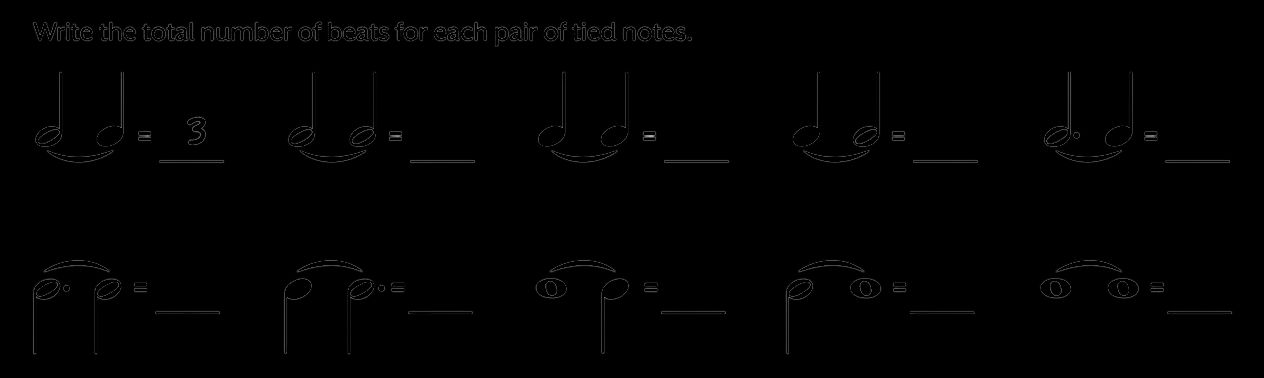
Any activity that emphasizes the number of beats in note values can help students strengthen their rhythm skills. Worksheets that focus on ties, for example, give valuable practice in adding together note durations. Ties are, in fact, simply a way to extend a note by adding two different note values together :
Simple vs. compound meter
Even students with a good grounding in simple meter can get confused when it’s time to learn compound meter. This is because the time signatures for compound meter don’t really show the beat; they instead show the notes that each beat is divided into. But with the right practice, students will become just as familiar with compound meter time signatures, like 6/8, 9/8, and 12/8, as they are with simple meter.
An effective way to start is to clap the rhythms for one song in simple meter, like 2/4, and another in compound meter, like 6/8. Au Clair de la Lune and Row, Row, Row Your Boat are excellent examples:
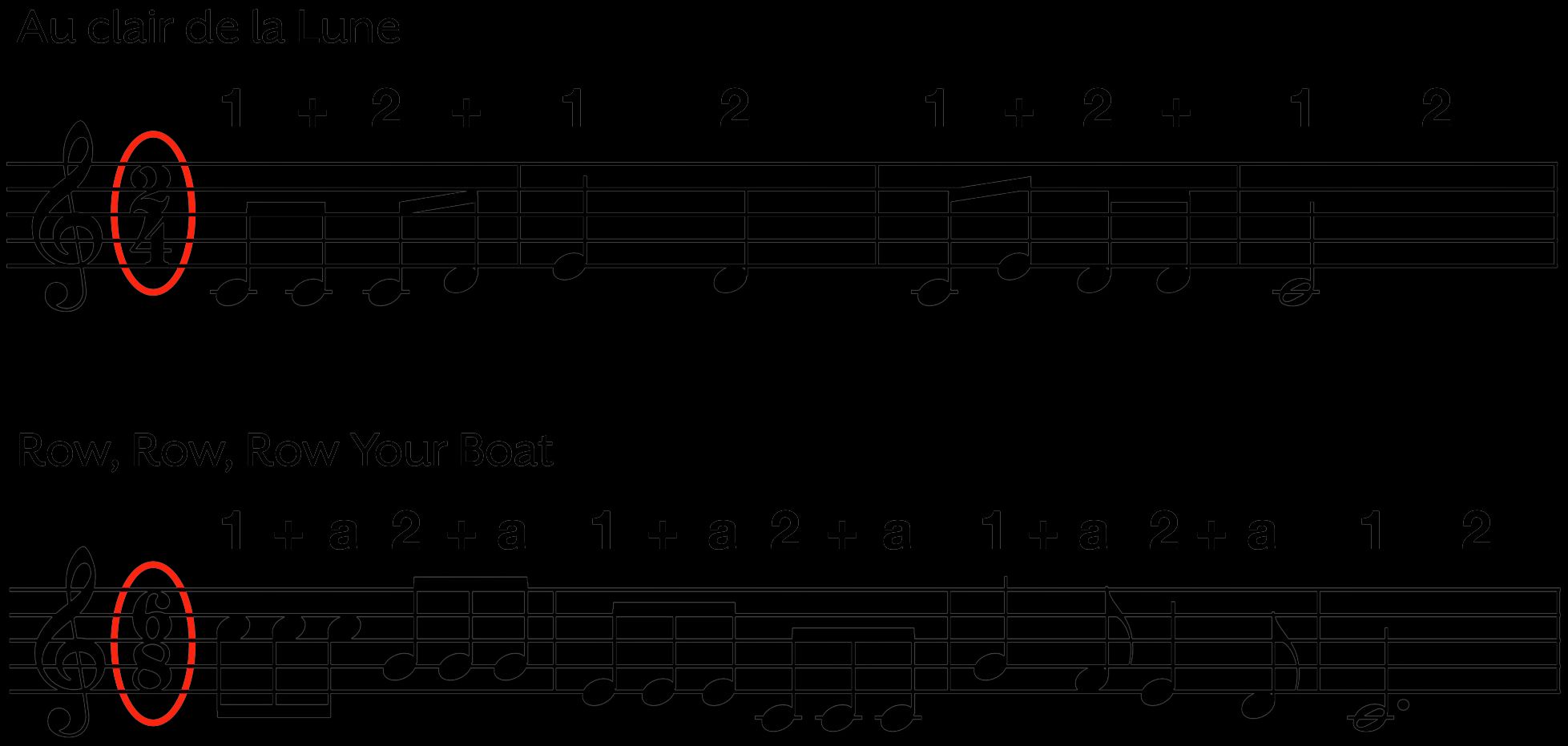
While both songs are in duple meter (two beats per measure), Au Clair de la Lune divides each beat into two eighth notes, while Row, Row, Row Your Boat divides each beat into three. That’s really the only difference between simple and compound meter. Students can clap the rhythm for Au Clair de la lune and say “one-and-two-and.” Then they can repeat with Row, Row, Row Your Boat and say “one-and-ah-two-and-ah.”This way, students enjoy the experience and feel of compound meter before seeing it on the page.
Resources from the Hoffman Academy Store for practicing rhythm
At Hoffman Academy, we have nearly two hundred learning and teaching resources in our store, many of them designed to help with rhythm. These products build on the techniques that you’ll find in the Hoffman Method books, and they’re absolutely free for premium members!
Our Heartbeat Mat has been tried and tested with thousands of piano students, and it’s a cornerstone of the Hoffman Method. Both color and black-and-white versions are available, complete with rhythm cards to cut out and use for rhythm dictations and games.
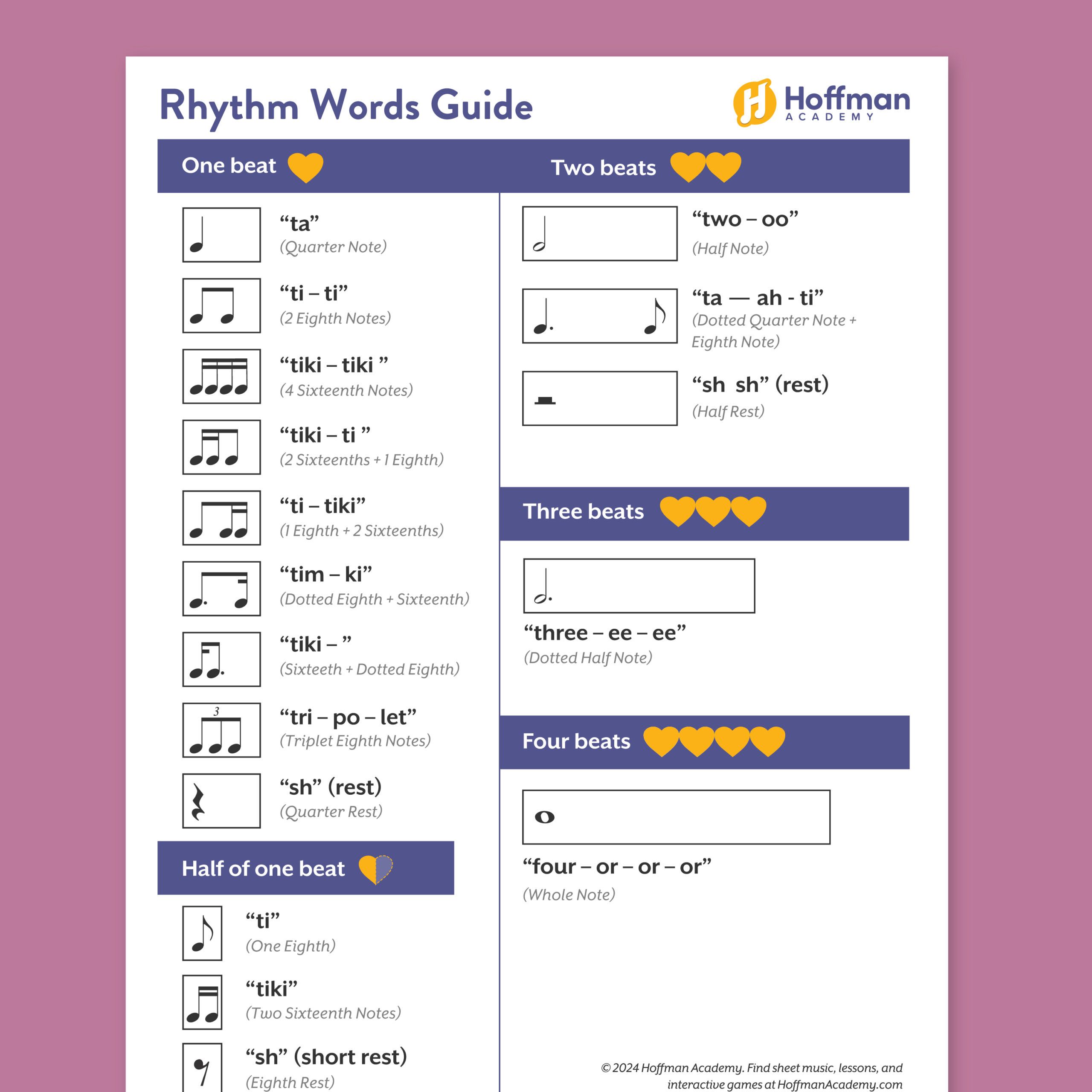
Before learning to count the beats, our Rhythm Words Guide will help students practice all possible rhythm combinations using rhythm syllables. These rhythm syllables are used extensively in the Hoffman Method books and video lessons. With this guide you can get them all conveniently in one place!
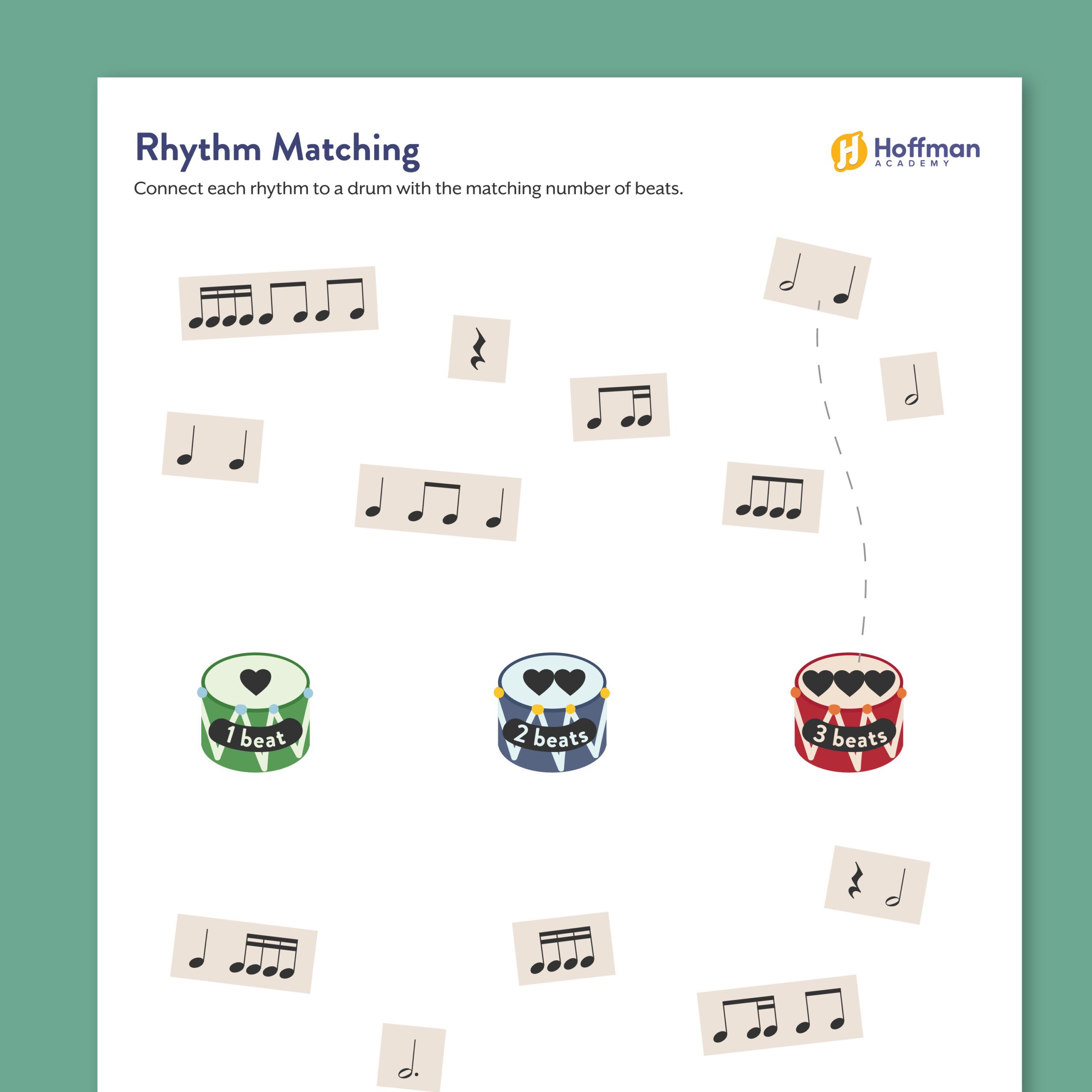
For extra practice, try our Rhythm Matching worksheet. Students can practice matching up rhythms with the correct number of beats on the drums, and then check their work with the included answer key.
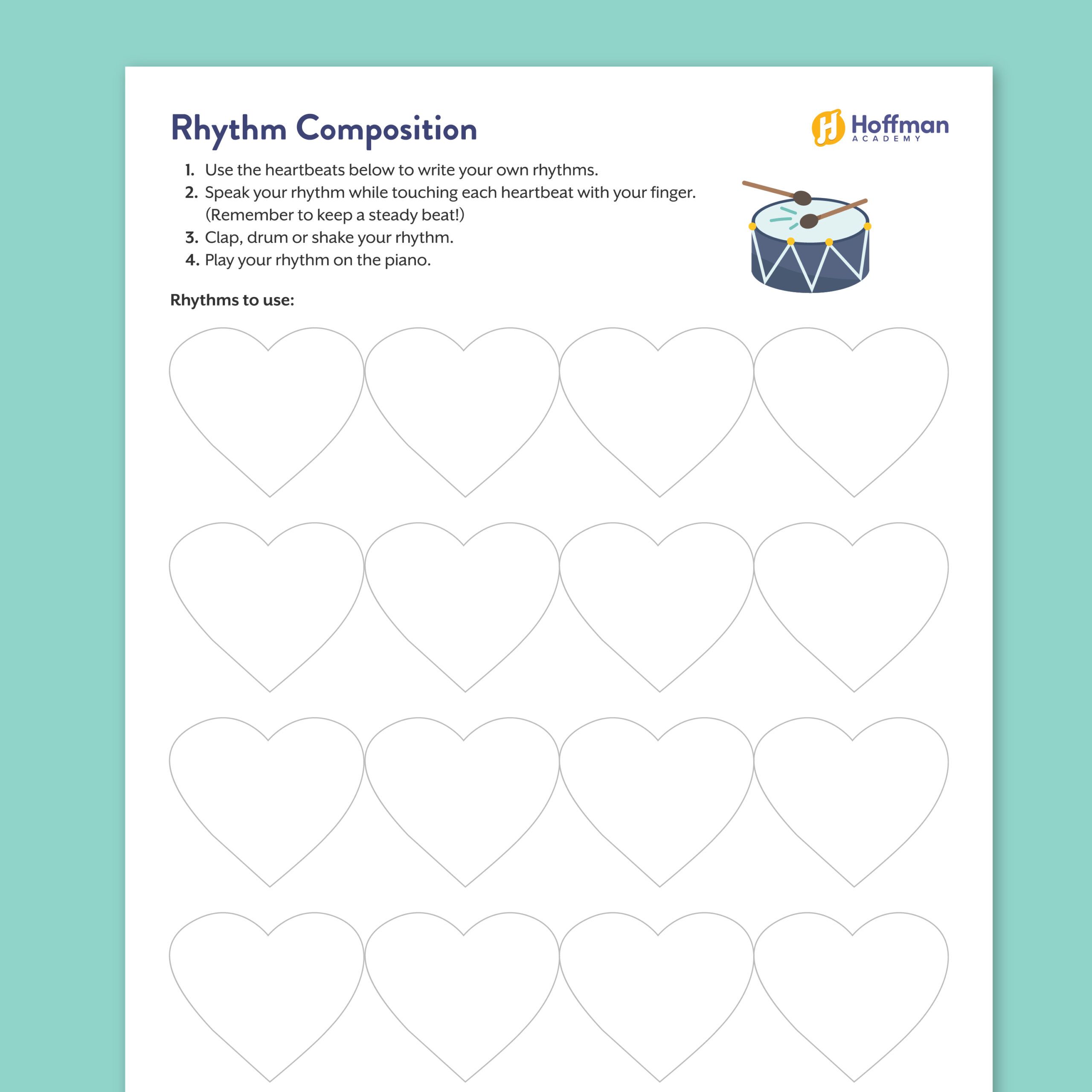
Practice or compose your own rhythm with our Rhythm Composition worksheets. Choose between large or small heartbeat sizes and write in your own rhythms, adding barlines and time signatures for more advanced students.
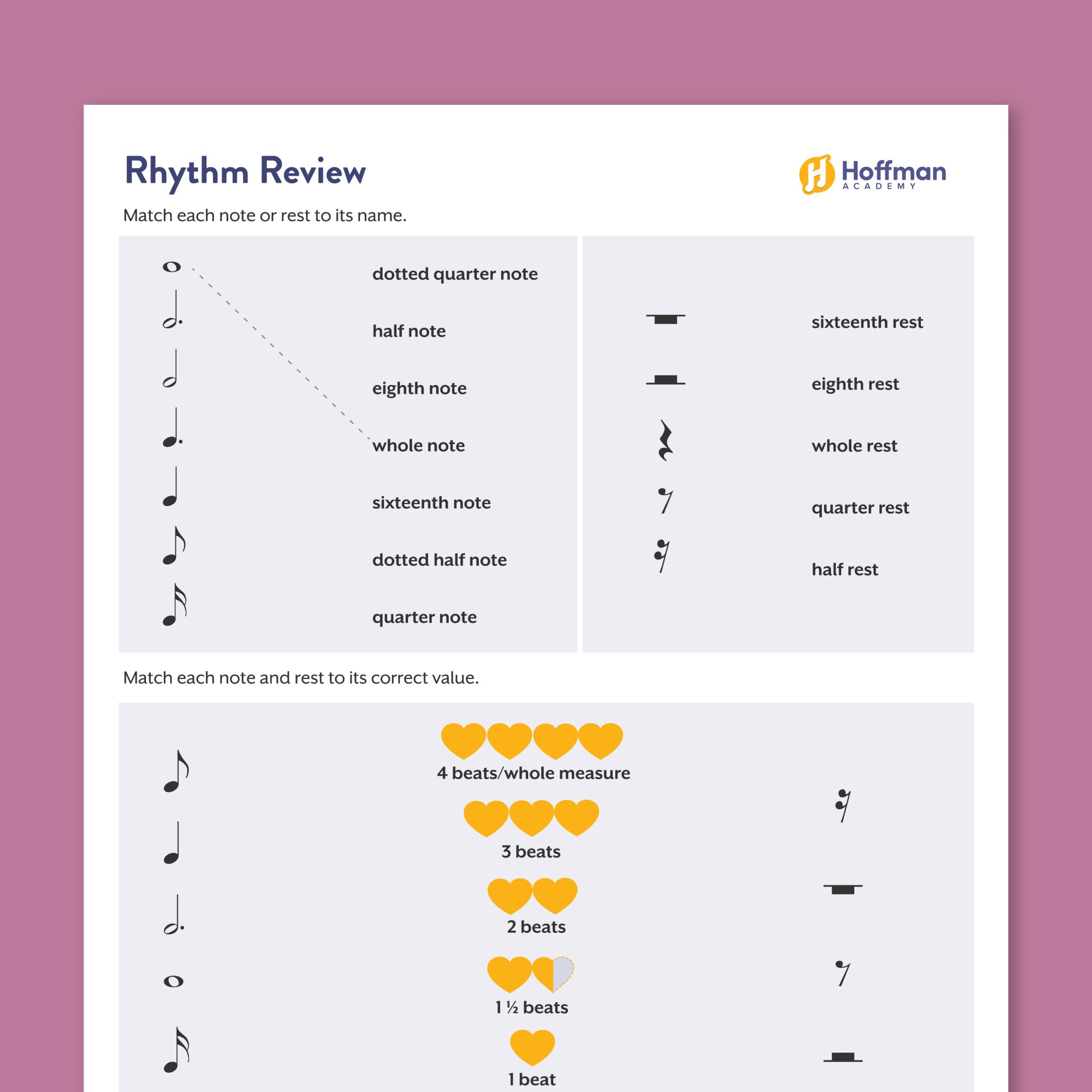
Similar to the rhythm matching worksheet, our Rhythm Review is a fun way for kids to match up rhythm values with note names and their correct number of beats.
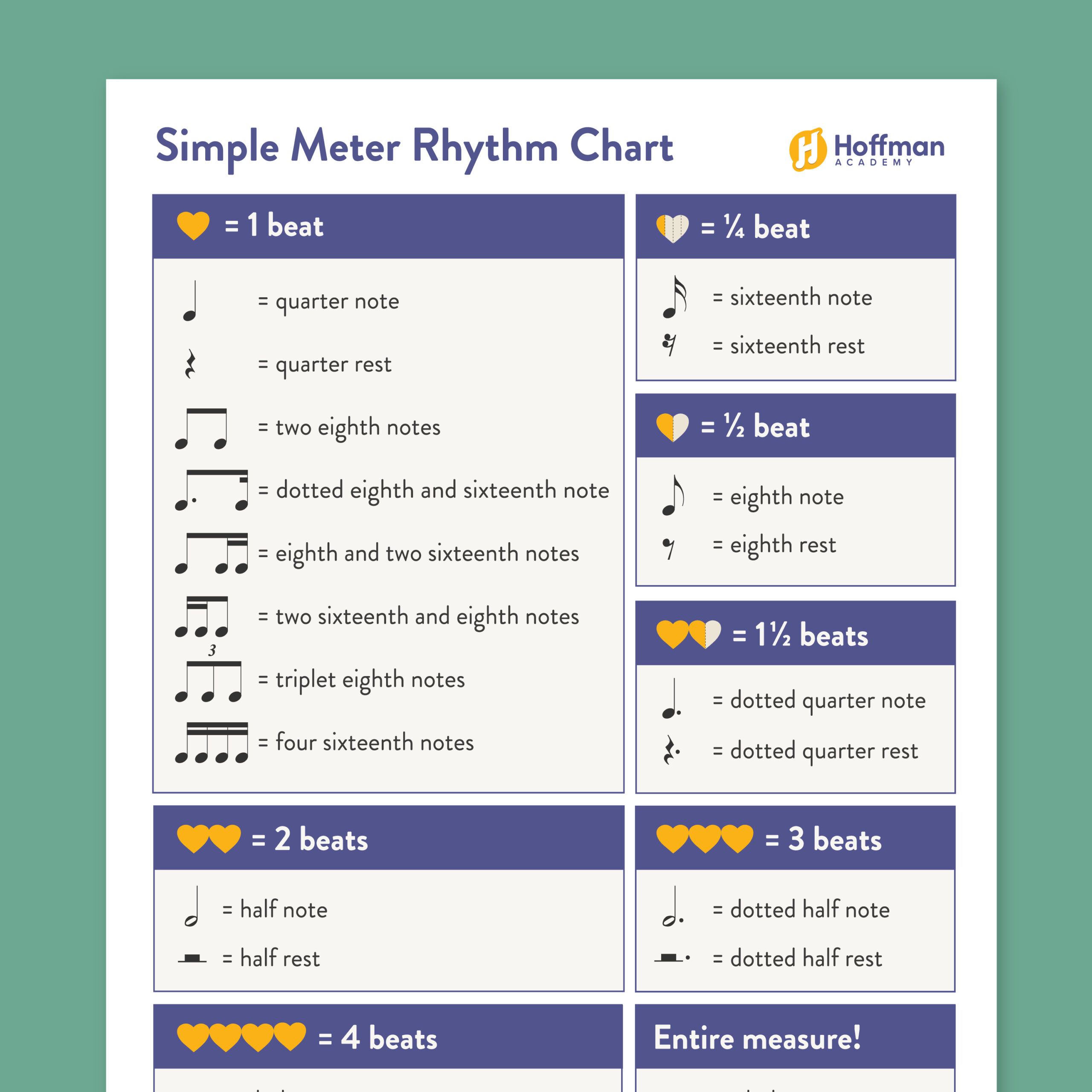
Use the Simple Meter Rhythm Chart as a convenient reference for all the rhythms you’re likely to encounter in simple meter. Each rhythm shows its note names and number of beats in any simple meter time signature.
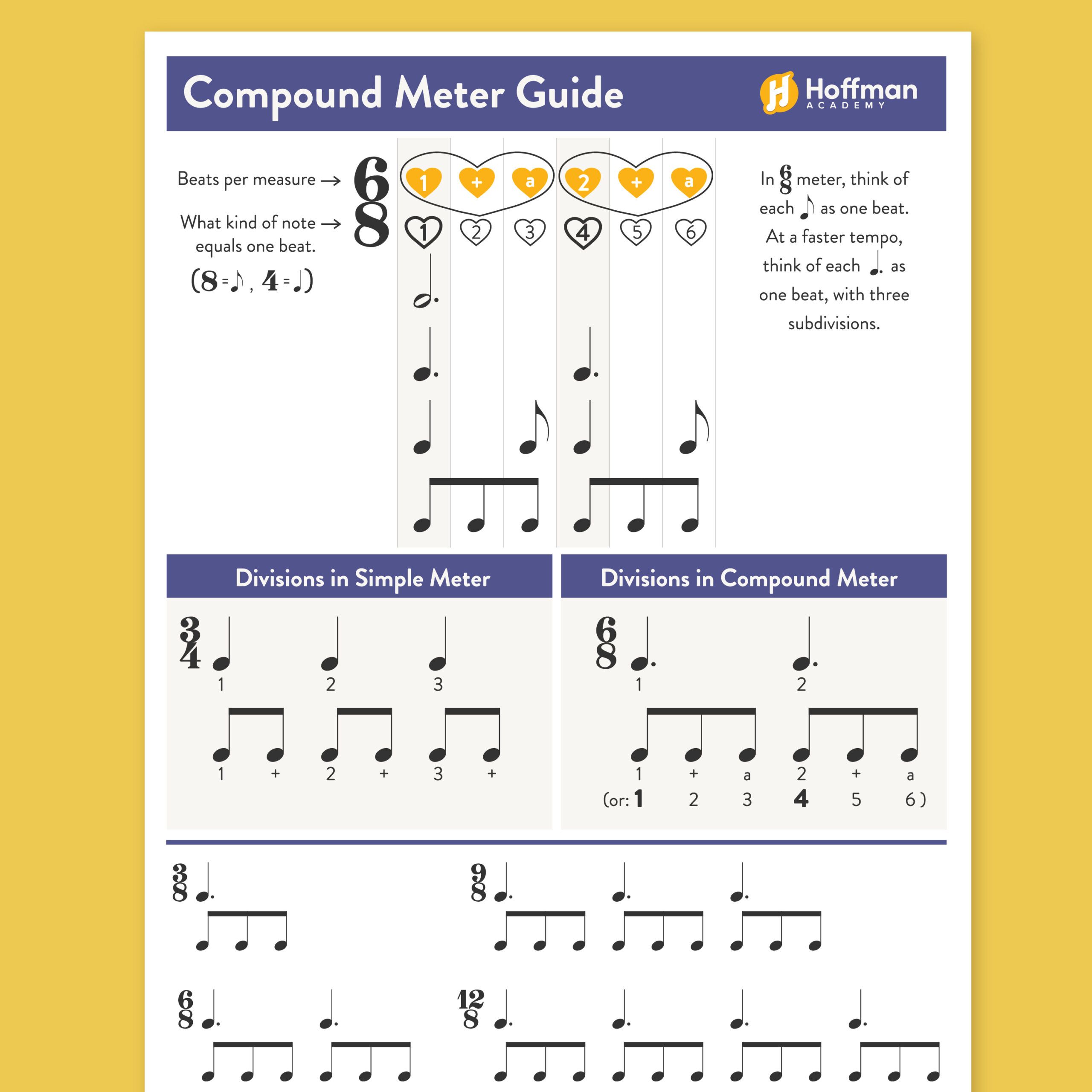
For time signatures like 6/8, 9/8, and 12/8, try our Compound Meter Guide for practice. You’ll clearly see the difference in how beats are divided between simple and compound meter, plus information on how to count rhythms in compound meter.
Philosopher and writer Harold W. Percival said that rhythm was his “first feeling of connection with this physical world.” We at Hoffman Academy strive to deepen that connection for music students. We hope these rhythm exercises and resources help you to develop your skills and make rhythm a vibrant, rich dimension in your playing.