


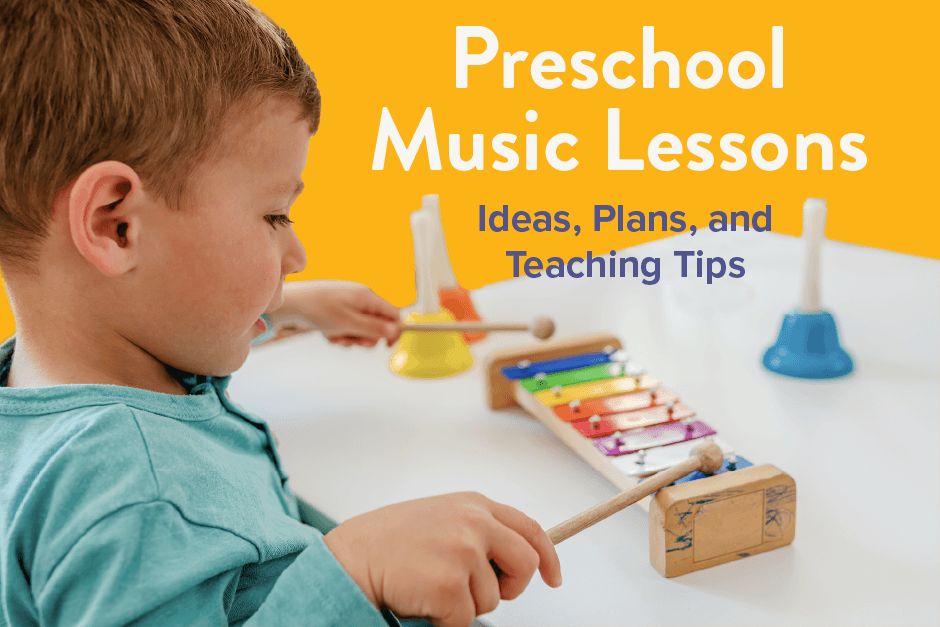
Preschool is the perfect time to spark a child’s love of music. At this age, children are like sponges, absorbing new experiences as they grow. During these peak years of childhood development, preschool music lessons support more than a child’s musical growth. Motor skills, attention, pattern recognition, and more improve when preschoolers participate in kid-friendly music education.
This age is the ideal time to immerse your child in musical language. In this article, you’ll discover how children can benefit from music lessons emotionally and socially. We cover the process of building play-based immersive preschool lessons, as well as curriculum essentials.
Ready to take your preschool music lesson planning to new heights? Try Hoffman Academy Premium today for access to thousands of music educator resources and more preschool lesson ideas!
Benefits of music lessons for preschoolers
Music teaches preschoolers fundamental skills for making music and enjoying life. Lessons can encourage your preschooler to play, have fun, and discover their musical voice. Alongside creativity and joy, there are tangible developmental benefits, too. Clapping games and singing in music classes develop both fine and gross motor skills. Early rhyming songs and movement foster rhythm skills and pattern recognition.
Music lessons also support preschoolers’ cognitive development by strengthening their memory and attention skills. Engaging in group singing and clapping activities also helps preschoolers develop social skills, including turn-taking and cooperation. These skills further support your preschooler’s growth as a listener and communicator.
What does a preschool music class look like?
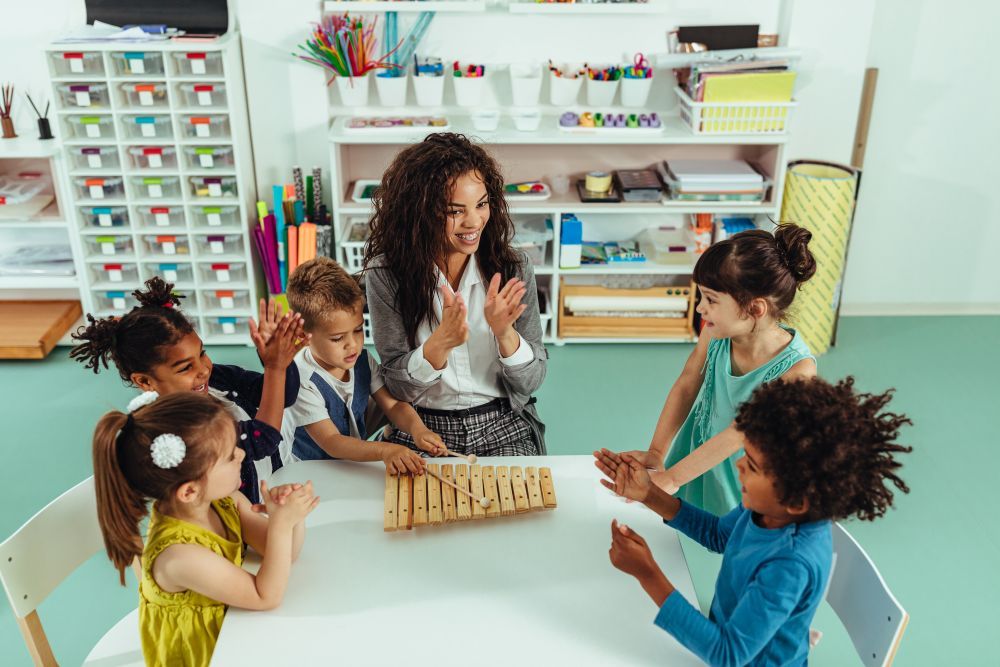
Preschool music classes consist of group classes where students explore and make music together. Above all, preschool music class should look like kids having fun as they explore listening to and making music. A class might start with movement and dance to connect to the beat of the music. Singing together with repetitive songs and rhymes builds your preschooler’s connection to the music. A teacher could also lead rhythm games involving clapping and stomping to build rhythm skills.
What are the key components of preschool music lessons?
Singing and clapping together are key to preschool music lessons. These activities encourage children to imitate what they hear. Through hearing and repetition, young children build their musical ear, an important foundation for later music lessons.
Rhythm forms another key part of preschool music learning. This foundational skill of musicmaking is developed through copycat games, dancing, and movement. Although call-and-response exercises seem simple, these partnered activities around listening and imitating are key to awakening your child’s musical instincts. Even free musical play and instrument exploration, where a preschooler gets to try Orff instruments or boomwhackers, can cultivate a child’s musical curiosity.
What to teach in preschool music lessons
Pitch Matching
You can teach the basics of pitch matching through singing. When singing a new song, model the pitches by moving your hands high for high pitches and low for low pitches. Encourage your students to move along with you and build their knowledge of pitch relationships.
Rhythm
Rhythm activities anchor music classes for young students. Clapping songs and hand games teach students to internalize knowledge about the beat and rhythm. Movement games and dance-along songs show the basics of tempo and help preschoolers understand fast vs. slow music.
The Musical Alphabet
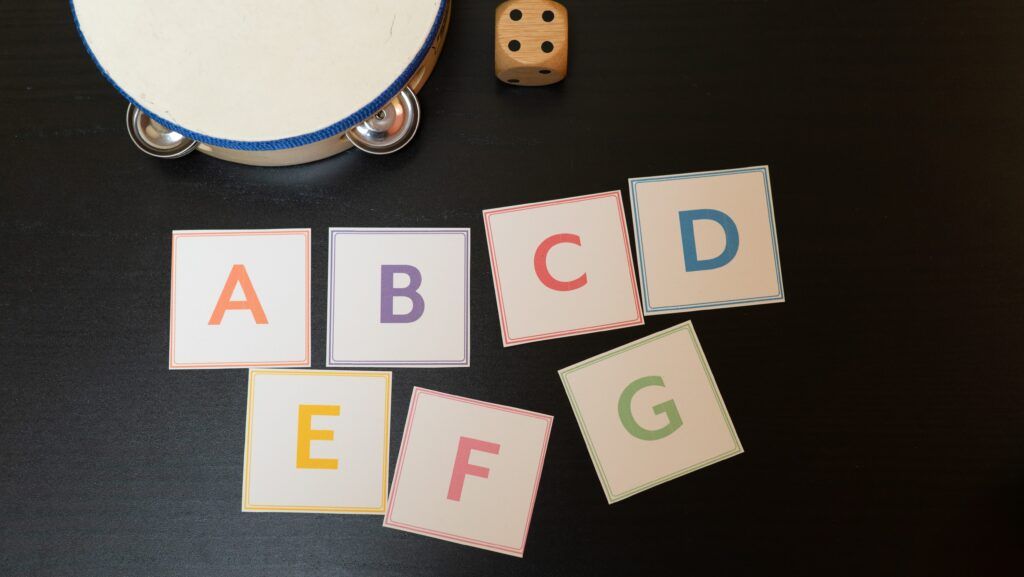
Preschool is also a great time to introduce the musical alphabet. While kids may not be reading age yet, many of them know their ABCs. Take some time to put letters in order. Even if students aren’t ready to read flashcards, they can “help” you organize them if you say the letter aloud.
What instruments are good for preschoolers?
If you’ve watched preschoolers play, you know that if they can grab it, they love it. Many great instruments for preschoolers can be held in a fist – no fine motor skills required! In a preschool music class, you may hear shakers and maracas, tambourines, and hand drums. These allow students to explore the different ways you can make sound while building rhythm skills naturally.
Some instruments show the relationship between notes well, which is key to teaching pitch relationships. These include xylophones, which differentiate notes by size and color. A piano keyboard also visualizes the relationship between notes.
Although piano is often best learned after age 5, a keyboard can make a fun first instrument (especially if your preschooler is interested in an older sibling’s piano lessons!). Because preschoolers are still gaining the fine motor skills needed to play piano on their own, you can facilitate their success using some of the tips from Piano Lessons for Toddlers. Try the “chicken head” hand shape, for which you touch your preschooler’s fingertips to the thumb to form the shape of a “chicken head” and “peck” the keys.
How to structure a preschool music lesson plan
Structure your preschool music lesson plan with lots of breaks for play! We recommend starting with a rhythm based warm up and call-and-response songs to activate your children’s listening skills. Scaffold your plan so that students hear a song in the warm up, learn to sing it in call and response, and then play with it in a rhythm section.
At this age, children learn through experiencing music, so it is important to structure your lessons with plenty of time for movement. Preschoolers need ample opportunities to move around. You can help your students by having free play with instruments and movement time to music in between guided activities. Above all, plan to make lots of music and have fun!
What are some example activities for preschool music lesson plans?
Start your preschool music lesson plan with some movement-based warm ups. Try “Freeze Dance,” where you ask students to dance the way the music makes them feel. Then, pause the song and have them freeze when the music ends. Another fun warm up activity is “Copy Cat,” where you can use drums, maracas, or your body to practice leading and following with your students.
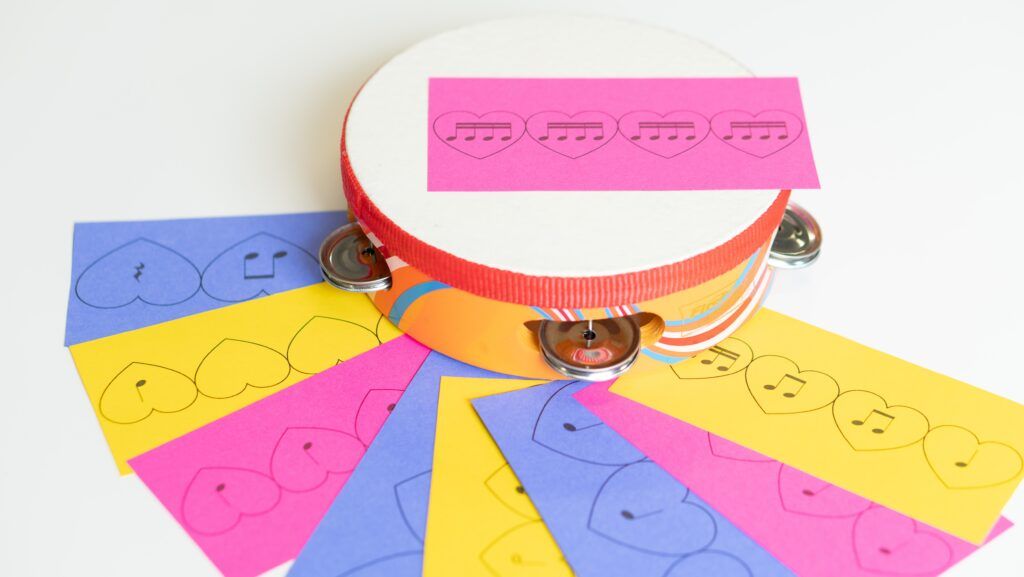
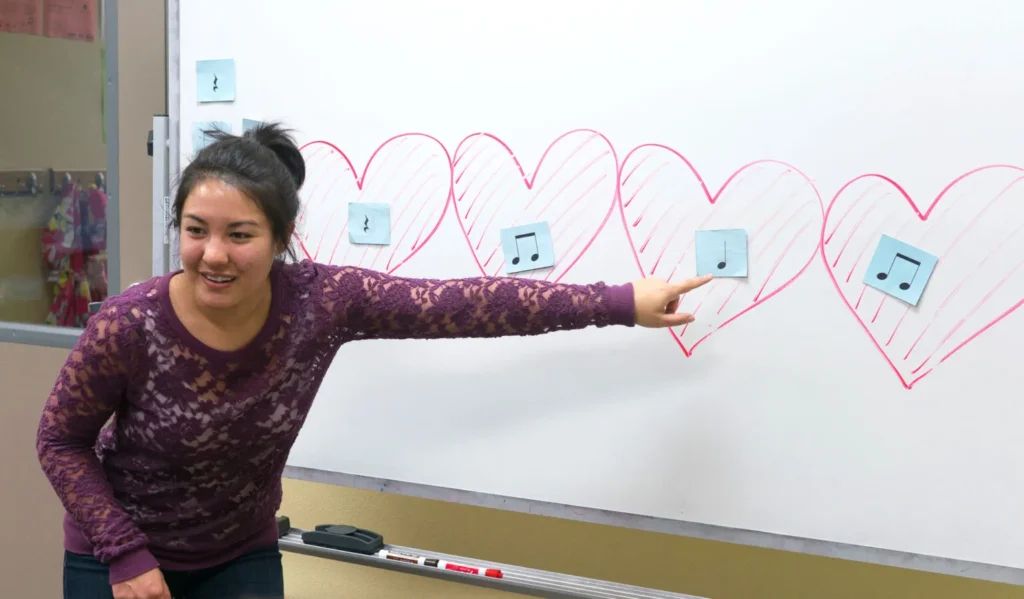
Our Early Elementary worksheets include age appropriate flashcards and matching exercises that you can use in your classroom. With preschoolers who know their ABCs, you can work together to build a “Musical Alphabet Snake.” If your class has learned a call-and-response song, you can tap it out on the Heartbeat Mat. For more great ideas, check out 17 Music Activities for Preschoolers for even more partner games.
Preschool music lesson plans by theme
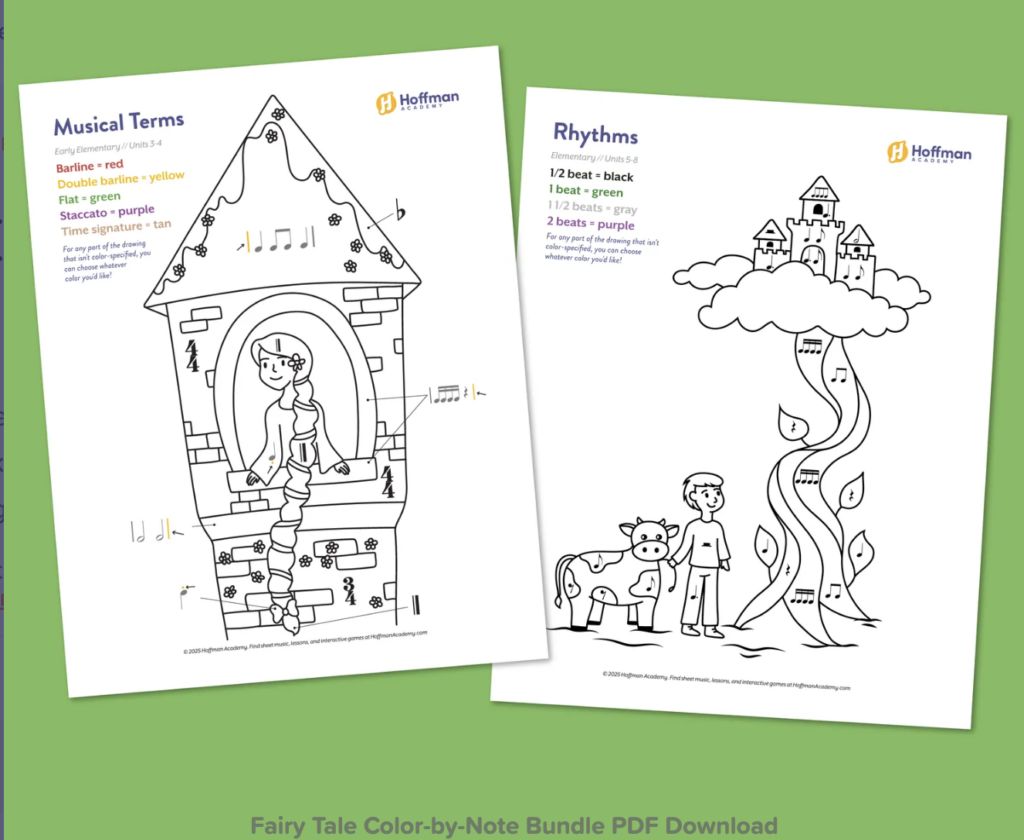
Another way to build your preschool music lesson plan is by theme. If you are near a holiday, pick a song to build your theme around. For spring, you could make a silly spring playlist, including Vivaldi’s “Spring,” that your students dance to for warm up. Then, you could have Tulip Musical Alphabet Cards activities. Top it off by singing the song “Lavender’s Blue” and coloring a Fairy Tale Color By Note sheet in spring colors.
In the winter months, you can build a theme around “Snow!” Start with a warmup, dancing to songs like “Waltz of the Snowflakes” from The Nutcracker and “Frosty the Snowman.” Then, it’s time to play a matching game for a break. Work with your students to put the Snowflake Musical Alphabet Flashcards in order. Have a movement wiggle, then start a “Frosty the Snowman” sing along. Go phrase-by-phrase for pitch modeling. If your preschoolers are learning keyboard geography, you can even play Match the Mittens for another floor matching game before returning to a “Frosty Rhythms” clapping game.
For more fun themed activities, check out our Learning and Teaching Resources page. You’ll find themed flashcard sets, music coloring sheets, and more activities that your preschoolers will love.
What are tips for preschool music instructors?
Preschool music instructors can remember that making music is fun! Your enthusiasm and joy are contagious, so lean into the fun as you encourage your students to play and explore. For this age group, music class is about soaking up music rather than pursuing perfection.
Repetition is your friend – preschoolers love to play a song or game over and over. You can always explore a different game using the same song. This will help your students internalize a song. They’ll also gain confidence through revisiting a piece of music.
To be successful, plan your day’s activities in advance. Create simple instructions that a 3-5 year old will understand. For example, you might have planned a game around a concept like “tempo – fast vs. slow” that includes movement. Be sure you can clearly explain to your preschoolers fast, slow, and how to play the game.
This preplanning will help you keep transition times short and activities moving briskly. It will also allow you to put some thought into the games and songs and how they can connect to a theme or concept. We also recommend having alternative activities ready, so you can read the room and pivot if your students need more movement time.
How to choose a preschool music curriculum
It’s important to select a curriculum that supports whole-child learning and is rooted in play and exploration. Look for age-appropriate content, which for 3-5 year olds means lessons based in listening and watching rather than reading. Additionally, preschool music curricula should progress over time. Select curriculum materials that draw upon proven methods, such as Kodály or Orff, to ensure that your students are acquiring knowledge in a way matched to their development.
At Hoffman Academy, we use a method rooted in early child development and learning theory. The Hoffman Method teaches children to not only play piano but to truly comprehend music. Our lessons begin with learning music by ear to build a strong foundation of musical understanding. That foundation prepares students to learn musical theory concepts and how to read music with an understanding of musical language already in place. Learn more about the Hoffman Method.
Start teaching preschool music lessons with confidence
It’s easier than you imagined to make music lesson plans for preschoolers. First, let play come first, and perfection later. This is the age to center on joyful musicmaking and games as students soak up the music. Next, plan your preschool music lessons in advance to scaffold skill development. Focus on play, leading songs and rhythm activities through call-and-response games. By focusing on experiencing music, you’ll organically introduce your students to musical elements including pitch, rhythm, tempo, dynamics, and more.