



Music appreciation shows kids how to listen to music and think about what they hear. Listening to understand music teaches students to identify the elements of music and use those elements to contextualize songs. These listening skills make children better musicians and pianists. Learning to listen and understand also strengthens the development of critical thinking and connects to other academic disciplines like history, literature, and art.
You can broaden your child’s musical horizons through music appreciation. A music appreciation course crosses the boundaries of genre and can take your child on an adventure through time. From the first chants sung in monasteries in the 5th century, to the concerts of Mozart and Beethoven, to the birth of rock and roll, developing an appreciation for music strengthens your children’s empathy and ability to contextualize history.
Ready to pair learning piano with music appreciation? Our library of 400+ video tutorials includes artists from Beethoven to Taylor Swift. Try Hoffman Academy Premium today!
What is music appreciation for kids?
Music appreciation for kids teaches listening skills and fosters a lifelong love of music! These classes should include listening opportunities that expose students to a broad range of musical time periods and genres. For younger students, part of these classes should also include dance and movement to the music to help develop concepts of beat and rhythm.
What are key elements of music appreciation?
The key elements of music appreciation include growing the skill of listening with understanding in order to contextualize music in the world we live in. A comprehensive course also presents the fundamental elements of music to provide a shared language for discussing music. This means students learn shared vocabulary words like melody, harmony, rhythm, and more to talk about how the music they hear moves them. A course should also expose students to the development of various musical styles and genres from classical to rock. Often courses are organized chronologically and, if focusing on Western music, travel from early chants sung in religious services to today’s pop music.
What are the benefits of music appreciation?
Music appreciation benefits everyone by deepening listening skills. For musicians, this improves understanding of pieces and how to perform them. These foundational active listening skills allow pianists to listen to recordings and then develop their own informed interpretations of artists from Chopin to Joplin. Even if you don’t play an instrument, music appreciation enriches your understanding of art, history, and culture. It can make listening to and talking about music an even more enjoyable experience.
How are music appreciation skills developed?
Skills for appreciating music grow by learning how to engage in active listening. Active listening is more than just putting on a recorded piece of music and letting it play in the background. It’s thinking about what you hear. By putting effort into their listening, students learn to orient themselves to a piece of music. Then they can talk about music, from sonatas by Beethoven to the rock anthems by Boston, by describing what they hear using a common musical vocabulary.
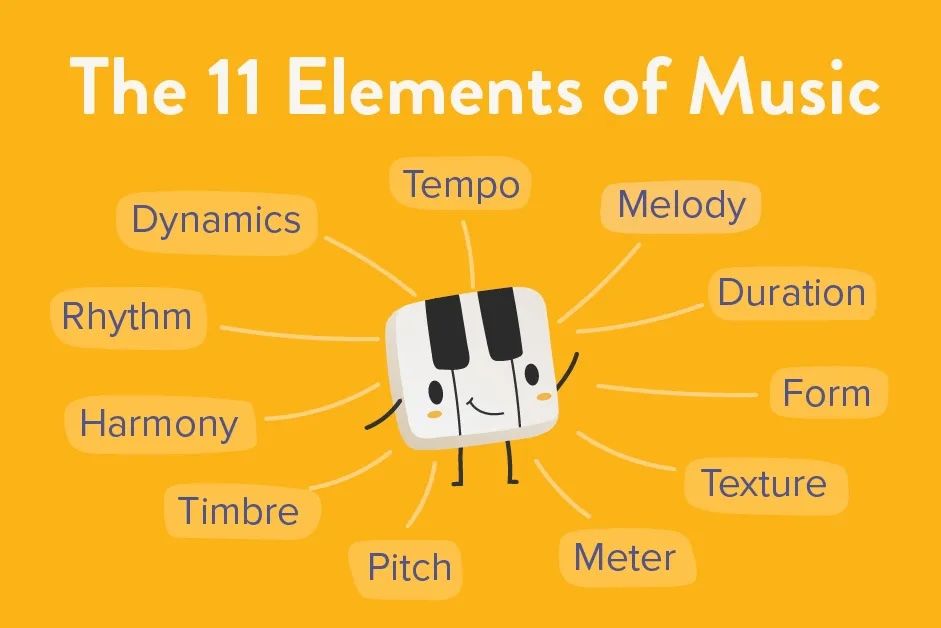
Part of describing the music we hear includes learning the 11 Elements of Music. These words give people a common vocabulary to describe musical phenomena. These elements include: Pitch, Tempo, Rhythm, Meter, Melody, Harmony, Form, Texture, Timbre, Dynamics, and Duration. These words let anyone describe how high or low a sound is, how loud or soft it is, if it happens alone or with other sounds, and how long it lasts. Describing those qualities lets us talk about music concretely.
As students grow in their active listening skills, they’ll be able to identify musical instruments either playing as solos or in a group. The unique timbre of a particular musical instrument helps you decide if you are hearing a cello or a guitar. If you hear many stringed instruments like violins, violas, and cellos alongside wind instruments, you might be listening to a symphony.
Ultimately, students will be able to use their listening skills to contextualize a piece of music. Their familiarity with different musical styles will help them identify what time period a piece of music is from, or even guess the composer of a piece even though they’ve never heard it before.
What’s studied in a music appreciation course?
Students study specific pieces of music across different times and places in a music appreciation course. These courses build on a shared language of the elements that make up music to guide active listening. This practice also sharpens musicians’ critical thinking about music and develops listening skills.
Most importantly, appreciating by listening opens the door to a full enjoyment of many types of music. Students are encouraged to explore different genres of music and practice describing what they hear using the elements of music. They might even discover new styles of music that they love!
Music appreciation course structure
This course structure begins with learning the elements of music and teaching the principles of active listening. Once the elements of music are mastered, students describe music using this shared vocabulary. Each lesson involves listening to a piece of music with the goal of using these terms. Active listening means using your musical vocabulary to talk about what you hear, so students can expect to journal and record their reactions.
Reflecting both on the active listening related to a piece and a piece’s place in time and space helps students think critically about music. A student might prepare a further reflection on their active listening by studying the history of the work. Often, music appreciation courses are structured to travel through time linearly. Knowing who the composer was and where and when they lived can help you understand the world in which they wrote. For example, Mozart’s Turkish March isn’t just a perky tune to play on the piano – it was composed as a reaction to Austria’s war with the Ottoman empire.
How does music appreciation overlap with music theory?
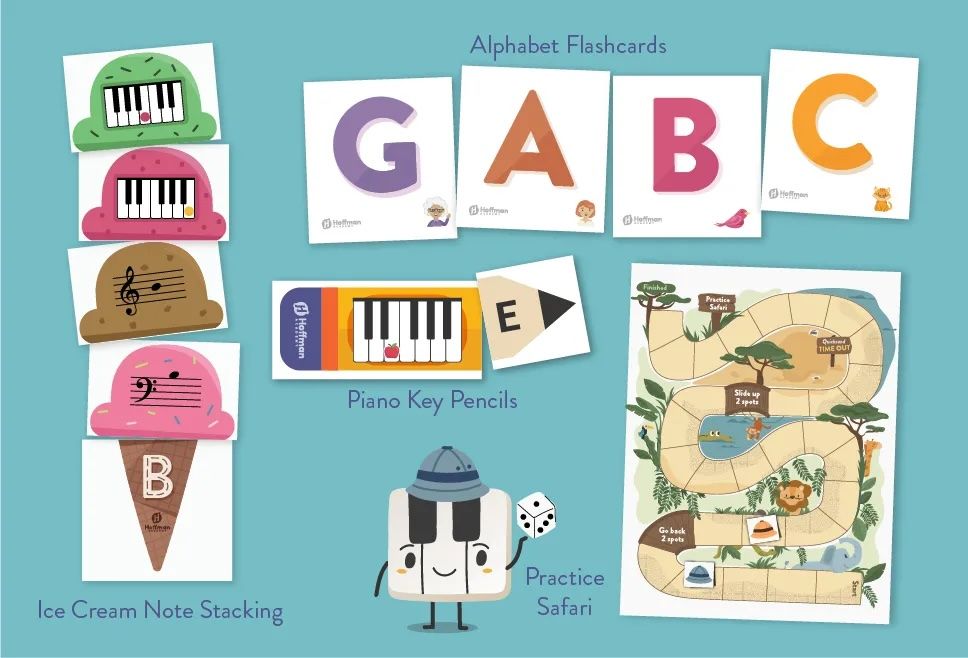
Music appreciation and music theory courses overlap because both use the elements of music. Music appreciation asks us to consider the question “why does music move us” and music theory asks us to think about the question “how does music move us.” Appreciating music involves listening and then describing what we hear. We use ideas like pitch, rhythm, and melody to talk about why a piece moves people in broader society. In contrast, music theory classes focus on using the nuts and bolts of music theory, like the practice games pictured below from our curriculum.
Music appreciation and music theory classes teach students how a song works in different ways. As an example, in both classes, you might learn that a common harmony for pop songs is the I- IV – V chord progression. The focus in music theory class is understanding “how” a I-IV-V chord progression works. Through an appreciation lens, you might instead listen to “Love Story” by Taylor Swift and reflect on the optimism of the major key of the song. We can reflect on what the world was like in 2008 when she wrote the song, and how it relates to her experience of creating something innocent and fun as a young artist.
What are resources for music appreciation?
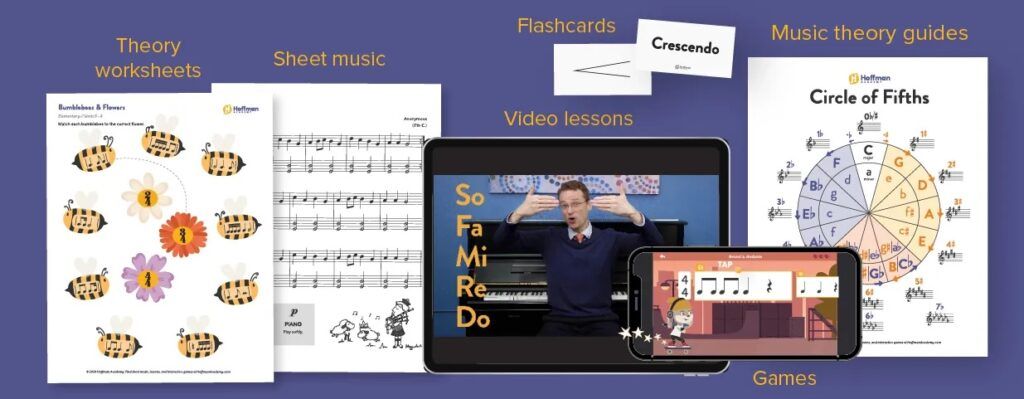
For students looking to pair music appreciation with learning a musical instrument, Hoffman Academy’s piano lessons make a wonderful resource. Our 400+ free video tutorials teach songs spanning hundreds of years of musical history. From Taylor Swift’s “Love Story” to Beethoven’s “Moonlight Sonata,” our students experience piano spanning multiple genres and time periods. Every lesson includes music theory and listening concepts that let students appreciate the music they’re learning to play on the piano.
Another accessible audiobook or textbook option is the Great Courses: Music Appreciation series. At the time I went to college to become a classical singer, this is the course my mother chose to take so she could better connect with me about what I was studying. As a database analyst, she was interested in understanding the musical traditions I learned at school. The Great Courses platform remains a good option for students looking to develop their active listening skills and gain a comprehensive understanding of Western classical music beyond piano music. EdX also offers a similar Classical Works certificate.
The lifelong value of music appreciation
Music appreciation teaches students to listen with understanding and think critically. Developing an understanding of music creates well-rounded pianists who can talk about music across all genres. These critical thinking skills also empower people to take in different perspectives and understandings of the world around them. In this way, music becomes a powerful tool for empathy and perspective. Through appreciation, we connect across culture, time, and place to a shared experience of soundwaves and melodies.