





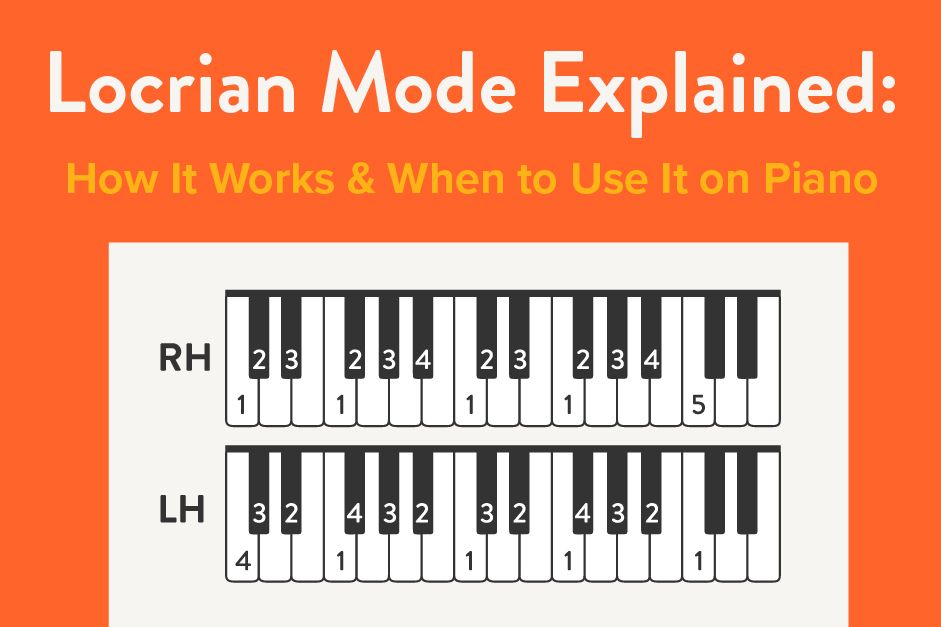
What is the Locrian mode in music? Learn its formula, feel, and function
The Locrian mode is built on the seventh scale degree of the major scale. This makes Locrian the least harmonically stable mode. The lowered fifth scale degree in Locrian mode creates an interval of a diminished fifth in the tonic chord, which gives the foundational chord of the scale a dissonant sound. In fact, that diminished fifth includes the same interval as a tritone, which was considered the “devil’s tone” in the Middle Ages.
In Western classical music, the diminished fifth and minor third of the tonic chord in this mode sounds unstable to our ears. Classical composers from Rachmaninoff to Debussy incorporated passages of Locrian to create a temporary feeling of instability, but tended to resolve to different modes. Because of the flat third and flat fifth scale degrees, Locrian rarely appears in American folk or popular music, though you might hear it in a metal or rock track in passing.
Below, we’ll describe how to create music in this mode. You’ll learn the formula to write the Locrian scale and about its unique tonic chord. For more information about the modes, you can also download our free Modes Packet.
Is the Locrian the least used mode?
Yes, the Locrian mode is rarely used in Western music because of its harmonic instability. The diminished fifth in this mode weakens the dominant and tonic chords, which means this scale doesn’t pull towards a clear resolution like the major scale. You can hear an example of the haunting instability of this mode in “Dust to Dust,” a song by English folk singer John Kirkpatrick. Although Locrian is not typically used in English folk music, Kirkpatrick wanted to try it out.
When Locrian is incorporated in some heavy metal songs and the occasional rock tune, the musicians often add an extra note in the harmonization. Artists including Metallica or Bjork who use Locrian borrow the perfect fifth for some of the chords. This helps them find harmonic resolution while exploring the unstable qualities of the melody.
What is the formula for the Locrian Mode?
There are a couple of ways to think of the formula for Locrian. One way is to build it on the 7th scale degree of a major scale. To do this on the piano, start on B and play only the white keys. You can also build Locrian by counting with whole and half steps. Locrian mode is half step, whole step, whole step, half step, whole step, whole step, which renders a scale of 1, ♭2, ♭3, 4, ♭5, ♭6, ♭7.
To quickly make Locrian mode, a pianist could also make a minor scale become Locrian by lowering the second and fifth scale degrees. (This formula may be easier to remember, because ♭3, ♭6, and ♭7 are already flat in minor.)

Are there rules for the Locrian mode?
Like the other modes derived from the music theory of Ancient Greece, there are certain rules that go with this scale. Functionally, though, most Western musicians dip into this mode for only a moment, and then resolve to a different scale degree because of the tonic instability.
When and how do you use the Locrian mode?
Locrian mode is often used sparingly, sprinkled in to add a moment of uncertainty or spice before resolving to a different mode.
Are there chords for the Locrian mode?
Yes, there are! In Locrian, the tonic chord, or one chord, is very unusual because it includes a lowered fifth degree. This means the tonic chord is very unstable and contains the sound of a tritone. To hear this for yourself, you can go to your piano and play B natural, D natural, and F natural together (all white keys).
What is the Super Locrian scale?
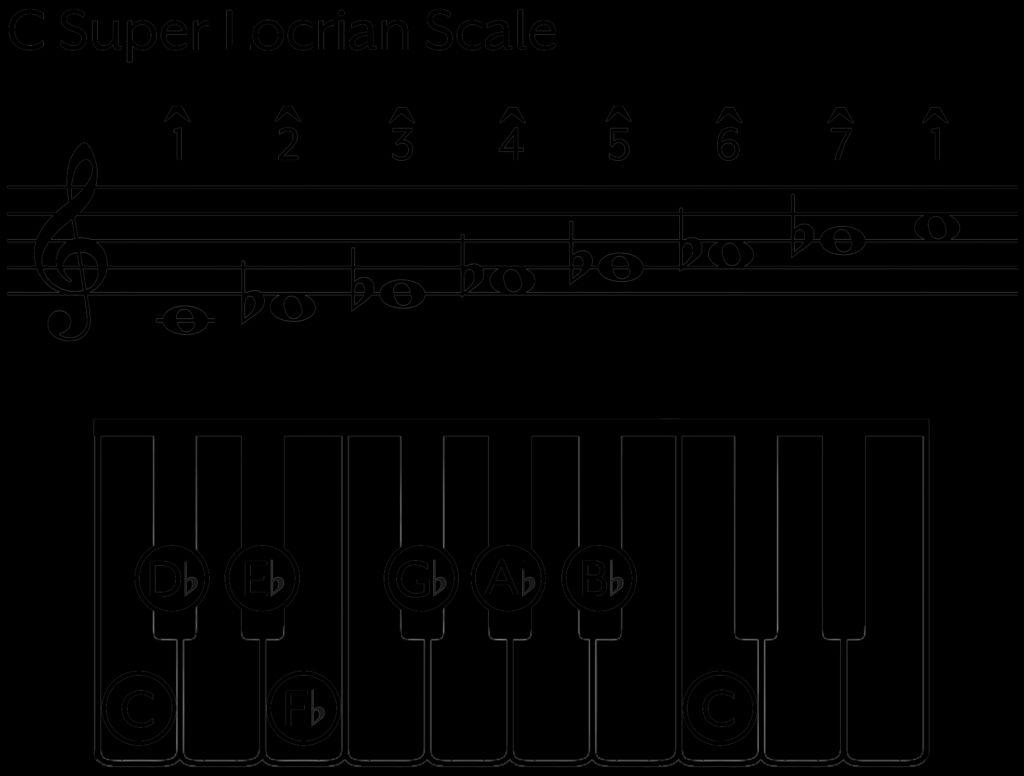
This scale is also known as the altered scale or the Ravel scale. Used in jazz music, Super Locrian is derived from the seventh mode of the ascending melodic minor scale. Super Locrian happens to also have the same note relationships as a major scale with every note lowered except the tonic. It’s related to the whole tone scale, though it has one half step, and it lends jazz improvisations an unusual flavor.
Super Locrian can enrich your improvisation and riffs. A quick way to try improvising in Super Locrian is to raise the tonic of the scale you are playing in by a half step. Or, you can play in Locrian and lower the fourth scale degree to get to Super Locrian.
Examples of the Locrian mode in music
Locrian happens to be one of the rarest modes in Western pop and classical music. However, you can hear this scale in passing moments in some rock and metal tracks. The unsettled sound can be heard in Metallica’s “Sad but True” and Bjork’s “Army of Me.” However, both these artists use an alternate harmonization for this mode.
Tips for playing the Locrian mode on piano
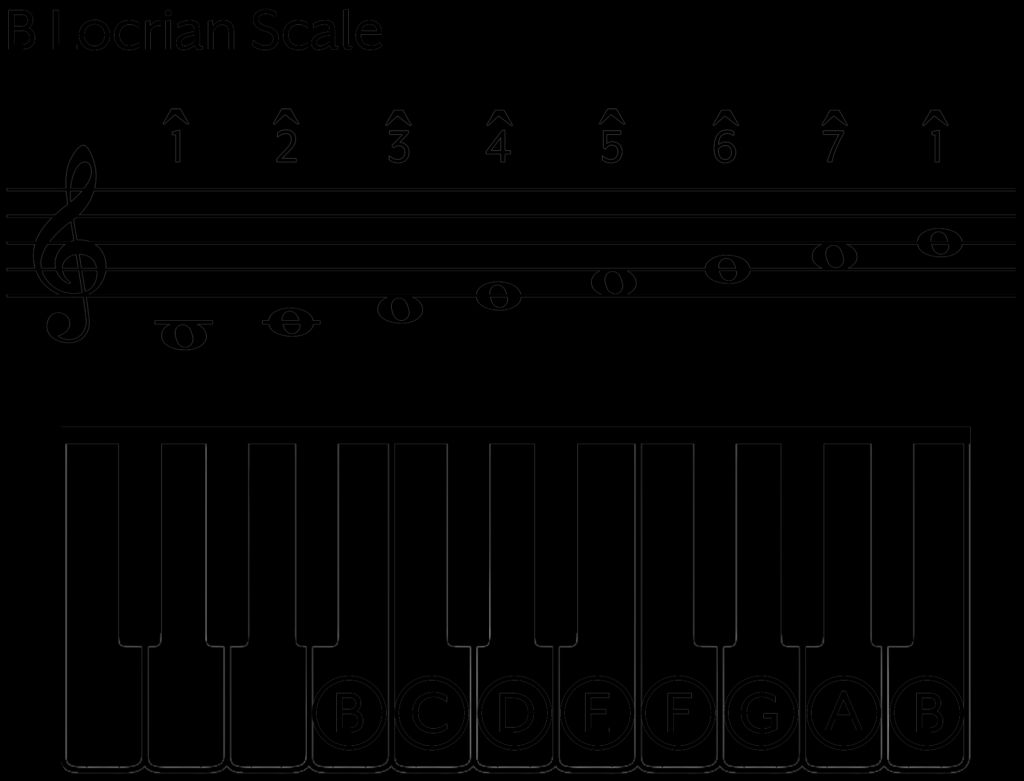
To experiment with playing in Locrian, try playing a scale of all white keys starting on B natural. You’ll notice that the interval B to F creates that diminished fifth (or tritone) that makes the scale so unstable. You can also build Locrian from any minor scale by lowering the second and fifth scale degrees of a minor scale. Or, you can start your scale on the seventh degree of the major scale.
This mode can expand your musical toolkit
Built on the seventh scale degree, Locrian is an unstable scale that can lend your music tension. Although it’s rarely used by itself for an entire song, you can use this mode to add tension and interest to your compositions. Although this mode is rare in the wild, it can be fulfilling to create unusual or spooky music with it!