





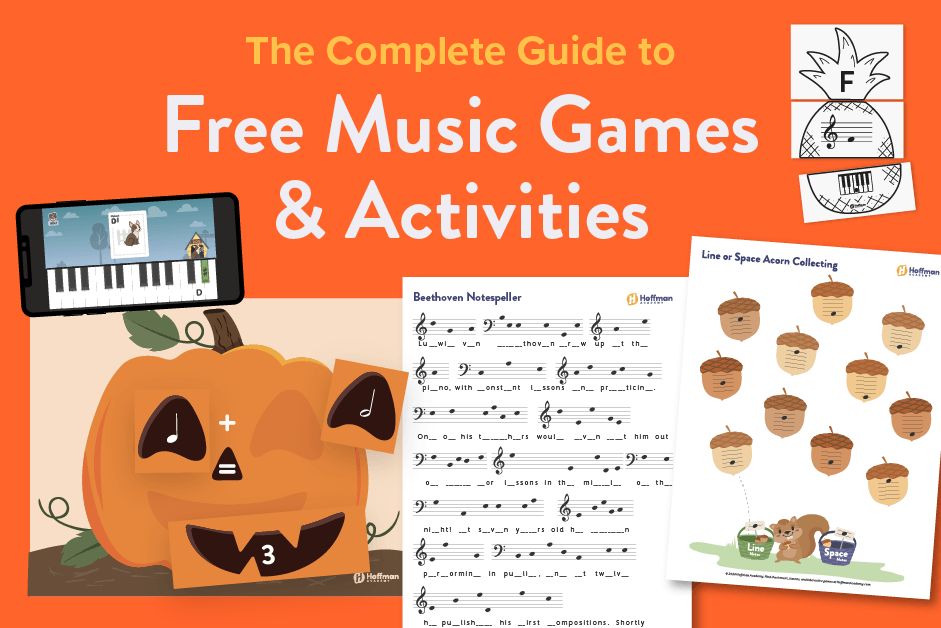
Our Hoffman Academy Store is full of free music games and activities for students of all piano abilities. We believe that learning music should be enjoyable, and part of that joy comes from creative games and activities. In this article, we’ll share free music games and activities to support your student’s piano learning.
Why use free music games for music learning?
Music games make practice and lessons more engaging. Music games often remove some of the friction that comes with learning new or difficult material. Games turn abstract concepts like rhythm, note reading, or ear training into interactive challenges. They help students learn music without it feeling like work. Plus, games are fun! Games can help students and teachers connect. When students feel connected to their teacher, they are more likely to engage with the music on a deeper level, making more musical progress.
Best free online music games for kids
The best online games are easy to understand and challenge students without being too difficult. Musictheory.net is one of the best free online music resources for music students. The website has both free ear training and music theory activities that scale from beginner to advanced. For example, the Keyboard Note Identification game helps beginner students learn the names of white and black keys. More advanced students might enjoy Chord Construction or Key Signature Identification.
Fun free music games to play in person
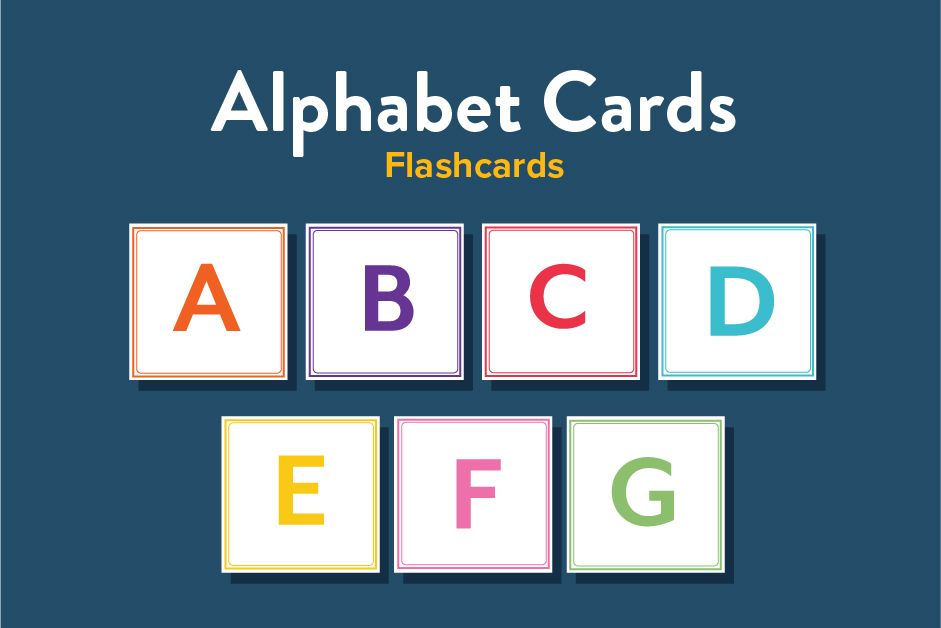
Playing games in person can be a great way to build relationships between parent and child or teacher and student. Our free Alphabet Flash Cards are a versatile way to teach young beginners the musical alphabet. With these cards, you can play Musical Alphabet Dominos, as described in our article Children’s Music Games: Fun Activities to Build Musical Skills. Alphabet Flash Cards can also be used to create a big long alphabet snake which can be fun for young beginners.
Hoffman Academy’s free finger puppets are another way to have fun while at the piano. Finger puppets can help remind young beginner students about good posture or technique. Sit the finger puppet on the piano and tell the student that the puppet enjoys watching piano students with good piano posture. Have the student play a song they know well while thinking about proper piano posture. Turn the puppet away if the student needs to make corrections to their posture. The puppet is an easy way to signal to the student to check in with their posture without having to verbally remind them.
Music Money can also be a highly motivating practice tool. Students can earn music money by practicing a certain amount of time or making sure to complete their theory homework. You can decide how much money a student earns per practice and what the rewards are. Personally, I like to give students $20 of music money for every piece of homework they complete at home. I also give $1 of music money for every minute practiced. It’s helpful to have parents involved in keeping track of their student’s practice times. It’s also important to create a list of prizes that motivate students.
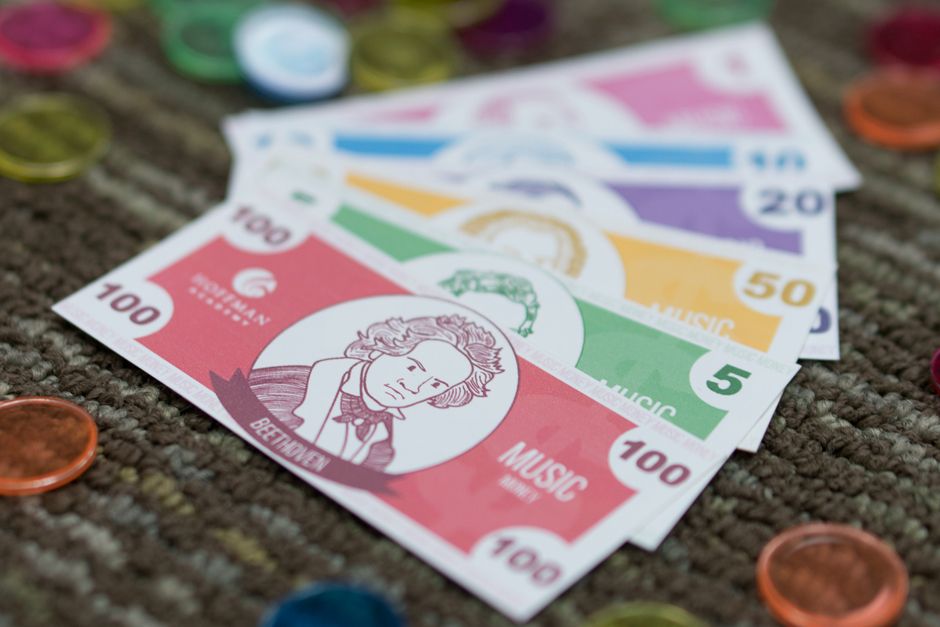
Not every parent may want to participate with music money prizes because students shouldn’t need to be “paid” to do their practicing. Ideally, we want students to be intrinsically motivated to practice. However, it can be fun to have a “Music Money Month,” where students can save up for a select amount of time and cash in for prizes at the end of the month.
For more in person game ideas, check out our post about Music Activities for Preschool, Kindergarten, and Elementary Students.
Free music games for learning rhythm
One way to practice rhythm is with our free Rhythm Composition worksheet. Print off a few sheets of this exercise for your student and grab an instrument to play with – a piano, drums, or even clapping works great. Play four beats of rhythm and have your student guess what rhythms you played. Scale the difficulty of the exercise depending on your student’s level. Then, have your student practice playing rhythms while you guess. You may need to guide them through this part of the exercise as students are still figuring out rhythms. It can be helpful to give them a few rhythms to use at a time such as quarter notes and rests only. After this exercise, have students compose their own rhythms on a new sheet of paper.
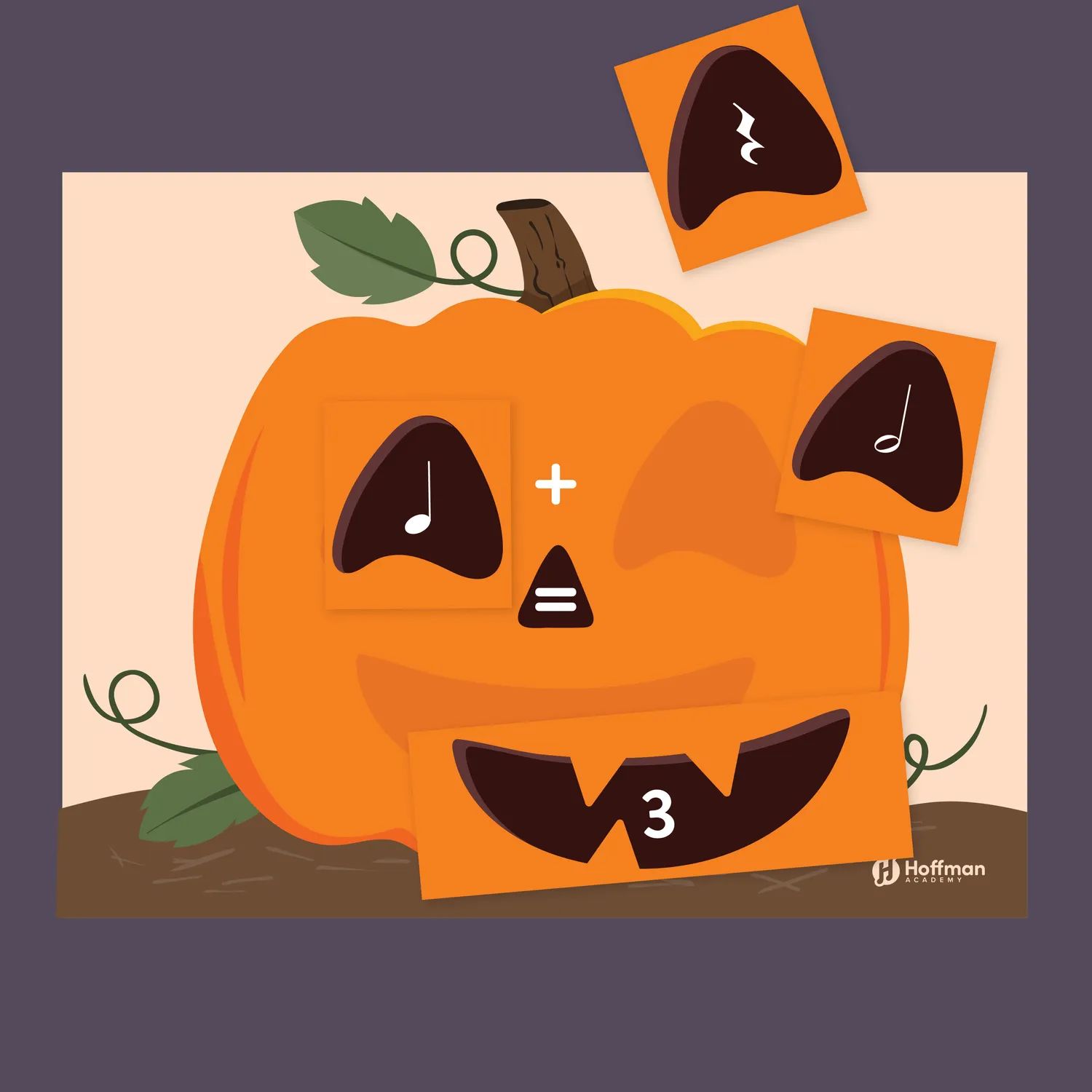
The Pumpkin Rhythm Game is a free music game that requires students to do rhythm math. Print out the Pumpkin Rhythm Game and cut out all the rhythms and mouths of the pumpkin. To play this game with your student, place two rhythms on the pumpkin. The student will need to add up the beats in the two rhythms and choose the pumpkin mouth with the correct answer. This game is great for reinforcing how many beats each rhythm gets. For more advanced students, you can start the game by placing the mouth down on the mat. The student then needs to figure out which rhythms add up to the correct amount of beats. This way of playing the game allows students to be creative because there can be more than one answer.
Free music games for note reading and music theory
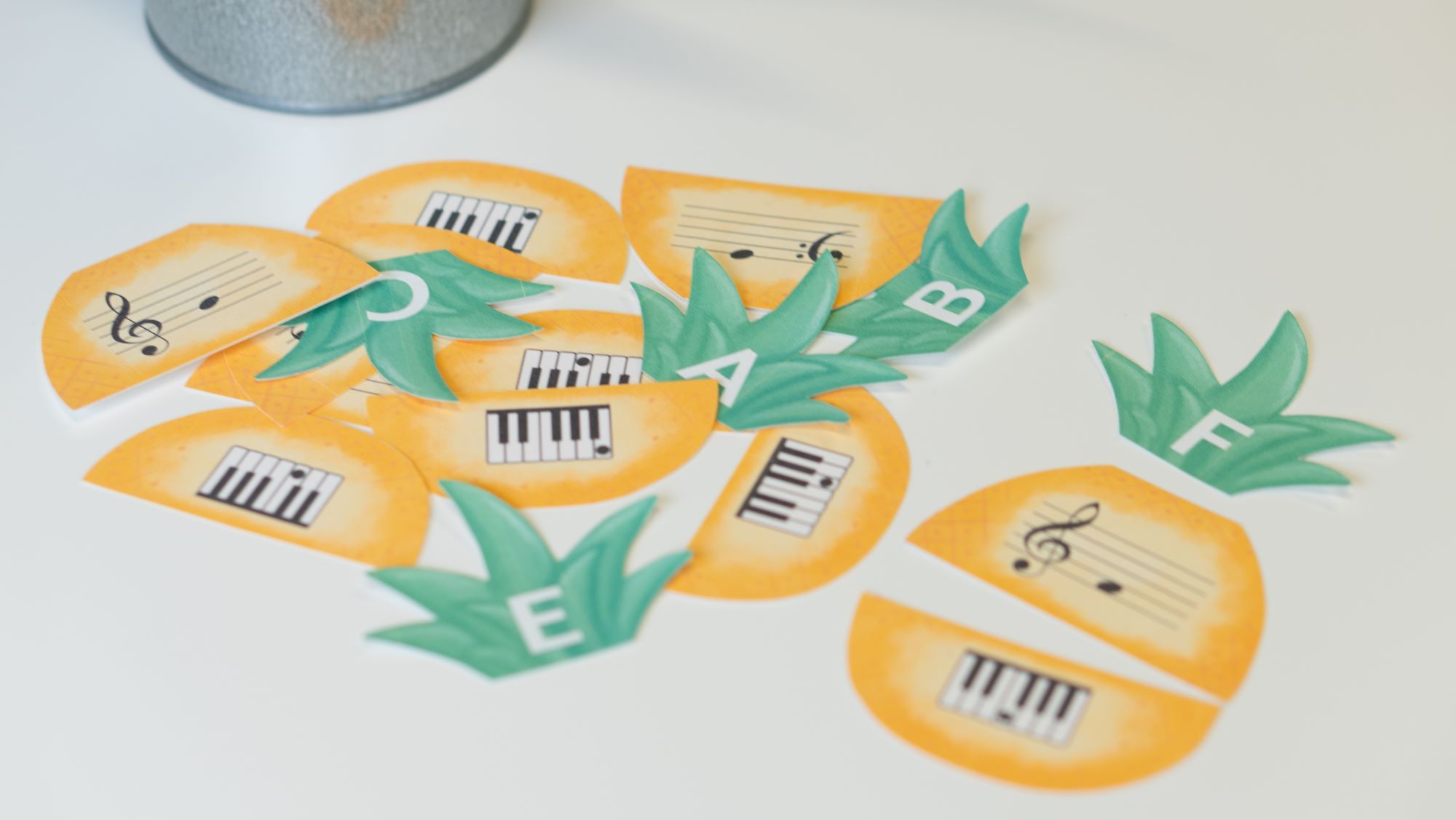
One of our favorite free music games is Pineapple Note Matching. Each pineapple in this packet is split into three different parts. The different parts of the pineapple will show the note on the staff, the note on the keyboard, and the name of the note. Mix up all the different pineapple pieces and have your student match up the notes to the correct place on the staff and keyboard. After playing this game a few times, see how fast your student can match all the pieces!
Grand Staff Flashcards are another free essential resource for piano students. Play Mad Minute and have your student read through as many flashcards as they can in a minute. Write down the amount of cards they get correct and see if they can beat that amount every week.
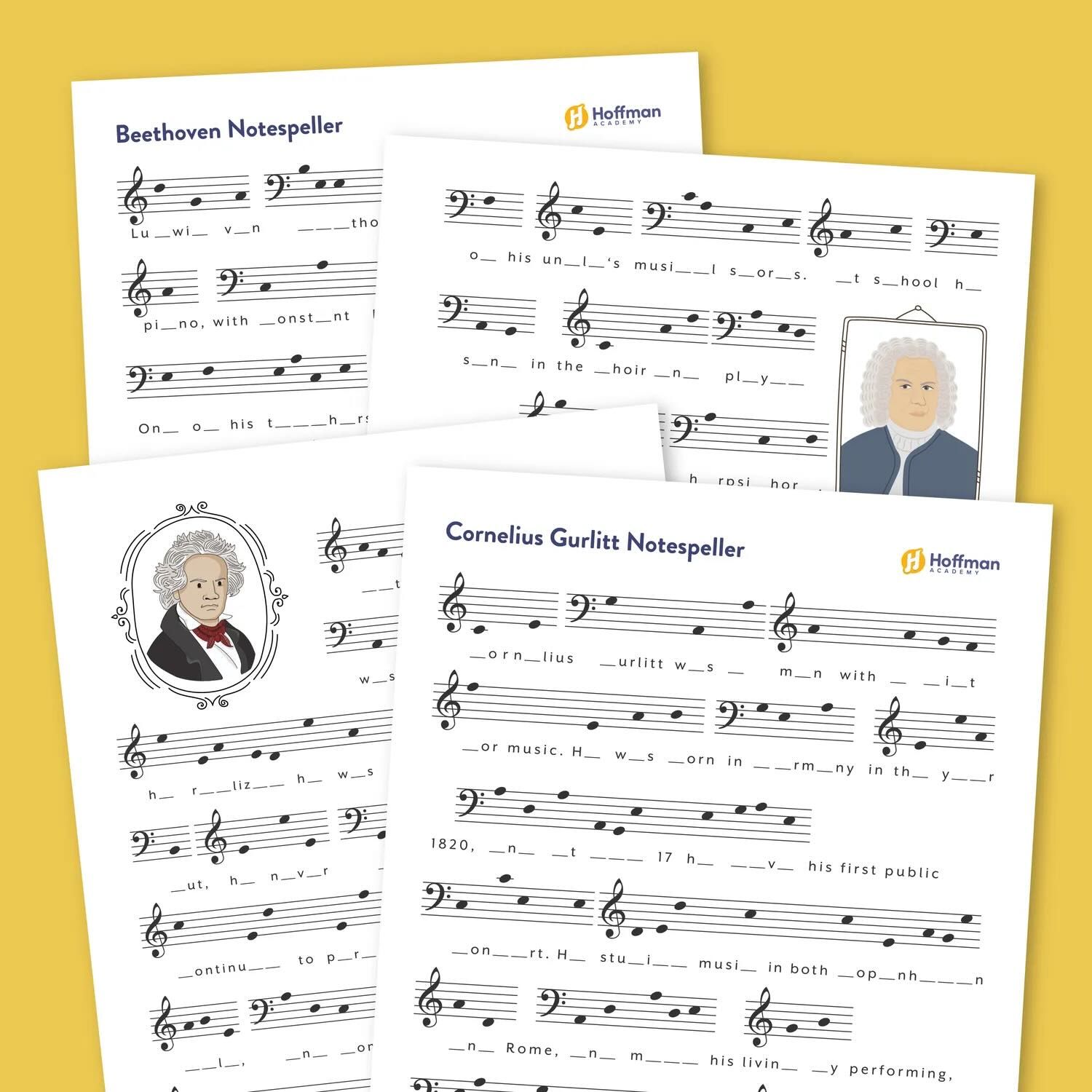
Don’t forget to give your students music theory worksheets! Our free music theory worksheets help to reinforce all the concepts that students explore in your games. Here are some of our favorite free music theory worksheets that focus on note reading:
- Beethoven Note Speller
- Air Balloon Note Identification
- Guide Notes Jellyfish
- Line or Space Acorn Collecting
Free music games for ear training
Musictheory.net has a mix of free music games for ear training. Keyboard Ear Training helps students identify individual notes on the piano. For more advanced students, Chord Ear Training helps students hear the difference between major chords, minor chords, seventh chords, and more.
While not necessarily a game, Chrome Music Lab is a free resource dedicated to music education. Each activity is colorful and visually pleasing. Arpeggios shows how arpeggios in different keys sound together while Spectrogram shows how sound waves differ depending on the instrument or sound. Song Maker provides tools to build a song using various instruments.
How to choose the right free music games
Identify what skills your child or student needs to work on. Some students struggle with sight reading while other students need extra help understanding rhythm. Once you’ve identified a skill to develop, choose your music game based on what can help strengthen that skill. For example, if a student has a difficult time remembering how many beats are in rhythms, play the Pumpkin Game. If learning the musical alphabet is difficult, use the Alphabet Flashcards to build an alphabet snake. Ultimately, the goal in every music game should be to aid in a student’s learning and further their understanding of music.
When to upgrade from free to paid music games
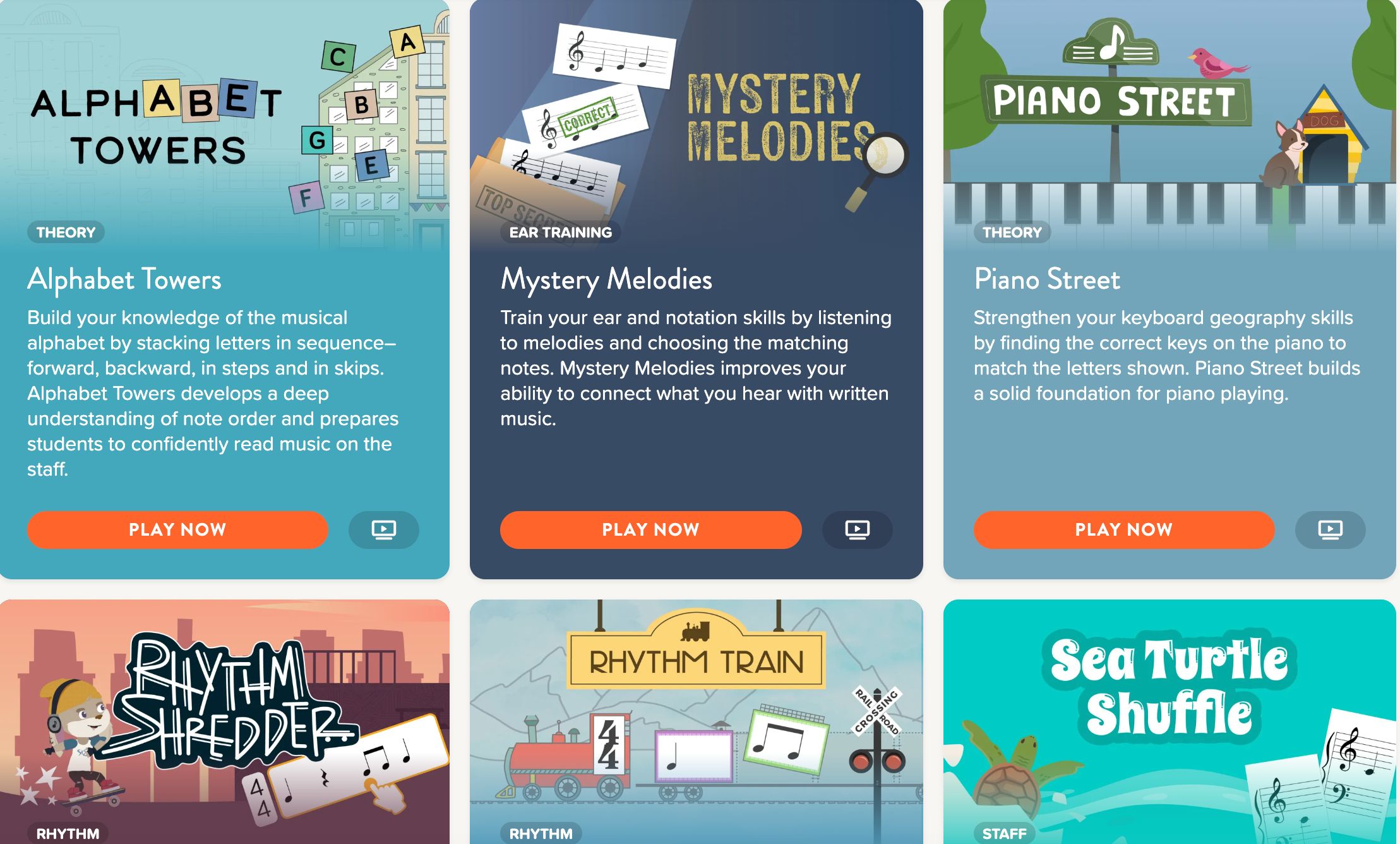
The best time to upgrade is simply when the free version no longer feels like enough. Free music games are a great starting point for learning music while upgraded plans such as Hoffman Academy’s Premium membership offer additional resources and support. One of the perks of a Premium membership is access to online games. Our online game library is full of games designed to help with ear training, note reading, sight reading, rhythm identification, and more. A Premium membership unlocks a fuller, more supported experience for students and families who are ready to take their learning to the next level. Click on the image below to explore our game library.
Tips for using free music games effectively
Different games are going to click with different students. It’s important to get to know what your child or student enjoys within a game. Some students enjoy narrative-based games that explore a story. For example, with the Pineapple Matching Game, you can tell your student that there was a big hurricane and all the pineapples were scattered everywhere. The Pineapple King needs your help in putting together all the scattered pineapples! Creating a story based around the game can motivate them to explore the game. Other students enjoy improving their stats like in games like Mad Minute, where they are challenged to identify as many Grand Staff Flashcards as they can in a minute. There’s a game out there for every student–experiment with different kinds of games to see which ones your student likes best.
Building a complete music learning experience with games
Incorporating free music games with lessons is one of the most effective ways to reinforce concepts and engage students. Finding your favorite music games will take some trial and error, but over time you will build your own personal library of go-to games that you can draw upon to target specific skills. While there are many free quality games online that are worth exploring, consider taking your musical experience a step further with Hoffman Academy Premium.