


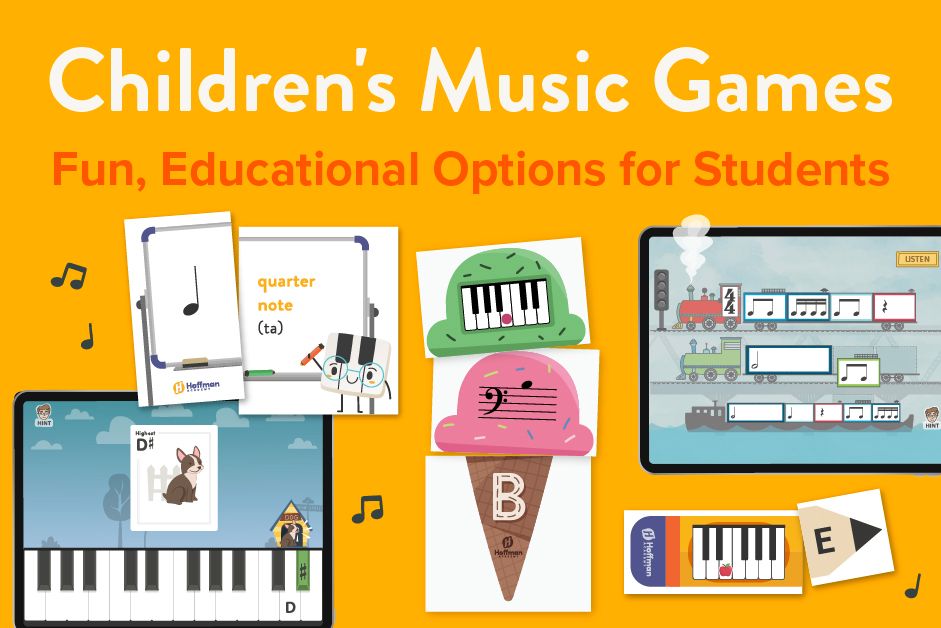
Games make learning fun! From online games that teach both listening and sight reading, to simple ways to perk up practice time, this article includes a variety of exciting children’s music games to help grow your child’s musical abilities.
Experience the world’s best music learning system, complete with online games, printable worksheets and reference guides, hundreds of sheet music titles, and so much more with Hoffman Academy Premium. Start your music learning journey today!
Why music games matter for children’s development
Children learn through playing games. Well-designed learning games keep children engaged and motivated while they acquire new skills. In order to learn a skill as complex as playing the piano, children need to develop a wide range of knowledge and abilities. They need to repeat the same task over and over, such as playing part of a song or identifying a note on the staff. This can get dull, unless it’s made into a game. A game can help children focus on a single skill at a time and have fun doing it! For more information on why games are important for young beginners, check out our article on how games enhance piano learning.
Children’s music games that teach rhythm skills
If you’re a parent, you’ve probably already played simple rhythm games with your children, like “Pat-a-Cake” and “Pease Porridge Hot.” Singing or chanting and clapping together creates a foundational sense of rhythm that children will need as they learn to play an instrument. Here are some more children’s music games focused on rhythm you can play together:
Move to the Beat
Play some recorded music and have your child clap, tap, march, or dance to the beat. Do this activity with a variety of music that’s fast, slow, and any speed in between.
Rhythm Echo
Clap a simple rhythm and have your child clap it back to you. For a super challenge, have your child clap a steady beat while they listen to your rhythm, then you clap a steady beat while they clap the rhythm back to you. Then they clap a steady beat again as you give them a new rhythm to echo. See how long you can keep the game going!
Clap the Words
Have your child clap out the rhythm of a familiar children’s song, for example, “Happy Birthday to You” while singing the song silently in their head. You could make it even more fun if you try to guess what song they’re clapping!

Listening and ear training games
Music surrounds us every day, but how often do we really listen? Intentional, engaged listening is essential for musical development. Help your child learn to listen with these fun children’s music games:
What Do You Hear?
Play some recorded music and ask your child the following questions:
- Is music fast or slow?
- Is the music loud or soft?
- Is the music smooth or choppy?
- Is someone singing?
- What musical instruments do you hear?
- How does the music make you feel?
Musical Hide & Seek
Choose a note on the piano and let your child see what note it is. Then have them close their eyes or turn away so they can’t see the keyboard. Play your chosen note, and then play a second note, either the same note, the next note up, or the next note down. Have your child see if they can find the second note you played. Bonus points if they get it right on their first try! As your child’s musical ability grows, you can try playing notes further away from your starting note.
Children’s music games for pitch and melody
Singing is the best way to develop a sense of pitch and melody. Sing with your child, even if you don’t feel confident in your singing ability. When your child is ready, try singing simple rounds, like “Row, Row, Row Your Boat” together. You can also try one of these games:
High and Low
Sing or listen to a recorded song. Have your child use their hand to show whether the notes they hear are high, low, or in the middle by raising their hand high for high notes, holding it down low for low notes, and so forth.
Echo
Sing a short melody on a single syllable like “la” and have your child sing it back to you. You can use both familiar tunes and combinations of notes that you make up. For a super challenge, see if your child can play the notes you sang on the piano!
Name That Tune
Without singing the words, sing or hum the first few notes of the melody of a familiar song. Have your child guess the name of the song. If they can’t guess in three tries, sing a few more notes and have them guess again.
Children’s music games for note reading and music theory
Music games help children learn to read notes and understand music theory concepts. Lots of different games can be played with the music note and music theory flash cards found in the Hoffman Academy Store. Here are some children’s music games for you to try:
Musical Alphabet Dominoes
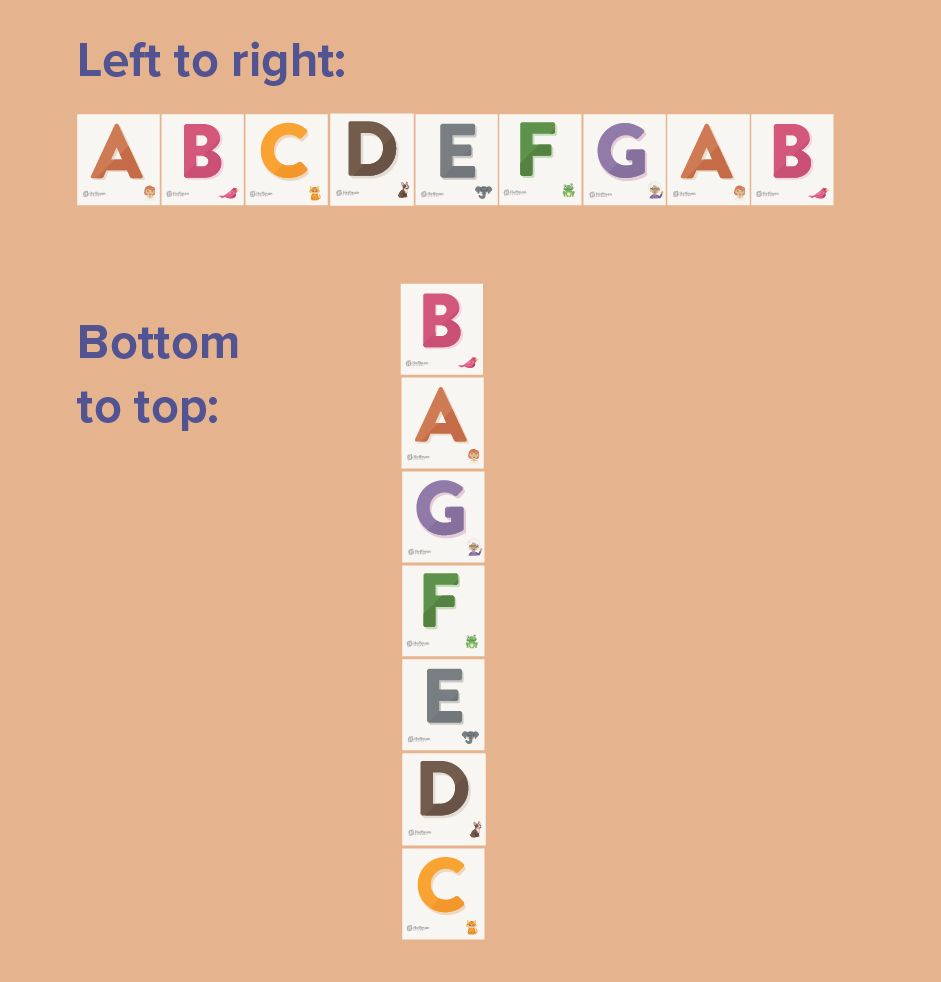
The object of this game is to make rows of musical alphabet letters in the correct order: A B C D E F G and back to A. Print several sets of our free downloadable musical alphabet cards on heavy cardstock and cut them out. First practice placing several cards in order from left (lowest note) to right (highest note), and also bottom (lowest note) to top (highest note).
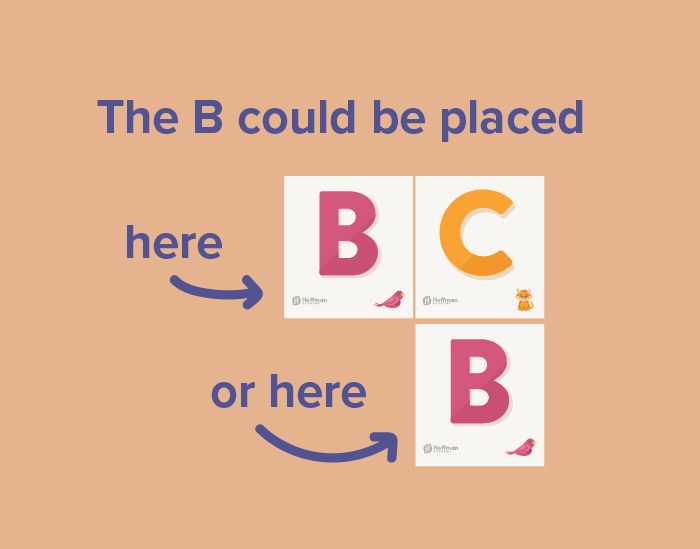
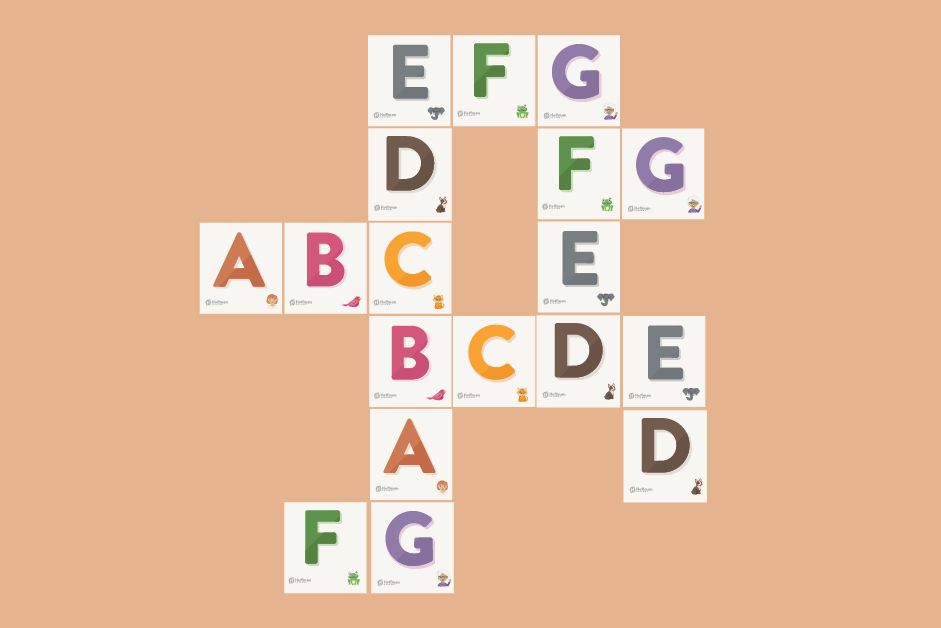
Ready to play? Turn all the cards face down and spread them out. The first player selects a card and sets it face up in the middle of the playing area. The next player selects a card and checks to see if it’s a note that’s next to the first note. If so, set it down either above or to the right if it is one note higher, or below and to the left if it is one note lower. For example, if the first player set down a C and the second player drew a B, they could place it either to the left or below the C, since B comes before/below C in the musical alphabet.
If the card they drew can’t be played next to any of the notes in the playing area, they keep the card in their hand and the next player takes a turn. Continue playing until all the cards have been picked up and as many cards as possible have been played. The player with the fewest cards in their hand wins.
Where in the Song?
Choose a song from one of our Hoffman Academy video lessons and print out the sheet music. Open the video lesson and find the place (either near the beginning or near the end) where the whole song is demonstrated. Choose a short section of the song to play. Can your child find that part of the song in the sheet music just by listening and without peeking at the screen?
Forbidden Notes
Print out a set of music note flashcards on heavy cardstock and cut them out. Choose a piece of music your child is working on and have them find all the notes that are in the song. Turn these cards face down and shuffle, and have your child draw a card. This is now the forbidden note. Have them play their song, but they’re not allowed to play the forbidden note. This note has turned into a rest. You can try different variations of this game. For example, the note they chose must be played staccato, or very loud, or an octave higher than written.
For even more children’s music games, explore our article Twelve Great Piano Games for Kids.
Online and printable music games
Hoffman Academy online games make music learning fun! Learn the musical alphabet, find all the keys on the keyboard, practice reading and playing rhythms, work on your sight reading skills, and more. These children’s music games are available to play online for our Premium users. Visit our Online Piano Games page to learn more!
- Alphabet Towers – be ready for music reading success by learning the musical alphabet forward, backward, and in skips
- Mystery Melodies – match notes on the staff with the melody you hear
- Piano Street – get to know the names of notes on the keyboard
- Rhythm Shredder – tap the rhythm you see
- Rhythm Train – choose the train cars that match the rhythm you hear
- Sea Turtle Shuffle – practice identifying individual notes and playing them on the keyboard
- Staff Crawler – learn to sight read step by step by correctly playing a line of music
Learn more about our favorite online games here!
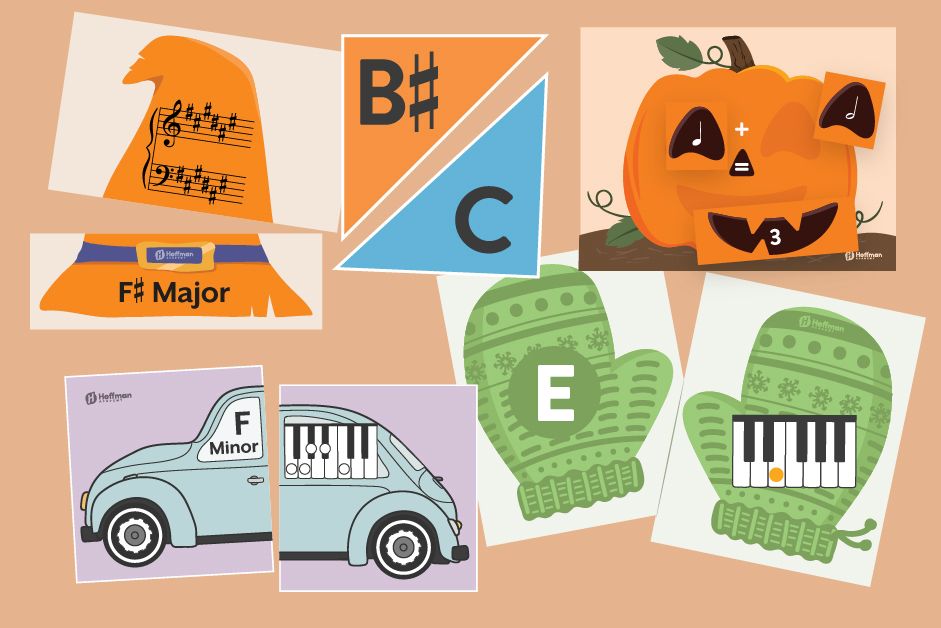
Practice music theory skills with our series of printable music games. These are just a few of the resources you’ll find in the Hoffman Academy store. All of these games are included with Premium membership, or can be purchased and downloaded for a small fee.
-
-
- Pentascale Matching Game – match keyboard position with pentascale name
- Match the Mittens – match keyboard position with note name
- Pineapple Note Matching (FREE!) – match letter name, staff position, and keyboard position for each note
- Matching Rocketships – match letter name, staff position, and keyboard position for each note
- Pumpkin Rhythm Game (FREE!) – match different rhythms to create the right number of beats
- Pumpkin Chord Pie – match pentascales and chords with their staff and keyboard positions
- Matching Witch Hats – match key signatures on the staff with their names
- Halloween Bat Matching Game – match chord names with their position on the keyboard and on the staff
- Candy Corn Matching Cards – match letter name, staff position, and keyboard position for each note
- Enharmonic Matching Cards – match enharmonic notes by staff position and letter name
-
Tips for parents and teachers
The most valuable learning for your student or child comes through your example. Use these children’s music games as an opportunity to play and explore music concepts together.
Make music learning games a part of daily piano practice time. Have a variety of games to choose from and let your child choose a favorite. It’s up to you and your child whether you want to start music practice with a game, use a game as a break in the middle, or finish with a game at the end.
Choose games at the right skill level for your child. For most children, a game is fun if they can be successful about 80% of the time. Any less than that and the game might seem too hard.
Children’s musical journey starts with play
Learning music should be a joyful, playful experience. We hope the children’s music games in this article help you have fun exploring the wonderful world of music with your child.