





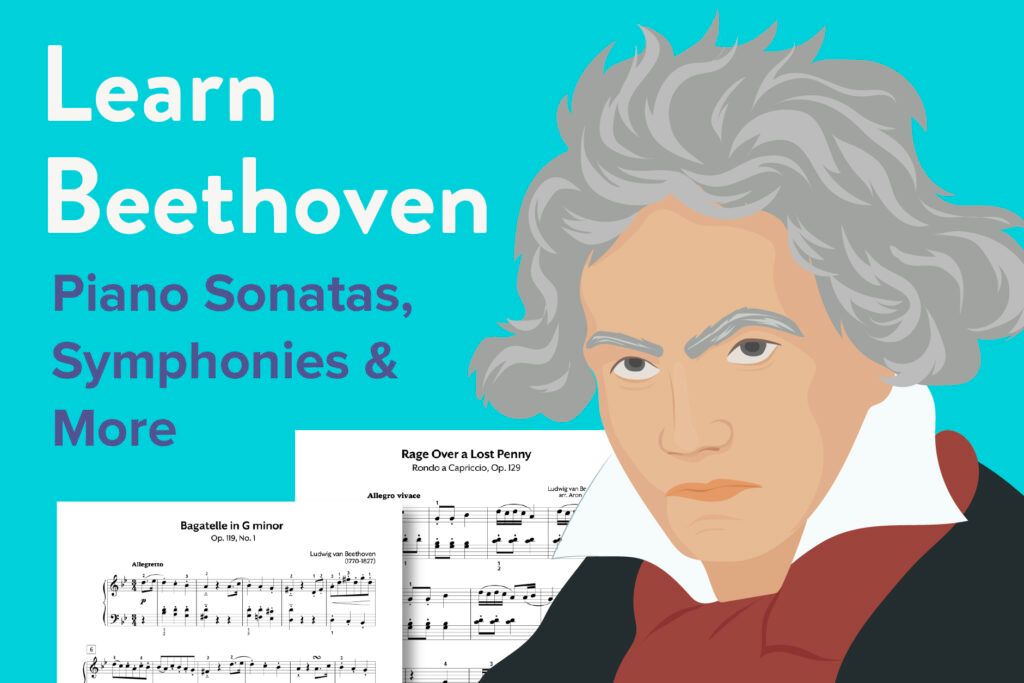
Ludwig van Beethoven was an incredibly prolific composer who created over 700 individual works. Although he is well known for his advanced piano literature, he also composed works for less advanced pianists, and others have arranged his most famous melodies for anyone to play and enjoy. In this article, we will explore the different levels of music written by this inspirational composer.
Learn classical music with Hoffman Academy! Discover your piano potential at Hoffman Academy with the world’s best piano learning system.
Beethoven: Piano pieces for elementary-level beginners
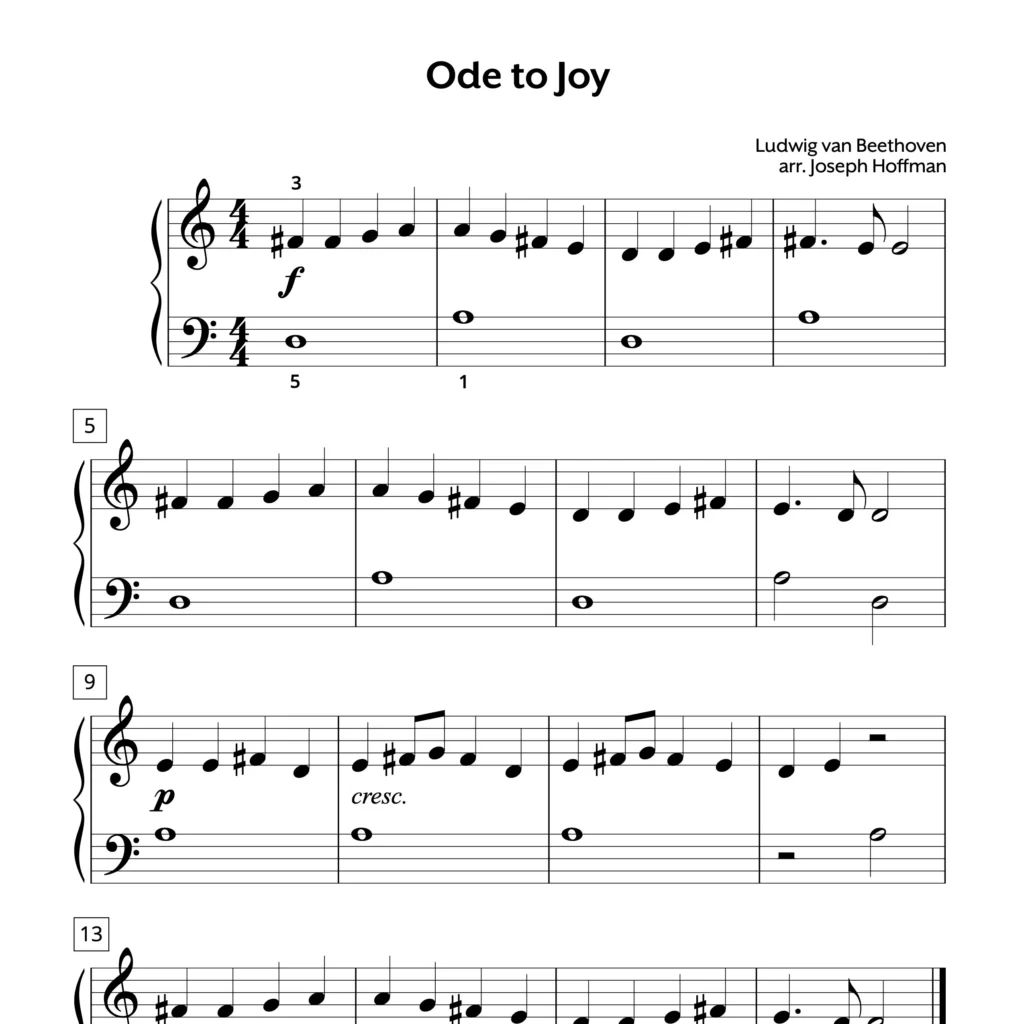
Ode to Joy
One of Beethoven’s most recognizable melodies, “Ode to Joy” comes from the final movement of his Ninth Symphony. Since the “Ode to Joy” is a declaration of unity and joy across humanity, it is the official anthem of the European Union. Due to its popularity, catchiness, and message of hope, this melody makes a great introduction to Beethoven for any piano student. Below is a link to the sheet music and to Mr. Hoffman’s tutorial. If you haven’t reached Hoffman Academy Unit 4 yet and the act of putting both hands together on separate parts is tricky, don’t worry. You can always just learn the melody and play that with one hand, or with both hands at the same time if you’re courageous.
Für Elise
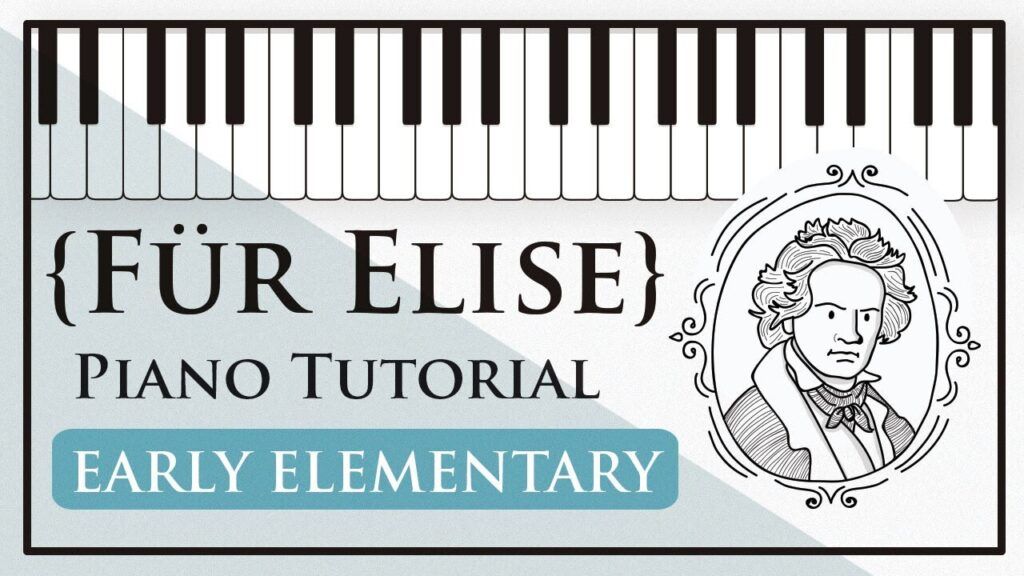
Another of Beethoven’s most recognizable melodies comes from his famous piano piece “Für Elise,” which is the nickname for his Bagatelle No. 25 in A Minor, WoO 59. This piece was written for an unknown love of the composer. There were several women in Beethoven’s life at that time who used the nickname “Elise,” but it is still uncertain to whom this piece was dedicated. The possible dedicatees were Beethoven’s close friend and pianist Therese Malfatti, the soprano Elisabeth Röckel, and pianist Elise Barensfeld. Read more about this interesting piece of music in our blog article All About Für Elise.
Hoffman Academy includes tutorials for the original composition as well as simplified versions. Below you can find the early elementary tutorial for this piece as well as the sheet music.
Rage Over a Lost Penny
“Rage Over a Lost Penny” is the popular nickname for Beethoven’s “Rondo alla ingharese quasi un capriccio” in G major, Op. 129. The Italian title of this piece translates to “rondo in the caprice-like Hungarian style.” The nickname comes from the autographed manuscript, but was not written in Beethoven’s hand. It’s most likely that this name came from Anton Schindler, who was Beethoven’s personal biographer.
Bagatelle in G Minor, Op. 119, No. 1
The first of eleven bagatelles in Op. 119, this piece is only around 2 and a half minutes long. It is quirky and not too quick but does make use of both scales and arpeggios. A late elementary or early intermediate student can have fun challenging themselves while learning this piece.
Bagatelle in G Minor, Op. 119 No. 1
Beethoven: Piano pieces for intermediate players
Beethoven’s iconic Moonlight Sonata and arrangements of his Symphony No. 5 and Symphony No. 7 are exciting pieces for intermediate piano students to learn and perform. In order to prepare for these works, it’s always important to listen to the originals and get familiar with their melodies, structures, and different interpretations.
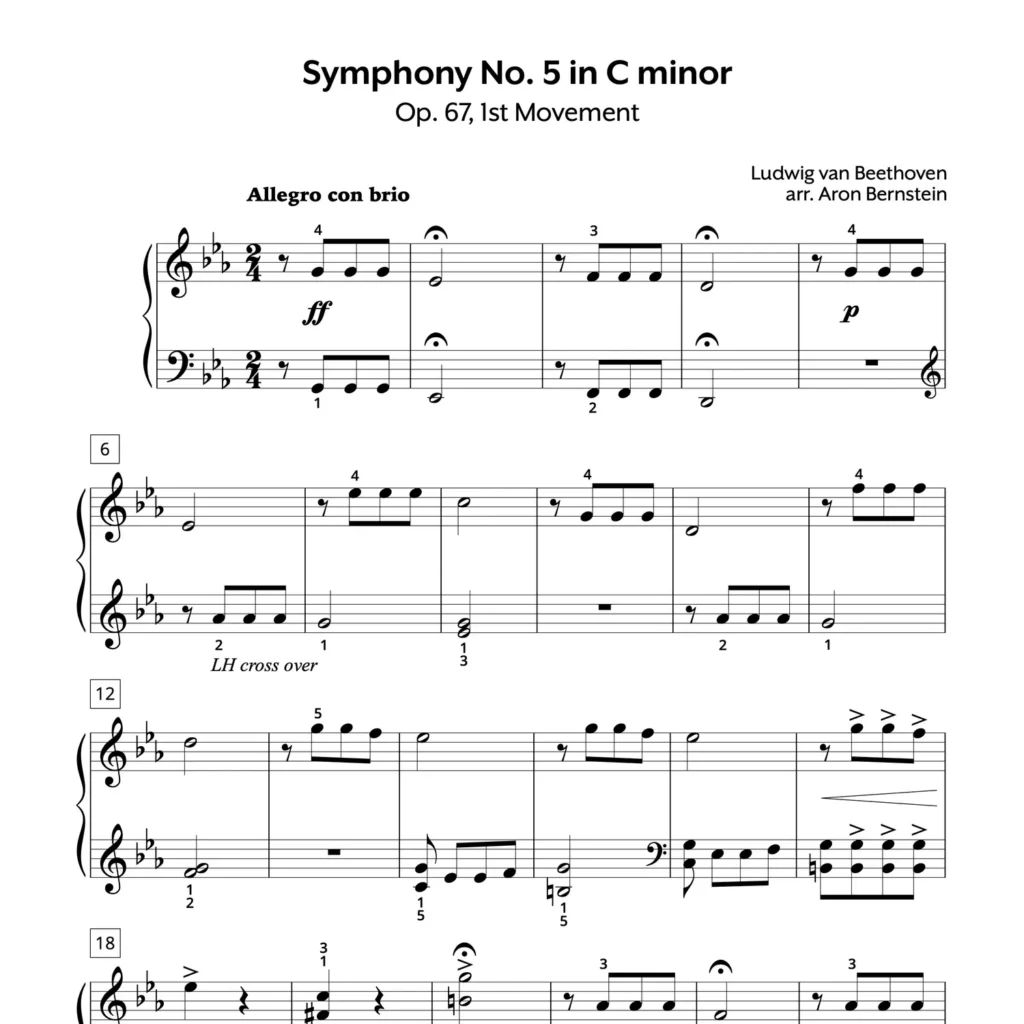
Symphony No. 5 in C Minor
Beethoven’s very popular Symphony No. 5 is one that most people, even non-musicians, know. Since students enjoy and benefit from learning music that they’re familiar with, the team at Hoffman Academy has arranged a piano version of this orchestral piece. Check out the sheet music below:
Symphony No. 7
Originally, Beethoven was an admirer of Napoleon, who he believed was working to bring democracy to France, but Beethoven grew angry with Napoleon after the ruler declared himself to be the French emperor in 1804. Beethoven’s third symphony was originally dedicated to Napoleon, but he rescinded this dedication and instead wrote “to a great man.” The second symphony was composed in 1812 and was another political criticism of Napoleon, this time of his 1812 invasion of Russia. During its composition, Beethoven was already suffering from intense hearing loss.
Here is an arrangement of another beautiful Beethoven symphony that an intermediate student can learn.
Sonatina in F Major, Anh. 5, No. 2
This charming piece is attributed to Beethoven, but it is unknown if he truly composed it or if one of his students did. It was discovered after his death amongst his compositions, and no name was included. One of the composer’s easier works (if it is truly his), it is a great way for students to get their fingers around more music by Beethoven (or one of his students).
Sonatina in F Major, Anh. 5 No. 2
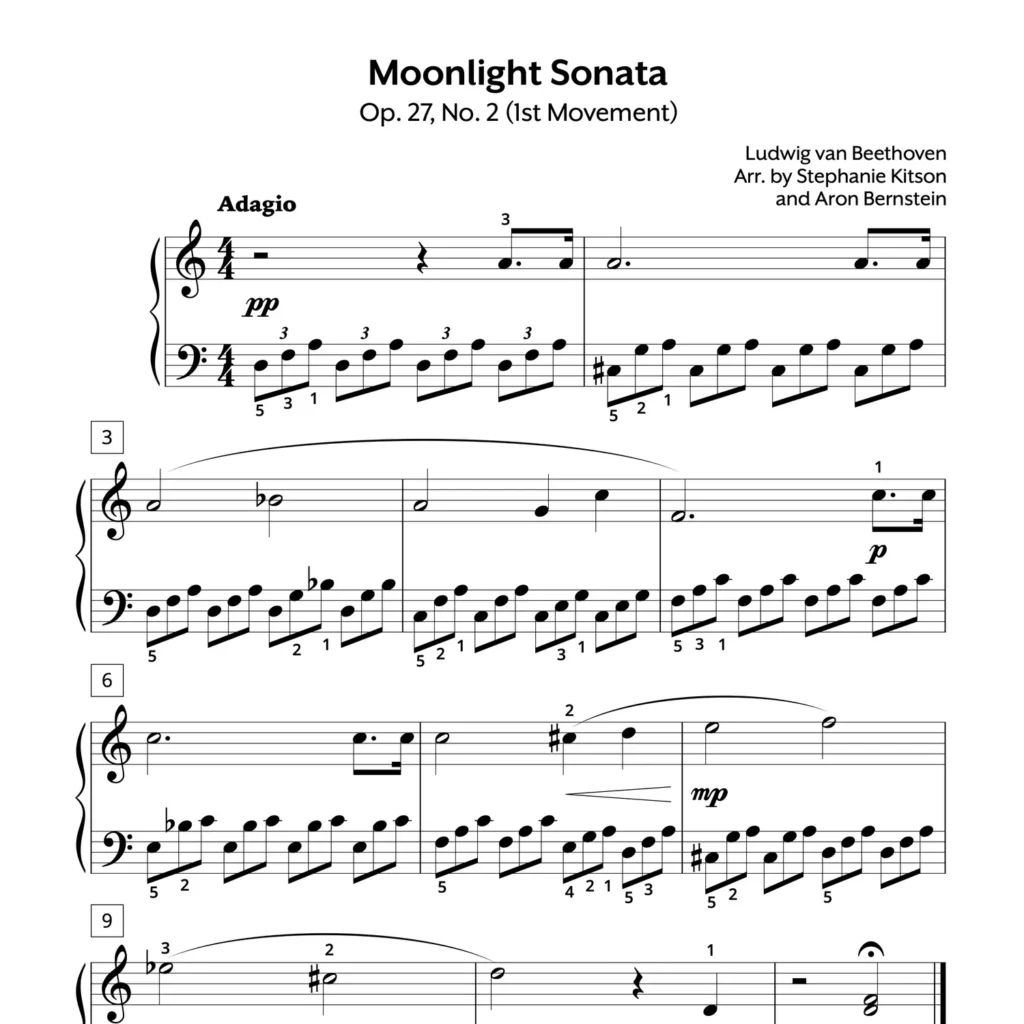
Moonlight Sonata
Below is a simplified arrangement of a cornerstone piano work by Beethoven. To learn more about the work itself, read the paragraph below in the advanced piano works section and also read our blog article All About Moonlight Sonata.
Beethoven: Piano pieces for advanced players
Delving into Beethoven’s advanced piano music is one of the most enjoyable endeavors of being a classical pianist. In this music, you will encounter some of Beethoven’s most raw emotions and his ability to weave short melodies into large and complicated musical fabrics.
Sonata No. 19 in G Minor, Op. 49, No. 1
Along with Sonata No. 20, this is one of Beethoven’s shortest and easiest sonatas. It was published in 1805 during his middle period of composition, around the same time as the “Waldstein” Sonata No. 21, but Sonata No. 20 was probably composed around 10 years earlier. It only contains two movements, the first slow (marked Andante) and the second quick (marked Rondo: Allegro). The first movement is written in standard sonata form, but the second is a modified rondo form, which means that it follows an ABCBADA form and often returns to the original A material.
Sonata No. 19 in G Minor, Op. 49 No. 1
Sonata No. 20 in G Major, Op. 49, No. 2
Known to be Beethoven’s easiest piano sonata, this composition was published along with Sonata No. 19 around 1805. Similar to Sonata No. 19 but unlike most of his sonatas, it only contains two movements. The first movement is marked Allegro ma non troppo (quickly, but not too much) and follows a simplified sonata form, and the second movement is marked Tempo di Menuetto which follows a more dance-like minuet form in 3/4.
Sonata No. 20 in G Major, Op. 49 No. 2
Moonlight Sonata, Op. 27, No. 2 (1st Movement)
This hauntingly beautiful sonata was composed when Beethoven was 31 and today is one of his most performed pieces. At the time it was composed, Beethoven’s hearing was deteriorating, which meant that he had to “listen” through bone conduction. This means that he had to place his head on the piano as he composed in order to allow the vibrations of the music to work their way through his skull and to his brain, which allowed him to “hear” the music. This sonata strays from the normal sonata form and begins with a slow and mysterious movement, contrasted with most sonatas of the time that began with quick and lively movements. It received its nickname “moonlight” from poet Ludwig Rellstab in the 1830s, which refers to its eerie and serene mood, likening it to an image of moonlight cast across a quiet lake. Learn more about this interesting piece by reading our blog article All About Moonlight Sonata.
Moonlight Sonata, Op. 27 No. 2 (1st Movement)
Sonata No. 17 in D Minor, “The Tempest,” Op. 31, No. 2 (3rd Movement)
An extremely fun sonata movement to play, this movement is emotional, quick, and builds to a big climactic moment towards the end. Written in the sonata’s home key of D minor, this movement feels like the fastest winds in a terrifying storm. The melody artfully weaves itself throughout the piece and satisfyingly carries the listener and performer through different keys while making use of scales, arpeggios, and more.
The Tempest Sonata, Op. 31 No. 2 (3rd Movement)
Making Beethoven part of your practice routine
Now that you know more about Beethoven’s music and the sheet music and tutorials offered on the Hoffman Academy website, I recommend diving into some of his famous pieces. Have fun and get emotional! Also, make sure to read our blog article on How to Play Beethoven on Piano to learn more about him and his astonishing body of work.