





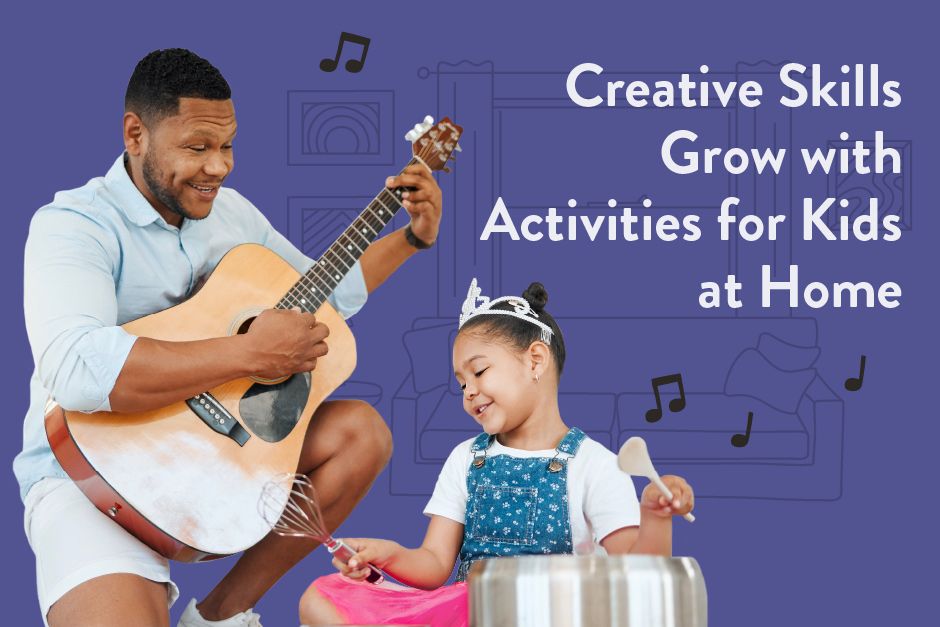
Build your child’s creativity with fun, at-home activities that explore music, art, dance, and more! The joy of creating motivates kids to try new things, develop new skills, and find new ways to express their thoughts and feelings. Use one of the suggested creative activities in this article, or get inspired to come up with your own.
You can bring creativity into your home with Hoffman Academy’s piano lessons, musical coloring sheets, and more.
What counts as a creative skill?
A creative skill is any ability that allows someone to put elements together to create a desired outcome. This can be as simple as putting a few words together in a unique and personal way when you speak, or as complex as composing a symphony. The ability to imagine something new and then make it real requires specialized creative skills, some of which can take many years to develop. Depending on the nature of what is being created, enjoying the creation and sharing it with others will expand your creative toolbox even more.
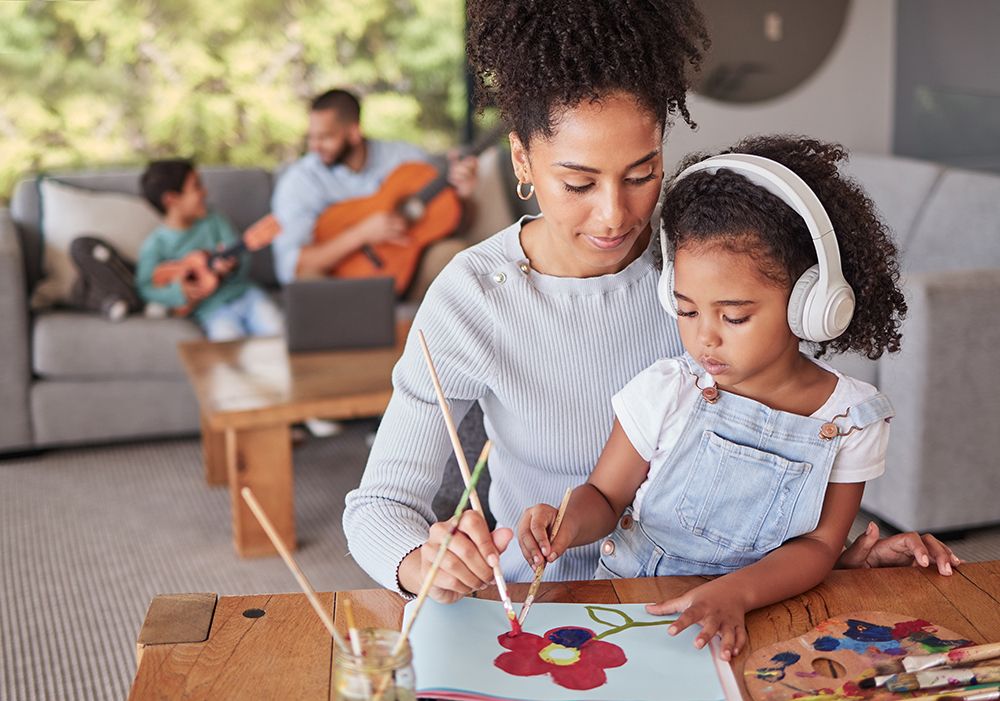
One of the wonderful aspects of creativity is that any one project will require the use of several different creative skills and several different parts of the brain working together. This is one of the reasons creative activities feel so fun and satisfying.
Why do activities for kids at home matter for creative development?
The home is the best place for creative skills to begin. Before children enter preschool, their parents can help them develop art and literacy skills by reading picture books together. Singing songs and playing movement games like “Pat-a-Cake” will plant the seeds for music and dance. As children grow, opportunities to draw, paint, color, play with clay, build with blocks, read, write, sing, play instruments, and move to music can grow into a lifetime love of creative expression.
School classes and private lessons in creative arts build on the foundation of creative skills that began at home. A child who sees their parents enjoying creative activities and who is given the opportunity for creative expression and exploration at home is more likely to do well in formal instruction for music and the arts.
What are some musical activities for kids at home?
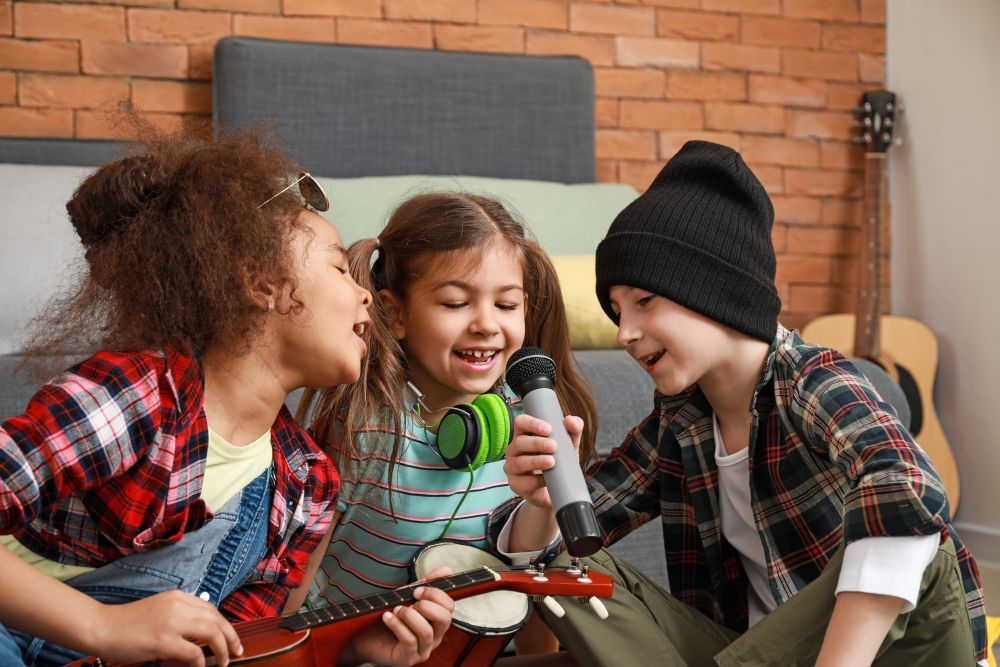
Some musical activities kids can enjoy at home include active listening, singing, dancing, and playing musical instruments.
Active listening
Listening becomes a creative activity when you fully engage with the music you’re hearing. Choose a piece of music to listen to together. For younger children, ask them to describe how a piece of music makes them feel. Does it bring any images to their minds? Give them a sheet of paper and some crayons and ask them to draw whatever the music inspires.
For older children, ask them what instruments they hear as they listen to recorded music. Is the music fast or slow, loud or soft? Are any parts of the music repeated? Try listening to a few pieces of music by the same composer. What similarities and differences can you hear? Comparing pieces this way builds creative skills through careful listening.
Singing
Your voice is the first musical instrument you learn, and one that you can carry with you anywhere. A fun singing game that helps develop creativity is “Opera.” In theater, an opera is a play where every line of dialogue is sung. When playing “Opera,” sing everything instead of speaking it. Sing any notes you like, in any musical style you want. The object of the game is to have fun making up melodies together.
Rhyming game songs are another way to build creativity with singing. Songs like “My Aunt Came Back” and “Down by the Bay” invite singers to make up their own silly rhymes. Take turns coming up with your own words to these songs. Older children might enjoy writing new silly lyrics to any of their favorite songs.
Encourage your child to make up a song of their own. For younger children, help them write down the words and record them singing it. For an older child who knows how to write music, they can write down the words and the notes as well. Writing an original song is a strong way to practice creative skills.
Musical instruments
If your child is learning to play an instrument, encourage them to create music of their own. Read “How to Improvise” for some great tips on how to get started. Improvising is the first step to composing music and supports creative development.
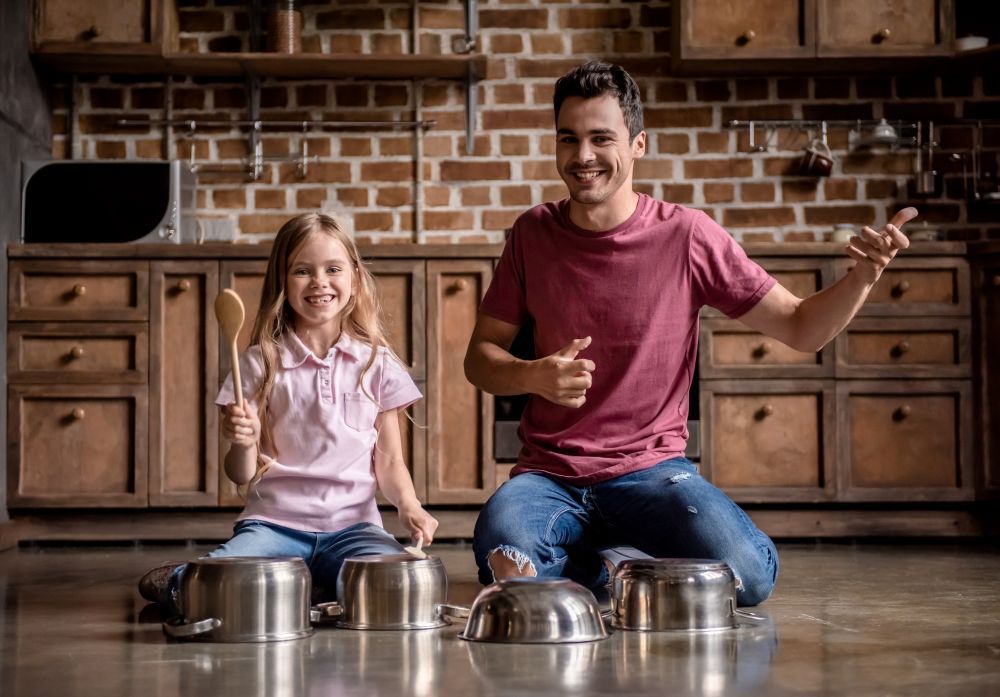
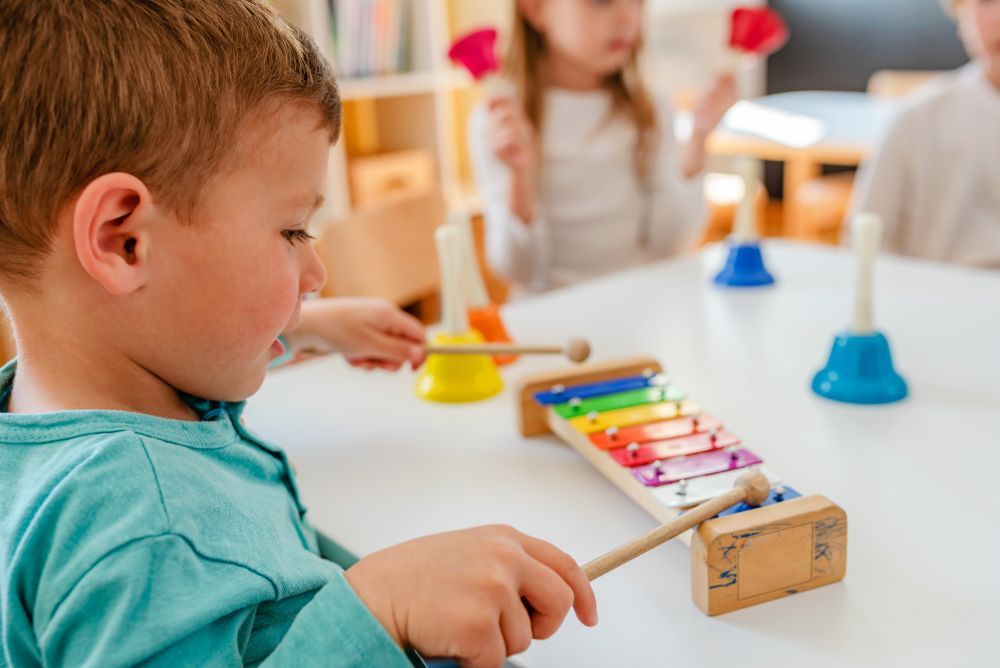
If your child makes their own musical instrument, they’re building even more creative skills! Building an instrument is one of the most rewarding hands-on activities for kids. To play with making melodies, a water glass xylophone is a favorite do-it-yourself instrument. Fill water glasses or mason jars with different amounts of water and tap the glasses lightly with a spoon to play. You can also invite your child to explore rhythm and dance with home-made shakers. To make shakers, put some dry rice or beans in a container, and you have an instant percussion instrument. Plastic buckets, pots, pans, and a pair of wooden spoons can also make a great improvised drum kit.
How does music build creative skills specifically?
Music builds creative skills by utilizing multiple cognitive abilities. For example, when children sing or play an instrument, they use listening skills, motor skills, and their sense of timing and rhythm. They can also use their emotional intelligence to add expression to the music they’re making. Performing develops communication skills, and playing music with others develops cooperation. Each time you make music, you’re engaging in a creative act.
Improvising or composing music develops another level of creative skills. When improvising, a child develops the confidence to experiment freely with the medium of sound. Composing is an act of selecting sounds they like and memorizing them or writing them down so that they can share them again and again with others. These same skills (experimenting, selecting, and recording) can transfer to creating in other areas of art and literature.
What are easy musical activities for kids that don’t require equipment?
Singing, clapping, and rhythmic movement are easy musical activities for kids that don’t require any equipment. Sing favorite children’s songs with your kids, especially songs that involve movement and clapping, such as “The Wheels on the Bus” or “Bingo.”
Here’s a rhythm game you can play with your kids to help them develop a good sense of timing. Clap a short, simple rhythm and have them echo it back to you. If you like, you can clap the rhythm of a familiar song and ask them to guess what song it is. Let them take a turn to clap a rhythm for you to echo.
How can parents turn everyday moments into musical activities at home?
Turn everyday moments into musical activities by intentionally including music in your family’s daily routine. Some of the things I liked to do with my children included singing them a wake-up song every morning. When it was time to pick up toys, I’d put on a recording of “Happy Working Song” from Disney’s Enchanted. As we were doing the dishes or folding laundry, we would often sing simple rounds together to pass the time. At bedtime, each child would choose a favorite song for me or my husband to sing to them.
Another good time to enjoy music together is in the car. On road trips I would bring my ukulele and we would sing together. We would also listen to a wide variety of music and talk about it, discussing the time period the music was from, the composer, songwriter, or musicians performing the music, and what the lyrics of the songs were about. Sometimes we’d choose a favorite musical, like Wicked or The Greatest Showman, play the soundtrack, and sing along.
Where does piano fit among activities for kids at home?
Having a piano in the home can be a huge boost to your child’s creative development. Piano lessons are a gift that can give them the skills to enjoy creative music making throughout their lives. Most children are ready to start piano lessons around the age of 6, but piano lessons can begin at any age. Hoffman Academy offers free online piano lessons that make it easy to get started at home. Beginning pianists should focus on developing a habit of practicing the piano every day, even if only for a few minutes. A young pianist will also do best if a parent can be with them to guide and support them whenever they are at the piano.
In every practice session, encourage your child to take a little time to be creative. They can take a piece they are working on and try improvising a different ending, or they can make up an entire new song of their own. Another way to blend creativity with piano learning is with Hoffman Academy music coloring pages, games, and activity packets. Including creativity with each practice session helps keep things fresh and fun, and also develops your child’s creative skills.
How much time should kids spend on creative activities at home?
Children should be allowed to spend as much time on creative activities as they want, so long as it doesn’t interfere with their responsibilities at home or at school. Regular practice strengthens creative skills over time. Provide children an opportunity to do something creative, and most of them will be eager to take it, but if not, try again later or try something else.
How can parents keep musical activities fun rather than a chore?
To keep music activities, including practicing an instrument, from feeling like a chore, remember these important principles:
- Finish while it’s still fun. Make sure not to drag out an activity until your child is tired of it. If they stop while they’re still enjoying themselves, they’ll be eager to come back next time.
- Be a positive practice partner. When your child is at the piano or doing any other musical activity, be present and focus on encouraging them rather than correcting them. Let them know how much you enjoy hearing them make music.
- Include games. To keep practice from being tedious, turn repetition into a simple game. Learn more about how to do this by reading “Twelve Great Piano Games for Kids.”
Building creative skills starts with everyday play
Building creative skills in young children begins with encouraging play and exploration. Children can find creative ways to use even the simplest materials in their everyday playtime. Take the time to play with them and be an example, whether by singing, moving to music, storytelling, drawing, building, or whatever arts and crafts you enjoy.
If you’d like piano to be a part of your child’s creative development, try Hoffman Academy today!