





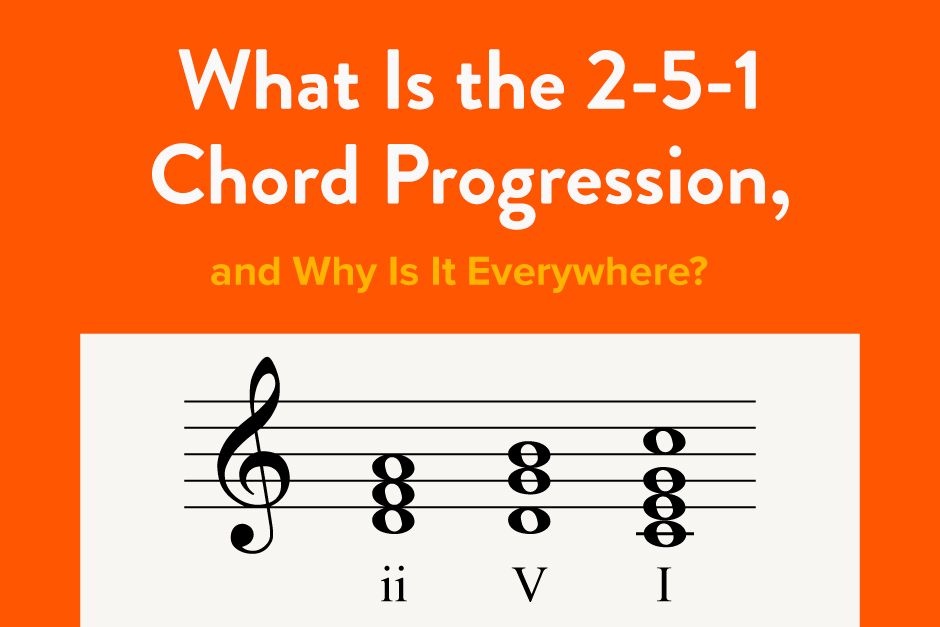
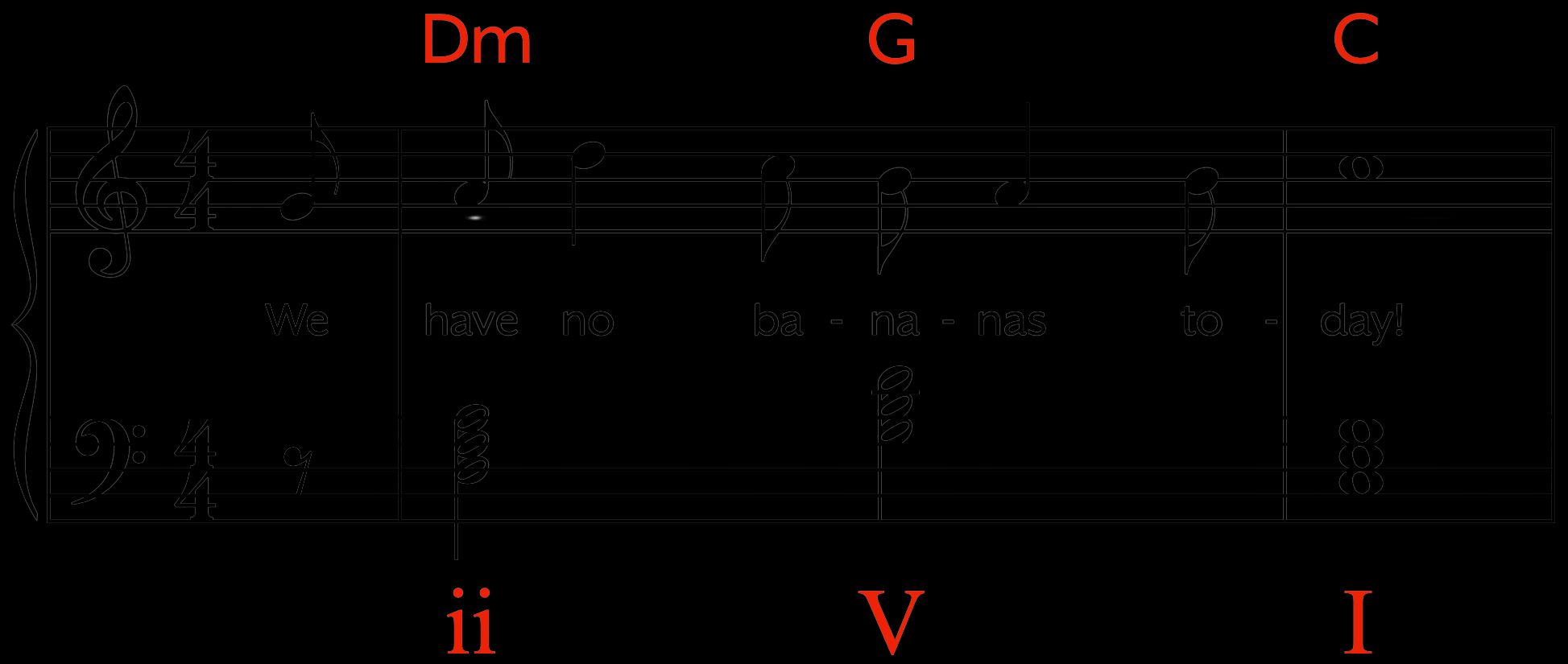
The 2-5-1 chord progression is a three-chord pattern that drives musical phrases to a strong finish on the tonic, or I chord. This pattern is made from chords built on the second, fifth, and first notes of any scale, and it’s often written as ii – V – I. Listen to the way it perfectly rounds off this phrase from Yes, We Have No Bananas by Frank Silver and Irving Cohn:
This progression is so common and inevitable-sounding that it is often called a turnaround, a harmonic formula that leads quickly back to the tonic. Equally at home in classical music, pop, and jazz, the 2-5-1 turnaround is a cornerstone of any musician’s harmonic vocabulary. Come along and discover why.
Hoffman Academy has a piano cadence guide to help you learn chord progressions. We’ve also got hundreds of other music learning resources. Sign up for a Premium Membership today and get everything you need to learn piano!
How the 2-5-1 chord progression works in major keys
The 2-5-1 turnaround serves a cadential function, leading phrases toward a resolute end on the I chord in a major key. It can immediately follow the I chord, I – ii – V – I, as in Jerry Lee Lewis’s Every Day I Have to Cry:
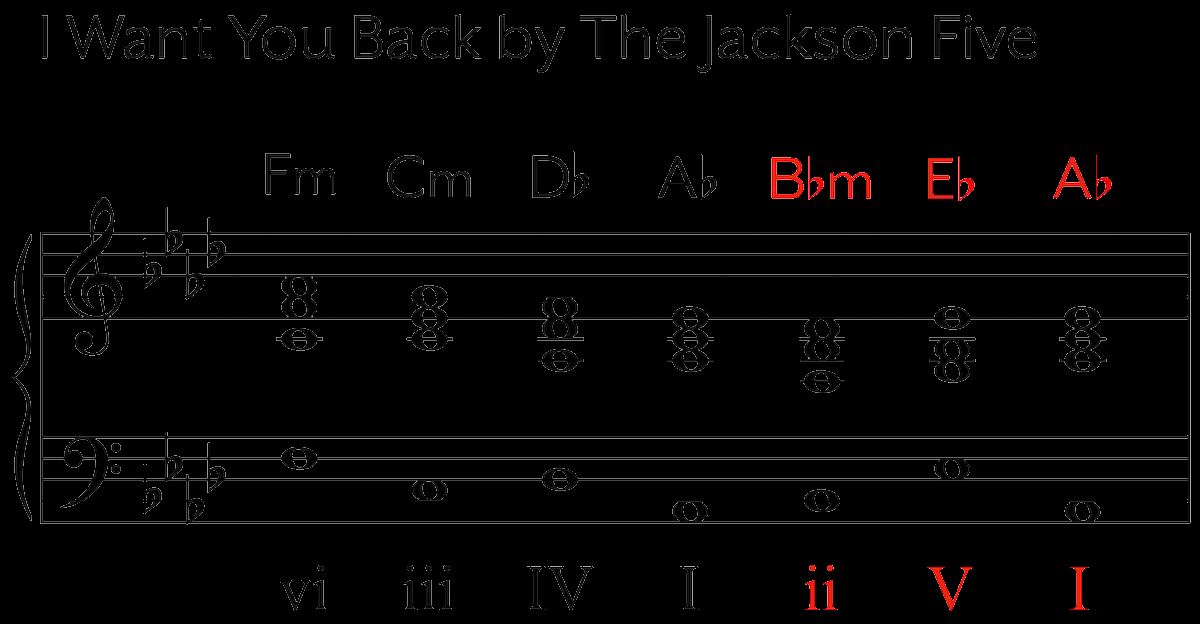
Often, however, 2-5-1 is the concluding part of a longer chord progression. I Want You Back by The Jackson Five has this progression: vi – iii – IV – I – ii – V – I in the key of A-flat major:
Why does 2-5-1 sound so good?
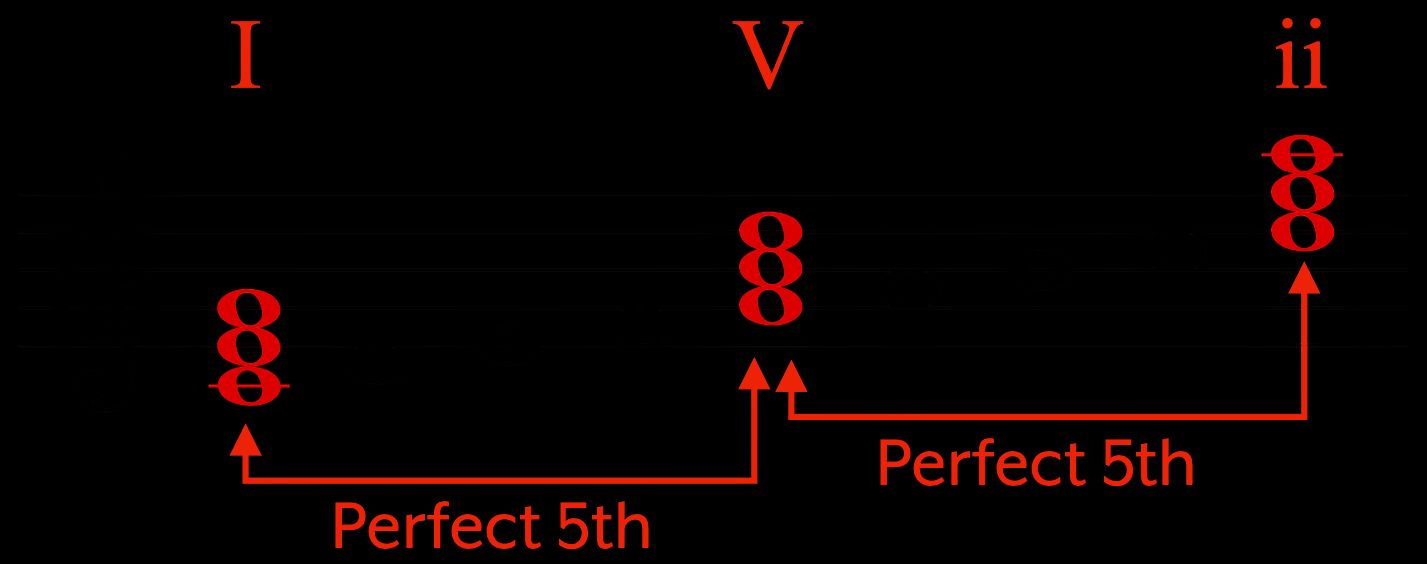
The finality of the 2-5-1 progression comes from the intervallic relationships among its chords. While the V chord has a strong push toward I, the ii chord leads convincingly to V. This is because ii and V are related by the same interval that gives V its tendency toward I. The ii chord is built a perfect fifth above V, just as V is positioned a perfect fifth above I:
Because the ii chord is such an effective approach to V (the dominant), it’s often called a pre-dominant. Setting up for the V chord is by far the most common function of ii in classical, jazz, and pop music.
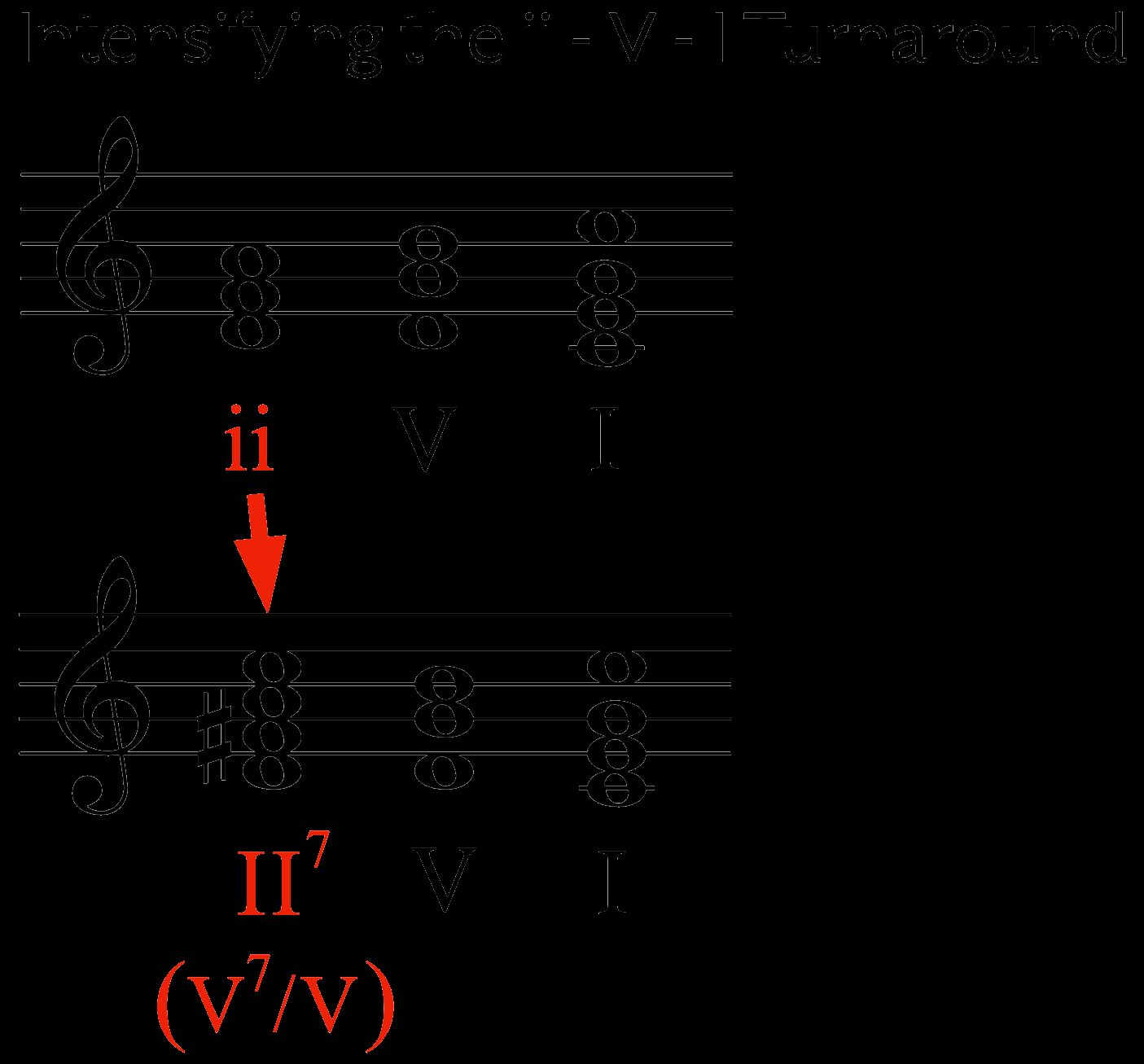
In a major key, ii is a minor triad, but by turning it into a dominant seventh chord, it drives toward V all the more urgently. In the key of C major, simply change the ii chord, D minor, into D major and add C as a seventh. The chord is now a II7, with a heightened tendency toward V. In fact, we’ve now transformed the ii chord into a secondary dominant, or, in other words, V7 of V:
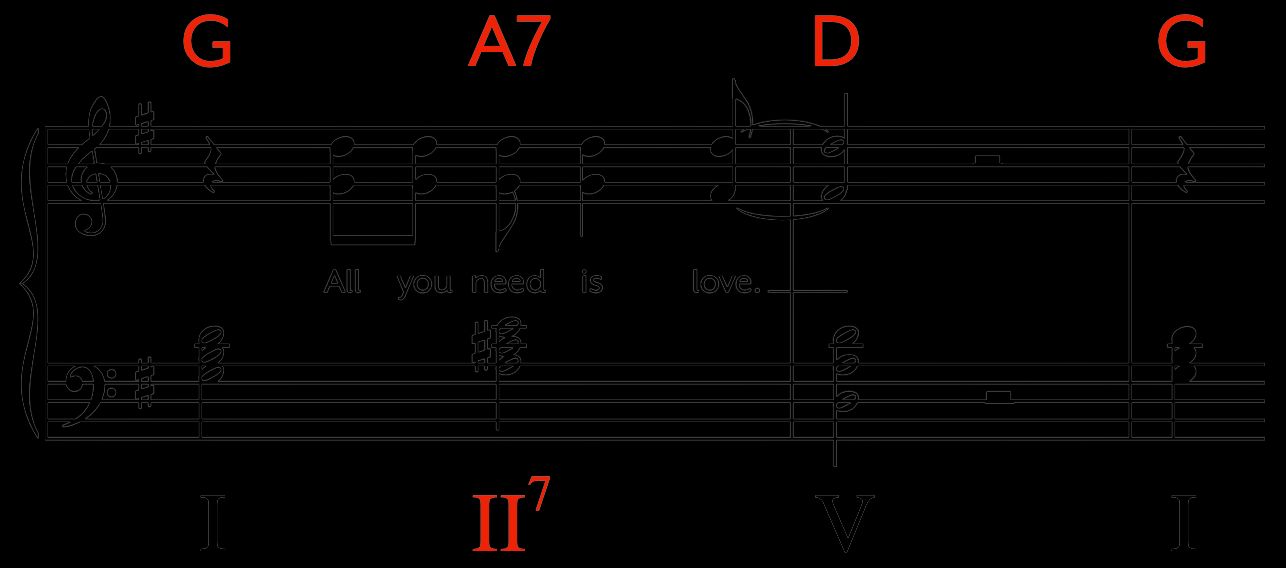
You can hear the 2-5-1 progression with this altered II7 in All You Need is Love by the Beatles:
The 2-5-1 chord progression and voice leading
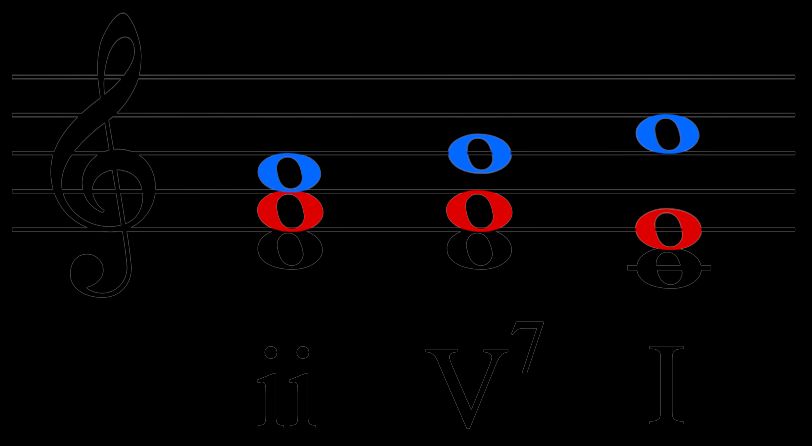
Voice leading involves seeing each note in a chord as a separate melodic voice, with a logical movement into the next chord. The 2-5-1 progression allows smooth voice leading and ease of playing in both vocal and instrumental music. This is because all three chords share common tones, which keeps the voice movement to a minimum. In the turnaround below, notice that the red and black voices remain stationary from ii to V7, and no voice has to move more than a step in any direction:
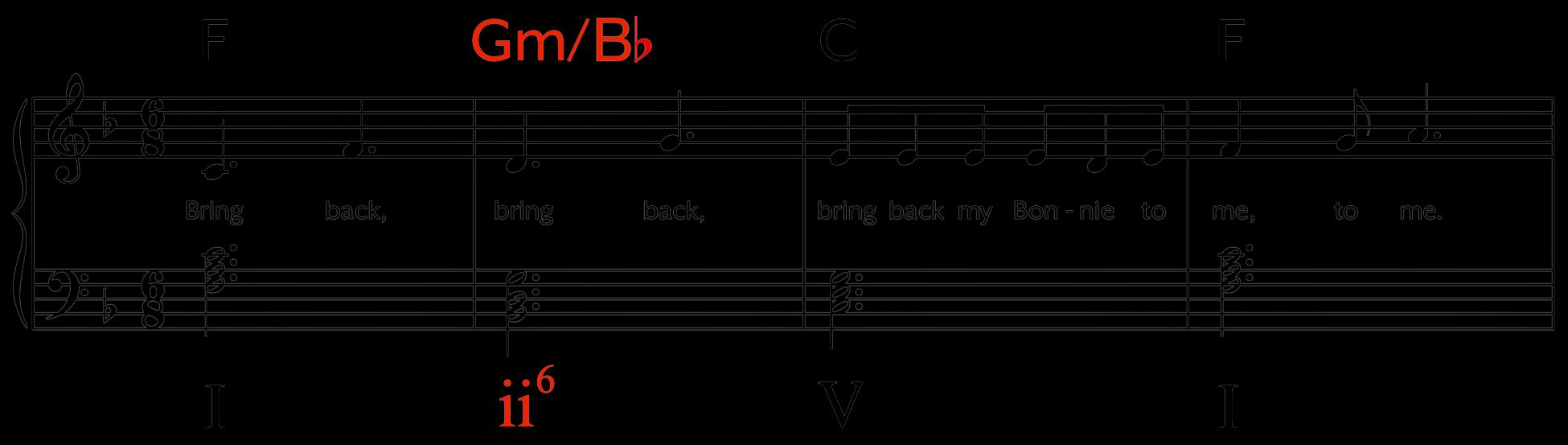
In the 2-5-1 progression, ii often appears in first inversion as a ii6 chord. This gives the bass a more resolute FA-SO-DO line, as in My Bonnie Lies Over the Ocean:
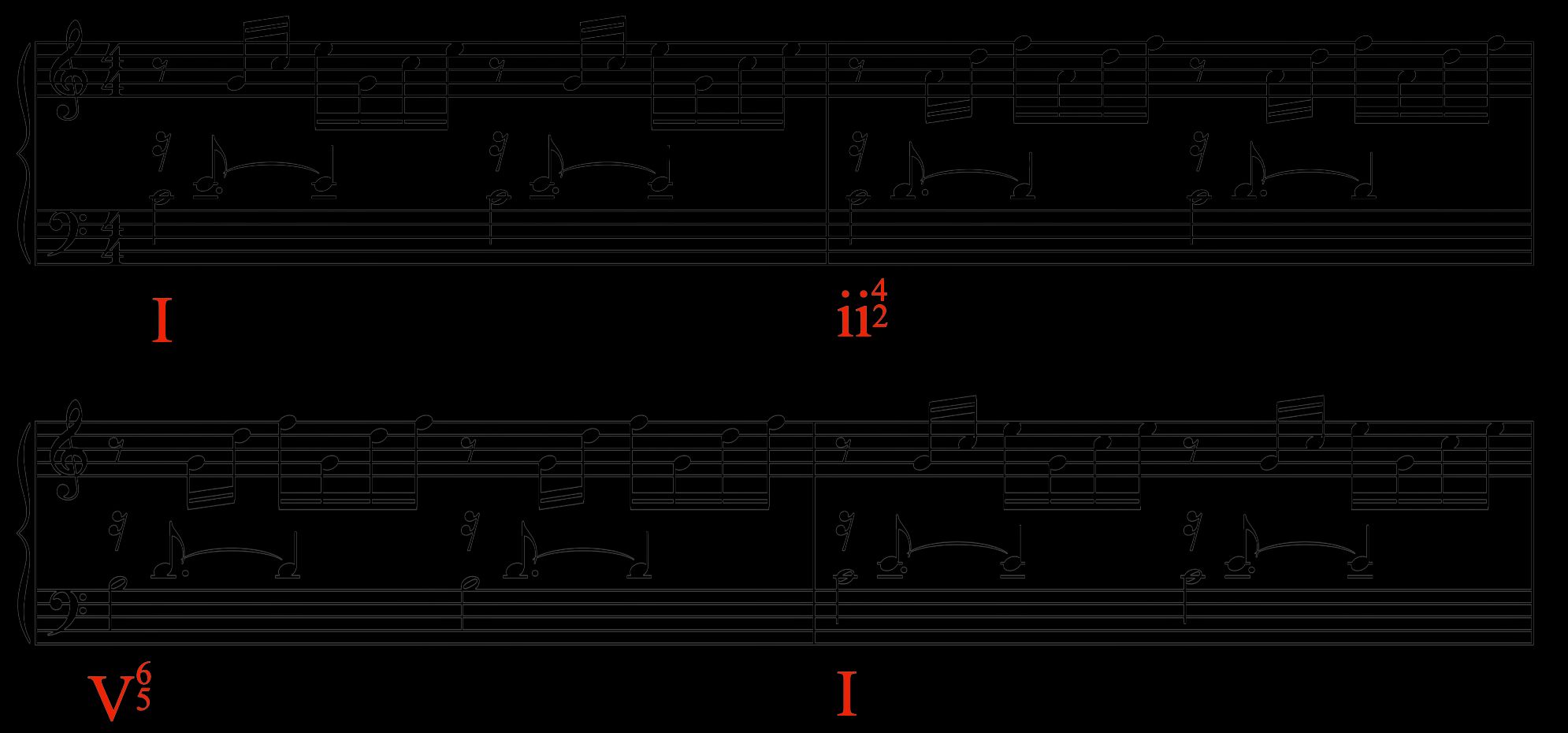
Along with inversions, the addition of a seventh to the ii chord provides even smoother voice leading. In J.S. Bach’s Prelude in C Major from Book I of The Well-Tempered Klavier, the ii chord is a ii7 in third inversion (ii4/2). For the first two chords, the bass voice remains stationary, and only needs to resolve down a half step into the V7 chord, which is also inverted (V6/5):
What is the minor 2-5-1 chord progression?
The minor 2-5-1 progression is the same sequence of chords as in major keys, but using a minor scale instead. The other difference is that the ii chord will be a diminished triad, making for a more plaintive approach to V. Very often a seventh will be added to the ii diminished triad, making it a half diminished seventh chord:
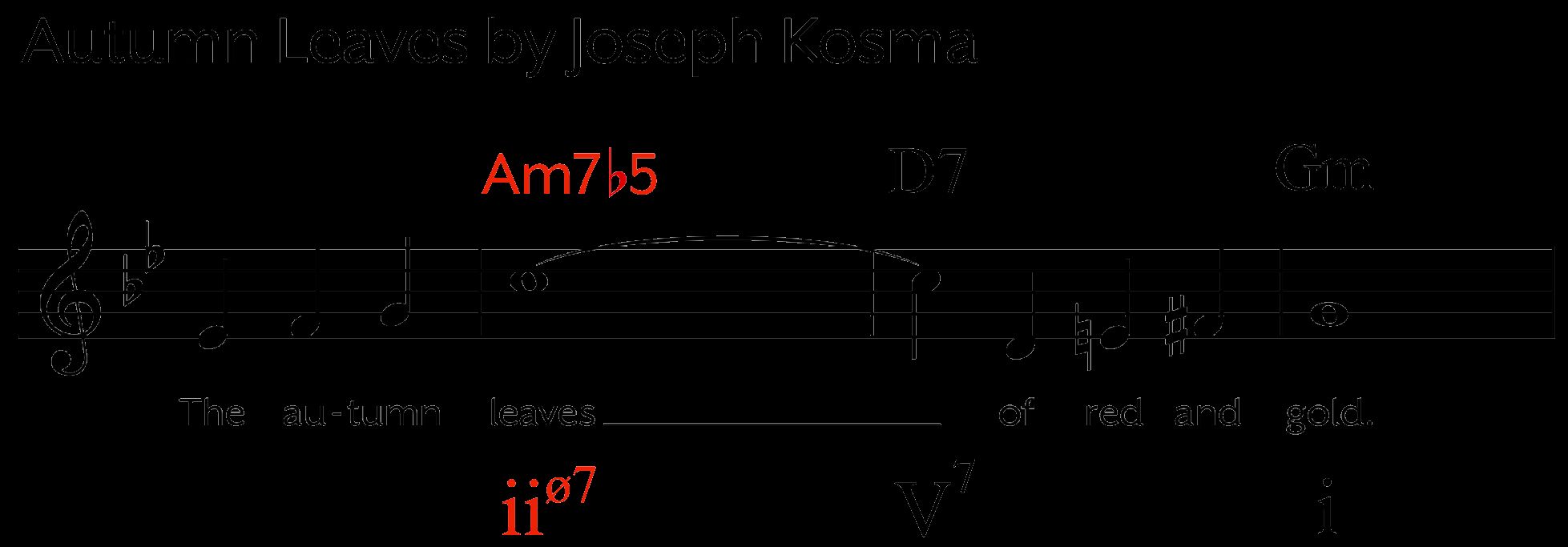
Notice the typical alteration of the V chord in a minor key, using the raised seventh note of the harmonic minor scale to ensure V is a major triad. So 2-5-1 is often used in minor keys, just with the use of harmonic minor to create an authentic V-i cadence.
How to use the 2-5-1 to change keys
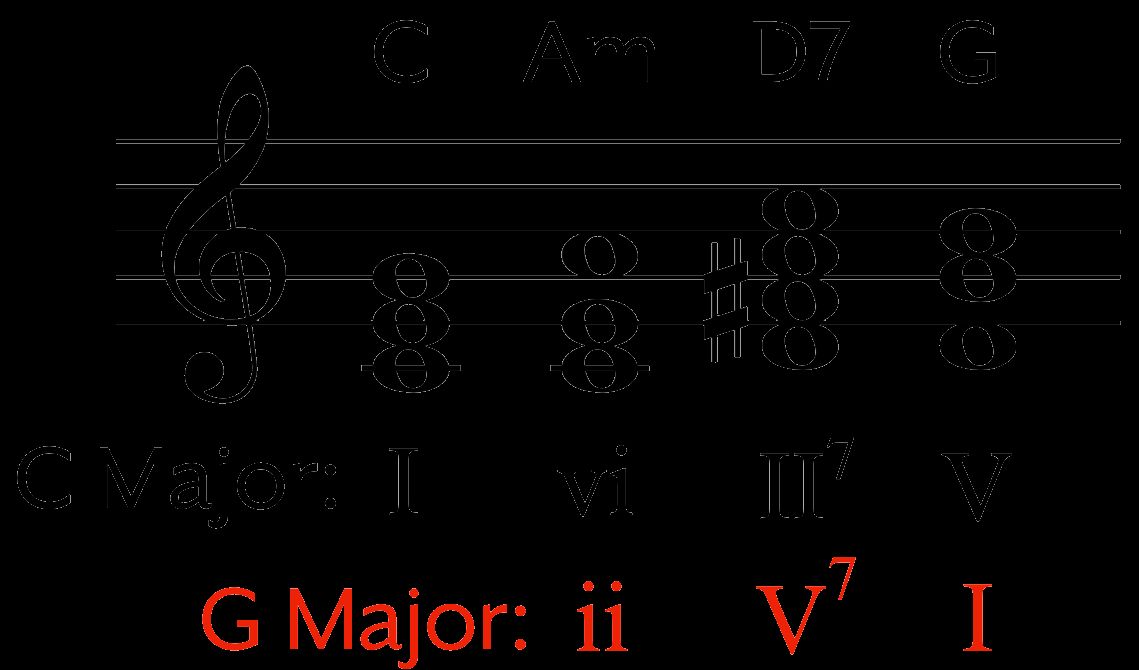
The 2-5-1 turnaround can be used to intensify any key area, not just the tonic. This process is called tonicization, and will readily pivot the music toward a new key. We simply set up the ii, V, and I chords in the key we want to modulate to. If we start in the key of C major and want to change to the key of G, we can create a turnaround with the A minor, D7, and G major chords. These might look like vi, II7, and V in the key of C major, but in the key of G they represent ii – V7 – I. This tonicizes the key area of G major, and, if we hang out there long enough, we’ve effectively modulated to that key:
How to practice 2-5-1 in all 12 keys on piano
The first step is to familiarize yourself with the ii, V, and I chords in each different key. This will involve learning the diatonic chords in all major and minor keys. Next, choose a key and play the triads of the 2-5-1 turnaround on both hands so that you become fluent. Try the following in all twelve keys.
Triads on the left hand
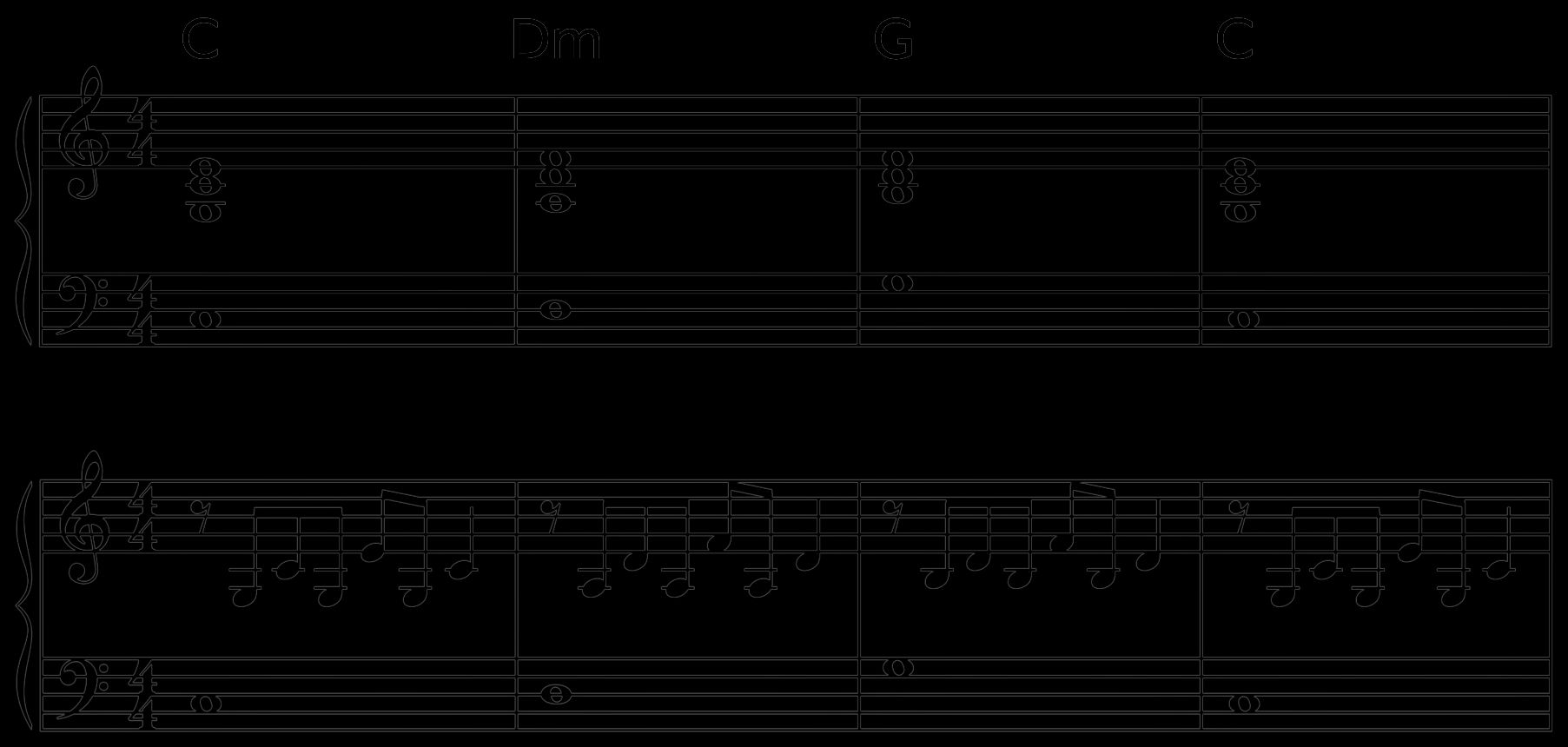
You can accompany a right hand melody with the 2-5-1 chords on the left. Simply play the three chords in root position on the left hand for the most basic texture. You can also try inversions to minimize hand movement:

Right hand triads with a bass line on the left
If someone else is playing or singing the melody, that frees you up to use both hands for a more robust accompaniment. Play the ii, V, and I triads on the right hand while playing the triad roots on the left. When you’re ready, try breaking up the chords to give your accompaniment more sophistication:
Play 2-5-1 in minor keys
Practice the same steps above in minor keys. Remember that the ii chord will be a diminished triad. For extra poignancy, add a seventh to to create the ii half diminished seventh chord, also known as a minor seventh flat five.
Popular examples of the 2-5-1 chord progression
Because of its versatility, you’ll find the 2-5-1 progression in a variety of music genres.
Pop Music
My Sweet Lord by George Harrison
Listen to how the song gets caught in a ii-V loop for several repetitions before finally making it to I. This perfectly captures the spirit of the lyrics: “but it takes so long.”
Don’t Know Why by Jesse Harris
The verse melody adds the 2-5-1 turnaround to the end of a longer progression:
I – IV – III – vi – ii – V – I. The chords are also decorated with sevenths to give the song a jazz feel.
Baroque and Classical Music
Prelude in D major from Book I of the WTC by J.S. Bach
This piece opens with a straightforward I – ii – V – I progression. The ii chord appears with an added seventh, as an Em7.
Largo al Factotum from The Barber of Seville by Rossini
Rossini approaches the turnaround from the vi chord: vi – ii – V – I

Ragtime
Scott Joplin’s The Entertainer and Maple Leaf Rag both use the II9 chord in the 2-5-1 turnaround:
Jazz
Autumn leaves by Joseph Kosma
Here the 2-5-1 progression occurs twice back-to-back, first in the key of Bb major, then in G minor. This is a good example of how the turnaround can be used to modulate.
Sunday Morning by Maroon 5
The 2-5-1 turnaround is decorated by 9ths and even a 13th for a particularly jazzy sound.
The 2-5-1 chord progression: a foundation worth building on
It’s no accident that certain harmonic conventions ride out centuries of musical development. Chord progressions like 2-5-1 have survived because they work, giving logic and form to so many genres. Whether the turnaround is decorated with jazzy 9ths or contains bare triads in pop music, it should be an indispensable part of your musical grammar.