





Build a strong foundation with our rhythm worksheets for beginners
Got rhythm? Developing a good sense of rhythm is an essential skill for beginning musicians. When playing music, knowing when to play a note is just as important as knowing what note to play. Learning to hear, count, and read rhythms creates a strong foundation for musical understanding. Build these rhythm skills with Hoffman Academy rhythm worksheets!
Want access to over 170 colorful music learning resources designed by our expert piano teachers, including flashcards, games and crafts, worksheets, and activity packets? Get Hoffman Academy Premium today!
How do you teach rhythm to beginners?
Before teaching rhythm, help students feel a steady beat. Put on a recording of a song and have them clap, tap, or walk to the beat. Without a steady beat, it’s impossible to play rhythms accurately, so don’t forget this essential step.
After doing some exercises to help students recognize beat, play simple rhythms and have students imitate those rhythms. Clapping, tapping, or even playing a drum or other percussion instrument works well for this activity. Try taking turns with the student clapping a steady beat while you clap a rhythm. Then have the student clap the rhythm while you clap a steady beat. For more ideas, read our article What is Rhythm in Music? Building Rhythm Skills in the Beginning Musician.

How do beginners learn to count rhythms?
Once a student feels comfortable with playing a rhythm, it’s time to learn to count. This is opposite from the way some traditional piano methods teach, expecting students to be able to count a rhythm in order to figure out how it is played. Instead, in the Hoffman Method, students are taught to hear and perform rhythms first, the same way they learn to speak before they learn to read. This way the counting helps connect students to a rhythm they already know.
At Hoffman Academy we use rhythm words to help beginning students learn to count rhythms. Download our free Rhythm Words Guide to see how it works. It’s important to practice counting rhythms out loud with songs a student already knows well before they try counting out rhythms in songs they are just learning. Counting rhythms can be tricky, so be patient and take the time to practice.
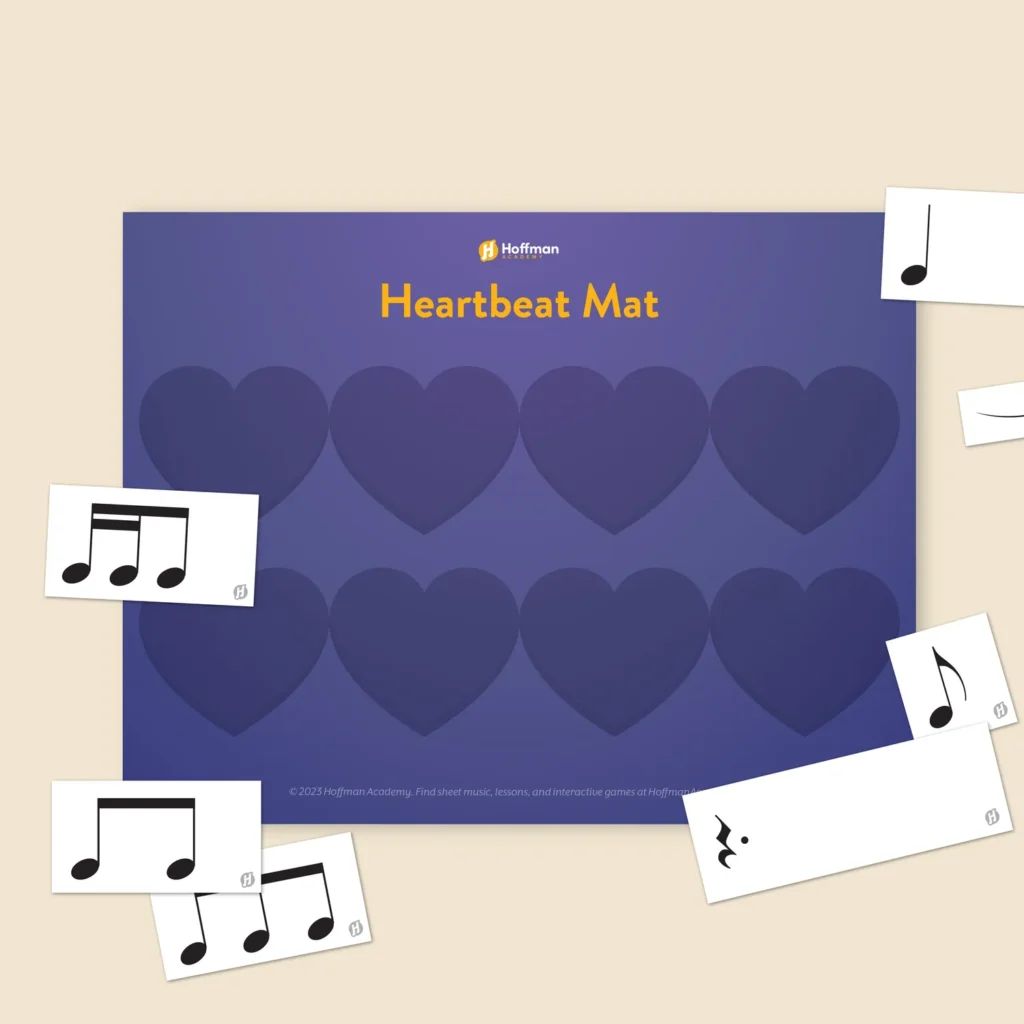
The Hoffman Academy Heartbeat Mat is a fantastic resource for helping students learn to read and count rhythms. This mat along with printed rhythm cards allows students to do many rhythm-related activities. Each heart represents a beat, and the rhythm cards can be arranged in the beats.
What is the best rhythm game for beginners?
The very best rhythm game for beginners is a simple game of catch. You play a rhythm for them, and then they catch that rhythm and repeat it back to you. Start out with short, simple rhythms. Here are some ideas for making the game more challenging and fun as their skills increase:
- Take turns playing a rhythm, then having the other person repeat it.
- Now take turns, but the person listening for the rhythm plays a steady beat while the other person is playing the rhythm. This can be tricky so be patient and keep trying!
- Count out loud or say the rhythm words while playing the rhythm, then have the student count out loud or say the rhythm words while repeating the rhythm.
- As a student learns new rhythms, add them to the game. You can also make the rhythms longer as the student’s skills increase.

Examples of free rhythm worksheets for beginners
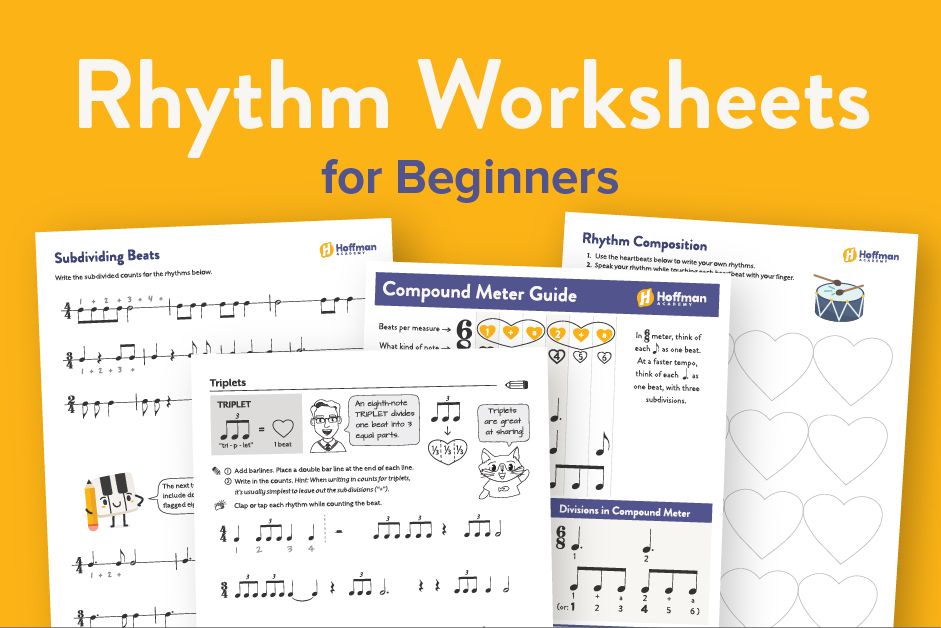
Simple Meter Rhythm Chart – This handy reference chart shows the music notation and names of all the rhythms you’ll commonly see in simple meter, from sixteenth notes to whole notes and rests and everything in between. The rhythms are organized into groups based on how many beats each one represents, which helps students recognize the relationships between rhythm and beat and different rhythmic patterns.
Compound Meter Guide – Take your rhythm skills to the next level with compound meter. This chart helps students make sense of rhythms in time signatures such as 6/8, 9/8, and 12/8, where beats are divided into three instead of two.
Rhythm Composition – Practice writing rhythms with our rhythms heartbeat composition sheet! Each heart represents one beat, helping students visualize and internalize a steady pulse beneath the rhythm. Students can practice writing rhythms they hear or make up rhythms of their own. Instructions for activities are included.
Triplets Theory Pages with Answer Key – For early intermediate piano players, learn how to count and play triplets with this set of free worksheets. Three pages that help you practice a wide range of rhythm skills and answer key included.
Rhythm Words Guide – Rhythm words make counting rhythms fun and easy! Learn all your rhythm words and how they fit into the beat with this essential reference guide.
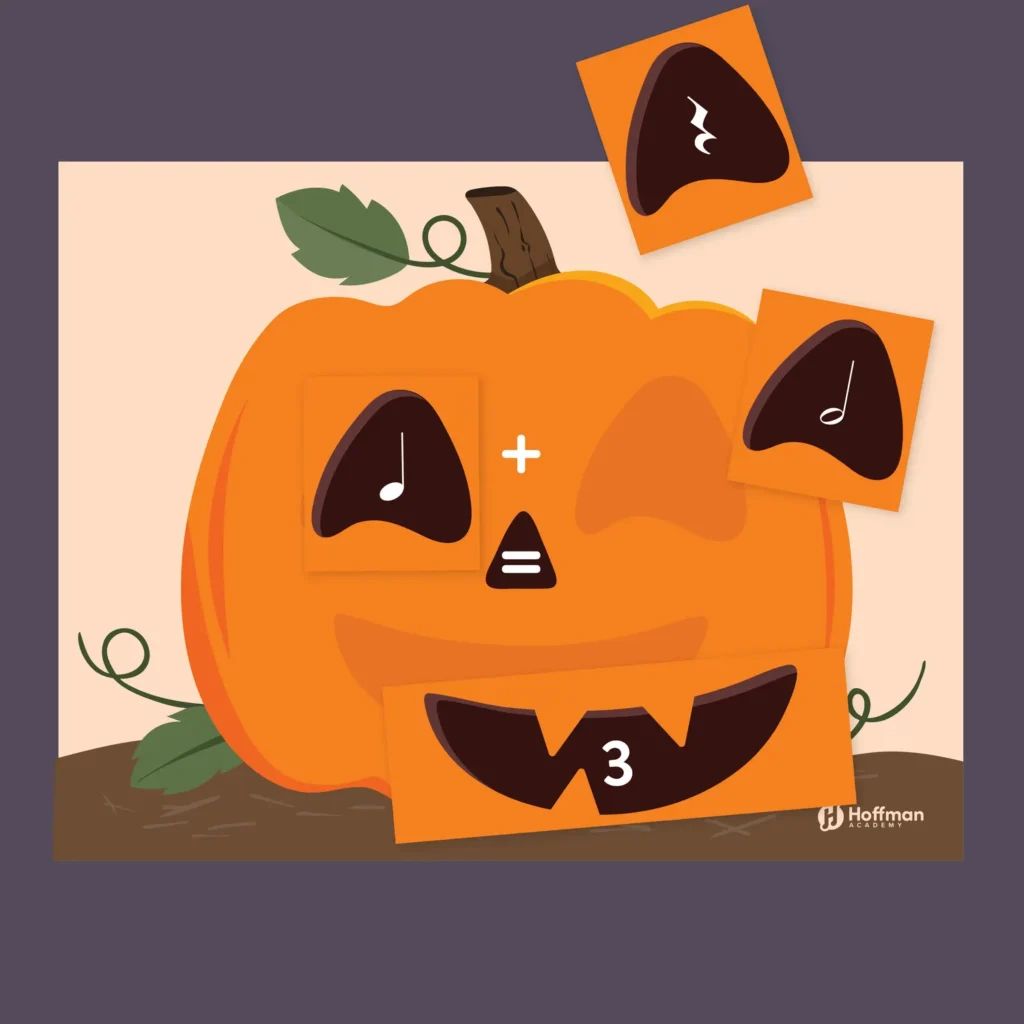
Pumpkin Rhythm Game – Use the pumpkin mat and rhythm card cut-out shapes to practice adding up rhythm note values.
Premium rhythm worksheets from Hoffman Academy
These rhythm worksheets are included with a Hoffman Academy Premium membership, or can be purchased separately from our store.
Rhythm Composition Worksheets (Simple Meter Version) – Practice writing down rhythms you hear or create your own with these Rhythm Composition Worksheets. Printable in 2/4 time, 3/4 time, and 4/4 time. Common rhythms are included in a rhythm bank at the top of the sheet.
Rhythm Composition Worksheets (Compound Meter Version) – Have fun creating rhythms in 3/8 and 6/8 using these worksheets. Common rhythms are included in a rhythm bank at the top of the sheet.
Rhythm Matching – Elementary level piano students can have fun matching rhythms to the correct number of beats with this colorful worksheet. Answer key included.
Rhythm Review – Elementary level piano students test their knowledge of rhythm notation with this comprehensive rhythm review worksheet. Match written notes to their rhythm name, and then to their number of beats.
Subdividing Beats – Ready to make it count? Practice counting out the subdivided rhythms on this worksheet for elementary level piano students. One and two and let’s go!
Looking for more interactive practice beyond rhythm worksheets? We have rhythm games online, too!
Ready for an interactive rhythm ride? Hoffman Academy has two fun online games to help students practice their rhythm skills. These games make it fun for students to get the repetition they need to solidify their ability to hear, identify, and play different rhythms. All of our online games are included with a Hoffman Academy Premium membership.
Rhythm Train helps students learn to hear and identify written rhythms. After a rhythm is played, choose the train car with the correct written rhythm. All aboard for rhythm learning fun!
Can you keep up with the beat in Rhythm Shredder? Help skate boarder Rae ride by tapping the rhythms you see in time with the music. The rhythms start out easy, but get more challenging with each level.
Get full access to these piano games and more, plus our entire library of downloadable sheet music, reference guides, and music theory worksheets with Hoffman Academy Premium!