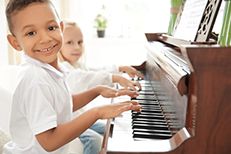





Learn what a piano recital is and how to prepare for one with our tips below
A piano recital is a performance of all the music that you’ve spent time practicing. Practicing music is one thing, but being in a confident mental space for a performance is a different thing. Everyone gets jittery about performing. It’s totally normal, whether you’re performing at home with family and friends or playing for an audience at Carnegie Hall. The key to conquering those jitters is piano recital prep! Students do best if they practicing performing regularly throughout the year. As a result, students enjoy their recital experience more because they know what to expect.
Subscribe for updates, content & free resources!
Wait…what do you mean, “practice performance?”
Just like songs and scales, performing is a skill that can be learned through practice. Piano recital prep is different from normal practice. In normal practice, if you make a mistake, you stop to correct it. However, when performing, you want to keep going no matter what happens. A “practice performance” is just what it sounds like: a chance to practice going through the motions of the upcoming performance.
To help you get ready for your next recital, download this FREE Recital Preparation Planner from Hoffman Academy.
How to do a practice piano recital performance
- First of all, have an audience. It can be as small as one or two people, or even a group of stuffed animals.
- Face the audience and announce yourself. “My name is Emily, and today I’m playing…” If you’re playing more than one piece, just announce the title of the song you are about to play. You can announce the others as you get to them.
- Sit at the piano and take a breath. Sometimes I have my students count to three in their heads before they even touch the keys. As a result, they are more calm and focused when performing.
- Play! When you’re finished, put your hands on your lap. Then stand, turn to your audience, and bow. Bowing is the performer’s way of saying, “thank you for listening.”
It may seem like a lot to remember, but that’s why you practice! Before you know it, each step will feel perfectly natural.

When to do a practice piano recital
Anytime! Start doing your piano recital prep a week or two before the event. The more often you perform, the easier it becomes. Doing a practice performance on recital day can be beneficial. It’s even better if you can practice at the recital venue, on the actual piano being used! This isn’t always convenient though, so simply having a run-through at home can still work.
Be a good practice audience
This is for the parents or other practice partners! After the practice performance, give simple, direct feedback to the performer. What did they do well? Be specific, for example: “You played with clear rhythm and gave a lovely bow!” What do they need to remember for next time? You could say something like, “Remember to count to three before you start.” Don’t dwell on mistakes made in the actual playing; you can address those in a regular piano practice session.
Extra piano recital tips
Many aspects of recitals can be nerve-wracking, even ones we don’t think much about. You’re in an unfamiliar location, on an unfamiliar instrument, in front of unfamiliar people. Recitals might be scheduled on days or times when you’re not used to being at the piano, and performers don’t always have a chance to warm up beforehand. Consequently, try to have your recital prep simulate this by:
- practicing performing in front of a number of different audiences
- playing on different pianos if possible
- practice performing at different times of day – not just during practice time
Sign up for a free account now and receive over 400 video lessons (and counting!) accessible on any smart device.
Make it a game!
Make piano recital prep fun by turning practice into play! Perhaps you model a purposely bad performance for your student and have them make suggestions for what you could do better. Perhaps you award points for every step remembered. Again: do not focus on any mistakes in the piano playing. Practice performances are primarily about getting the routine down; introduce yourself, sit down at the bench and take a moment to breathe and focus, play through the piece without stopping no matter what, then pause with your hands in your lap for a moment before you stand and take a bow. trouble spots in the song can be addressed separately.
Dealing with distractions during piano recitals
Audience members cough. Babies cry. Someone forgets to silence their phone and it rings. The lights suddenly go out (This has happened to me twice!). As the old saying goes, “The show must go on” – and that’s true for pianists as well! Therefore, to make recital prep more fun and prepare students for distractions, here’s a piano game for kids I sometimes play:
The distraction game
People needed: 1 Performer, at least 1 Distracter (I have a colleague who calls themselves the “Distraction Monster”)
Object: The Performer must play their entire piece – no matter what happens!
How: The Distracter will talk, sing, dance, laugh, make funny noises, wave hands around the Performer
Rules/limitations: Incorporate a “safety zone” around the Performer and instrument where Distracters are not allowed to enter. The Distracter(s) cannot touch the performer or cause anything else to touch them. The Distracter may not play on the piano while the performer is playing. It’s perfectly fine for the Performer to laugh or stumble in their piece – after all, they just need to get to the end in order to win!
Practice performing leads to confidence
We hope you now have the tools to help you feel more comfortable about your piano recital! Remember that one of the best parts of learning music is sharing it with others. No matter what, remember to feel the joy of music as you perform. Even if you make mistakes, if you’re enjoying yourself the audience will enjoy it too!