





The ability to play the piano is an amazing gift that parents and teachers can give to children. Some children naturally take to learning the piano and will want to practice every day without any prompting from an adult, but this is rare. For most children, learning to play the piano takes years of patient, dedicated work. How do we inspire more children to become piano players, especially in an age of digital distractions?
Finding joy in learning the piano doesn’t need to be complicated. At Hoffman Academy, we’ve spent decades combining the science of early childhood education with the best music learning methods in the world and put it all together with a dash of modern technological magic. Our program can be used by a child learning on their own with the support of a parent, by a music teacher with their own studio, or by school classrooms. Watch our first lesson and see how much fun learning the piano can be!
At what age can a child start learning piano?
Children can start to learn piano at age 4 or 5, but often won’t be ready until age 6. Preschool and kindergarten aged children prefer to learn by exploration, play, and interacting with the world on their own terms rather than with a teacher. It may be hard for them to sit still for a lesson or a piano practice session. By age 6, when children are ready for school and learning to read, they’re often ready to learn a musical instrument too! To learn more, read What Is the Best Age to Start Piano Lessons?
How to set up a good learning environment
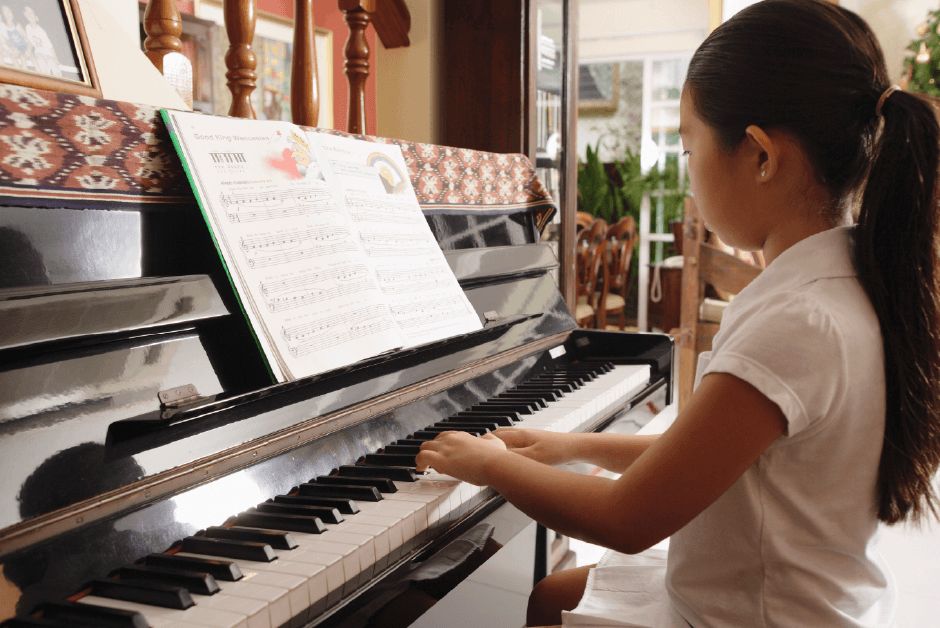
Set up a good learning environment by setting aside time and space in your home for piano. Minimize distractions by turning off the television and keeping interruptions at a minimum during piano lessons or practice time. The area around the piano should be a pleasant, welcoming space where family members and visitors will want to enjoy making or listening to music.
A good learning environment includes creating a musical culture in your home. This includes making music yourself. If you don’t already play an instrument, sign up for lessons along with your child. When I was young, my mother signed herself up for piano lessons, and my sister and I eagerly followed her example.
Another key component of a good learning environment is a healthy attitude toward mistakes. A child who is scolded or criticized for making mistakes will quickly want to quit. Instead, treat mistakes as a moment for discovery. With a curious and playful mindset, a mistake becomes an opportunity to figure out what went wrong and make a plan for how to do better next time.
What is the best method of teaching piano?
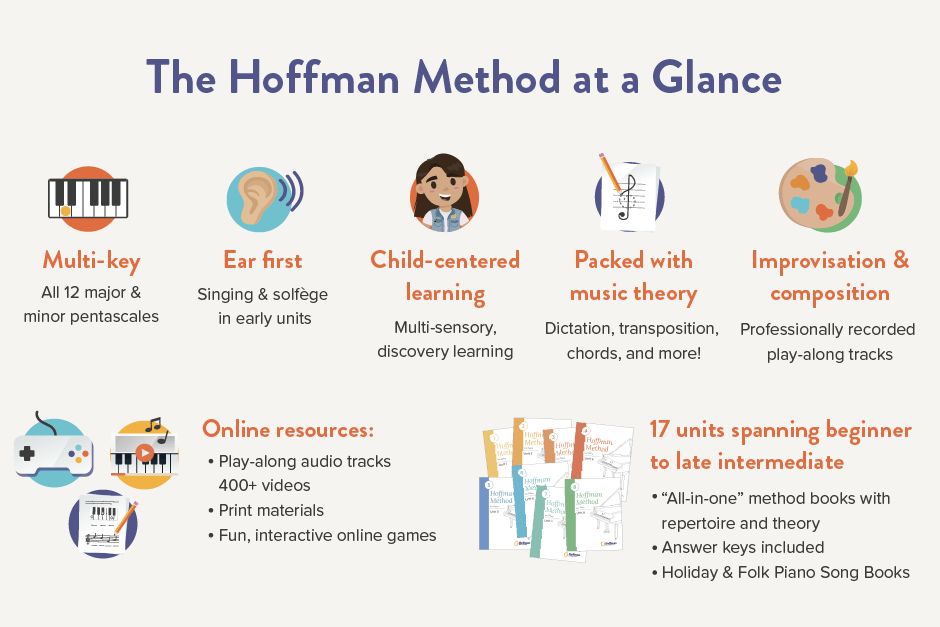
My journey to create the Hoffman Method began with trying to find the best piano method for my students. I wanted something fun and engaging, but I also wanted it to build real skills and create capable musicians. The Faber method was an excellent sight-reading-based method, and Suzuki was wonderful for teaching students to play by ear, but neither of them had everything I was looking for. I wanted to teach students to read music and play by ear, as well as improvise, transpose, and create their own music from the very beginning. With this goal in mind, I decided to create my own piano method that incorporated the latest learning science, a well-rounded music education, and lots of fun!
So, what is the best method of teaching piano? For me, and for over a million piano students, the answer is the Hoffman Method!
How to teach basic piano concepts to beginners
The key to teaching basic piano concepts to beginners is to let them experience the concept first, and then explain. In some piano methods, the teacher turns the page, shows the child a new musical symbol, explains what it is and how it works, then demonstrates it. This doesn’t work as well because it’s difficult for children to start with an abstract concept on a page. Adults have learned to work with abstractions like words and symbols, but all of this is very new for a child. Children have no context for a new symbol, so their brain doesn’t know where to put this information, and they’re likely to forget it.
When you teach by experience first, you begin by singing a new song with the child. Traditional folk songs are filled with musical knowledge that we can explore after the student has learned the tune. Learning a new song will be more fun and interesting than trying to understand how to count out half notes and quarter notes. If the song contains quarter notes and half notes, after the child is familiar with the song the teacher can point out that some notes are held longer than others. That’s when it’s time to show them the symbols and explain the concepts.
No matter what you’re teaching, whether it’s rhythm, intervals, or articulation, let the student hear it and experience it first. You can see this concept in action in my video lesson, Rhythm Dictation for Hot Cross Buns.
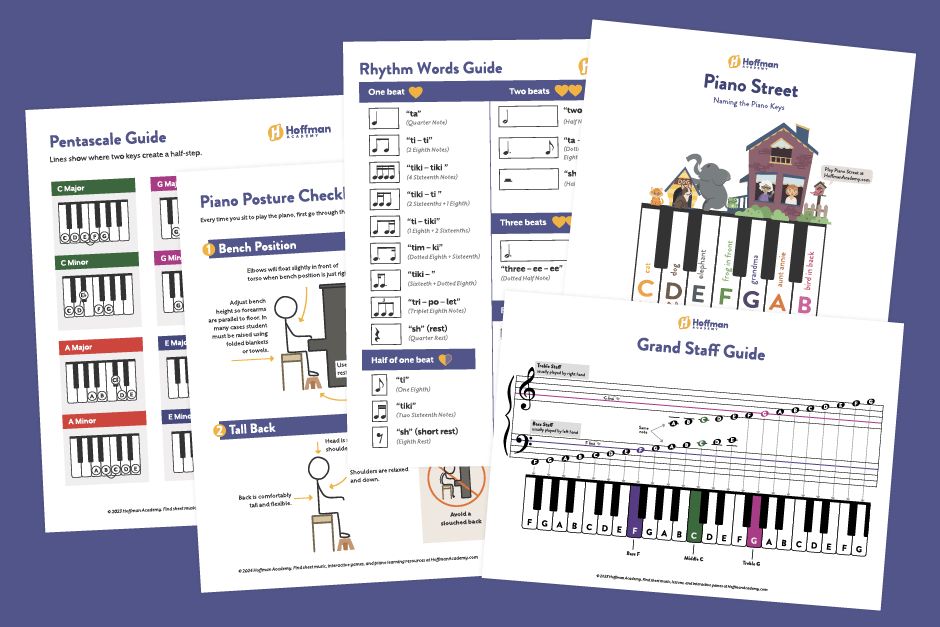
A good way to reinforce piano concepts for beginners is to have visual references on display where they can look at them often. Get this free downloadable Ultimate Piano Learning Essentials Packet for colorful printables that will help your piano student remember the new musical ideas they’re learning.
How to make piano lessons fun for kids
Make piano lessons fun for kids by incorporating these five elements in your teaching:
Stories
Stories, whether real or imaginary, are not only fun, they can help students remember concepts and gain a deeper understanding. For example, when I teach about the grand staff, I tell the story of the monks who invented our system of writing music. They were trying to pass down their music from one generation to the next by ear alone. That meant some songs were lost or forgotten. So, they developed a system of drawing notes on a staff, and we still have their music today!
When I teach about the letter names of each key on the keyboard, I use a made-up story called Piano Street. The group of two black keys are a dog house, with D in the middle – D for Dog. The three black keys are Grandma’s house, and the first room in the house is G for Grandma. Watch the Piano Street lessons to learn all the note names, then play the Piano Street game to practice these note names on the keyboard.
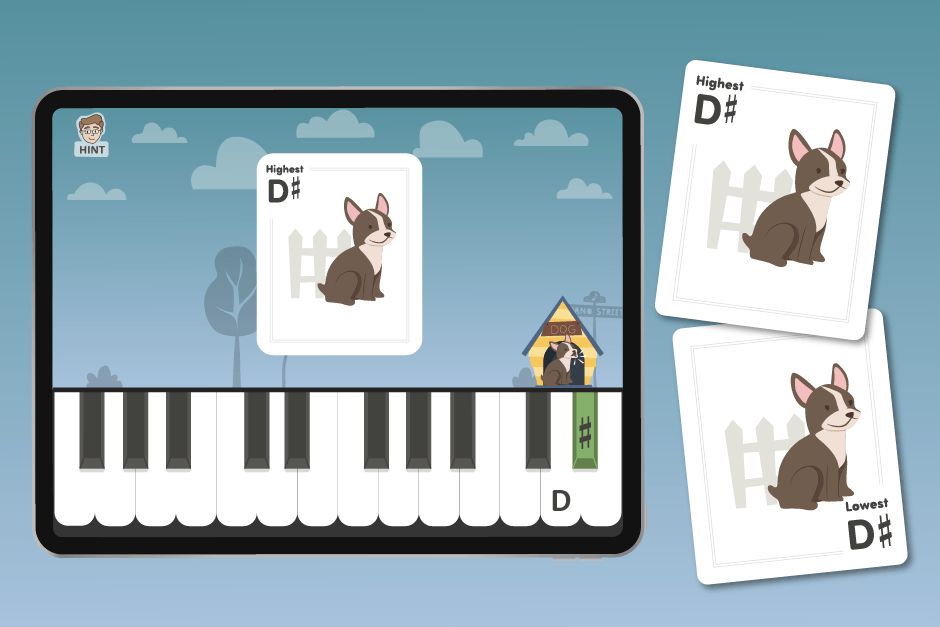
Games
Games are a great way to reinforce a concept that you’re teaching. Instead of “drilling,” which is rarely fun, think of it as gaming. You can turn any kind of practice into a game by setting a clear goal and tracking progress. Drilling with flash cards turns into a game if you say “each time you get the answer right, you earn 1 point. Earn 10 points and you win the game.” Hoffman Academy has a full library of online games that make it fun to practice the skills piano students need to succeed. Check out our music learning games collection here!
Enjoyable Songs
If your child enjoys the music they’re learning, they are more likely to enjoy practicing and playing. At Hoffman Academy we teach with real folk music that listeners have loved for centuries. We also have lots of fun popular music tutorials in addition to our core curriculum so kids can choose and learn to play their favorites.
Creativity
Playing the piano should involve play! I like to get kids started on improvising from the very beginning. Encourage piano students to play around with the sounds the piano can make. When they find some sounds they like and put them together, they’ve composed their own song! Being creative at the piano is not only fun, it helps students develop their musical intuition much faster than if they only learn to play music written by others.
Music making
Piano lessons should focus on making music rather than on drilling and memorizing musical facts. A good way to do this is to encourage students to continue to play pieces they’ve already learned. Sometimes there’s a tendency to have a child learn a song out of a piano book, then turn the page and learn the next song without ever going back to enjoy playing what has already been mastered. When a child learns a piece of music, encourage them to play it again and again. This will help them develop their confidence, musicality, and love of piano.
How to structure a piano lesson for a child
Structure a piano lesson for a child with a good warm up, time to share what they’ve been working on, time to learn something new, a game or activity, and a clear assignment of what to work on before the next lesson.
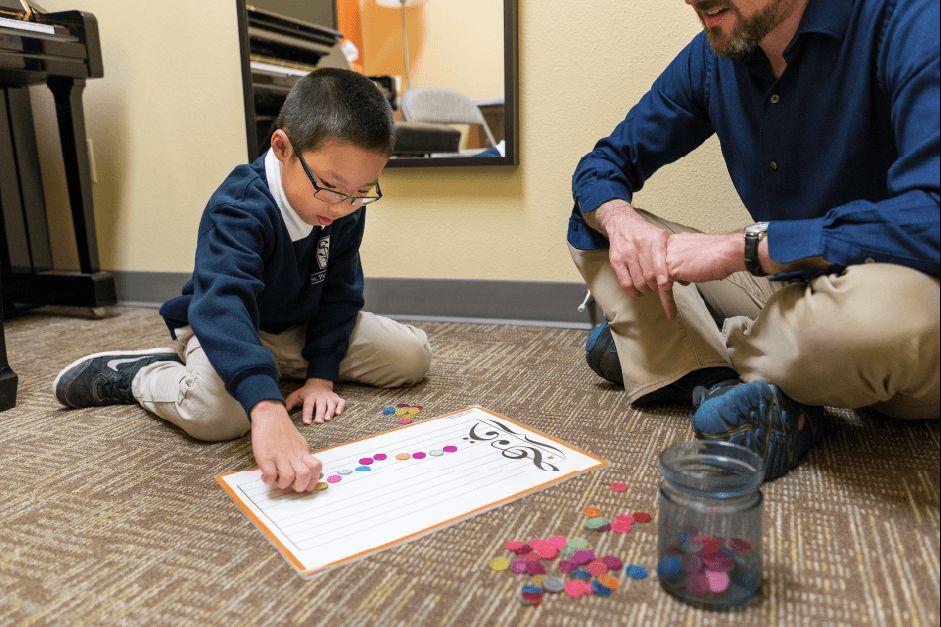
Warm ups
This is a time to relax, warm up the body and brain, and get energized. Try a fun warm up game. This can be something simple, like tossing a stuffed animal back and forth and, every time you catch, saying the name of the next letter in the musical alphabet. Another fun warm-up activity is to take turns clapping rhythms and echoing them back.
Sharing
Let students share what they’ve been working on. Kids are often eager to play what they’ve been practicing during the week. Keep this short! 5-8 minutes. Avoid the temptation to dive in and spend the whole lesson correcting the student’s playing.
Something new
Spend most of the lesson on learning a new song or a new music theory concept. Learning something new each week helps students feel a sense of progress.
Fun & games
The rest of the lesson is dictated by the needs of the student. Is there a music concept they need to work on? Play a game to help them practice the concept. This can also be a great time to give your piano student a chance to improvise at the piano with you. Maybe you can enjoy listening to a great piano performance together and talk about what you heard.
Set clear goals
Make a clear assignment for the student to work on during the week.
How to build good practice habits
- Pick a time of day to practice the piano and be consistent.
- When learning a piece, break it up into small sections and work on one section at a time.
- Play slowly enough that you can play each note accurately. Every time you play a mistake, you’re gradually turning that mistake into a habit! If you play slowly and accurately, you’ll learn the piece much faster in the long run.
- Once you can play a small section of a piece accurately, play it many more times to lock it in. Remember, practice doesn’t make perfect. Practice makes permanent. You are creating a new pathway in your brain, and the more times you go down that path, the clearer and stronger the path becomes.
Get more tips for a great piano practice session in our article, Top Piano Practice Tips for Beginners.
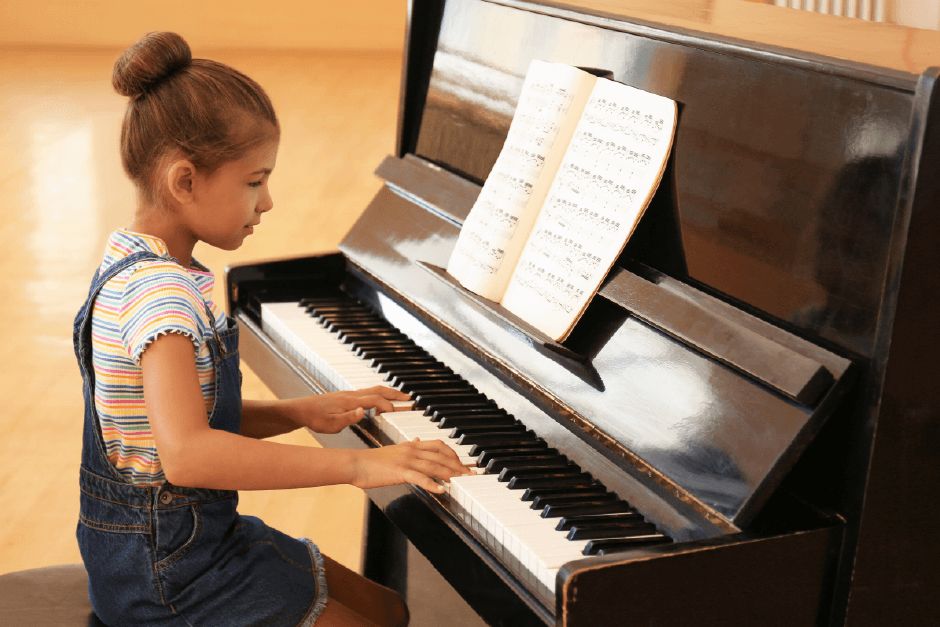
Common challenges when teaching piano to children
Attention Span
Most young children don’t have the attention span to sit on a piano bench for 30 minutes. I like to break up each lesson with activities away from the piano bench. Use flashcards, the heartbeat mat, practice rhythm or melodic dictation, play a matching game, or complete a worksheet. Try not to spend too long on any one activity.
Games and stories, which I’ve talked about already, are also a great way to help children stay focused.
Abstract concepts and symbols
Children tend to have more difficulty with abstract concepts and symbols, especially if they’re at the age when they’re just learning to read. When teaching piano to children, remember to put experience first. They don’t need to understand all the concepts and musical symbols right away.
Each new musical symbol requires lots of repetition for it to sink in, so be patient. Think of it as musical immersion. Use the vocabulary and give them time to pick it up naturally. Don’t spend too much time quizzing them on music theory details. Focus instead on the joy of making music.
How to track your child’s piano progress
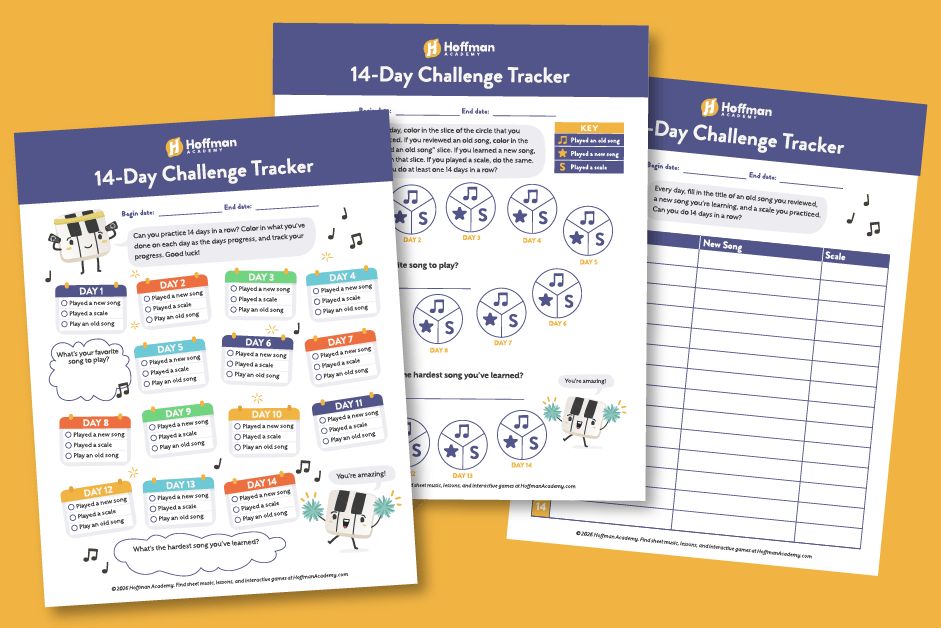
As your piano student develops habits like daily practicing, it can help them to have a piano practice chart to track daily progress. Hoffman Academy offers a variety of different piano practice trackers geared toward different piano levels.
A good way to track a piano student’s progress is by building a repertoire list. This is a list of songs that a piano student has memorized and can play well. As a piano student grows, they’ll add more advanced songs to their repertoire, and leave some of the older, simpler songs behind. Keep a list of the songs they know well with their assignment book and update the list now and then. Looking back at the songs they’ve learned over the years can give them a great sense of progress.
What to expect in your child’s first year of piano
A child with a good teacher who practices regularly can accomplish amazing things in their first year of piano. Here are some of the things they’ll be able to do:
- Know the letter names of notes on the keyboard and staff
- Read and play rhythms from whole notes to sixteenth notes
- Play with right hand and left hand together on the piano
- Play with sharps and flats
- Understand time signatures, measures, and barlines
- Play simple chords
- And more!
Our Hoffman Academy students will also be transposing, composing, and improvising at the piano in their first year. Read “What Can I Learn in One Year of Piano Lessons” for more details.
Help your child discover a lifelong love of piano
Bring a joyful, light-hearted, playful spirit to each lesson and each practice so that the love of music can last a lifetime. Never let the need to play something perfectly or to understand a concept right now overshadow the importance of enjoying the music-making experience.
The best way to instill a love of piano playing is to show our students and children that we love it too. Some of my happiest memories include playing piano duets with my grandma. I also clearly remember the moment when, as a young child, I realized playing the piano could cheer me up when I was having a bad day. Learning the piano takes consistent effort, but it starts to pay you back almost immediately. With your positive encouragement, your child can discover their own lifelong love of piano.