





The most meaningful first step for how to introduce kids to music is letting them see you making music with joy. If you want your child to sing, then sing to them. If you want your child to learn to play an instrument, then play an instrument yourself. Your example is one of the best ways to enrich your child’s life with the good things you want them to experience.
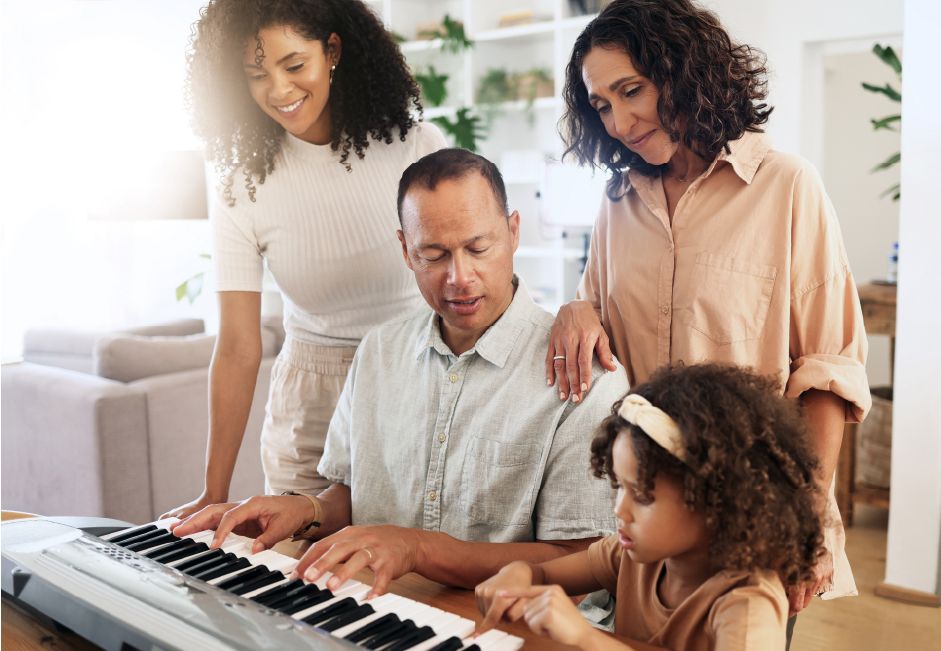
Learning how to introduce kids to music doesn’t have to be complicated; it can start with simple shared moments of listening and singing. Singing, playing, and listening to music is part of what makes us human. It’s a way to share emotions, traditions, a sense of wonder, and an appreciation for beauty and creativity. Music simply makes life better!
Bring more music into your child’s life with piano lessons from Hoffman Academy.
Why music education matters to kids
Studying music has a huge positive impact for children. It’s proven to make lasting, lifelong changes to the brain. Even for those who don’t continue to play music later in life, children who experienced a meaningful amount of music learning have larger auditory processing centers in their adult brains. Music study has also been proven to improve spatial reasoning and academic success. FMRI studies show that music lights up more regions of the brain simultaneously than almost any other activity. Playing music integrates multiple regions of the brain as diverse as hand-eye coordination, language, emotion, and internal sense of beat and movement.
There are also so many benefits to studying music that go beyond developing cognitive ability. Music education builds confidence and develops sensitivity to beauty. It inspires diligence, hard work, and communication skills. Music also provides an opportunity to connect with others through performance and especially through ensemble playing. The joy and confidence I see in a child as they learn to play music is the number one reason why I love teaching music, and why I believe everyone should be given the opportunity for music education.
When to start: age-appropriate introduction timeline
Understanding how to introduce kids to music also means meeting them where they are developmentally. At a very young age, simply experiencing good music is already preparing your child for a more formal music education later in life.
Shinichi Suzuki, music educator and creator of the Suzuki Method, said a child’s music education should begin from the moment of conception. He then jokingly corrected himself by saying it actually starts when the child’s mother is conceived. A child when born already recognizes their mother’s voice. This means they are listening in the womb. A mother who sings while carrying a child has already begun that child’s music education.
Ages 0-3: song and movement
Once an infant is born, music should be a natural, consistent part of their environment. Even the youngest infant can be soothed by a gentle lullaby. As children grow, continue singing to them along with cuddling, touch, and bouncing gently to the beat. Toddlers love songs with finger movements such as “Eensy-Weensy Spider,” clapping games like “Pease Porridge Hot,” and marching or dancing to recorded music.

Make music part of your family’s daily routines. You might have a song for cleaning up, a song for going to bed, and a song for waking up in the morning. While singing together has the most powerful impact, recorded music can also introduce infants and toddlers to a wonderful array of musical styles and sounds. Try putting on some of your favorite music and dancing together!
Ages 3-5: exploration and play
At this age your child can enjoy one of the many great pre-school music programs, like Music Together, Kindermusik, and Musikgarten. While children at this age generally aren’t ready for private lessons, they love exploring music. Pre-school music programs will allow them to try things out, play with simple instruments, sing new songs, and learn some basic musical concepts.
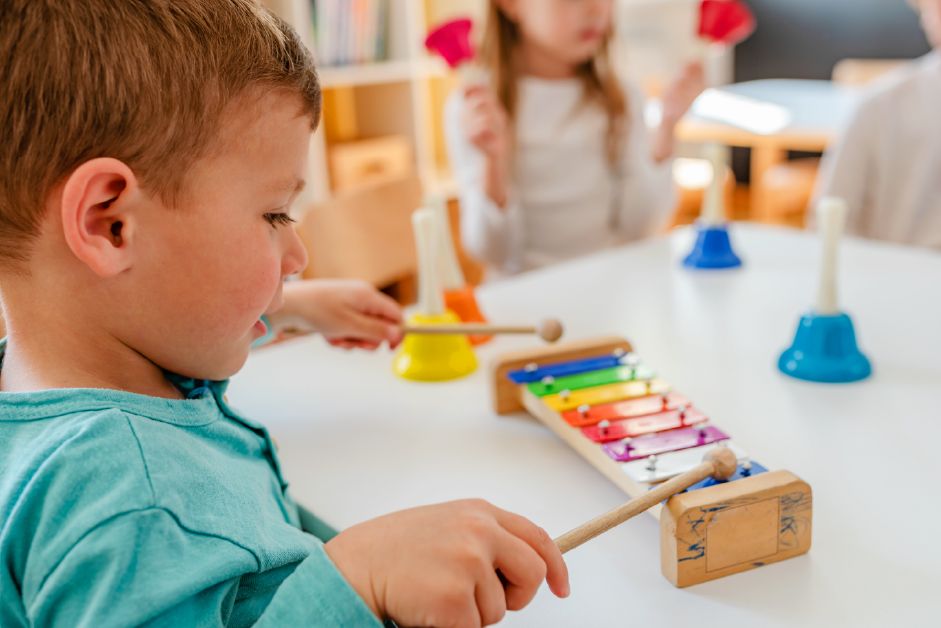
At home, have some simple instruments available for your child to play with, such as a metal xylophone, a tambourine, or some toy drums. Continue singing together. Don’t worry if at this age your child isn’t singing perfectly in tune. Some children can sing consistently in tune at this age, but most do not. It takes time to learn to match pitch when singing, so keep at it while their ability emerges.
This is also a great time for your child to see you playing a musical instrument. If you don’t know how to play an instrument already, sign up for lessons. In my family, my mother started taking piano lessons when I was young, which prompted both me and my sister to want to learn as well.
Ages 6-8: skill building
The years from six to eight can be a golden age to start studying an instrument. Kids at this age are well prepared with enough focus and cognitive development to tackle studying an instrument whether in a group or private setting.
Not sure if your 5 or 6 year-old is ready for piano lessons? Lesson #1 from Hoffman Academy can be a good test. Is your child interested in watching the lesson? Can they sit on a piano bench for several minutes? Can they play “Hot Cross Buns” successfully? If the answer is yes, you can keep going with Hoffman Academy, or find a private teacher. If you like, you can try Hoffman Academy for a few months and judge your child’s interest level before signing them up for private lessons.
If you as a parent don’t already play an instrument, I highly recommend that you start music lessons now, whether with online learning like Hoffman Academy or with a private teacher. Watching their own parent playing an instrument or taking lessons is the best way I’ve seen to generate a spark of interest in a child. If they see their parent learning music, the child will often ask if they can do lessons too! It makes music learning a part of your family culture. A child who sees that mom or dad practices and has fun making music will naturally want to join in. As you demonstrate the art of practice, your child will learn by example that playing an instrument does take time, dedication, and effort, but is also an inherently enjoyable, rewarding activity.
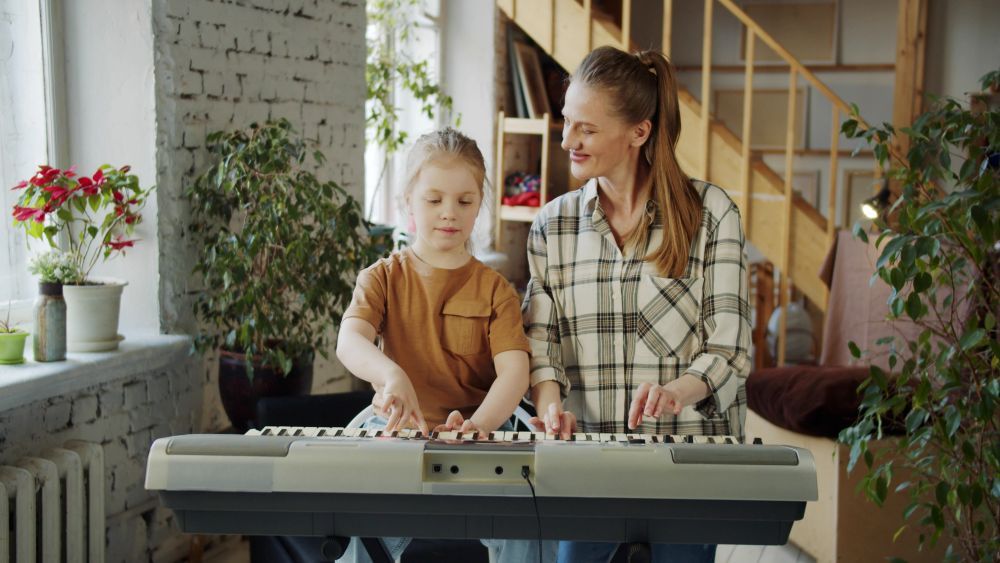
Once children begin music lessons, daily practice should be fun, playful, and engaging! Practice should be goal-oriented, not time-oriented, meaning that students complete a short list of tasks rather than set a timer. Practice time is also a great way for a parent and young child to connect and spend quality time together. For kids under the age of 9, I recommend sitting down with your child when they practice so that you can gently guide and encourage. Piano practice games are a great way to motivate and help a child focus, and they make practice time enjoyable for everyone. Check out our article, Piano Practice Games, and see our store for more printable practice and music theory games. We also have a series of online piano games to help children develop a wide range of skills from reading music, ear training, rhythm, and more!
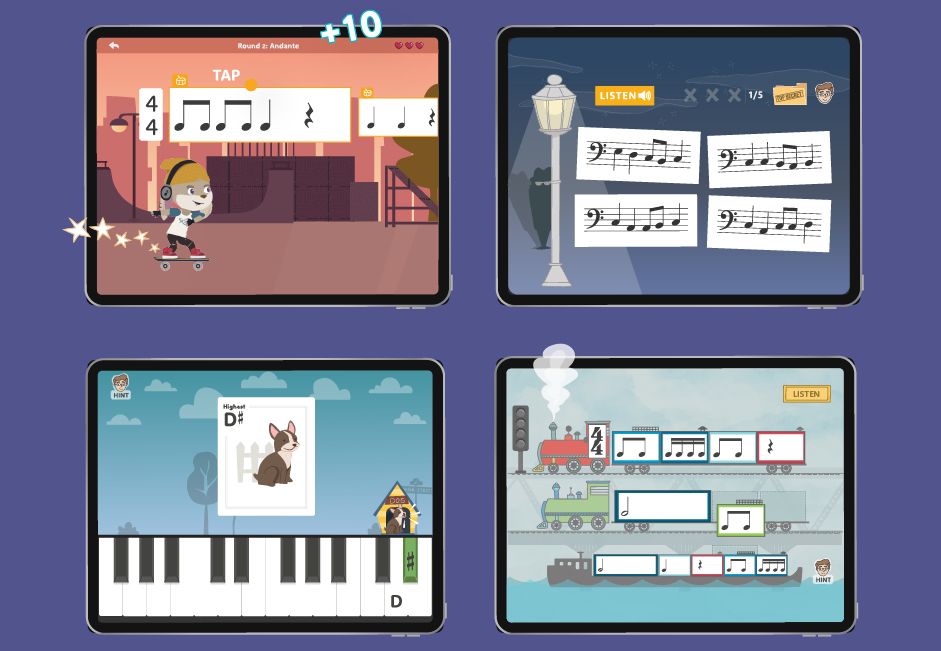
Ages 9+: deepening interest:
As children reach the age of 9 it’s time to begin giving them more independence in their music studies. At 9 years old, ideally a parent should still sit with their child during some, but not all of piano practice time. As they continue to grow and develop, the parent can gradually step back so that by age 12 their child is 100% independent in their piano practice.
At around age 9, with my own children I began asking them once a year if they wanted to continue studying piano for another year. We always committed to one year at a time. They weren’t allowed to quit on a whim. Sometimes practicing became hard during that year, but we worked through those times. I wanted my children to learn that they could do hard but valuable things even if they sometimes felt frustrated. But, once a year I would check in and ask if piano was something they still wanted to do.
My boys always said they wanted to continue piano, but not all children will make that same choice. If your child doesn’t want to continue studying piano, ask if there’s another instrument they’d like to try. Even if they’re ready to leave music study behind, remember that what they’ve learned will always be with them, and if they decide to pursue music in the future they’ll already have a good foundation to build on.
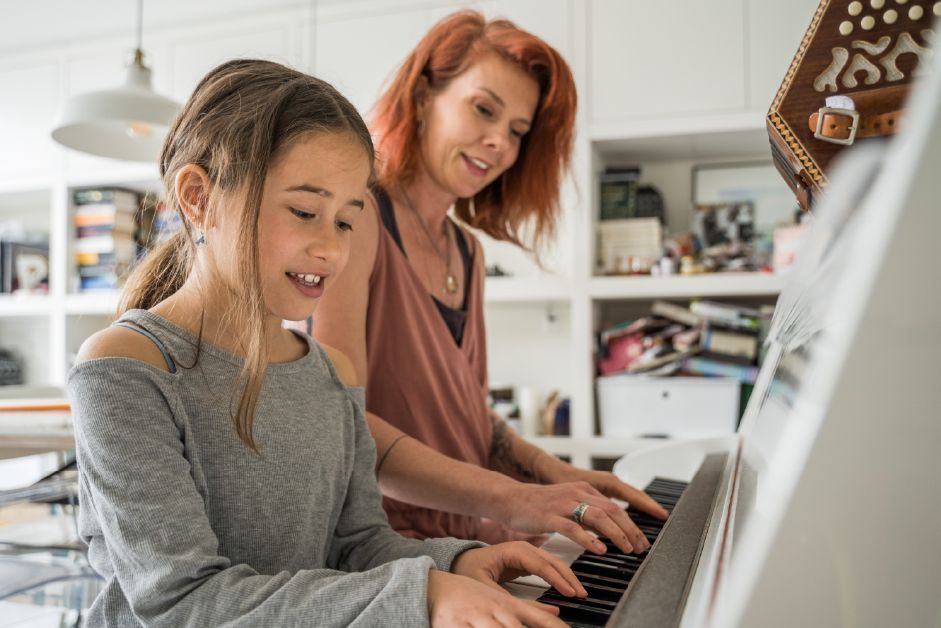
As children reach their teen years they’ll continue to grow in independence. This is a great time for them to choose the instruments they want to learn and the style of music they want to play. It’s been a great joy to me to see my oldest son branch out beyond the classical piano training I gave him and explore jazz piano in his college studies. In my family, I’m delighted that we have 3 great pianists, but sometimes I think it would be fun to have more instrumental variety in the mix. With a bassist and a drummer we could have a jazz combo, or with a cellist and a violinist we could be playing Beethoven trios. There is such a wide world of music to explore!
Give your child guidance and support, but let them make decisions in their music learning and it will help them continue as a confident and joyful musician into adulthood.
Creating a musical environment at home
When parents lead the way by listening to music, singing, playing an instrument, or taking music lessons, children naturally want to follow. A musical home is one of the most effective answers to the question of how to introduce kids to music in a lasting, joyful way. If you want your child to love something, begin by showing them how much you love it yourself.
An easy thing that everyone can do is intentionally listen to music with your child. Share your favorite tracks with them, and listen to their favorite music too. Talk about what you like. Sing your favorite songs together. You don’t need to be a great singer to have a great time singing. Make it a family rule that no one criticizes anyone else’s singing, dancing, or musical performance.
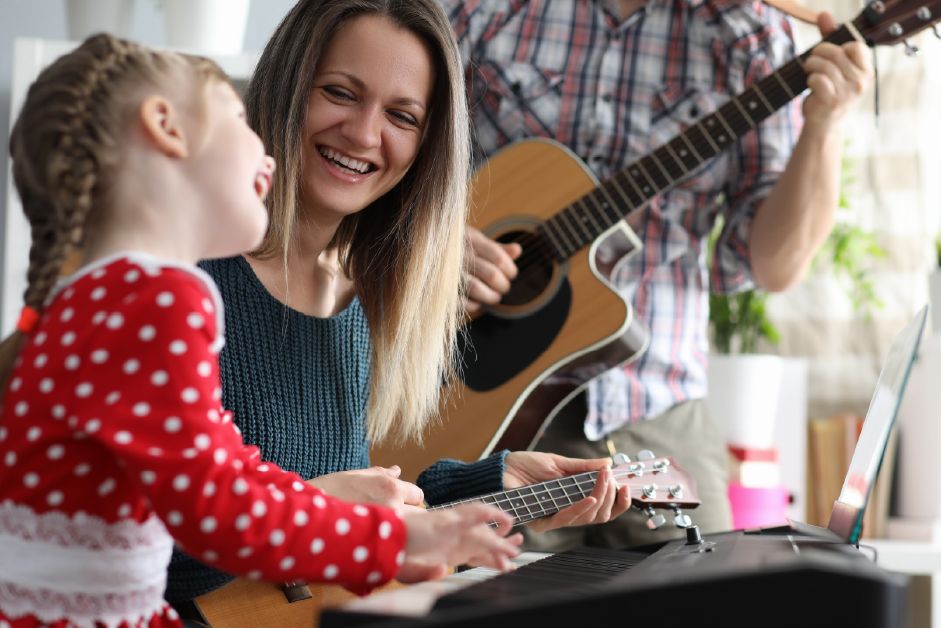
When your child is in music lessons, recognize that they will be playing the same song over and over and over again as they practice. Never dampen their enthusiasm by growing impatient with the practicing process. Make it a family rule that we don’t ever complain about hearing a song that someone is practicing for the 100th time.
For more ideas, read “7 Ways to Create a Musical Home.”
Choosing the right instruments for beginners
The piano is an excellent first instrument. Here are the reasons you should consider starting your child on the piano:
- Unlike many instruments, the student is not in charge of tuning the piano. A well-tuned piano will always make the right notes and can help students develop their sense of pitch.
- It’s simple to make sound with a piano. Press a key and it makes a beautiful sound. With other instruments, such as a violin or a trumpet, producing a note with a pleasant sound can be quite difficult for a beginner.
- The full-sized piano keyboard can be played by most children by the time they are 6 years old. When starting a child on a guitar or a violin at that age, a smaller sized instrument is required so that the child’s hands can operate the instrument.
- Piano layout is very visual and supports music theory learning. Each note is laid out in order from low on the left to high on the right. It’s also easy to see where the whole steps and the half steps are in the musical scale.
- With the piano, it’s easy to play more than one note at a time. This allows students to learn about chords and harmony from very early on.
- While it is possible to begin with another instrument, such as a child-sized violin or guitar, the piano creates a great foundation for students to study other instruments later.
Make sure that you provide a good quality piano for your child to learn on. It doesn’t need to be fancy, but an electric keyboard with too few keys, or keys that aren’t the right size or weight, will greatly limit musical growth and cause frustration. Also, watch out for used pianos that don’t stay in tune or that have keys that stick or won’t play. Read “How to Choose a Keyboard or Piano for Beginners” for a guide to finding the right piano for your child.
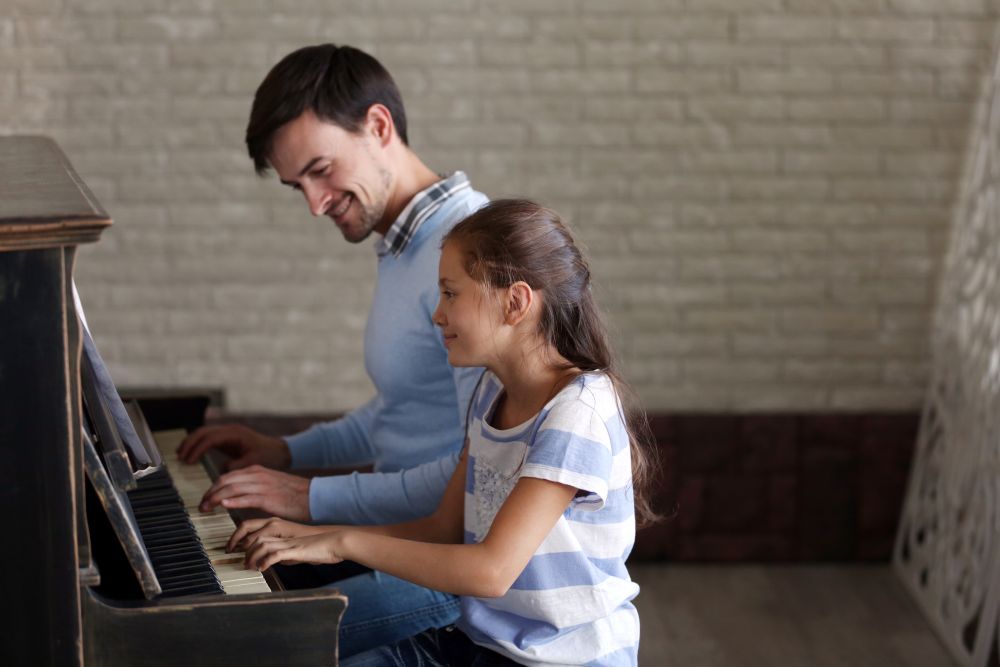
Finding quality music education
Finding the right teacher makes a night and day difference in your child’s music learning experience. Piano lessons can either be a positive, life-changing experience, or a kind of plodding, frustrating misery depending on the teacher.
The most expensive teachers are not always the best. A teacher that charges a higher fee will usually be more demanding, but kids can get burned out and grow to hate piano if they get pushed too hard by a competitive teacher. Some kids thrive under that kind of pressure, but that’s the exception rather than the rule. It’s more important to find a teacher who is highly trained and experienced but also knows how to nurture a love of music. Interview the teacher to get a sense of their goals and philosophy. Talk to people who study with that teacher, and if possible, sit in on a lesson. Read this article for more tips on how to find the right piano teacher for your child.
Making practice fun and sustainable
Here are a few key principles that will help you make music practice a joyful part of your family’s daily life for years to come:
Make it fun
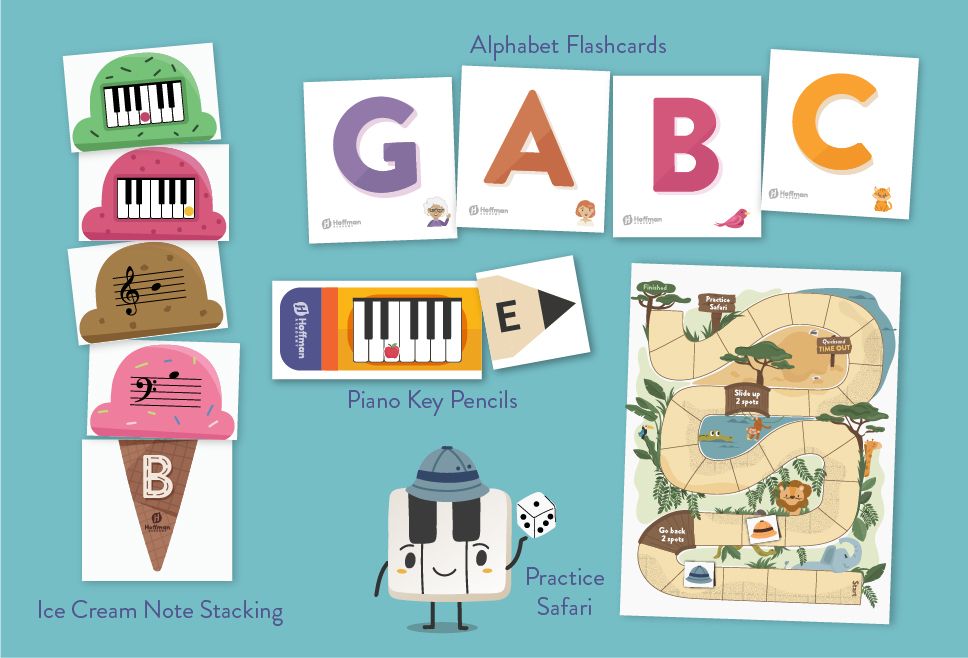
I’ve had the most success making piano practice fun when I incorporate simple games. To learn any physical skill requires repetition, and that can feel monotonous to a child. Instead of simply asking your child to play a piano song five times, put five pennies, or five raisins, or five chocolate chips on the piano. Each time they play the song without making a mistake, they earn one small reward. For more simple and fun games to play during piano practice, read “Piano Practice Games.” You can also visit our store to find colorful flashcards, matching games, and more!
Clear goals
A piano practice session should be measured by goals, not by a timer. Many kids grow to resent piano practice when it’s ruled by a timer. Plus, using a timer can lead to simply filling up the time without meaningful progress being made. Instead, choose a number of goals or tasks appropriate for the age and ability of your child. Break up larger, more complex tasks into smaller and simpler ones to help give your child a sense of progress. When all the tasks are completed, practice is over! Hoffman Academy has a list of just-right practice tasks for every lesson, available to our Premium members.
Consistency
Make daily time at the piano a priority, even if it’s only for a few minutes. With consistency, music practice will become a natural part of your day. Keep practice time short and sweet. End before the child is tired of practicing, and they’ll come back to the piano bench the next day with a smile.
Common challenges and solutions
Here are some tips for dealing with common challenges that come up for piano students and their families:
Developing a habit of daily practice
One of the most common obstacles to learning the piano is the challenge of taking time to practice every day, especially when kids would rather spend time with friends or on a screen. To help with this challenge, make piano practice is part of what’s expected, like brushing teeth and doing schoolwork. When piano practice is a regular part of the routine, there tends to be less conflict about it. Children learn that there are certain tasks that must be done first, before they play, and music practice is one of them.
Helping piano learners with developmental challenges
Learning the piano can be more difficult for children with developmental challenges. For example, a child with dyslexia may have difficulty learning to read music, and a child with Attention Deficit Disorder may not be able to sit at the piano bench for very long. Because of its short lesson videos that can be paused and replayed as much as needed, and because we focus both on learning to play by ear as well as read music, Hoffman Academy can help these children be successful at learning the piano. Read this article for more guidance on helping children with unique challenges learn piano.
When a child wants to quit
If your child truly wants to quit piano, there are a few things to consider. Is it too hard for them? Do you have the right teacher? Have you done what you could to make practice time fun? Does your child like the music that they’re learning?
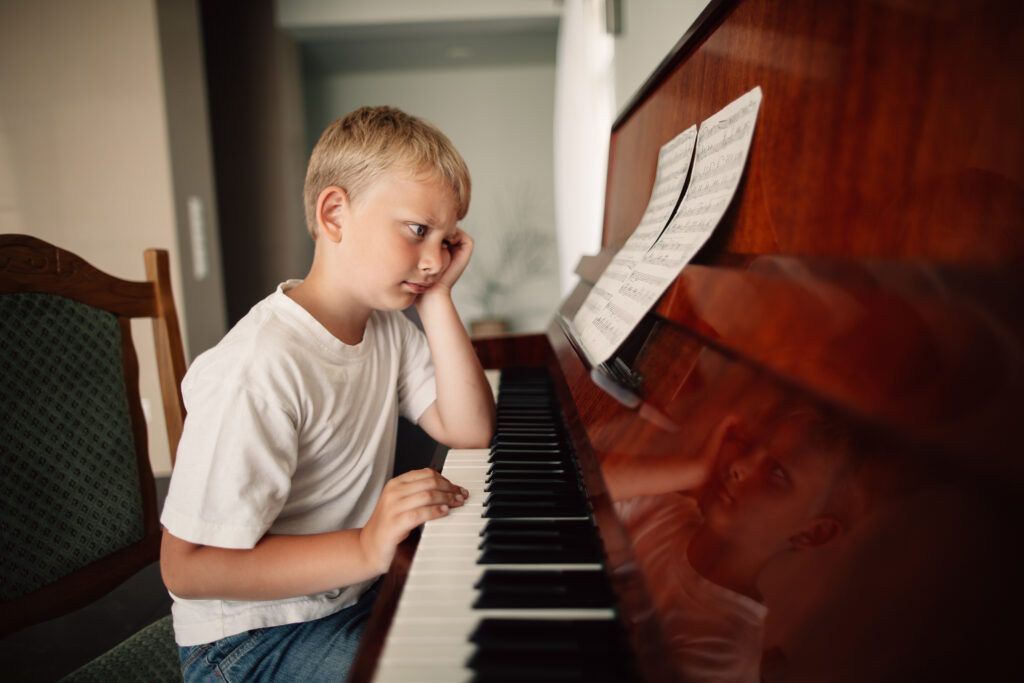
Treat your child with respect and discuss the challenges they’re facing. If they continue to struggle with their music studies, maybe they need a break. If they’re allowed some time away, they may come back more readily than if they’re forced to continue. At the end of the day, especially when a child reaches their teens, the desire to learn music has to come from them. You always want to be on the same team.
Encouraging musical growth beyond lessons
There are so many ways to grow as a musician beyond taking music lessons! Here are just a few things you can do together to help your child’s musicianship grow:
- Go to concerts and performances of all different genres of music
- Create playlists together on your favorite music streaming service
- Improvise together at the piano
- Encourage your kids to try playing by ear and create their own arrangements of their favorite songs
- Buy your kids sheet music by their favorite artists or composers
- Get some music notation software for your family to make writing music more fun and easy
- Help your child experiment with a simple DAW (Digital Audio Workstation) like Chrome Music Lab’s Song Maker to make fun digital music tracks
- Help your kids record and share music on soundcloud or a similar app
- Put on a music party and invite friends to come sing & play instruments together
Your child’s musical journey starts now
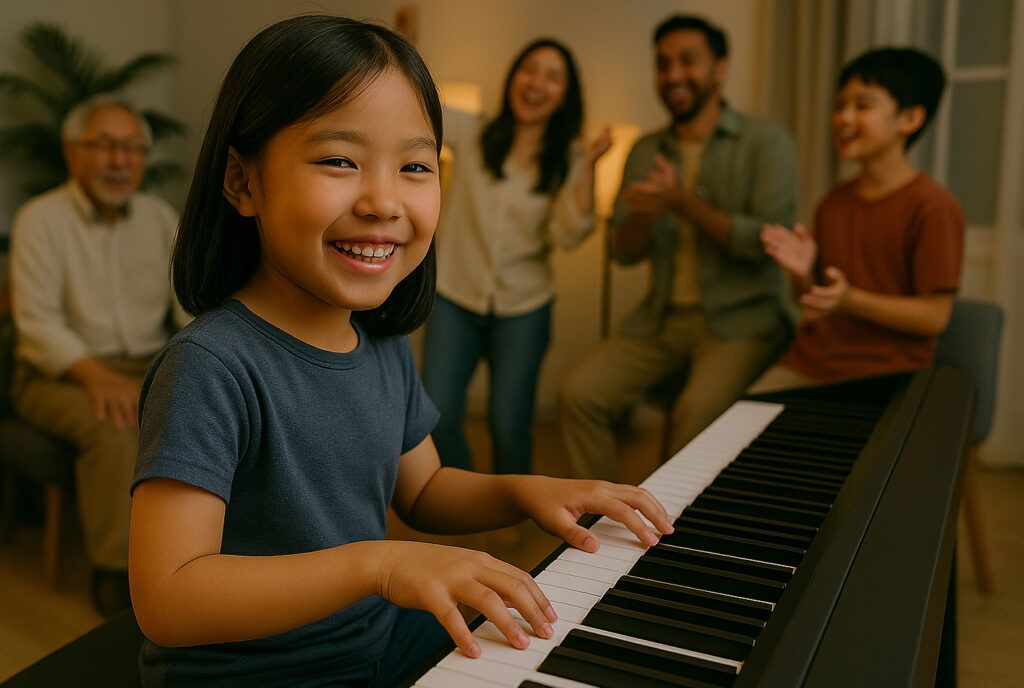
Start today to give your child the gift of music. It can be as simple as singing a song, listening to a favorite track, or watching the first Hoffman Academy lesson together. For parents, learning how to introduce kids to music can spark a lifelong love of musical self-expression and creativity. Take the first step on the journey to explore, enjoy, and make music for a lifetime.