





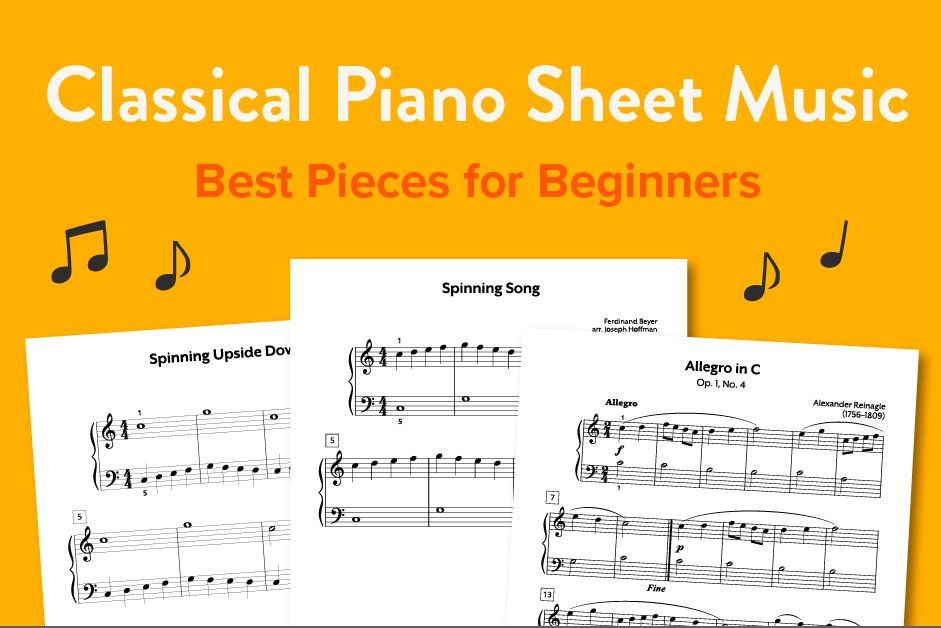
Hoffman Academy’s online store is full of easy classical piano sheet music and arrangements! In this article, we’ll explore simple, short classical piano songs for beginners. Most of the songs in this article stay in one key, have little or no changes to hand position, and rely on easy rhythms. Keep reading to explore our favorite easy classical piano sheet music for beginners.
What are the easiest classical piano songs to play?
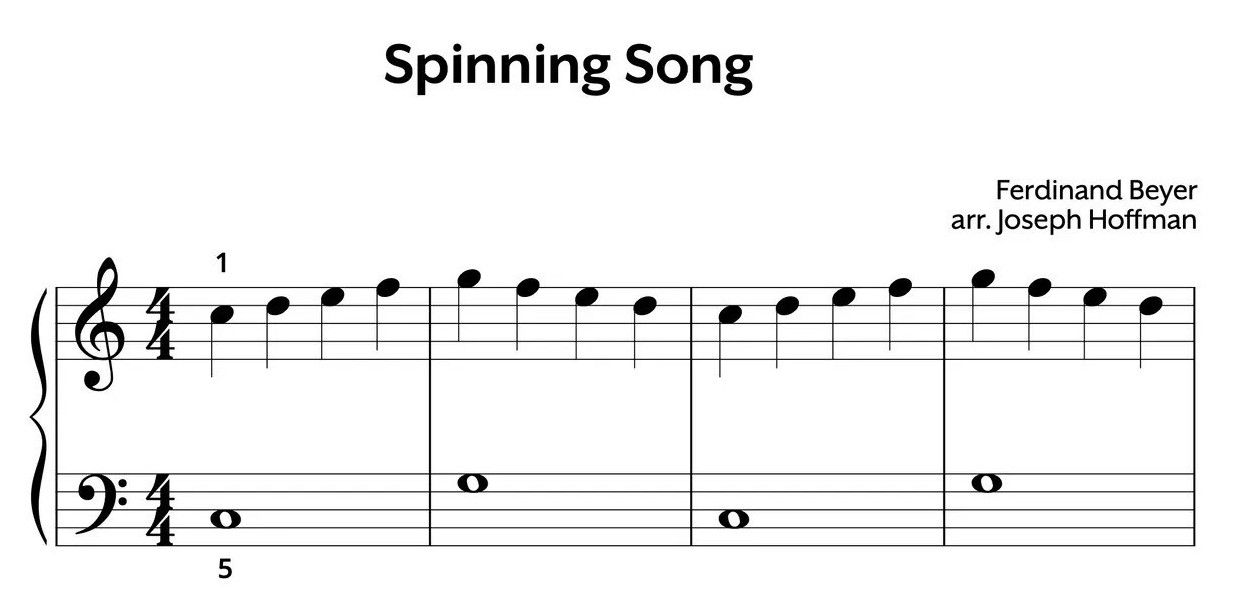
“Spinning Song” is a great example of a short, easy classical piece for beginners. This piece is only 8 measures long and both hands sit in the C pentascale, two octaves apart. If a student already knows their steps and skips in major pentascales, this piece is even easier to learn!
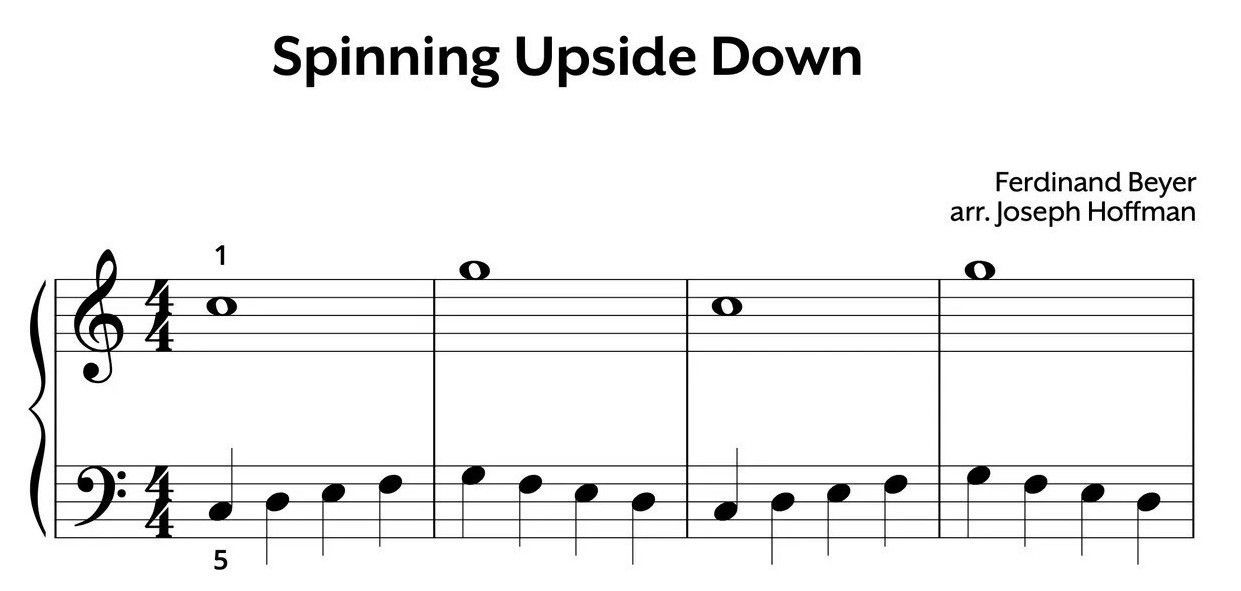
“Spinning Upside Down” is the inverse of “Spinning Song.” Now, the left hand has the melody, while the right hand plays the counterpoint.
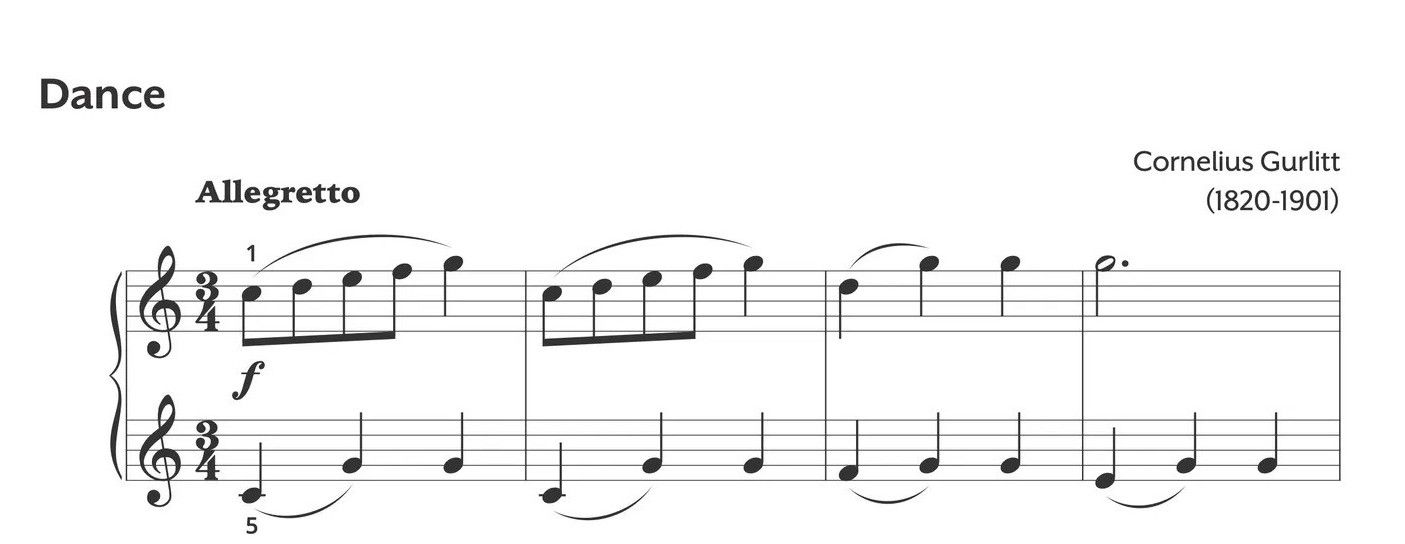
Another easy classical piece is “Dance” by Corneilius Gurlitt. Both hands are positioned in C pentascales and each hand’s part is written in the treble clef.
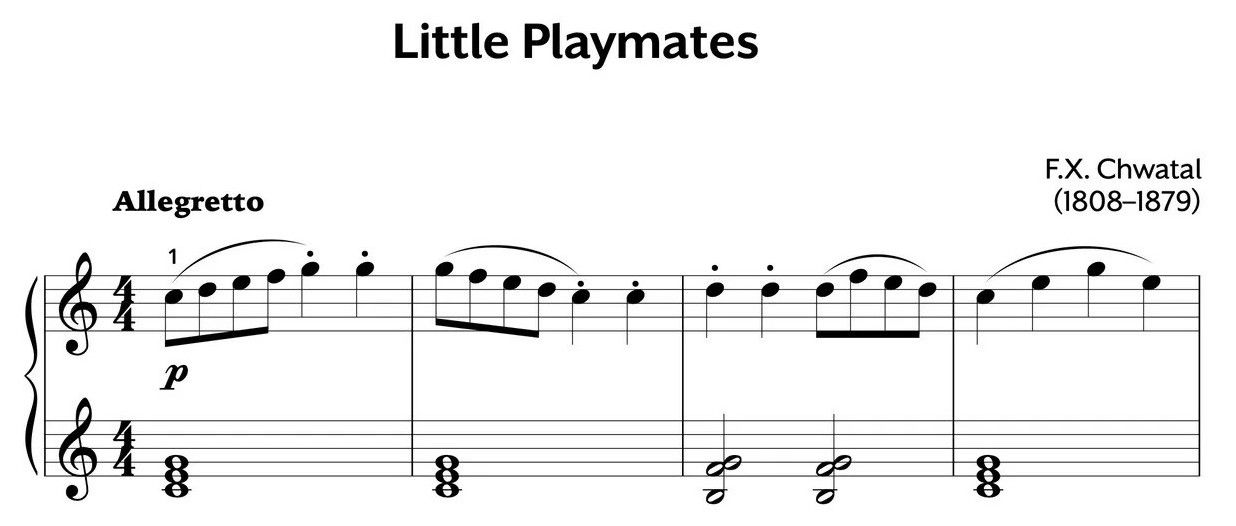
“Little Playmates” by Franz Xaver Chwatal also sits in C pentascale and features a simple melody accompanied by the I and V7 chord in the left hand. Like “Dance,” both left hand and right hand play in the treble clef.
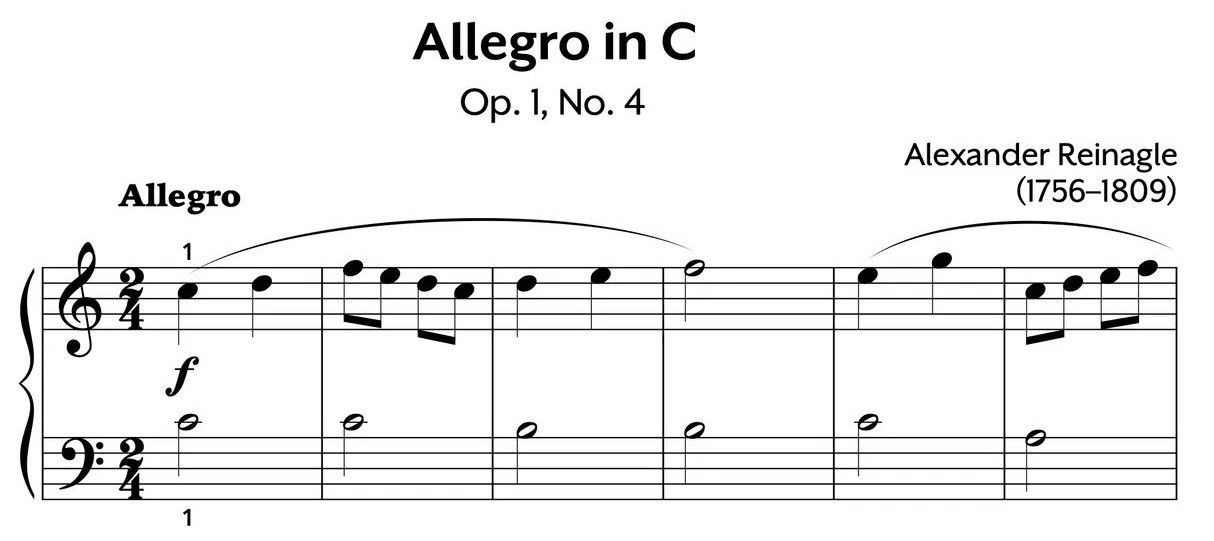
“Allegro in C” by Alexander Reinagle is another easy classical piano piece. The right hand plays a melody in C pentascale while the left hand plays counterpoint. This piece is wonderful for students learning how to play dynamics such as piano and forte.
What are good piano songs for beginners?
Beginner piano students need music that encourages growth but is not too difficult. This can sometimes be a hard balance to find with classical music! Many of the most famous classical pieces require a variety of intermediate/advanced technical skills; however, there are still many classical pieces and arrangements a beginning student can learn. Classical arrangements in particular are a great middle ground to encourage classical music exploration while a student is developing their technique for more difficult repertoire. Classical arrangements are composed to sound like the original piece but tend to be easier to learn than the original composition.
What is the easiest Mozart song to play?
Mozart’s easiest works were written when he was just 5–8 years old. These compositions range from easy to intermediate and were later compiled into The Nannerl Notenbuch, a book of compositions Mozart’s father wrote for his daughter Nannerl. “Minuet in F major, KV. 2” is featured in this notebook and is the easiest piece by Mozart in our store. Still, it’s best to have a few years of piano study before attempting this piece as a beginner. This 2 page piece features hand position shifts, accidentals, and frequent use of staccatos. Browse more of our Mozart repertoire in the Hoffman Academy store.
What is the easiest Beethoven song to play?
Like Mozart, Beethoven did not intentionally compose music for beginners. Even his “easiest” pieces require at least a year or two of piano study. However, there are many arrangements of Beethoven’s original compositions that are accessible to beginner piano students. One of our favorite beginner-friendly Beethoven arrangements is “Für Elise.” In this version, the famous melody is shared between two hands with the names of the notes written under or above each note. This arrangement also shows an image of the exact hand position needed on the piano for beginner students. Check out our video tutorial for “Für Elise” by clicking on the thumbnail below.
Another beginner-friendly Beethoven arrangement is “Ode to Joy.” This particular arrangement is played in the D major pentascale and introduces students to dotted quarter notes and dynamics. Learn how to play “Ode to Joy” with Mr. Hoffman!
What is Chopin’s easiest song to play on piano?
Chopin is known for writing some of the most technically challenging piano music in classical literature. Even his easier pieces are still quite challenging for advanced pianists. However, arrangements of his work are a fantastic way to explore his genius. Our arrangement of “Funeral March” uses repetitive blocked chords in the left hand and dotted eighth note sixteenths in the right hand. Fun fact! Chopin’s “Funeral March” inspired Darth Vader’s “Imperial March” by John Williams.
Another “easier” Chopin arrangement in our store is “Prelude in D minor, Opus 28, No. 4.” This arrangement features steady broken chords in the left hand. The right hand plays a wistful melody that culminates in a dramatic hand-over-hand run in the last line of music. This piece is best for students with a few years of piano experience.
What is the easiest Debussy piece to learn?
Debussy’s original music is best suited for early advanced students, but our arrangement of “Clair de Lune” is great for intermediate students. This 1 page version of “Clair de Lune” arranges the famous melody into C major while still preserving the beauty of the piece. Tap on the thumbnail below to learn how to play our easy arrangement of “Clair de Lune.”
What is the easiest Bach piano piece to learn?
Our arrangement for ““Toccata in D minor” is perfect for beginning piano students. This version of “Toccata in D” is arranged from the first 13 measures of the famous melody originally written for organ. This composition uses repetitive patterns and accidentals such as flats and sharps. It’s available as easy classical piano sheet music in the Hoffman Academy store. Click on the thumbnail below for our easy piano tutorial.
More easy classical piano sheet music
Here are a few more of our favorite easy classical sheet music pieces and arrangements:
- Musette in D (Simplified) from the Anna Magdalena Bach Notebook
- La Primavera (Spring) (Arrangement) by Antonio Vivaldi. Available for free!
- In The Hall of the Mountain King (Elementary Version) (Arrangement) by Edvard Grieg. Available for free! Learn this piece with our video tutorial.
- Lullaby (Arrangement) by Johannes Brahms
- Chopsticks (Elementary Version) by Euphemia Allen
- Vivace by Corneilius Gurlitt
- La Cinquantaine by Jean Gabriel-Marie
Start your classical piano journey today
We hope you found some classical piano pieces in this article that inspire you to make music! If you’re interested in exploring more sheet music resources, dive into our article about the best free sheet music for beginners or explore our Classical Repertoire in the Hoffman Academy store. Happy piano playing!