





What is the 80/20 rule?
The 80/20 rule states that 80% of results come from only 20% of efforts. This concept originated with an Italian economist named Vilfredo Pareto in the late 1800’s. Pareto noticed that 80% of the wealth in Italy was owned by only 20% of the Italian population. He later saw a similar pattern in his own backyard garden. 80% of the peas came from 20% of the pods! Pareto was onto something. It turns out that in all sorts of systems, success isn’t evenly spread out. For example, most people wear 20% of their clothes 80% of the time. For a company, 20% of their products often yield 80% of their revenue.
The numbers 80 and 20 aren’t hard and fast rules. Sometimes it’s 90/10 or 70/30, but the important concept to remember is that efforts and results are not evenly distributed. It pays to think about what yields the most results and focus your effort and attention on what’s most effective.
Key concepts of the 80/20 rule for learning piano
Piano learning follows the 80/20 rule in so many ways. It especially applies to piano practice. In any piece you learn there will be one or two small areas that you might spend 80% of your time on! If you spread your efforts evenly across the piece, for example by playing through from start to finish, again and again, that’s a very inefficient way to learn music. Instead, spend 80% of your practice time on 20% or less of the actual music. Find those passages that are difficult for you and hone them until they become as easy as the rest of the piece.
It’s also very likely that if you look closely at your practice time, you’re going to get 80% of results from only 20% of the minutes. Part of your challenge as a learner is to analyze your practice time and find out where you’re getting your results. You might find that a 15-minute practice session that’s focused and effective does much more for you than an hour of less-focused practicing.
Technical exercises can be an important part of the 20% of your practice time that yields high results. Doing technical work is like running laps or working out in the gym. If you’re a basketball player of course you’d rather play ball than run laps, but spending time working out can help you make a lot of progress on your strength quickly. A baseball player can get stronger arm muscles and hit more home runs if they lift weights as opposed to only swinging the bat. It’s important to make that small but significant investment to increase your strength and basic skills. When it comes to piano, if you spend 20% of your practice time learning to play scales, chords, and arpeggios, you get a huge return.
The 20% of technical skills that matter most
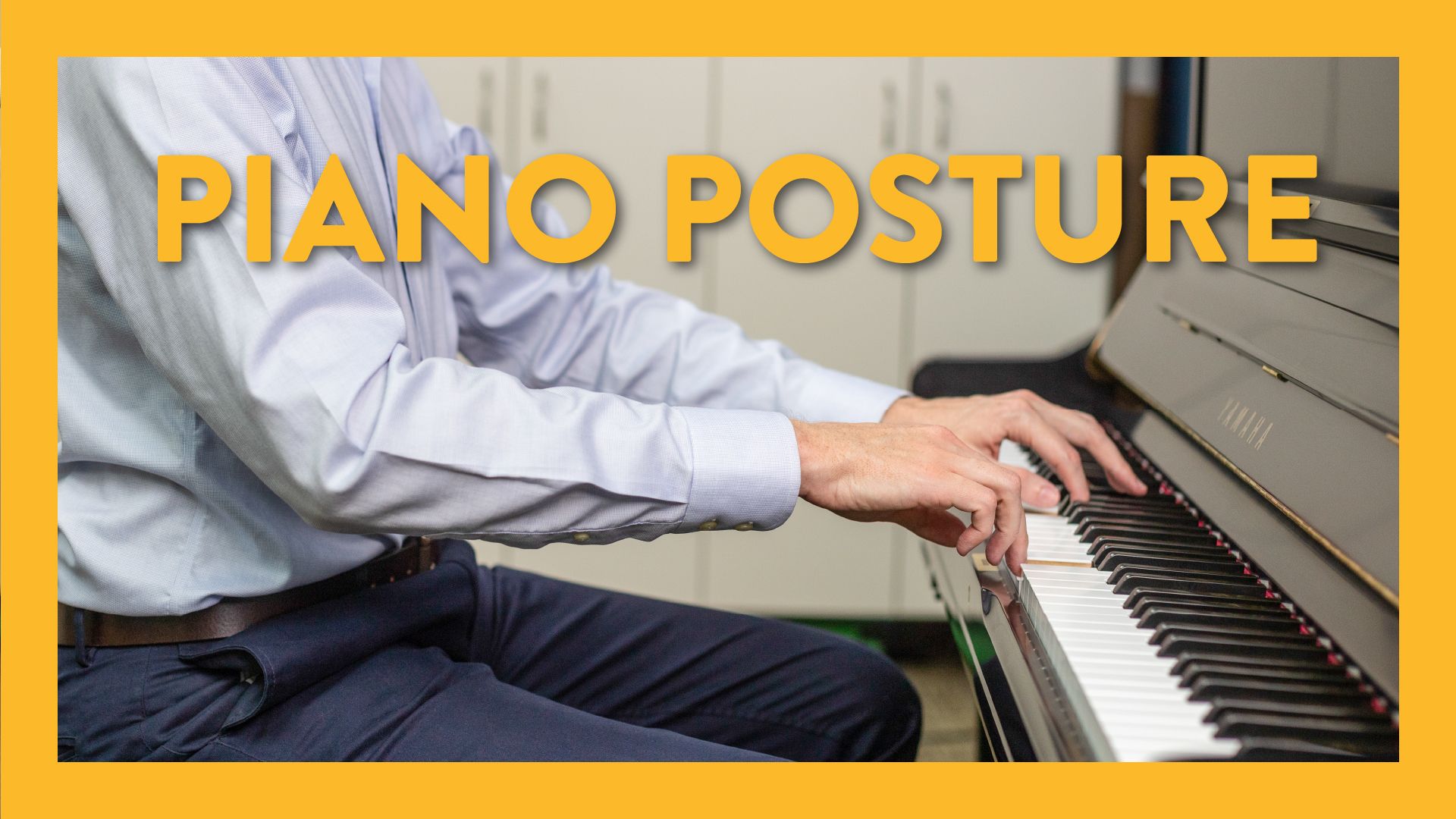
The number one technical skill that gives huge returns is piano posture. This means moving your hands, your arms, and your body in an efficient and relaxed way as you play. When there is unnecessary effort, that takes away from your performance.
- Hands – make sure that your fingers always release, relax, and come back to neutral. From the earliest beginner to the most advanced concert pianists, keeping your hands relaxed even when playing loud and fast will make a big difference.
- Arms – Use your arm weight, not just your finger strength, to play the notes. This gives you a much wider dynamic range and will keep your hands from getting tense or tired as you play.
- Body – be sure to sit in the middle of the bench with a tall back, in a balanced and relaxed position. You can lean to reach high or low notes, but then come back to neutral.
Watch this video to learn correct piano posture:
Another valuable skill to learn is playing chords in all their qualities (major, minor, diminished, and augmented) and inversions. Chords are found in almost every piano piece, and so taking some time to practice them individually can really boost your playing. Learn to see piano chords not as individual notes, but as a single unit, and practice the hand shape that will make each chord. This will incredibly speed up your sight reading and your music learning.
Scales and arpeggios are another technical skill that pays big dividends. Advanced piano pieces in all genres use scales and arpeggios. If you don’t practice them, you’ll eventually get to a piece you want to learn and there will be one passage with a fast scale or arpeggio that will really trip you up. You simply don’t become a great pianist without practicing scales and arpeggios.
If you focus on these important technical skills, you’ll get a high return. This is the 80/20 rule in action. There’s nothing magical about this. These are basic skills that often get overlooked, but make a huge difference when it comes to playing the piano.
The 20% of practice methods that yield 80% of progress
Goal-focused practice yields the best results. Of course you should spend time playing the piano for fun, but practice time needs a goal. A good goal for practice time is to find the most challenging part of the piece and choose a few measures to polish. I find it’s helpful to choose a short section, one measure or even less, short enough that you can play it 3 times in a row with no missed notes. If you can’t play it 3 times in a row, choose a smaller section, or slow down, or play it hands separately, until you’re playing something correctly. Simplify so you can build success. Then, gradually put it back together: both hands, a longer section, a faster tempo, until you can play the difficult section along with the easier parts of the piece.
As you’re practicing, make sure you don’t practice mistakes. Practicing mistakes is definitely a less effective use of your practice time! If you want to be in that 20% most effective zone you are thoughtful, deliberate, noticing any repeated mistakes and correcting them before they become a habit. This doesn’t mean that you have to stop and correct every single mistake you make. That’s also a less effective use of your practice time. Let occasional, random mistakes happen, but they shouldn’t become habitual. A mistake made twice in a row should be cleaned up. The sooner you stop and clean it up, the better.
A truly powerful practice principle is doing a combination of slow, medium, and fast practice. Slow for accuracy and confidence, medium for flow and consistency, and then fast for stretching, challenging, and getting a piece ready for full performance tempo. You need all three, no matter what stage of learning the piece you’re at! Even when you first begin, try full speed, at least one measure at a time hands separately, to make sure your fingerings work. Even at the end, when you’re ready to perform, practice slowly on occasion to reinforce your accuracy and confidence.
For another boost to your practice time, don’t forget to spend time at the piano being creative. Improvising and composing unlocks a different part of your brain! Try transposing the pieces you’re learning as well. It can be quite challenging, but it’s also very high yield.
The 20% of repertoire that teaches 80% of techniques
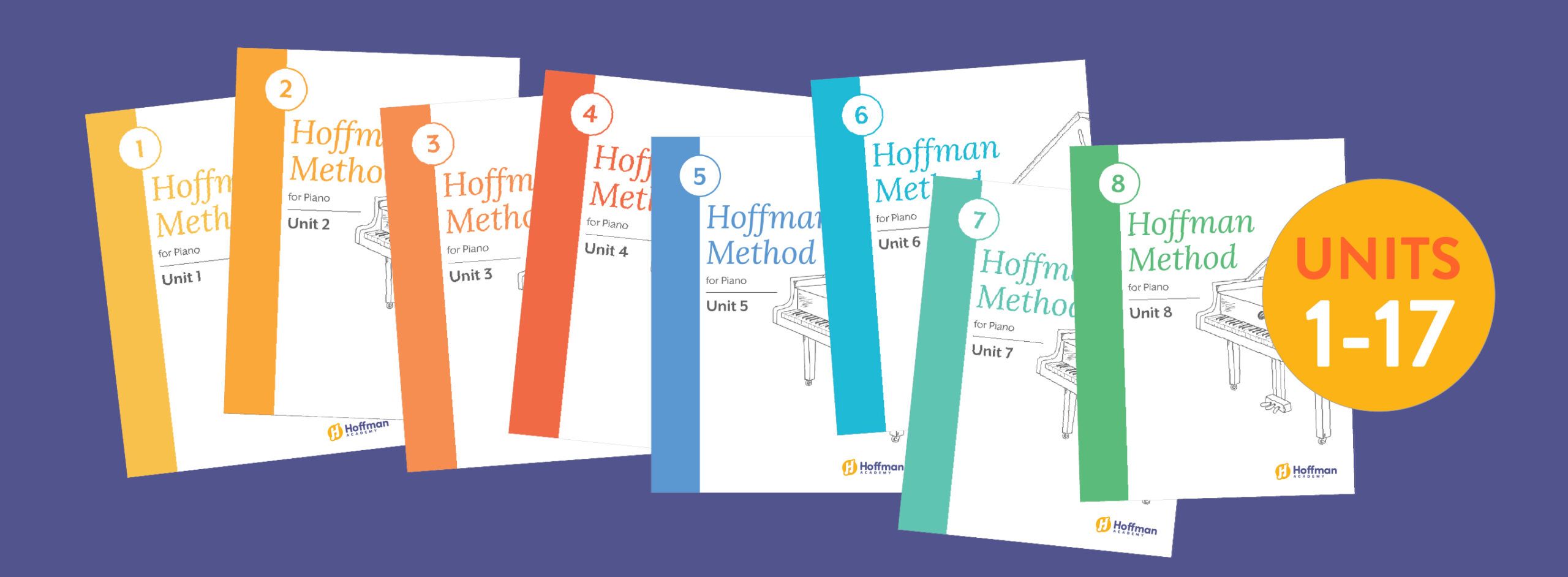
A good piano curriculum is built out of the 20% (or less) of piano repertoire that teaches 80% (or more) of techniques. If you are trying to teach yourself piano by randomly choosing songs to learn, you’ll be faced with a vast sea of pieces you’re not ready for and pieces that won’t challenge you at all.
Anyone who has built a good piano method has thought very carefully about which pieces to present in which order to build the student’s technical skills. For example, if I am looking for the next piece in the Hoffman Method, I reject most of the pieces I come across. It may be a nice piece, but if it doesn’t teach anything new or doesn’t grow your technique, I keep looking. The great advantage for you as a piano learner in going to a teacher, or using a learning system like the Hoffman Method, is that we’ve chosen the repertoire that will teach you the technique you need, step by step, to be a successful musician.
Eliminating the 80% of low-value activities
Mindfulness when practicing the piano will eliminate 80% of low-value activities. The more self-aware you can become during your piano practice session, the more effective you can be. Here are some of the low-value activities to watch out for.
Grinding
Practicing the piano is not the same as going to the gym, where you can plug in your earbuds and grind out reps. If you’re grinding piano, mindlessly playing the same thing over and over, you’re working against the 80/20 rule and spending too much time in the 80% of low-value activities. As you play, notice where things are going well or not going well. Slow down, find the problem spots, and polish!
Only playing from start to finish
Students should definitely have a chance to enjoy playing through a piece from start to finish. That, however, is low value when you’re learning a piece. A full play through has higher value as you approach performance, but even then, once or twice per practice session should be enough. As you play through once or twice, notice where the problems are. Then, the bulk of your practice, the 80%, should be focused on polishing, improving artistry, and correcting mistakes.
Repeating mistakes
As mentioned before, making the same mistake over and over again is probably the lowest value activity you can do when practicing the piano. If you find you’re repeating a mistake, focus your attention on correcting it.
Hyperfocusing on “one-off” mistakes
As you practice, don’t feel like you have to stop and fix every mistake. “One-off” mistakes often fix themselves. In an actual performance, you never stop to correct a mistake. Simply forget about it and keep going. But if you find you make the same mistake over and over, stop and think about how to correct it.
When you do make a repeated mistake, ask yourself why the mistake happened. Was it a distraction, a lack of preparation, or have you learned the passage incorrectly? The answer to this question will help you decide on a solution for correcting the mistake. If it’s something you can fix by doing mental preparation, for example, “I need to remember I’m about to do this big leap to the G-flat” then focus on mental preparation, rather than solely relying on developing better muscle memory by playing the passage over and over.
Playing too fast
Playing fast too soon or too often is definitely a low value activity. Trying at high speed a few times is fine. That can be high value. But always practicing at high speed becomes low value very quickly as it can lead to sloppy playing. Be sure to practice at slow and medium speed as well.
Practicing for too long
Research supports spaced learning for any skill. This means that short practice sessions with breaks in between can create more progress than one long session. It’s another example of the 80/20 rule at work. Notice when your practice begins to be less effective, which is usually when you feel tired or bored, and stop to take a break.
For young children, forcing them to stay at the piano for a set amount of time after they’ve already lost focus is very low value. This is where goals can help and games can help. If you turn piano practice into a game with clear goals, you’ll win your child’s attention and buy in. Read “Twelve Great Games for Piano Students” for more game ideas.
Creating your personal 80/20 practice plan
Create your personal 80/20 practice plan by putting together some of the concepts we’ve discussed in this article.
Once a month it would be good to take stock of where you are as a pianist. Identify your strengths and weaknesses, and choose some skills you want to work on. You might want to focus on playing with your left hand, or on learning to play seventh chords. Think about what you’re trying to accomplish and where you’ll get the most benefit.
Decide if the repertoire you’re currently working on is helping you toward your goals. Is it in the 20% that will move you along, or is it too hard or too easy? Aim for repertoire that is “comfortably challenging,” within reach but just out of your comfort zone.
Make sure you have some good material to sight read, which should be a few levels simpler than your performance repertoire. Also, make sure you’re taking time for creativity. Applying the 80/20 rule here means recognizing that being creative at the piano grows you in ways nothing else can.
Start your 80/20 piano practice today
When you focus on a few important habits, such as using good posture at the piano, practicing key technical skills like scales, chords, and arpeggios, and breaking your learning of each new piece into small, manageable steps, you’ll be directing your piano practice efforts toward what will give you the greatest return. That’s the power of the 80/20 rule.