


Tonality is a musical road map that uses harmony and pitch relationships to bring us back to where our journey began. Listen to the intro for I Want You Back by The Jackson Five and notice how this nine-chord progression comes full-circle back home:
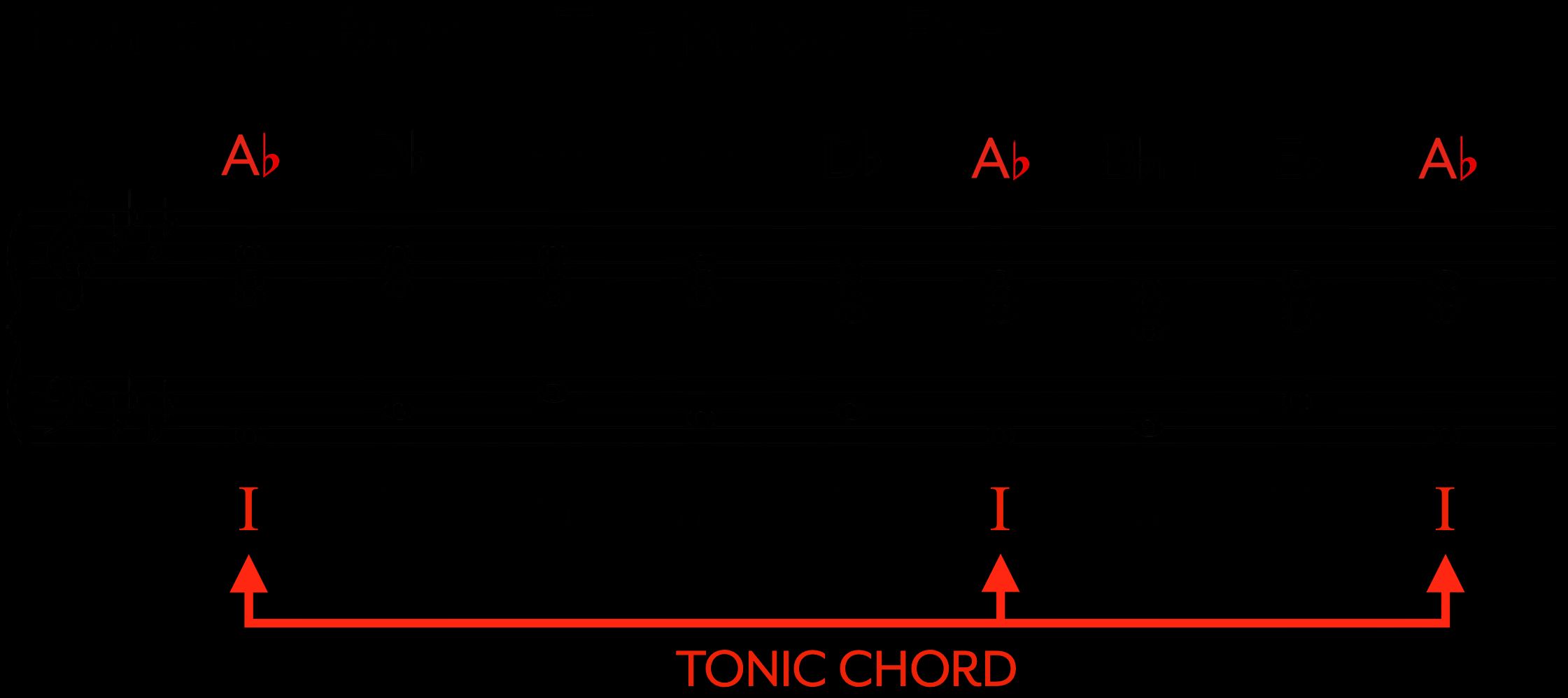
No matter how many different chords we visit, the music drives inevitably back to A-flat major. This tonic, or “home” chord, is like a gravitational center that pulls us in, and it’s the basis for all tonal music. Centuries in the making, tonality had fully established itself by the late Baroque Era. It’s still called the “common practice” today.
You can learn music theory at the same time you’re learning to play piano! Hoffman Academy Premium is the best way to enjoy both!
What is tonality in music? What are the characteristics of tonality?
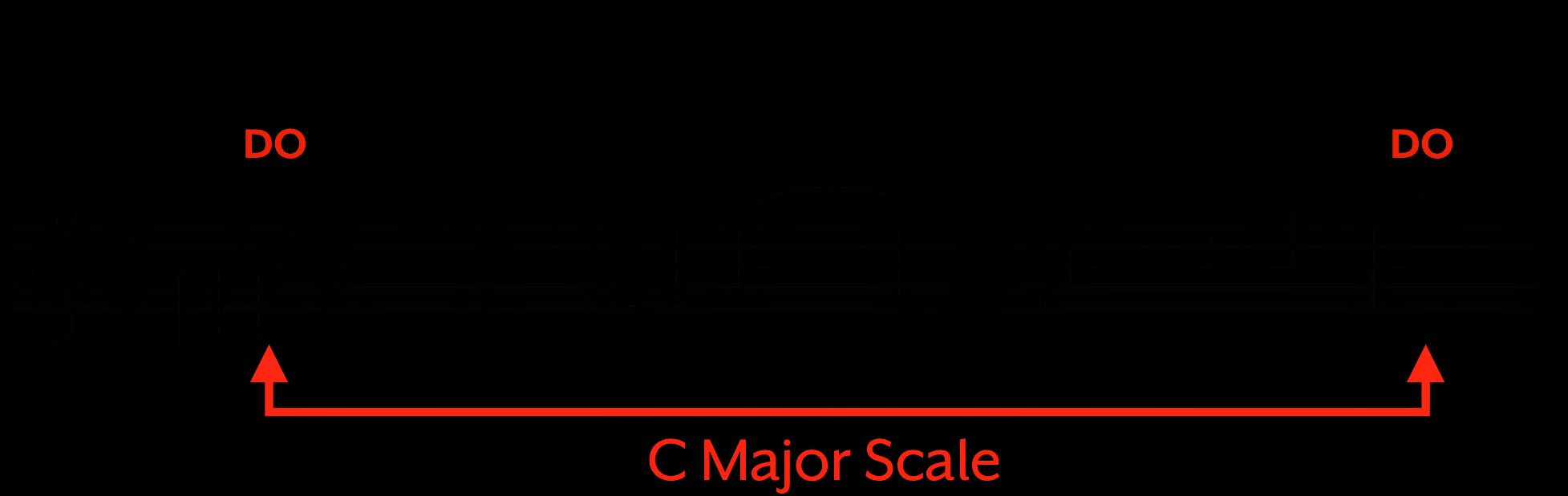
Tonality is a system that gives unequal treatment to pitches and harmonies. In any diatonic scale, the starting note is of paramount importance. You can hear this simply by singing the solfège for a major scale: DO – RE – MI – FA – SO – LA – TI – DO. As you rise through the notes, listen to how inevitable the top DO sounds. This is the tonal center, also called the tonic. The famous introduction to Richard Strauss’s Also Sprach Zarathustra demonstrates just how strong it is:
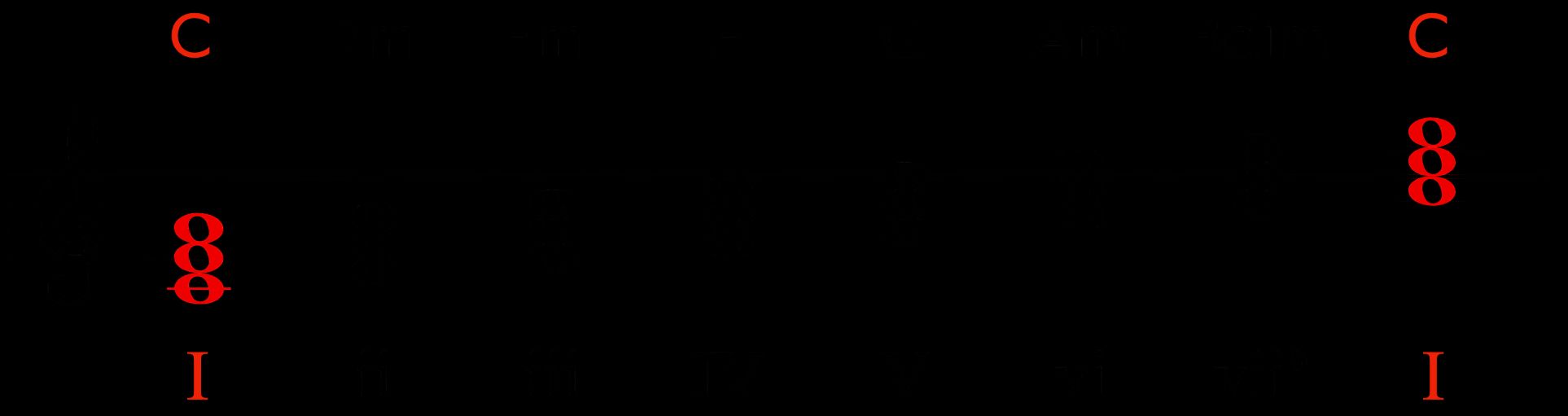
Once we build chords on each note of a scale, we get a collection of harmonies with strong tonal relationships. All seven diatonic chords in a major or minor key will ultimately gravitate toward the chord built on DO, the tonic chord:
What are the types of tonality in music? Major vs. minor
The two types of tonality are major and minor. Western tonality has centered mainly on these two scales since the early 17th Century. The harmonies built from these scales have given rise to chord hierarchies, in which some chords are subordinated to others. In a ii – V – I progression, the ii chord is subordinated to V, and V leads back to I:

These chord progressions typically end with a cadence, a kind of musical punctuation, the strongest of which is the authentic cadence, or V-I.
The authentic cadence in major keys
The authentic cadence is readily available in any major key. Simply build a diatonic chord on the fifth note of a major scale, and you get a major V triad, which leads convincingly to I:
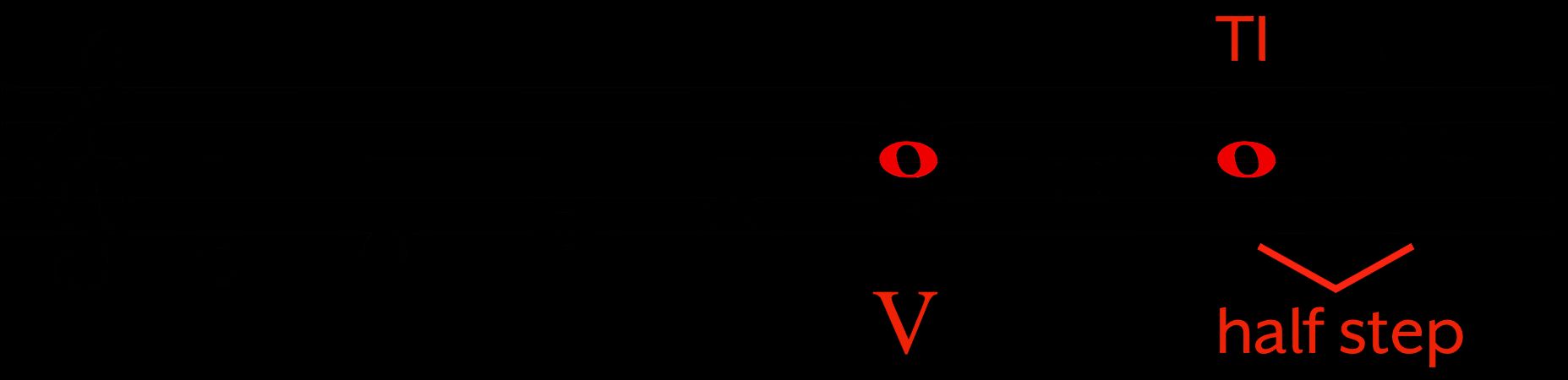
There is no need to alter any of the notes in either chord. The middle note of the V chord happens to be the leading tone (TI), the seventh note in the scale. Being just a half step below DO, it’s the note that makes the V chord drive so irresistibly toward I.
The authentic cadence in minor keys
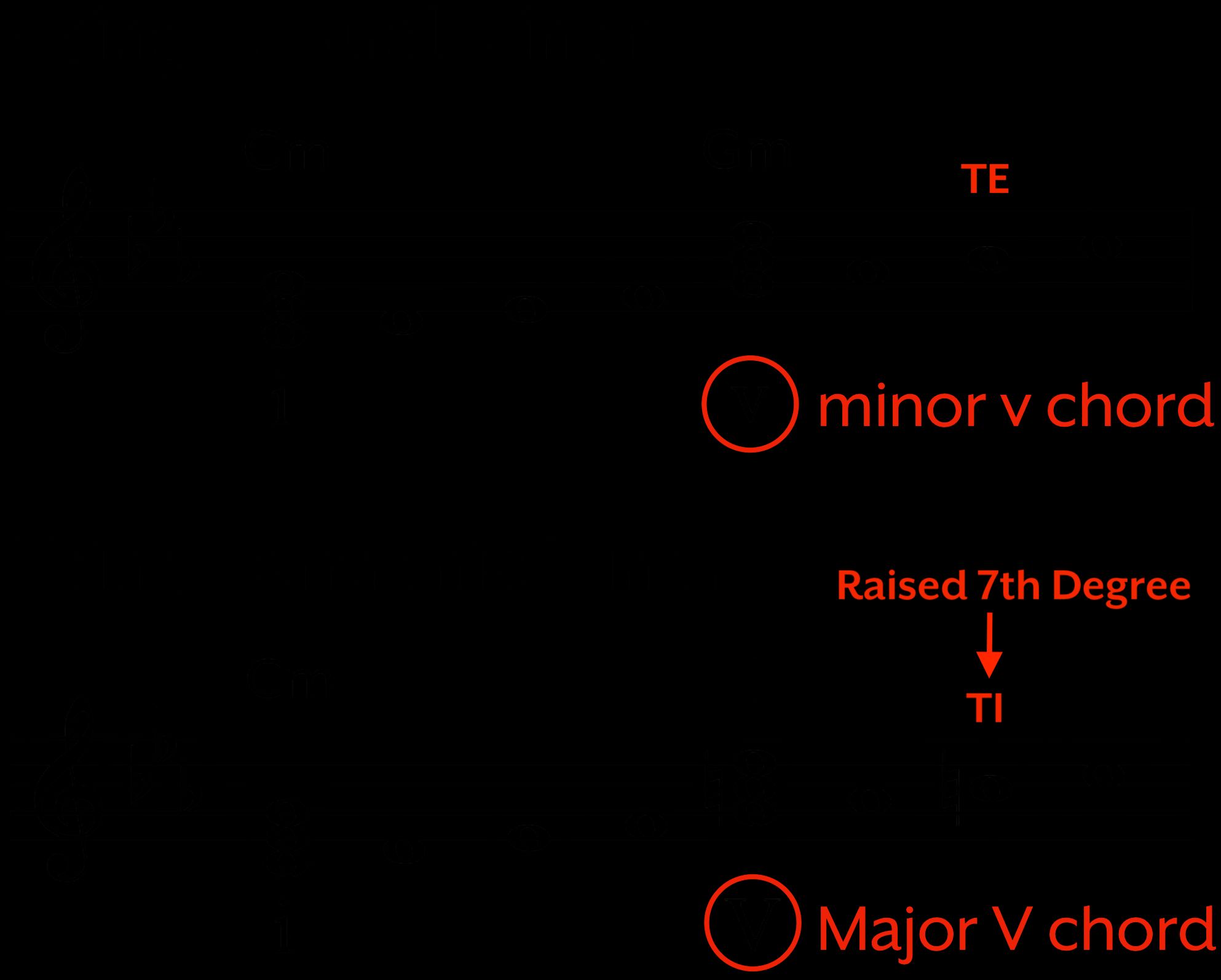
Minor keys can also have authentic cadences, but there’s a catch. The natural minor scale’s seventh note is TE, which is a whole step below DO. This results in a minor v chord, with a much weaker tendency toward I. The solution is to use a harmonic minor scale, with the seventh note raised a half step to become a leading tone. This turns the v chord into a major triad and makes the authentic cadence possible:
How do you identify the tonality of a song?
Looking at the key signature is the quickest way to determine a song’s tonality, which is another way of saying what key it was written in. The key signature is the group of sharps or flats next to the clefs, indicating which notes, if any, are automatically sharp or flat. A quick glance, and you can tell what key the piece is in, if you know the tricks.
Sharp major keys
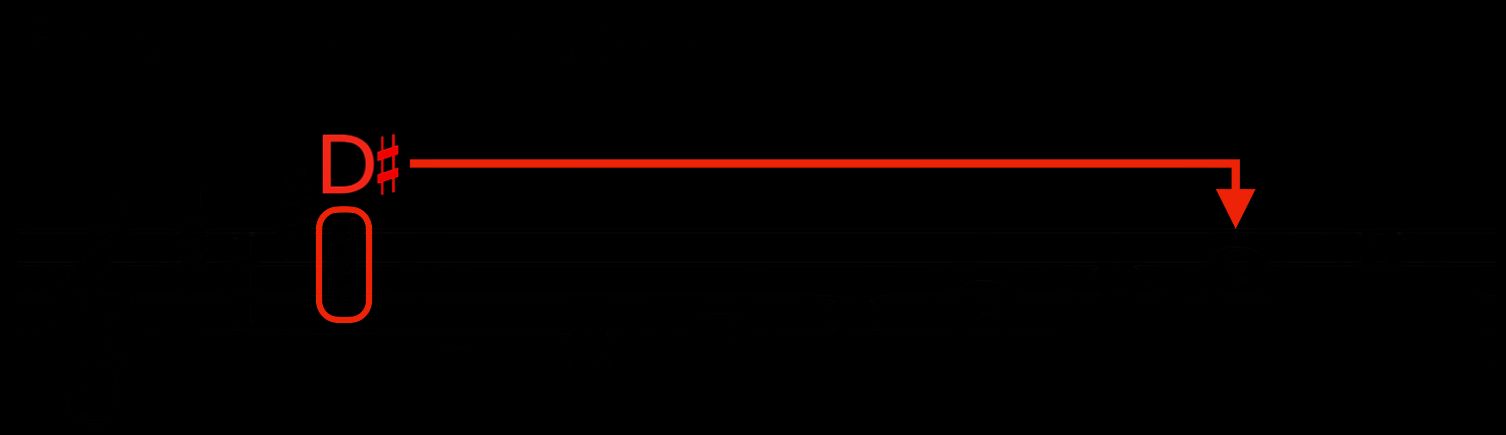
In any sharp major key signature, the final sharp represents TI, the seventh note of the major scale. Since TI is just a half step below DO, simply go up a half step and you get the name of the key. If your key signature has four sharps, look at the last one, which is D-sharp. A half step up is E, and this is the key of E major:
The only major key signature with no sharps is C major, so for this key you’ll see nothing after the clefs.
Flat major keys
For key signatures with flats, simply look at the next-to-last flat and you’re done! That’s the name of the major key. For a key signature of three flats, the next-to-last flat is E-flat, and this is the key of E-flat major:

Major or relative minor?
The tricks above help you identify any major key. But every key signature represents both a major key and its relative minor key. To tell which, you’ll need to look at the actual music. Most tonal pieces clearly establish the tonic key at the very beginning. Chopin’s Prelude in C minor, Op. 28, No. 20 has a key signature of three flats. This could indicate the key of E-flat major, but when you look at the very first chord, you’ll notice it isn’t an E-flat major triad, but instead C minor. A quick listen will also convince you that this is anything but a major-key piece. So, this prelude is in the relative minor key, C minor:

Tension and resolution
A major hallmark of tonality in music is its sense of motion. This is created by two types of sound: consonance and dissonance. A dissonant (clashing) interval or chord will cause tension, almost demanding to resolve to a more consonant (restful) harmony. This tension and resolution is what drives one harmony toward another, and imparts the dynamic movement characteristic of tonal music.
The authentic cadence
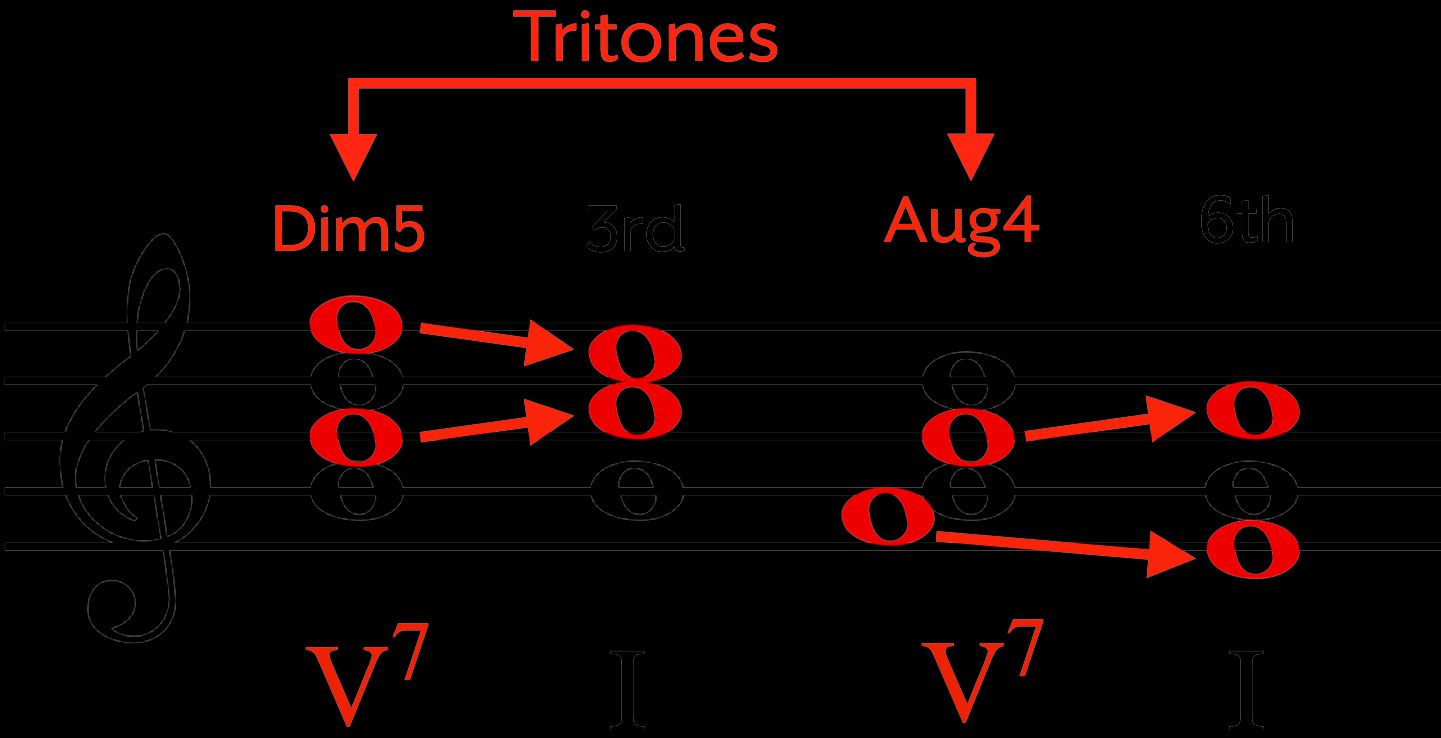
The authentic cadence is made possible by a very tense interval called the tritone. Made up of six half steps, the tritone is what gives a V7 chord its instability and pushes toward a resolution on the I chord. Below you can see how the tritone resolves either to a third or a sixth in the tonic chord, both of which are consonant intervals:
Suspensions
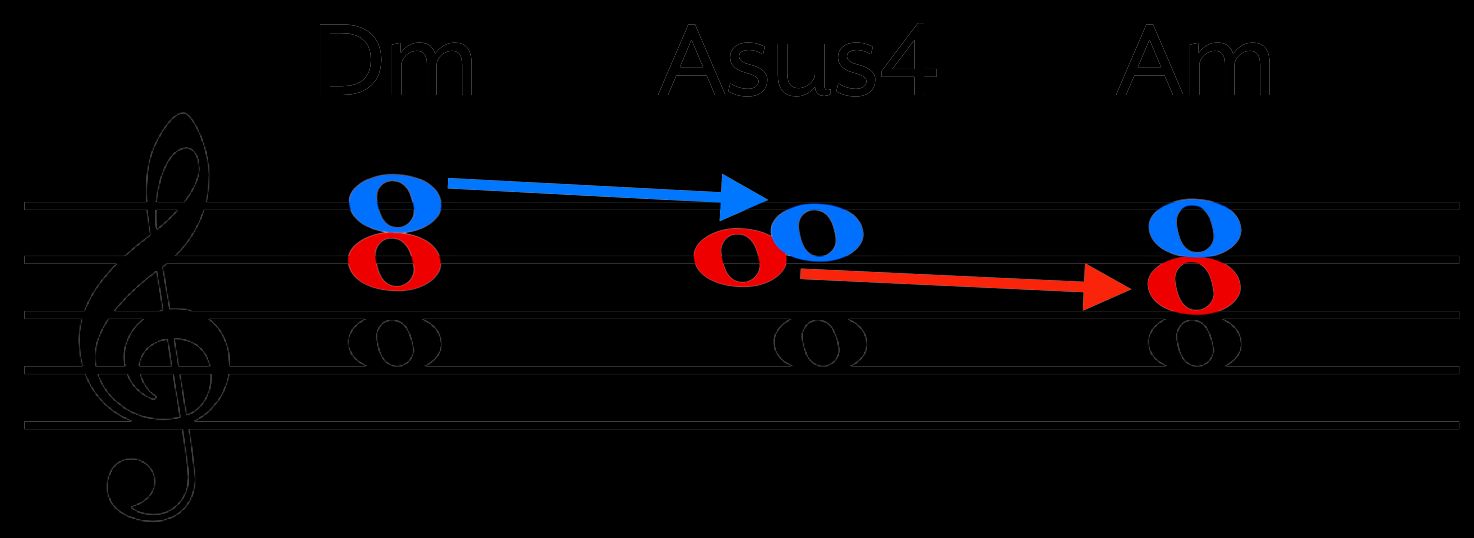
A suspension happens when one note moves against the other notes in a chord, creating a dissonant interval. One of the other notes must then move to resolve this tension. Suspended chords (or sus chords) often resolve to more restful harmonies in this way. The blue voice in the D minor chord below steps down, causing a dissonant second with the red voice. The middle note then steps down, resolving this dissonance into a much more restful A minor chord:
Examples and styles of tonal music
Composers will either plainly establish the tonality of a piece, or do everything they can to obscure it. This often depends on the era of the music, and reflects a stylistic and expressive choice.
Clear, unambiguous statement of tonality
The Neoclassical Era typically produced music that was upfront about its tonality from the beginning. Mozart’s Piano Sonata in C Major, K. 545 could not be more clear about its tonic key. The famous melody begins over a broken C major triad, and the I – V – I – IV – I – V – I progression has three solid cadences in the key of C, two authentic and one plagal:
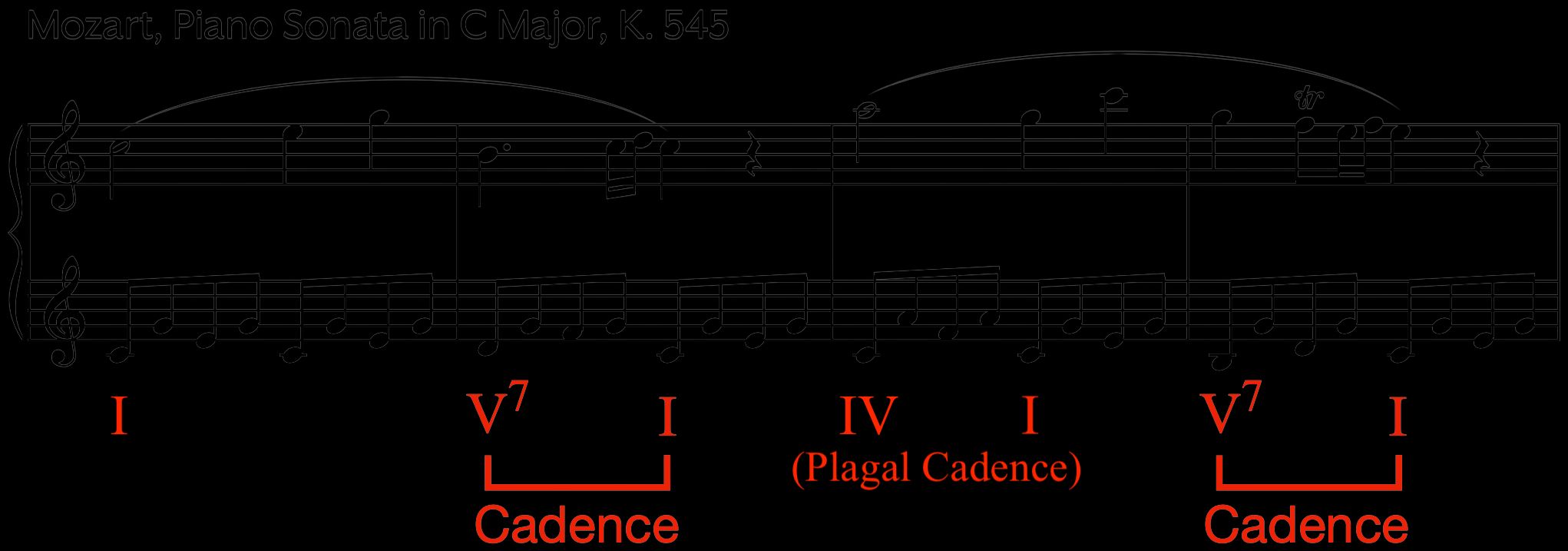
This tonal clarity was consistent with sonata-allegro form, which required a firm establishment of the tonic key at the outset, and a solid return to it by the finish.
Keeping the key a secret until the end
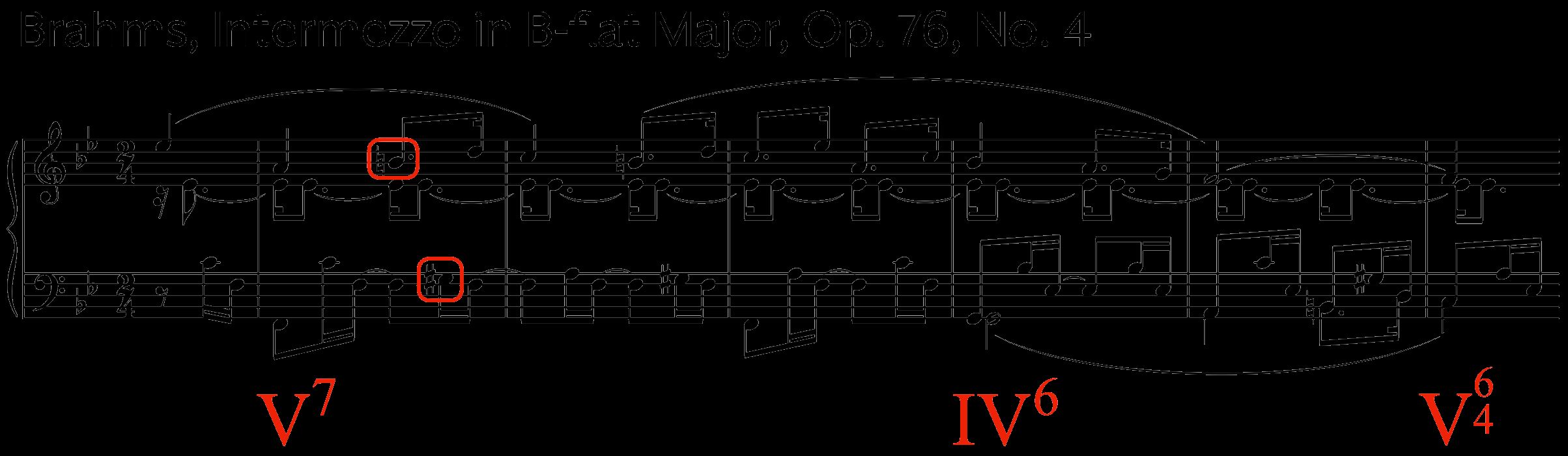
In the Romantic Era, composers used chromaticism and unresolved harmonies to play the tonality close to the chest. In the Intermezzo in B-flat Major, Op. 76, No. 4, Brahms mysteriously starts on an extended V7 chord, moves to IV in a few measures, then goes right back to V7. Also, his use of chromatic passing tones like B-natural and G-sharp help to utterly confuse the listener’s sense of the tonic key, B-flat major. In fact, the entire first section of this piece ends not in the home key, but in G minor, the relative minor key. It is only at the very end of this unusual piece that we finally settle down in B-flat major:
The history of tonality in music (and what lies beyond)
Tonality in Western music took many centuries to develop, from the Medieval modal system through the Renaissance. It was finally in the late Baroque Era that tonality as we know it had fully crystalized. Let’s take a closer look at each stage:
The Medieval Period: 12th through 14th Centuries
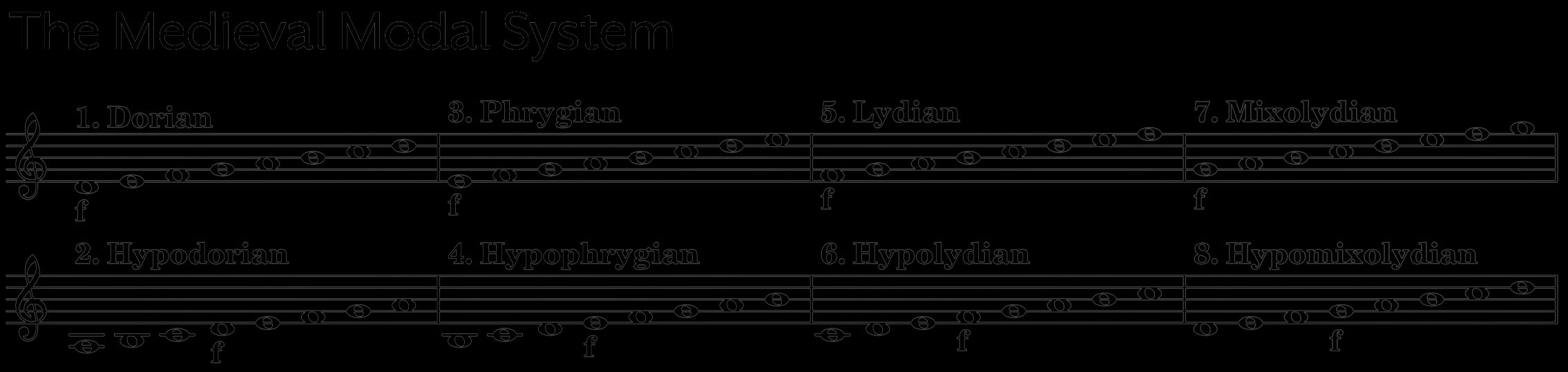
Medieval composers took the centuries-old pitch ranges, or tonoi, of the ancient Greeks and adapted them for use in both church and secular music. These scales, or modes, had a rudimentary sense of tonic called the final, a pitch that was either at the bottom of the mode’s range or near the middle. This was typically the note that a plainchant melody, a piece of church organum, or a motet ended on. The f indicates this pitch in the image below:
Polyphonic masses, motets, and secular songs dominated the music of this era.
The Renaissance: 15th and 16th Centuries
It was during the Renaissance that Franco-Flemish and Italian composers developed the harmonic progressions that the modes had to offer. The older cadences of the Medieval period died out in favor of 4-3 suspensions and bass lines that began to sound closer to the modern authentic cadence. In the 16th Century, secular pieces like madrigals pushed musical texture in a more homophonic direction, a crucial step away from polyphonic modal writing.
The Baroque Era: through the early 18th Century
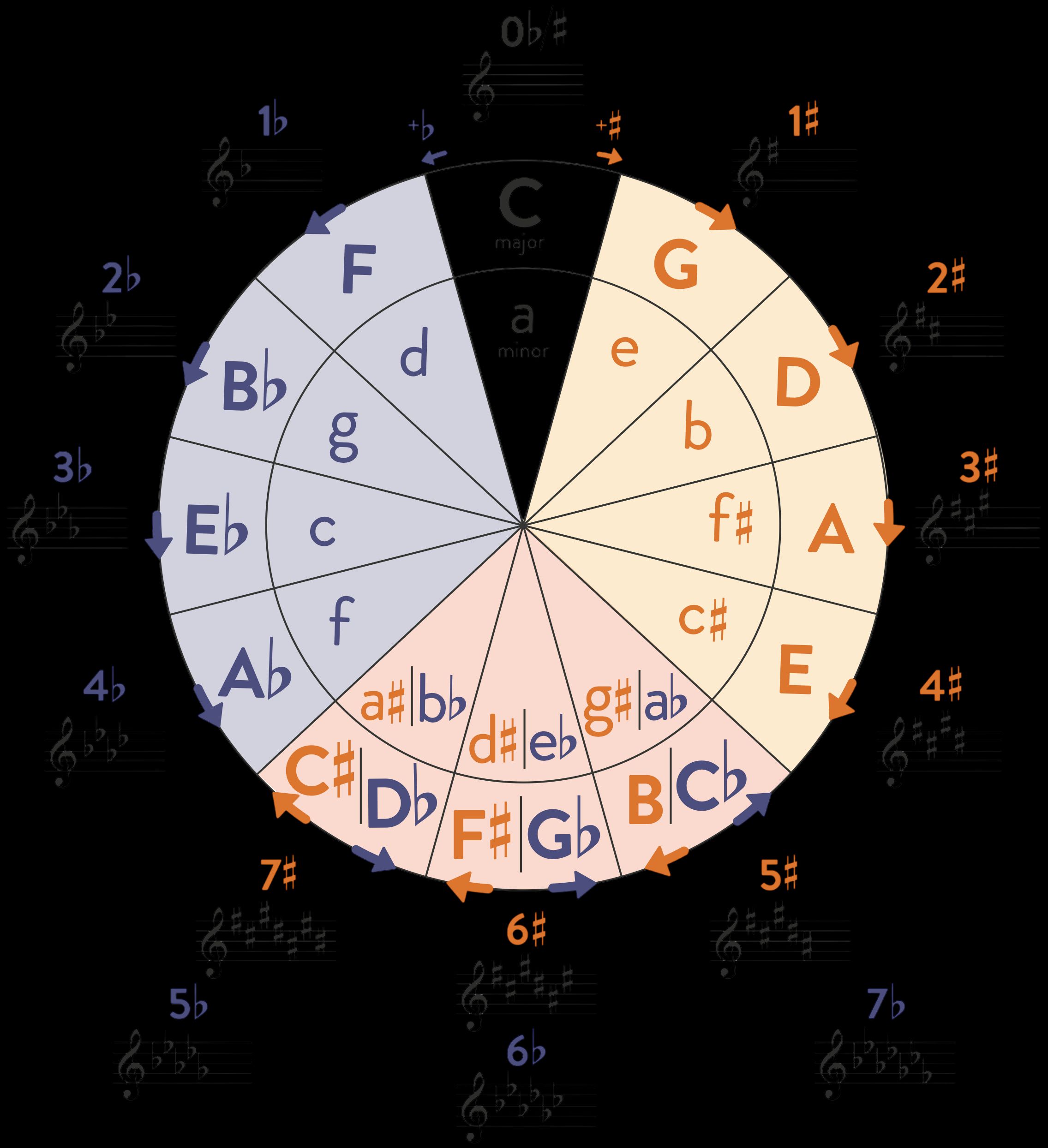
While any scale, including the modes, can represent a tonal set of pitches, it was Ionian and Aeolian (major and natural minor) that best supported the harmonic progressions that had been developing throughout the Renaissance. Major-minor tonality therefore became the basis for the common practice, and during the Baroque Era the modern system of key signatures and the circle of fifths fully cemented.
The Romantic Era: the dissolution of tonality
The common practice was largely the culmination of German, Italian, and French efforts spanning hundreds of years. With the 19th Century came the rise of musical nationalism, a movement on the part of Eastern European, Scandinavian, and Russian composers to celebrate their own musical identities. They also wished to liberate themselves from the well-established Western system. By reaching into their folk music traditions, which were strongly modal, composers like Antonín Dvořák, Edvard Grieg, the Russian Mighty Five, and Béla Bartók helped revive the modes that had been eclipsed by the common practice.
The modes generate harmonies that undermine major-minor tonality. Using the Mixolydian mode, for example, produces a minor v chord, with which an authentic cadence is not possible:
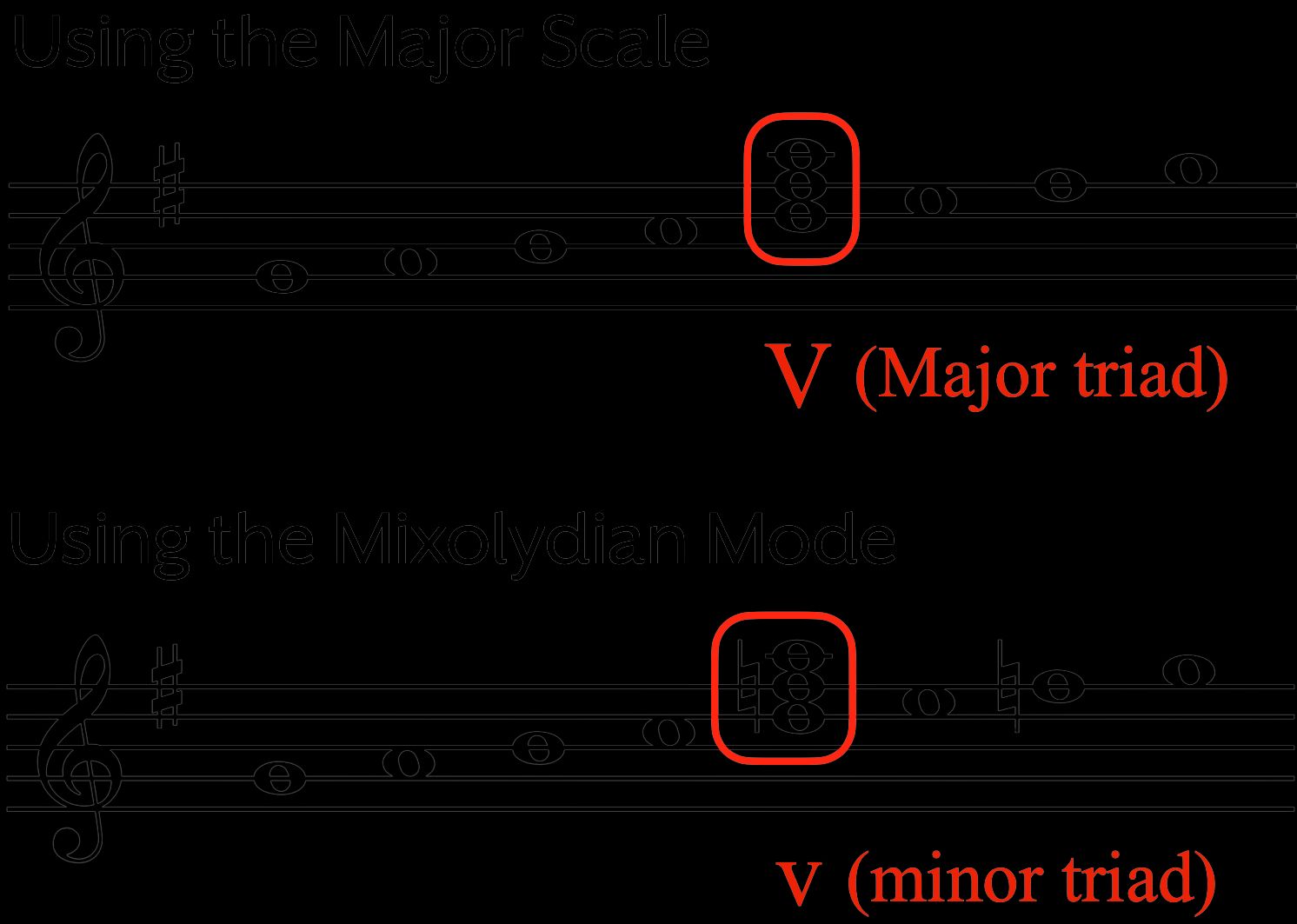
In the audio below, the first V-I cadence is based on the major scale, and the second on a Mixolydian mode. Hear how much stronger a V-I cadence is when the V chord is a major triad:
Modernist music: further departures from tonality
In the modern era, a greater interest in symmetrical scales, dissonance, and chromaticism weakened the tonal system.
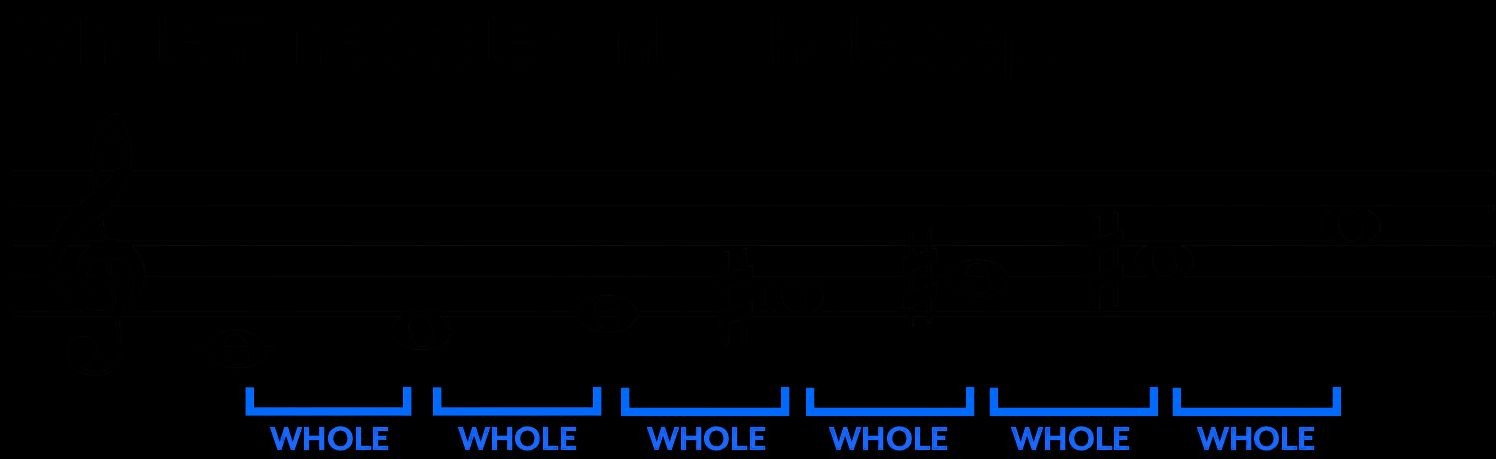
Debussy’s near-exclusive use of the whole tone scale in his piano prelude Voiles gives the listener a hazy, unanchored sense of tonality. There are no perfect fifths in a whole tone scale, and so major and minor triads cannot be built:
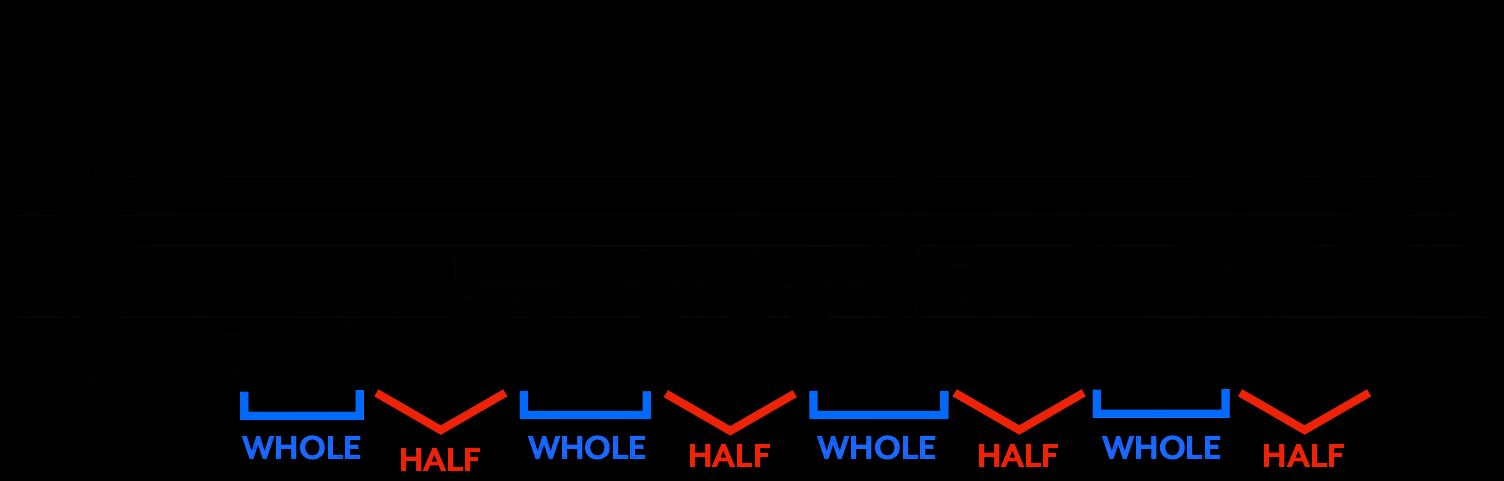
Stravinsky used the octatonic scale to derive two different harmonies and superimpose them in a dissonant, bi-tonal sound mass. Nowhere is this technique better known than in The Augurs of Spring, from his ballet The Rite of Spring. The horns and strings are divided into F♭7 and E♭7 chords, both built from an octatonic scale. While these chords are often found separately in tonal music, hearing them at the same time is an experience far outside of the common practice.
A final nail in tonality’s coffin was Arnold Schoenberg’s twelve-tone system. Using a tone row of all twelve pitches within the octave, he perfected a language utterly devoid of common practice harmonies. In this atonal world, dissonance was no longer seen as a fleeting tension needing to resolve, but instead an end unto itself. His Suite for Piano, Op. 25 is likely all the convincing you’ll need.

What to remember about tonality in music
Tonality is a well-tested practice that gives a sense of direction throughout a piece and satisfying resolution at the end. While atonal music is a bold experiment, Schoenberg’s twelve-tone system never found a wide audience outside of academia. Western musical culture has largely turned away from atonality, and most modern classical, pop, and film music retains the harmonies of the common practice. This may be partly due to the science behind the sound. Tonality is grounded in octaves, perfect fifths, and thirds–the same intervals naturally found in the overtone series produced by each note. The resulting harmonic relationships are pleasing and difficult to avoid, and have made tonality such an enduring musical tradition.