





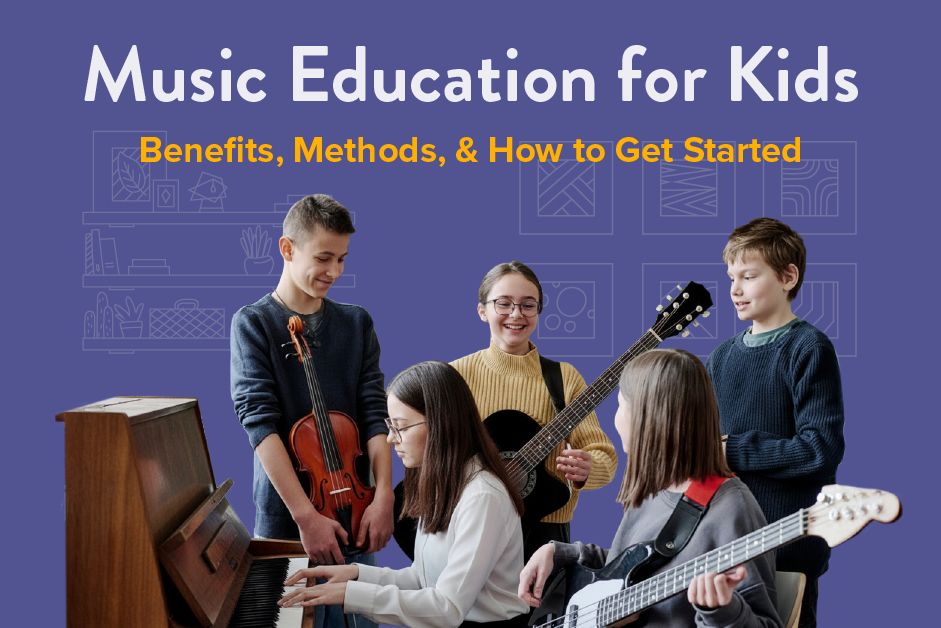
Music education supports a child’s learning and development. Not only does a music education help a child’s growth, it also gives them an outlet for expression, self-discovery, and play. Start your child’s music education today with Hoffman Academy Premium. Read on to learn more about the benefits and methods with music education for kids.
What are key benefits of music education for kids
Research suggests that children with musical training have increased cognitive development and brain growth. Because learning an instrument challenges the mind in many different ways, including memory, language processing, and mathematical reasoning, young musicians are often academically ahead of their peers in school. Music education for kids has also been shown to build cooperation, empathy, and social confidence. Whether a child goes on to become a musician or not, the cognitive, social, and emotional benefits of music education are lifelong. Seeking out a music education for your child is one of the best ways to support their future development.
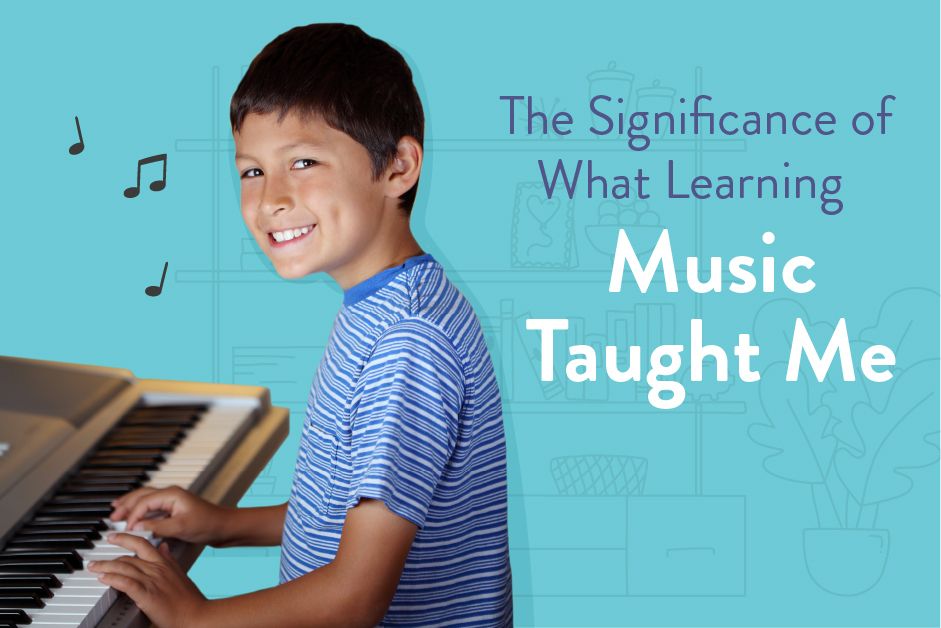
Those of us working at Hoffman Academy have felt the benefits of our own music education. Tap the image below to read about the significance of learning music from Hoffman Academy blog writer Jesse Preis.
At what age should kids start music education?
Kids should begin music education as soon as possible. With children 0-3, this means exposure to music, whether it’s playing with musical toys or participating in parent-child music classes. Even playing with your child while playing music in the background can help a child form a positive relationship with music. By the ages of 4-5, children are ready for more structured group music classes. These classes incorporate movement, rhythm, beat, and singing. By the time children are 5-6 years old, they’re ready to take lessons. By this age, kids have the fine motor skills needed to play instruments and the attention spans needed to sit for a music lesson.
What are kid-friendly instruments to start with?
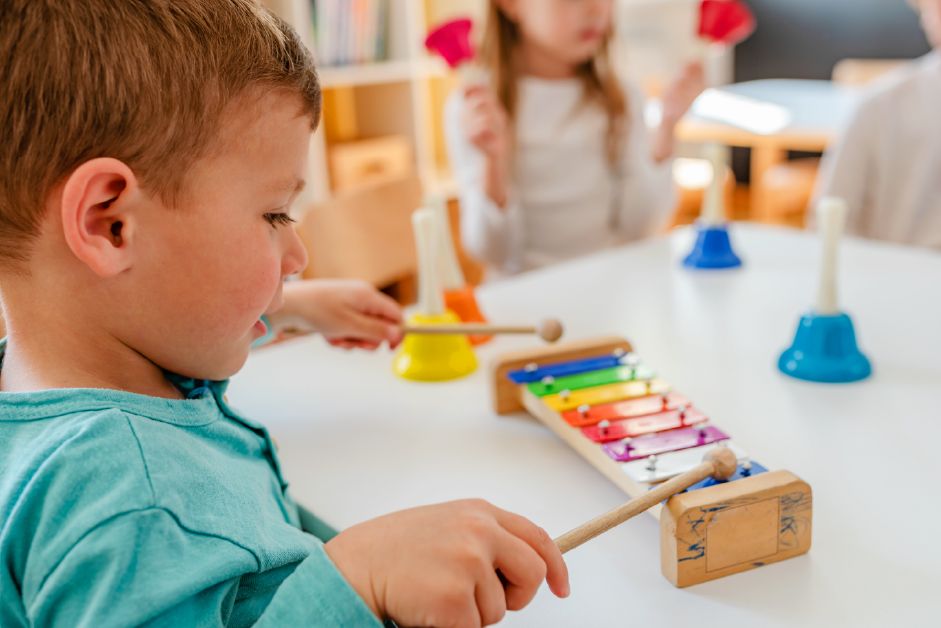
Kids are born with an instrument – their voice! A fun way for kids to explore music is to sing along with their favorite songs. For young kids who haven’t developed fine motor skills, shakers and tambourines are perfect instruments that introduce rhythm and beat. Play a song and let your child have fun shaking the tambourine along to the music. Kazoos, harmonicas, and recorders are other accessible and inexpensive instruments that can introduce a child to creating music. Of course, we recommend starting kids on the piano as well once they have the hand size and finger independence to play piano keys. This usually comes at age 6-8.
What are the types of programs and methods available?
Music programs for kids vary by country and region. Most programs borrow from various music methods to teach musical education. The best music program and method for your child will depend on your child’s age, learning style, and musical interest. Each method and program has its own benefits. Getting to know the different types of methods will help you discern which is the best style of learning for your child. Here are some of the most common music teaching methods:
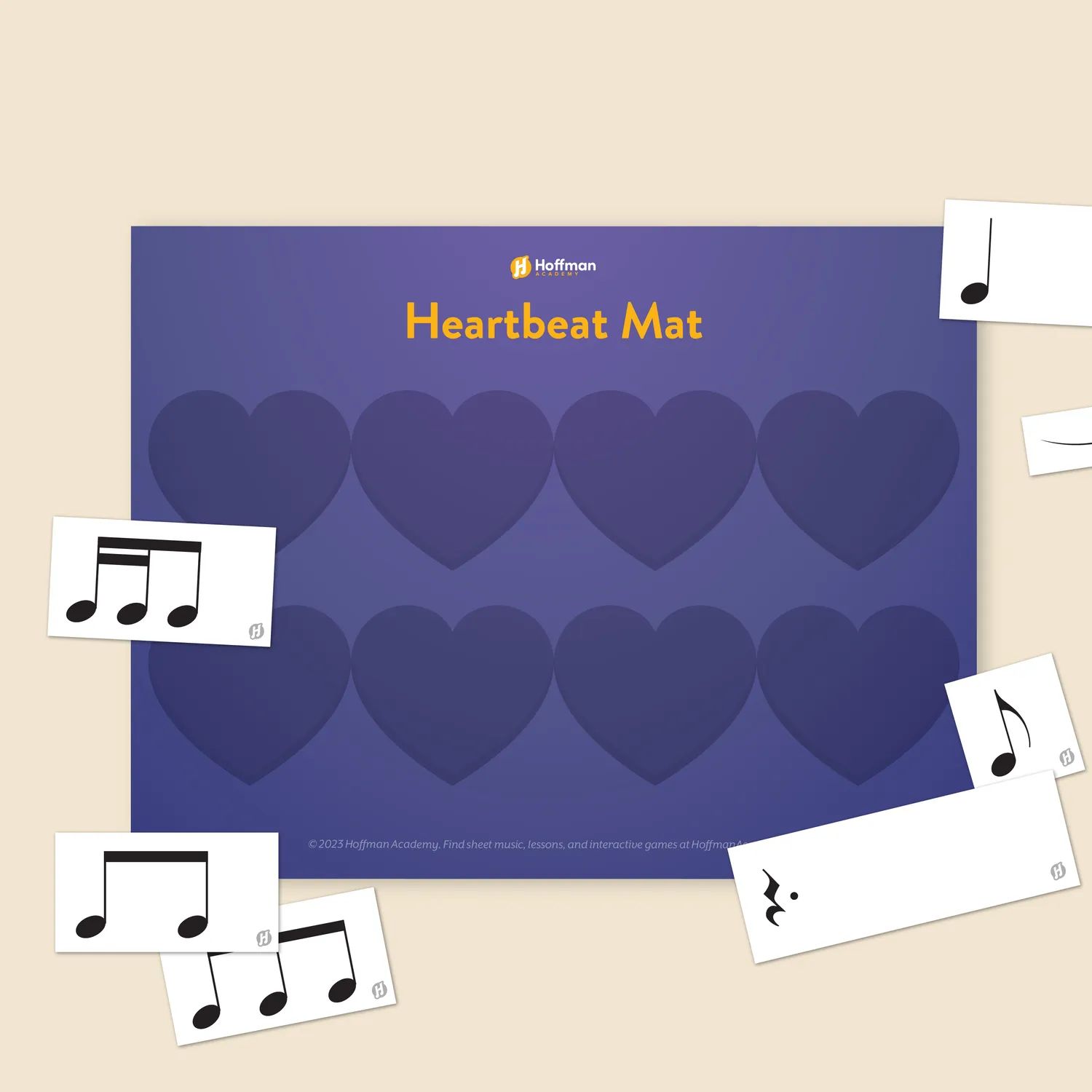
- Kodály Method – The Kodály method teaches music through immersion by blending kinesthetic, auditory and visual elements. Students learn music through solfège, hand signs, singing, and the heartbeat mat.
- Suzuki Method – The Suzuki method is built on the idea that children learn music the same way they learn language–through listening, imitation, and repetition before reading. The Suzuki method teaches students how to play music before reading.
- Traditional classical training – Traditional classical training is often based on notation or using a book to teach musical skills. This method is common in conservatories and among private piano teachers.
- Hoffman Method – The Hoffman Method blends the best strengths of multiple methods, including Kodály and Suzuki, to give students a comprehensive understanding of music. Students learn through composition, improvisation, solfège, hand signs, and the heartbeat mat.
When looking into different music programs, be sure to check out your local library! Libraries often have music and movement programs for young kids to encourage early development. Many towns and cities also have arts and theatre musical education programs that give kids opportunities to perform or collaborate with other musicians.
What are effective teaching methods?
The best teaching methods develop a wide range of musical skills: ear training, sight reading, composition, musical theory, improvisation and collaboration. Effective music teaching methods should encourage musical fluency and confidence as well. Here at Hoffman Academy, we’re partial to the Hoffman Method! From the first unit books, we teach students how to sing, feel rhythm, improvise, compose, and read notes. Our method emphasizes experiential learning, where students experience music first and then learn about the musical concept later. This is different from traditional classical training where students are shown musical ideas by rote or through a book.
We also believe that two things should occur at every lesson: make musical progress and have fun! At the end of the day, students should be enjoying their lessons, and if they enjoy their lessons, they’ll be more likely to make musical progress.
What does quality music education for kids look like?
Above all else, music should be enjoyable! Of course, there will be times where learning an instrument will feel hard. But students thrive in classrooms where they feel safe to explore different ideas and experiences. Look for teachers that are excited and eager to teach music. They should be kind, observant, and emotionally intuitive. Music education for kids isn’t “one size fits all,” so it’s important to find teachers that want to get to know your child, their strengths, and how they learn best. When a teacher truly connects with their student, musical growth follows naturally.
Online vs. in-person music education for kids
Both online and in-person learning offers distinct advantages depending on a family’s needs, schedules, and goals. An in-person teacher is able to provide feedback on posture, technique, and musical expression in real time. This is especially crucial during the early stages of learning an instrument because teachers can catch mistakes that could take years to unlearn.
An online music education for kids offers more flexibility and affordability. Students have two options when learning online: a private virtual lesson or online video tutorial lessons. A private virtual lesson is similar to an in-person lesson. Students receive feedback and training through a screen. This is great for students who want to study with a teacher who doesn’t live near them. These lessons usually cost the same amount as in-person private lessons.
With online video tutorials, students can learn on their own schedules. This format is significantly cheaper and students can still receive a high quality music education. Joseph Hoffman further explains why an online music education for kids works in his article Do Online Piano Lessons Really Work? Ultimately, the best format is the one that keeps a child engaged, motivated, and excited to return to the piano day after day.
How much does music education for kids cost?
The cost of music education depends on whether it’s online or in-person. In-person lessons can cost anywhere from $30-100 per lesson, depending on the teacher and length of lesson. Compared to in-person lessons, an online music education is significantly cheaper. At Hoffman Academy, students can receive a quality music education all for free with our online YouTube videos. With Hoffman Academy Premium, students can have access to online games, progress tracking, learning resources, and all items in our store for $25 a month or $239 a year. Our article How Much Do Piano Lessons Cost? dives deeper into the cost of piano lessons and how to find the right option for your budget and learning goals.
How to support your child’s music education at home
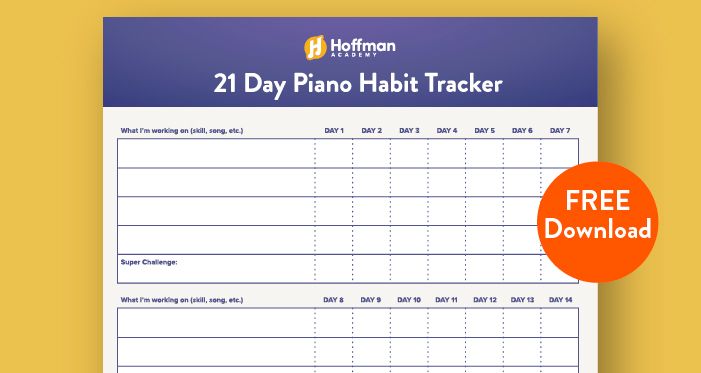
The best way to support your child’s music education at home is to create a consistent practice routine. Set aside a time of day that your child can consistently practice, even if it’s just for 10-15 minutes. Some students find it helpful to see their progress on paper. Free planners like the Monthly Piano Habit Tracker and Twenty-One Day Piano Habit Tracker help students organize their practicing and strive towards a goal. Other students enjoy challenges like the Fourteen-Day Piano Practice challenge which can keep students accountable to practicing everyday.
Beyond practice, parents should play music often in the house. Listen to a wide variety of genres and encourage your child to figure out for themselves what kind of music inspires them. For students following an online curriculum like Hoffman Academy, parents who stay involved by watching video lessons together with their child make a huge difference in their child’s motivation and confidence.
Hoffman Academy has a wide variety of resources to support musical learning in the home– check out our article Free Music Education Resources for Teachers & Parents.
Common challenges in kids’ music education (and how to overcome them)
Lack of motivation is one of the most difficult challenges for kids (and adults!) when learning music. Allowing your child to choose some of the songs they practice keeps them excited and interested in what they’re playing. Keep practice light-hearted and goal- oriented, and make a few goals with your child that can be achieved each practice session. The most important part of practicing an instrument is to make it a daily habit, and this habit is best built through encouragement and positive interactions.
Another challenge is finding the right teacher or program. Not every teaching style is suitable for every child, and a bad fit between teacher and student can quickly diminish motivation to practice. Look for teachers who prioritize connection and encouragement. Don’t be afraid to switch teachers if you are questioning whether the one you have is the right fit.
Slow progress can also be a challenge for music students. It can take more time than expected to develop piano technique and learn new pieces of music. Children might feel discouraged when progress is not immediate. It’s important to remember plateaus are a part of the learning journey. Taking videos of your child’s recitals or learned pieces can be a way to reflect on progress and feel a strong sense of achievement.
Empowering your child through music education
Music education provides children a foundation that goes far beyond learning to play an instrument. Even if a child doesn’t pursue music long term, a music education can give them the skills needed to collaborate, communicate, and express themselves for the rest of their lives. Start your child’s music education today with Hoffman Academy Premium!